Kirjojen hintavertailu. Mukana 11 342 296 kirjaa ja 12 kauppaa.

Kirjahaku

Etsi kirjoja tekijän nimen, kirjan nimen tai ISBN:n perusteella.

3 kirjaa tekijältä Keith C. Petersen

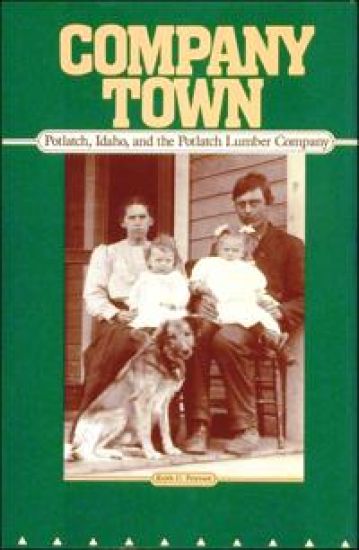
Company Town

Company Town

Keith C. Petersen

Washington State University Press
1987
pokkari
At a bend in the Palouse River, in the shadow of Gold Hill, rests the town of Potlatch, Idaho. It projects an image of gritty, working-class living. But its ordinary appearance belies an unusual past. Potlatch was a company town--a town completely owned by a large lumber company.Company Town, however, is more than just another community history. It is a history of the Pacific Northwest in microcosm--the exploitation of natural resources; the impact of big business upon the development of a rural area; and ordinary people making a place their home.Company Town gives us insights into the life of a rural community and follows its progress through the decades. It shows the close ties between community life and the larger spheres of the timber industry, regional and national economics, and international events. The book imparts a sense of what it was like to work in the sawmill and live in what the Potlatch Lumber Company had planned as a model town.Keith Petersen received the 1987 Award of Merit from the American Association for State and Local History for his work on Company Town. Co-published with the Latah County Historical Society, Moscow, Idaho.
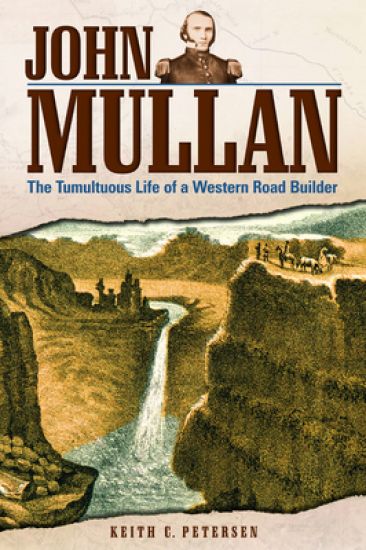
John Mullan

John Mullan

Keith C. Petersen

Washington State University Press
2014
pokkari
John Mullan's celebrated construction project-a 625-mile link that connected the Missouri and Columbia rivers-established the West Point graduate as an accomplished road builder. After completing the West's first engineered highway at age thirty-two, he lived for nearly another half century, a period of dynamic change. When he died in 1909, automobiles were making their initial crossings along the route he engineered, and his arterial eventually became a critical link in America's longest interstate freeway, I-90. Yet despite frequent mentions in books about the nineteenth century Northwest, the soldier/explorer has remained little more than a caricature: a dashing young Army officer who comes West, builds one of its most important thoroughfares, and then disappears from the region's literature. Now, in lively prose, Idaho State Historian Keith Petersen takes a fresh look at Mullan's road, which has significantly impacted the development of the Northwest for more than 150 years. The deeply researched biography also probes Mullan's complex personality and continues the story, including business partnerships and personal relationships with some of the West's most intriguing characters: Father Pierre-Jean DeSmet, General William T. Sherman, Chico founder John Bidwell, Idaho gold discoverer Elias Pierce, Yakama Indian chief Owhi, and others. Long overdue, Petersen's comprehensive portrayal bestows a full appreciation of Mullan's life-his rise to fame as well as his fall from grace.
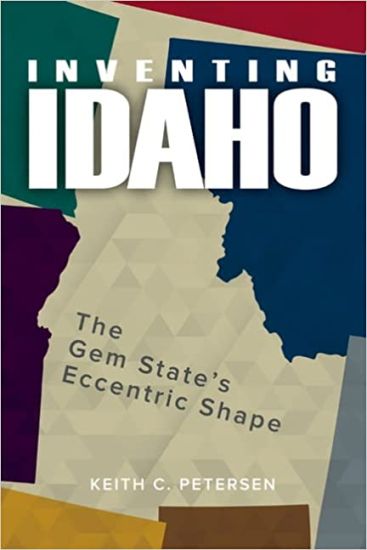
Inventing Idaho

Inventing Idaho

Keith C. Petersen

Washington State University Press
2022
pokkari
As Idaho's State Historian, the question Keith Petersen heard most was, "How did Idaho get such a strange shape?" That curiosity is fitting, because those peculiar borders have held enormous influence on much of Idaho's political, economic, and cultural history, and prompted repeated efforts to connect the north and south.In Inventing Idaho, Petersen answers that popular inquiry, breaking the state's intriguing border story into six sections covering the fascinating events and people--often U.S. presidents and other politicians and diplomats who never set foot in the region--involved in creating the boundaries between Idaho and Canada, Oregon, Montana, Nevada, Utah, Washington, and Wyoming. He explains their roots in the French and Indian War, how Idaho's northern and southern portions were once split between Oregon Territory and Washington Territory, how the state's panhandle and name can be traced back to a late-night 1863 Senate proposal, how Moscow became home to the University of Idaho, what might happen to a criminal in the "Zone of Death," and how a gold rush, geographic barriers, differing business and political interests, and more factored into border decisions. In addition, he discusses some of the ramifications Idahoans have faced ever since, and the various attempts to deal with them.