Kirjojen hintavertailu. Mukana 11 627 495 kirjaa ja 12 kauppaa.

Kirjahaku

Etsi kirjoja tekijän nimen, kirjan nimen tai ISBN:n perusteella.

3 kirjaa tekijältä Keith D. Miller

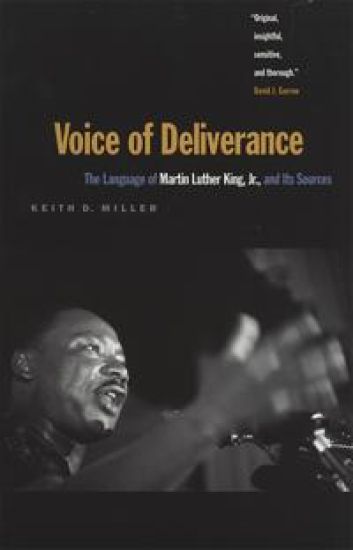
Voice of Deliverance

Voice of Deliverance

Keith D. Miller

University of Georgia Press
1998
pokkari
Martin Luther King Jr.'s words defined, mobilized, and embodied much of the American civil rights movement, crystallizing the hope and demand for racial justice in America. His powerful sermons and speeches were unique in their ability to unite blacks and whites in the quest for reform. In the first full-length study of King's language, Keith D. Miller explores his words to find the intellectual roots, spiritual resonances, and actual sources of the speeches and essays that continue to reverberate in America's mind and conscience.Miller argues that King's skillful borrowing and blending of the black oral and white written traditions was in fact the key to his language and to his effectiveness. It made his message of hope and deliverance accessible to all people and enabled blacks and whites to move in harmony to action and commitment.
Martin Luther King’s Biblical Epic

Martin Luther King’s Biblical Epic

Keith D. Miller

University Press of Mississippi
2011
sidottu
In his final speech ""I've Been to the Mountaintop,"" Martin Luther King Jr. delivered his support of African American garbage workers on strike in Memphis. Although some consider this oration King's finest, it is mainly known for its concluding two minutes, wherein King compares himself to Moses and seems to predict his own assassination. But King gave an hour-long speech, and the concluding segment can only be understood in relation to the whole. King scholars generally focus on his theology, not his relation to the Bible or the circumstance of a Baptist speaking in a Pentecostal setting. Even though King cited and explicated the Bible in hundreds of speeches and sermons, Martin Luther King's Biblical Epic is the first book to analyze his approach to the Bible and its importance to his rhetoric and persuasiveness.Martin Luther King's Biblical Epic argues that King challenged dominant Christian supersessionist conceptions of Judaism in favor of a Christianity that affirms Judaism as its wellspring. In his final speech, King implicitly but strongly argues that one can grasp Jesus only by first grasping Moses and the Hebrew prophets. This book also traces the roots of King's speech to its Pentecostal setting and to the Pentecostals in his audience. In doing so, Miller puts forth the first scholarship to credit the mostly unknown, but brilliant African American architect who created the large yet compact church sanctuary, which made possible the unique connection between King and his audience on the night of his last speech.
Martin Luther King's Biblical Epic

Martin Luther King's Biblical Epic

Keith D. Miller

University Press of Mississippi
2013
nidottu
In his final speech ""I've Been to the Mountaintop,"" Martin Luther King Jr. delivered his support of African American garbage workers on strike in Memphis. Although some consider this oration King's finest, it is mainly known for its concluding two minutes, wherein King compares himself to Moses and seems to predict his own assassination. But King gave an hour-long speech, and the concluding segment can only be understood in relation to the whole. King scholars generally focus on his theology, not his relation to the Bible or the circumstance of a Baptist speaking in a Pentecostal setting. Even though King cited and explicated the Bible in hundreds of speeches and sermons, Martin Luther King's Biblical Epic is the first book to analyze his approach to the Bible and its importance to his rhetoric and persuasiveness.Martin Luther King's Biblical Epic argues that King challenged dominant Christian supersessionist conceptions of Judaism in favor of a Christianity that affirms Judaism as its wellspring. In his final speech, King implicitly but strongly argues that one can grasp Jesus only by first grasping Moses and the Hebrew prophets. This book also traces the roots of King's speech to its Pentecostal setting and to the Pentecostals in his audience. In doing so, Miller puts forth the first scholarship to credit the mostly unknown, but brilliant African American architect who created the large yet compact church sanctuary, which made possible the unique connection between King and his audience on the night of his last speech.