Kirjojen hintavertailu. Mukana 11 239 951 kirjaa ja 12 kauppaa.

Kirjahaku

Etsi kirjoja tekijän nimen, kirjan nimen tai ISBN:n perusteella.

15 kirjaa tekijältä Keith Devlin

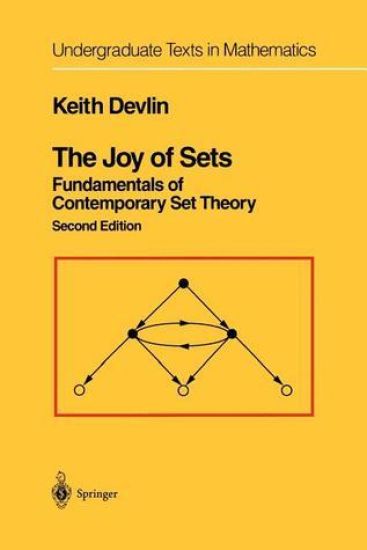
The Joy of Sets

The Joy of Sets

Keith Devlin

Springer-Verlag New York Inc.
1993
sidottu
This book provides an account of those parts of contemporary set theory of direct relevance to other areas of pure mathematics. The intended reader is either an advanced-level mathematics undergraduate, a beginning graduate student in mathematics, or an accomplished mathematician who desires or needs some familiarity with modern set theory. The book is written in a fairly easy-going style, with minimal formalism. In Chapter 1, the basic principles of set theory are developed in a 'naive' manner. Here the notions of 'set', 'union', 'intersection', 'power set', 'rela­ tion', 'function', etc., are defined and discussed. One assumption in writing Chapter 1 has been that, whereas the reader may have met all of these 1 concepts before and be familiar with their usage, she may not have con­ sidered the various notions as forming part of the continuous development of a pure subject (namely, set theory). Consequently, the presentation is at the same time rigorous and fast.
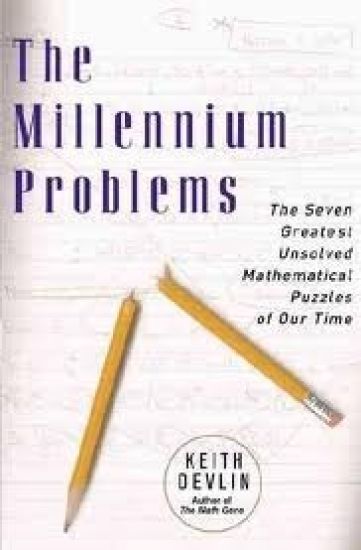
The Millennium Problems

The Millennium Problems

Keith Devlin

Basic Books
2003
pokkari
An account of the Clay Foundation's 2000 competition to solve seven high-level math problems references the Hilbert Problems of 1900 and cites the Millennium Problems' significance in the fields of math and science. 30,000 first printing.
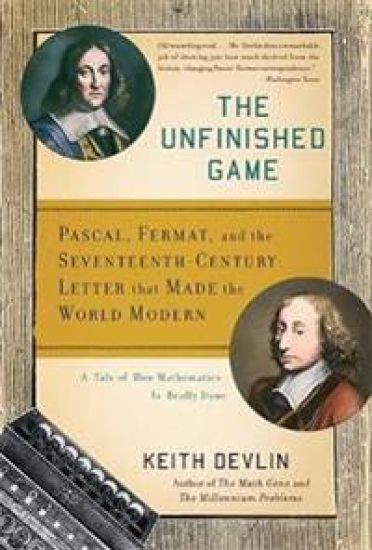
The Unfinished Game

The Unfinished Game

Keith Devlin

Basic Books
2010
pokkari
In the early seventeenth century, the outcome of something as simple as a dice roll was consigned to the realm of unknowable chance. Mathematicians largely agreed that it was impossible to predict the probability of an occurrence. Then, in 1654, Blaise Pascal wrote to Pierre de Fermat explaining that he had discovered how to calculate risk. The two collaborated to develop what is now known as probability theory,a concept that allows us to think rationally about decisions and events. In The Unfinished Game , Keith Devlin masterfully chronicles Pascal and Fermat's mathematical breakthrough, connecting a centuries-old discovery with its remarkable impact on the modern world.
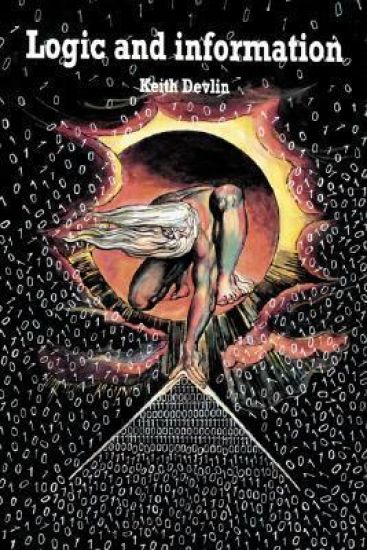
Logic and Information

Logic and Information

Keith Devlin

Cambridge University Press
1991
sidottu
Intelligence can be characterised both as the ability to absorb and process information and as the ability to reason. Humans and other animals have both of these abilities to a greater or lesser degree, but the search for artificial intelligence has been hampered by our inability to create a theory that covers both of these characteristics. In this provocative and ground-breaking book, Professor Keith Devlin argues that to obtain a deeper understanding of the nature of intelligence and knowledge acquisition, we must broaden our concept of logic. For these purposes, Devlin introduces the concept of the infon, a quantum of information, and merges it with situations, a mathematical construction generalising the notion of sets developed by Barwise and Perry at Stanford University in order to study the meaning of natural languages. He develops and describes the theory here in general and intuitive terms, and discusses its relevance to a variety of concerns such as artificial intelligence, cognition, natural language and communication.
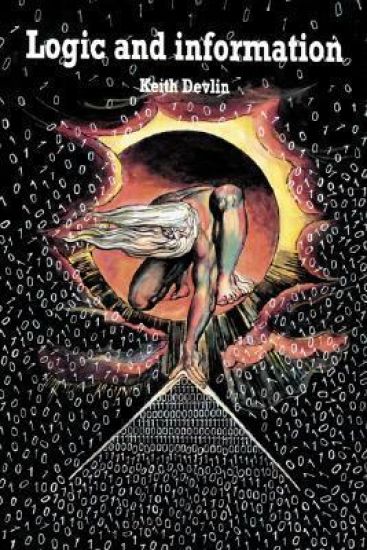
Logic and Information

Logic and Information

Keith Devlin

Cambridge University Press
1995
pokkari
Intelligence can be characterised both as the ability to absorb and process information and as the ability to reason. Humans and other animals have both of these abilities to a greater or lesser degree, but the search for artificial intelligence has been hampered by our inability to create a theory that covers both of these characteristics. In this provocative and ground-breaking book, Professor Keith Devlin argues that to obtain a deeper understanding of the nature of intelligence and knowledge acquisition, we must broaden our concept of logic. For these purposes, Devlin introduces the concept of the infon, a quantum of information, and merges it with situations, a mathematical construction generalising the notion of sets developed by Barwise and Perry at Stanford University in order to study the meaning of natural languages. He develops and describes the theory here in general and intuitive terms, and discusses its relevance to a variety of concerns such as artificial intelligence, cognition, natural language and communication.
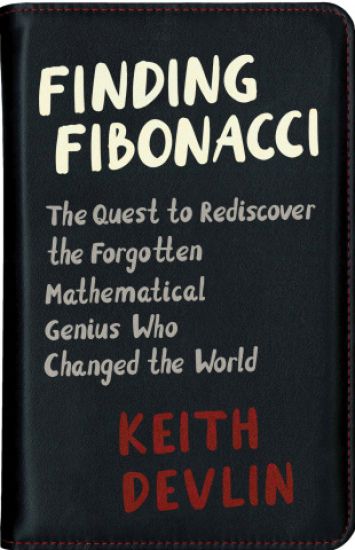
Finding Fibonacci

Finding Fibonacci

Keith Devlin

PRINCETON UNIVERSITY PRESS
2017
sidottu
A compelling firsthand account of Keith Devlin's ten-year quest to tell Fibonacci's story In 2000, Keith Devlin set out to research the life and legacy of the medieval mathematician Leonardo of Pisa, popularly known as Fibonacci, whose book Liber abbaci has quite literally affected the lives of everyone alive today. Although he is most famous for the Fibonacci numbers--which, it so happens, he didn't invent--Fibonacci's greatest contribution was as an expositor of mathematical ideas at a level ordinary people could understand. In 1202, Liber abbaci--the "Book of Calculation"--introduced modern arithmetic to the Western world. Yet Fibonacci was long forgotten after his death, and it was not until the 1960s that his true achievements were finally recognized. Finding Fibonacci is Devlin's compelling firsthand account of his ten-year quest to tell Fibonacci's story. Devlin, a math expositor himself, kept a diary of the undertaking, which he draws on here to describe the project's highs and lows, its false starts and disappointments, the tragedies and unexpected turns, some hilarious episodes, and the occasional lucky breaks. You will also meet the unique individuals Devlin encountered along the way, people who, each for their own reasons, became fascinated by Fibonacci, from the Yale professor who traced modern finance back to Fibonacci to the Italian historian who made the crucial archival discovery that brought together all the threads of Fibonacci's astonishing story. Fibonacci helped to revive the West as the cradle of science, technology, and commerce, yet he vanished from the pages of history. This is Devlin's search to find him.
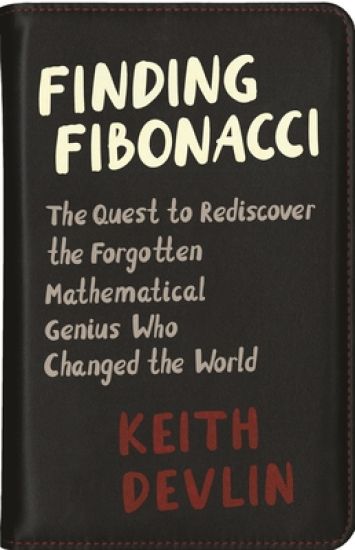
Finding Fibonacci

Finding Fibonacci

Keith Devlin

Princeton University Press
2019
pokkari
A mathematician’s ten-year quest to tell Fibonacci’s storyIn 2000, Keith Devlin set out to research the life and legacy of the medieval mathematician Leonardo of Pisa, popularly known as Fibonacci, whose book Liber abbaci, or the “Book of Calculation,” introduced modern arithmetic to the Western world. Although most famous for the Fibonacci numbers—which, it so happens, he didn’t discover—Fibonacci’s greatest contribution was as an expositor of mathematical ideas at a level ordinary people could understand. Yet Fibonacci was forgotten after his death, and it was not until the 1960s that his true achievements were finally recognized. Drawing on the diary he kept of his quest, Devlin describes the false starts and disappointments, the unexpected turns, and the occasional lucky breaks he encountered in his search. Fibonacci helped to revive the West as the cradle of science, technology, and commerce, yet he vanished from the pages of history. This is Devlin’s search to find him.
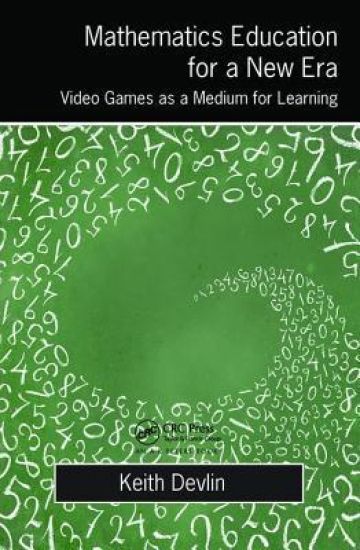
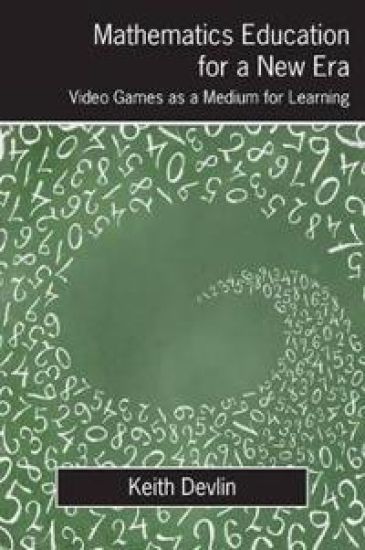
Mathematics Education for a New Era
Stanford mathematician and NPR Math Guy Keith Devlin explains why, fun aside, video games are the ideal medium to teach middle-school math. Aimed primarily at teachers and education researchers, but also of interest to game developers who want to produce videogames for mathematics education, Mathematics Education for a New Era: Video Games as a Medium for Learning describes exactly what is involved in designing and producing successful math educational videogames that foster the innovative mathematical thinking skills necessary for success in a global economy. Read the author's monthly MAA column Devlin's Angle
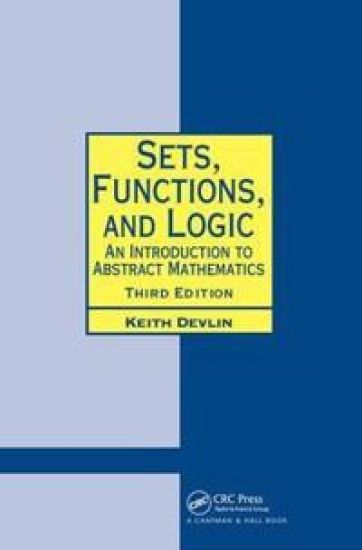
Sets, Functions, and Logic

Sets, Functions, and Logic

Keith Devlin

CRC Press
2017
sidottu
Keith Devlin. You know him. You've read his columns in MAA Online, you've heard him on the radio, and you've seen his popular mathematics books. In between all those activities and his own research, he's been hard at work revising Sets, Functions and Logic, his standard-setting text that has smoothed the road to pure mathematics for legions of undergraduate students. Now in its third edition, Devlin has fully reworked the book to reflect a new generation. The narrative is more lively and less textbook-like. Remarks and asides link the topics presented to the real world of students' experience. The chapter on complex numbers and the discussion of formal symbolic logic are gone in favor of more exercises, and a new introductory chapter on the nature of mathematics--one that motivates readers and sets the stage for the challenges that lie ahead. Students crossing the bridge from calculus to higher mathematics need and deserve all the help they can get. Sets, Functions, and Logic, Third Edition is an affordable little book that all of your transition-course students not only can afford, but will actually read and enjoy and learn from. About the Author Dr. Keith Devlin is Executive Director of Stanford University's Center for the Study of Language and Information and a Consulting Professor of Mathematics at Stanford. He has written 23 books, one interactive book on CD-ROM, and over 70 published research articles. He is a Fellow of the American Association for the Advancement of Science, a World Economic Forum Fellow, and a former member of the Mathematical Sciences Education Board of the National Academy of Sciences,. Dr. Devlin is also one of the world's leading popularizers of mathematics. Known as "The Math Guy" on NPR's Weekend Edition, he is a frequent contributor to other local and national radio and TV shows in the US and Britain, writes a monthly column for the Web journal MAA Online, and regularly writes on mathematics and co
The Man of Numbers

The Man of Numbers

Keith Devlin

Bloomsbury Publishing PLC
2012
nidottu
In 1202, a 32-year old Italian finished one of the most influential books of all time, which introduced modern arithmetic to Western Europe. Devised in India in the seventh and eighth centuries and brought to North Africa by Muslim traders, the Hindu-Arabic system helped transform the West into the dominant force in science, technology, and commerce, leaving behind Muslim cultures which had long known it but had failed to see its potential. The young Italian, Leonardo of Pisa (better known today as Fibonacci), had learned the Hindu number system when he traveled to North Africa with his father, a customs agent. The book he created was Liber abbaci, the 'Book of Calculation', and the revolution that followed its publication was enormous. Arithmetic made it possible for ordinary people to buy and sell goods, convert currencies, and keep accurate records of possessions more readily than ever before. Liber abbaci's publication led directly to large-scale international commerce and the scientific revolution of the Renaissance. Yet despite the ubiquity of his discoveries, Leonardo of Pisa remains an enigma. His name is best known today in association with an exercise in Liber abbaci whose solution gives rise to a sequence of numbers - the Fibonacci sequence - used by some to predict the rise and fall of financial markets, and evident in myriad biological structures. In The Man of Numbers, Keith Devlin recreates the life and enduring legacy of an overlooked genius, and in the process makes clear how central numbers and mathematics are to our daily lives.
The Joy of Sets

The Joy of Sets

Keith Devlin

Springer-Verlag New York Inc.
2012
nidottu
This book provides an account of those parts of contemporary set theory of direct relevance to other areas of pure mathematics. The intended reader is either an advanced-level mathematics undergraduate, a beginning graduate student in mathematics, or an accomplished mathematician who desires or needs some familiarity with modern set theory. The book is written in a fairly easy-going style, with minimal formalism. In Chapter 1, the basic principles of set theory are developed in a 'naive' manner. Here the notions of 'set', 'union', 'intersection', 'power set', 'rela­ tion', 'function', etc., are defined and discussed. One assumption in writing Chapter 1 has been that, whereas the reader may have met all of these 1 concepts before and be familiar with their usage, she may not have con­ sidered the various notions as forming part of the continuous development of a pure subject (namely, set theory). Consequently, the presentation is at the same time rigorous and fast.
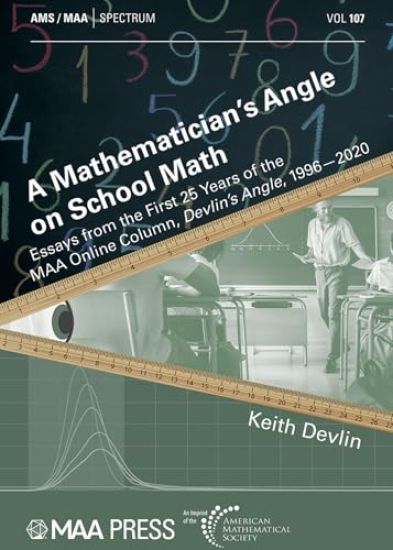
A Mathematician's Angle on School Math

A Mathematician's Angle on School Math

Keith Devlin

AMERICAN MATHEMATICAL SOCIETY
2025
nidottu
First published in January 1996, Devlin's Angle is a popular online monthly feature on the MAA Math Values website. In this book, Keith Devlin has celebrated the first quarter century of the MAA's web presence by curating a collection of 46 of the 288 posts from that period, chosen for their relevance to K-12 mathematics teaching. The posts are organized into nine themed chapters, each beginning with its own introduction regarding the history and nature of the posts presented. Topics covered include the teaching of multiplication, teaching for conceptual understanding, and a discussion of mathematical creativity. The book closes with a final chapter touching on teaching at the college level. Due to the nature of mathematics, many of the columns contain observations that remain relevant in the present day. Devlin's lively, conversational style is encapsulated in this informative and thought-provoking collection. It will appeal to mathematics teachers at all levels, as well as anyone interested in mathematics education at the K-12 level.
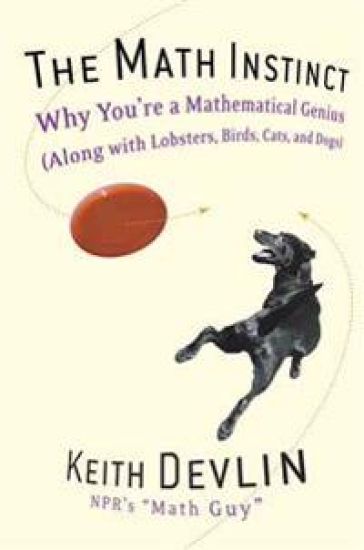
The Math Instinct

The Math Instinct

Keith Devlin

Thunder's Mouth Press
2006
pokkari
There are two kinds of math: the hard kind and the easy kind. The easy kind, practiced by ants, shrimp, Welsh Corgis and us is innate. But what innate calculating skills do we humans have? Leaving aside built-in mathematics, such as the visual system, ordinary people do just fine when faced with mathematical tasks in the course of the day. Yet when they are confronted with the same tasks presented as "math," their accuracy often drops. If we have innate mathematical ability, why do we have to teach math and why do most of us find it so hard to learn? Are there tricks or strategies that the ordinary person can do to improve mathematical ability? Can we improve our math skills by learning from dogs, cats, and other creatures that "do math?" The answer to each of these questions is a qualified yes. All these examples of animal math suggest that if we want to do better in the formal kind of math, we should see how it arises from natural mathematics. From NPR's "Math Guy," The Math Instinct is a real celebration of innate math sense and will provide even the most number-phobic readers with confidence in their own mathematical abilities.
Mathematics Education for a New Era
Stanford mathematician and NPR Math Guy Keith Devlin explains why, fun aside, video games are the ideal medium to teach middle-school math. Aimed primarily at teachers and education researchers, but also of interest to game developers who want to produce videogames for mathematics education, Mathematics Education for a New Era: Video Games as a Medium for Learning describes exactly what is involved in designing and producing successful math educational videogames that foster the innovative mathematical thinking skills necessary for success in a global economy.Read the author's monthly MAA column Devlin's Angle
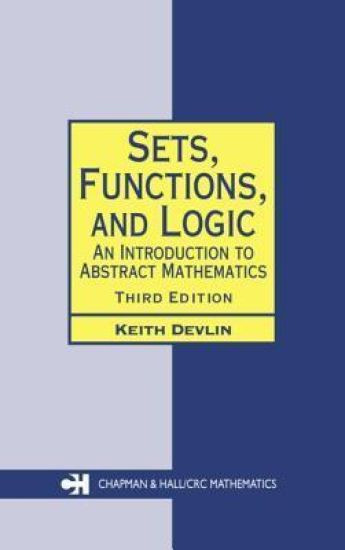
Sets, Functions, and Logic

Sets, Functions, and Logic

Keith Devlin

Chapman Hall/CRC
2003
nidottu
Keith Devlin. You know him. You've read his columns in MAA Online, you've heard him on the radio, and you've seen his popular mathematics books. In between all those activities and his own research, he's been hard at work revising Sets, Functions and Logic, his standard-setting text that has smoothed the road to pure mathematics for legions of undergraduate students. Now in its third edition, Devlin has fully reworked the book to reflect a new generation. The narrative is more lively and less textbook-like. Remarks and asides link the topics presented to the real world of students' experience. The chapter on complex numbers and the discussion of formal symbolic logic are gone in favor of more exercises, and a new introductory chapter on the nature of mathematics--one that motivates readers and sets the stage for the challenges that lie ahead. Students crossing the bridge from calculus to higher mathematics need and deserve all the help they can get. Sets, Functions, and Logic, Third Edition is an affordable little book that all of your transition-course students not only can afford, but will actually read…and enjoy…and learn from. About the Author Dr. Keith Devlin is Executive Director of Stanford University's Center for the Study of Language and Information and a Consulting Professor of Mathematics at Stanford. He has written 23 books, one interactive book on CD-ROM, and over 70 published research articles. He is a Fellow of the American Association for the Advancement of Science, a World Economic Forum Fellow, and a former member of the Mathematical Sciences Education Board of the National Academy of Sciences,. Dr. Devlin is also one of the world's leading popularizers of mathematics. Known as "The Math Guy" on NPR's Weekend Edition, he is a frequent contributor to other local and national radio and TV shows in the US and Britain, writes a monthly column for the Web journal MAA Online, and regularly writes on mathematics and computers for the British newspaper The Guardian.