Kirjojen hintavertailu. Mukana 11 717 486 kirjaa ja 12 kauppaa.

Kirjahaku

Etsi kirjoja tekijän nimen, kirjan nimen tai ISBN:n perusteella.

12 kirjaa tekijältä Keith Gilyard

True to the Language Game

True to the Language Game

Keith Gilyard

Routledge
2011
sidottu
In True to the Language Game, Keith Gilyard, one of the major African American figures to emerge in language and cultural studies, makes his most seminal work available in one volume. This collection of new and previously published essays contains Gilyard’s most relevant scholarly contributions to deliberations about linguistic diversity, cultural identity, critical literacy, writing instruction, literary texts, and popular culture. The volume also features contemporary treatises on such timely topics as "students’ right to their own language," code-switching pedagogy, and political discourse surrounding the rise of Barack Obama. Gilyard weaves together serious analysis, theoretical work, policy discussions, and personal reflections on the interplay of language, literacy, and social justice to make True to the Language Game essential reading for students and scholars in rhetorical studies, composition studies, applied linguistics, and education.
True to the Language Game

True to the Language Game

Keith Gilyard

Routledge
2011
nidottu
In True to the Language Game, Keith Gilyard, one of the major African American figures to emerge in language and cultural studies, makes his most seminal work available in one volume. This collection of new and previously published essays contains Gilyard’s most relevant scholarly contributions to deliberations about linguistic diversity, cultural identity, critical literacy, writing instruction, literary texts, and popular culture. The volume also features contemporary treatises on such timely topics as "students’ right to their own language," code-switching pedagogy, and political discourse surrounding the rise of Barack Obama. Gilyard weaves together serious analysis, theoretical work, policy discussions, and personal reflections on the interplay of language, literacy, and social justice to make True to the Language Game essential reading for students and scholars in rhetorical studies, composition studies, applied linguistics, and education.
Composition and Cornel West

Composition and Cornel West

Keith Gilyard

Southern Illinois University Press
2008
nidottu
Composition and Cornel West: Notes toward a Deep Democracy identifies and explains key aspects of the work of Cornel West - the highly regarded scholar of religion, philosophy, and African American studies - as they relate to composition studies, focusing especially on three rhetorical strategies that West suggests we use in our questioning lives as scholars, teachers, students, and citizens.In this study, author Keith Gilyard examines the strategies of Socratic Commitment (a relentless examination of received wisdom), Prophetic Witness (an abiding concern with justice and the plight of the oppressed), and Tragicomic Hope (a keep-on-pushing sensibility reflective of the African American freedom struggle). Together, these rhetorical strategies comprise an updated form of cultural criticism that West calls prophetic pragmatism.This volume, which contains the only interview in which Cornel West directly addresses the field of composition, sketches the development of Cornel West's theories of philosophy, political science, religion, and cultural studies and restates the link between Deweyan notions of critical intelligence and the notion of critical literacy developed by Ann Berthoff, Ira Shor, and Henry Giroux. Gilyard provides examples from the classroom to illustrate the possibilities of Socratic Commitment as part of composition pedagogy, shows the alignment of Prophetic Witness with traditional aims of critical composition, and in his chapter on Tragicomic Hope, addresses African American expressive culture with an emphasis on music and artists such as Curtis Mayfield, Marvin Gaye, Aretha Franklin, and Kanye West.This is the first book to comprehensively connect the ideas of one of America's premier scholars of religion, philosophy, and African American studies with composition theory and pedagogy. ""Composition and Cornel West"" will be valuable to scholars, teachers, and students interested in race, class, critical literacy, and the teaching of writing.
Voices of the Self

Voices of the Self

Keith Gilyard

Wayne State University Press
1991
nidottu
A unique blend of memoir and scholarship, Keith Gilyard's Voices of the Self is a penetrating analysis of the linguistic and cultural "collision" experienced by African-American students in the public education system. Gilyard examines black students "negotiate" their way through school and discusses the tension between the use of Black English and Standard English, underlining how that tension is representative of the deeper conflict that exists between black culture and white expectations. Vivid descriptions-often humorous, sometimes disturbing, always moving-of Gilyard's own childhood experiences in school and society are interlaced with chapters of solid sociolinguistic scholarship.Encompassing the perspectives of both the "street" and the "academy," Voices of the Self presents an eloquent argument for cultural and linguistic pluralism in American public schools.
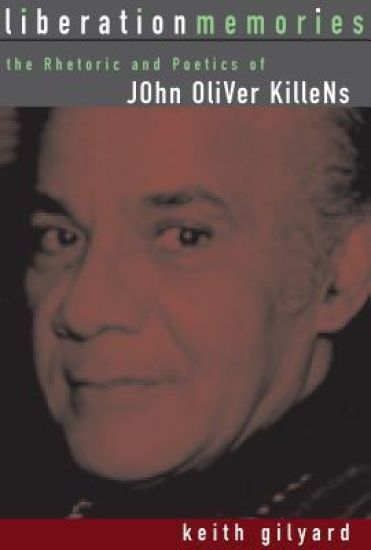
Liberation Memories

Liberation Memories

Keith Gilyard

Wayne State University Press
2003
sidottu
No serious history of the development of the African American novel from the 1950s onward can be written without reference to John Oliver Killens. A two-time nominee for the Pulitzer Prize and founding chairman of the legendary Harlem Writers Guild, Killens was regarded by many as a spiritual father who inspired a generation of African American novelists with his politically charged works. And yet today he rarely receives proper critical attention. Seeking to strengthen our understanding of this important literary figure, Keith Gilyard departs from standard critical frameworks to reveal Killens's novels as artful renderings of rich African American rhetorical forms and verbal traditions. Gilyard finds that many critics, adhering to ideals of art for art's sake or narrative conciseness, are ill-equipped to appreciate the many ways in which Killens's fiction succeeds. Rejecting the ""pure art"" position, Killens sought to articulate Black heroism particularly within a family or community context, offering a set of values he deemed liberatory. He focused on rendering noble and polemical characters, and his work represents a distinguished fusion of sociopolitical persuasion (rhetoric) and literary artifact (poetics). To help illuminate such novels as Youngblood (1954), And Then We Heard the Thunder (1962), and The Cotillion (1971), Gilyard examines Killens's work as an essayist and cultural organizer, highlighting his activism. His life and literary production can be partly characterized, Gilyard suggests, by the African American jeremiad - a major rhetorical form in the Black intellectual tradition expressing faith that America's destiny is to become an authentic, pluralistic democracy.
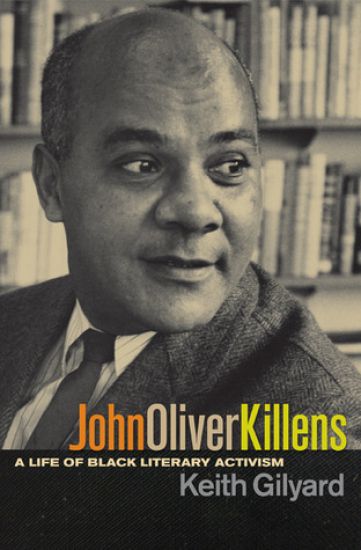
John Oliver Killens

John Oliver Killens

Keith Gilyard

University of Georgia Press
2010
sidottu
John Oliver Killens’s politically charged novels And Then We Heard the Thunder and The Cotillion; or One Good Bull Is Half the Herd, were nominated for the Pulitzer Prize. His works of fiction and nonfiction, the most famous of which is his novel Youngblood, have been translated into more than a dozen languages. An influential novelist, essayist, screenwriter, and teacher, he was the founding chair of the Harlem Writers Guild and mentored a generation of black writers at Fisk, Howard, Columbia, and elsewhere. Killens is recognized as the spiritual father of the Black Arts Movement. In this first major biography of Killens, Keith Gilyard examines the life and career of the man who was perhaps the premier African American writer-activist from the 1950s to the 1980s.Gilyard extends his focus to the broad boundaries of Killens’s times and literary achievement—from the Old Left to the Black Arts Movement and beyond. Figuring prominently in these pages are the many important African American artists and political figures connected to the author from the 1930s to the 1980s—W. E. B. Du Bois, Paul Robeson, Alphaeus Hunton, Langston Hughes, James Baldwin, Martin Luther King Jr., Malcolm X, Harry Belafonte, and Maya Angelou, among others.
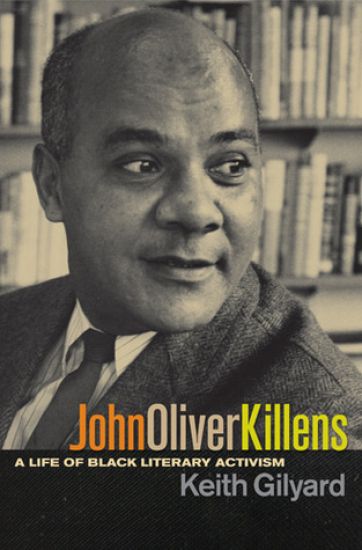
John Oliver Killens

John Oliver Killens

Keith Gilyard

University of Georgia Press
2011
pokkari
John Oliver Killens’s politically charged novels And Then We Heard the Thunder and The Cotillion; or One Good Bull Is Half the Herd, were nominated for the Pulitzer Prize. His works of fiction and nonfiction, the most famous of which is his novel Youngblood, have been translated into more than a dozen languages. An influential novelist, essayist, screenwriter, and teacher, he was the founding chair of the Harlem Writers Guild and mentored a generation of black writers at Fisk, Howard, Columbia, and elsewhere. Killens is recognized as the spiritual father of the Black Arts Movement. In this first major biography of Killens, Keith Gilyard examines the life and career of the man who was perhaps the premier African American writer-activist from the 1950s to the 1980s.Gilyard extends his focus to the broad boundaries of Killens’s times and literary achievement—from the Old Left to the Black Arts Movement and beyond. Figuring prominently in these pages are the many important African American artists and political figures connected to the author from the 1930s to the 1980s—W. E. B. Du Bois, Paul Robeson, Alphaeus Hunton, Langston Hughes, James Baldwin, Martin Luther King Jr., Malcolm X, Harry Belafonte, and Maya Angelou, among others.
Louise Thompson Patterson

Louise Thompson Patterson

Keith Gilyard

Duke University Press
2017
sidottu
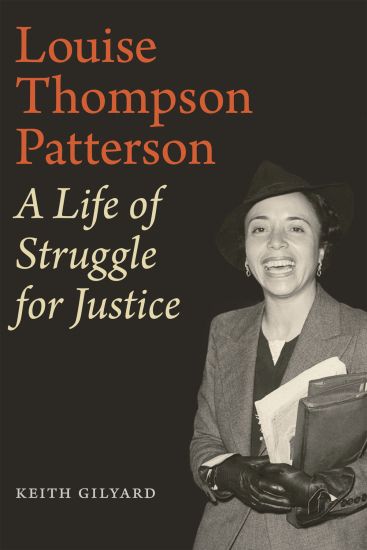
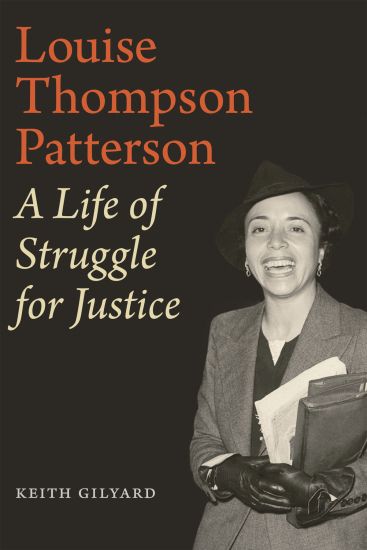
Born in 1901, Louise Thompson Patterson was a leading and transformative figure in radical African American politics. Throughout most of the twentieth century she embodied a dedicated resistance to racial, economic, and gender exploitation. In this, the first biography of Patterson, Keith Gilyard tells her compelling story, from her childhood on the West Coast, where she suffered isolation and persecution, to her participation in the Harlem Renaissance and beyond. In the 1930s and 1940s she became central, along with Paul Robeson, to the labor movement, and later, in the 1950s, she steered proto-black-feminist activities. Patterson was also crucial to the efforts in the 1970s to free political prisoners, most notably Angela Davis. In the 1980s and 1990s she continued to work as a progressive activist and public intellectual. To read her story is to witness the courage, sacrifice, vision, and discipline of someone who spent decades working to achieve justice and liberation for all.
Louise Thompson Patterson

Louise Thompson Patterson

Keith Gilyard

Duke University Press
2017
pokkari
Born in 1901, Louise Thompson Patterson was a leading and transformative figure in radical African American politics. Throughout most of the twentieth century she embodied a dedicated resistance to racial, economic, and gender exploitation. In this, the first biography of Patterson, Keith Gilyard tells her compelling story, from her childhood on the West Coast, where she suffered isolation and persecution, to her participation in the Harlem Renaissance and beyond. In the 1930s and 1940s she became central, along with Paul Robeson, to the labor movement, and later, in the 1950s, she steered proto-black-feminist activities. Patterson was also crucial to the efforts in the 1970s to free political prisoners, most notably Angela Davis. In the 1980s and 1990s she continued to work as a progressive activist and public intellectual. To read her story is to witness the courage, sacrifice, vision, and discipline of someone who spent decades working to achieve justice and liberation for all.
Let's Flip the Script

Let's Flip the Script

Keith Gilyard

Wayne State University Press
1996
nidottu
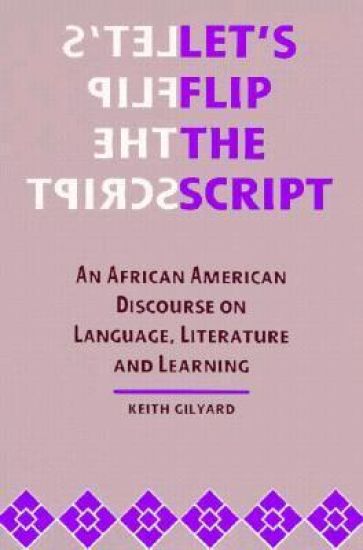
Building on themes presented in "Voices of the Self", Keith Gilyard examines connections among language, politics, expressive culture and pedagogy, with reference to American African literature. Areas such as diversity, dialect and learning are discussed.