Kirjojen hintavertailu. Mukana 11 244 527 kirjaa ja 12 kauppaa.

Kirjahaku

Etsi kirjoja tekijän nimen, kirjan nimen tai ISBN:n perusteella.

14 kirjaa tekijältä Keith Hartley

NATO Arms Co-operation

NATO Arms Co-operation

Keith Hartley

Routledge
2021
sidottu
This book, first published in 1983, examines weapons standardisation as one aspect of NATO’s efficiency. It analyses the economic arguments for weapons standardisation, the limitations of the analysis and the available evidence. A political economy or public choice approach is used, with its emphasis on policy developments in the political market place of voters, political parties, bureaucracies and interest groups. These agents are central to understanding the function of weapons procurement policy within the Alliance.
NATO Arms Co-operation

NATO Arms Co-operation

Keith Hartley

TAYLOR FRANCIS LTD
2022
nidottu
This book, first published in 1983, examines weapons standardisation as one aspect of NATO’s efficiency. It analyses the economic arguments for weapons standardisation, the limitations of the analysis and the available evidence. A political economy or public choice approach is used, with its emphasis on policy developments in the political market place of voters, political parties, bureaucracies and interest groups. These agents are central to understanding the function of weapons procurement policy within the Alliance.
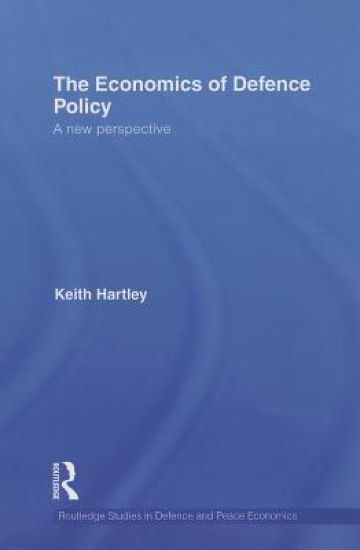
The Economics of Defence Policy

The Economics of Defence Policy

Keith Hartley

Routledge
2010
sidottu
Since the end of the Cold War, the world has been faced with new regional conflicts, terrorism and threats from the proliferation of weapons of mass destruction and from rogue states. The world remains uncertain, unstable and insecure with continued threats to global peace and security. The world economic crisis has also threatened government spending with defence as a candidate for spending cuts. Choices have to be made about the size of a nation’s defence budget, its allocation between nuclear and conventional forces, between equipment and personnel and between air, land and sea forces. Major reductions in defence spending and the challenge of maintaining security with increasingly limited resources will confront the defence budgets of all nations. This book identifies the typical questions raised by economists when studying defence policy, shows how simple economic analysis can be used to answer these questions and provides a critical evaluation of defence policy. Controversial and illuminating, this pioneering work subjects the myths, emotion and special pleading which dominate defence debates to the close scrutiny of economic analysis and critical appraisal. It identifies the range of choices facing all governments with examples taken from the UK, Europe and the USA.This valuable contribution should be of interest to postgraduates and researchers focusing on defence economics, as well as those working in the military or defence ministries.
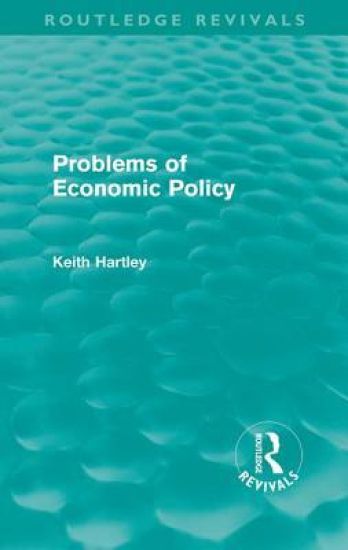
Problems of Economic Policy (Routledge Revivals)
First published in 1977, this is an applied economics text, in which the basic theory of any introductory economics couurse is applied to a whole range of UK macro- and micro-economic policy issues. The book is designed specifically for first and second year university students, with the aim of demonstrating the relevance of theory to policy, how theory can be applied to policy problems and, in the process, to improve their understanding of the theory itself.
Problems of Economic Policy (Routledge Revivals)
First published in 1977, this is an applied economics text, in which the basic theory of any introductory economics couurse is applied to a whole range of UK macro- and micro-economic policy issues. The book is designed specifically for first and second year university students, with the aim of demonstrating the relevance of theory to policy, how theory can be applied to policy problems and, in the process, to improve their understanding of the theory itself.
The Economics of Defence Policy

The Economics of Defence Policy

Keith Hartley

Routledge
2013
nidottu
Since the end of the Cold War, the world has been faced with new regional conflicts, terrorism and threats from the proliferation of weapons of mass destruction and from rogue states. The world remains uncertain, unstable and insecure with continued threats to global peace and security. The world economic crisis has also threatened government spending with defence as a candidate for spending cuts. Choices have to be made about the size of a nation’s defence budget, its allocation between nuclear and conventional forces, between equipment and personnel and between air, land and sea forces. Major reductions in defence spending and the challenge of maintaining security with increasingly limited resources will confront the defence budgets of all nations. This book identifies the typical questions raised by economists when studying defence policy, shows how simple economic analysis can be used to answer these questions and provides a critical evaluation of defence policy. Controversial and illuminating, this pioneering work subjects the myths, emotion and special pleading which dominate defence debates to the close scrutiny of economic analysis and critical appraisal. It identifies the range of choices facing all governments with examples taken from the UK, Europe and the USA.This valuable contribution should be of interest to postgraduates and researchers focusing on defence economics, as well as those working in the military or defence ministries.
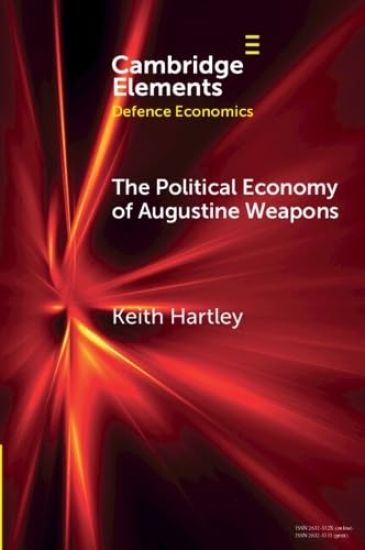
The Political Economy of Augustine Weapons

The Political Economy of Augustine Weapons

Keith Hartley

Cambridge University Press
2025
pokkari
This Element presents an economic analysis of Augustine's Laws and Weapons Systems. It explores and evaluates their economic content and subjects them to critical analysis. The Element is both theoretical and empirical and the empirical work uses an original UK data set on military aircraft over the period 1934 to 1964. The period embraces major technical changes involving war and peace and the shift to jet powered aircraft.
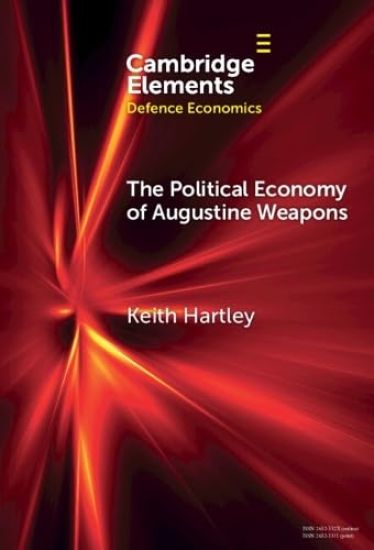
The Political Economy of Augustine Weapons

The Political Economy of Augustine Weapons

Keith Hartley

Cambridge University Press
2025
sidottu
This Element presents an economic analysis of Augustine's Laws and Weapons Systems. It explores and evaluates their economic content and subjects them to critical analysis. The Element is both theoretical and empirical and the empirical work uses an original UK data set on military aircraft over the period 1934 to 1964. The period embraces major technical changes involving war and peace and the shift to jet powered aircraft.
Defence Economics

Defence Economics

Keith Hartley

Cambridge University Press
2020
pokkari
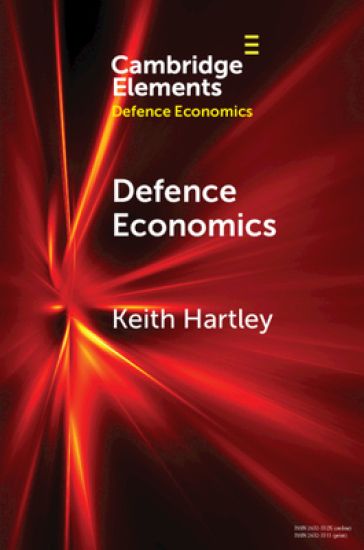
This Element introduces students, policy-makers, politicians, governments and business-people to this new discipline within economics. It presents the recent history of the subject and its range of coverage. Traditional topics covered include models of arms races, alliances, procurement and contracting, as well as personnel policies, industrial policies and disarmament. Newer areas covered include terrorism and the economics of war and conflict. A non-technical approach is used and the material will be accessible to both economists and general readers.
The Political Economy of Aerospace Industries

The Political Economy of Aerospace Industries

Keith Hartley

Edward Elgar Publishing Ltd
2014
sidottu
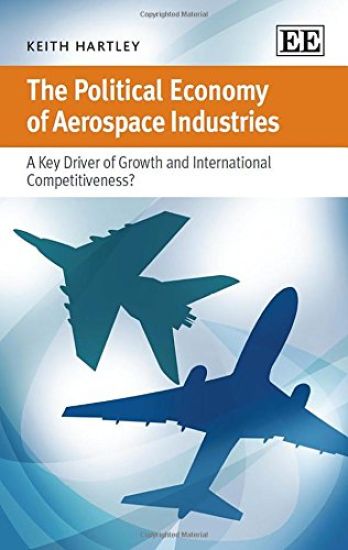
Aerospace is often viewed as a key high-technology industry, important for a nation's future growth prospects and international competitiveness. This book presents an economic and political analysis of the world's aerospace industries and their performance. Keith Hartley uses examples from most of the world's significant aerospace industries, especially across the USA, UK and Europe. The emphasis on political economy reflects the continuing influence of government on the fortunes of the industry. He presents chapters on aerospace markets, technical progress, industry structure, conduct and performance, a case study of BAE Systems, public choice analysis, the case for subsidies, procuring military aircraft, international collaboration, as well as an insight into future prospects. He concludes that the future aerospace firm will be radically different, but governments will continue to dominate the industry.The Political Economy of Aerospace Industries will appeal to undergraduate and graduate students in industrial and defense economics, public choice and policy courses. It will also be of interest to researchers, policy-makers and those involved in the industry in various different capacities.
I Want to Be A Machine

I Want to Be A Machine

Keith Hartley

National Galleries of Scotland
2018
nidottu
Through the early works of Andy Warhol and Eduardo Paolozzi, this book traces the development of their deep obsession with the machine. Looking at the way that both artists began in the late 1940s and the years following, the book illustrates their fascination with popular culture and the methods that they used in creating their art. Common to all their methods of making works was their hand-made quality. Only in the 1960s did the artists make the step to mechanical means to create their own artworks, resulting in the iconic images that are integral to our culture. As Warhol said of himself, there is only surface, with nothing underneath.
The Economics of Arms

The Economics of Arms

Keith Hartley

Agenda Publishing
2017
nidottu
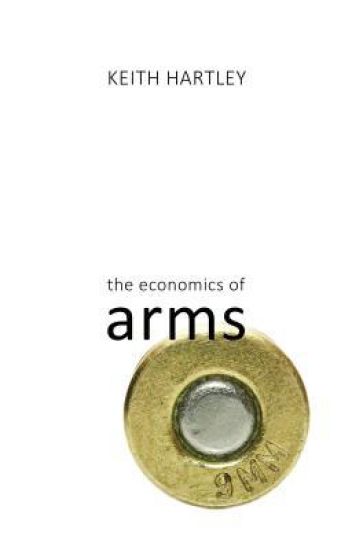
It is estimated that today some 2.7% of world GDP ($1.5 trillion) is spent on arms. In 2014 Lockheed Martin, the US defence contractor, had revenues of $45 billion ? the equivalent of the GDP of Tunisia. This book explores the business behind these breathtaking figures and explains how the arms industry makes its money. The book begins by defining the industry, explaining why the sector is important, outlining its prime contractors and key supply chains. Its cost categories (from R&D to maintenance), the role of technical innovation, and the sector’s dependence on the monopsony buying power of Government, are all examined. The structure-conduct and performance model is used to show the workings of the arms market and its various entry and exit conditions, and the sector’s performance is analysed through various indicators including exports, development time scales, cost overruns and profitability. The complex choice problems of domestic procurement are considered alongside sales to foreign governments and the opportunities that may present for bribery and corruption. The Military-Industrial-Political-Complex (MIPC) is unpacked and the behaviour of its major agents ? national defence agencies, the armed forces, producer groups, political agents (voters, political parties and budget-maximising bureaucracies) ? is scrutinised, both in times of conflict (expansion) and peace (contraction). The book concludes by considering future trends, such as whether arms industries are better under state or private ownership, and how they can meet the challenge of new threats in different forms. The discussion throughout is anchored to case studies from all parts of the world, including Brazil, Korea, Japan, Russia as well as UK, US and Europe. As an authoritative non-technical introduction to the economics of arms industries, it is suitable for students of business studies, politics, international relations, political economy, strategic and defence studies as well as for courses on microeconomics and industrial economics. As a masterly summation from one of the world’s leading defence economists, it will also be required reading for staff in defence ministries, procurement agencies, the armed forces and strategic studies think-tanks throughout the world.
NATO at 70

NATO at 70

Keith Hartley

Springer Nature Switzerland AG
2020
sidottu
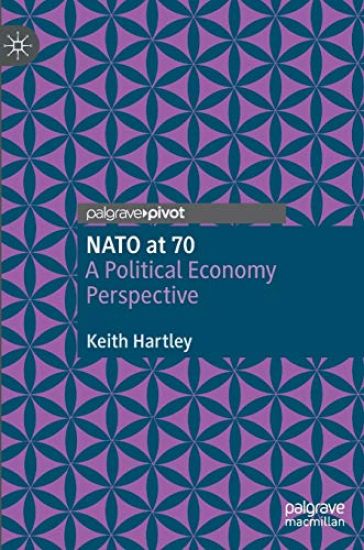
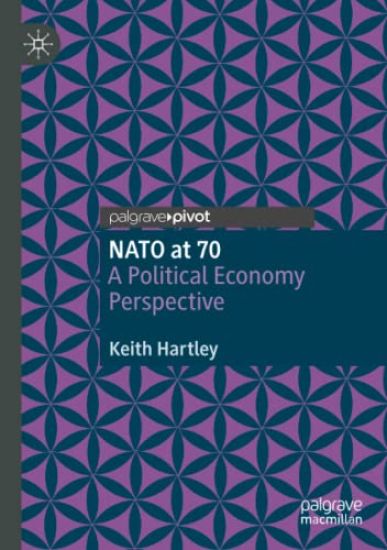
NATO is facing a unique crisis questioning its existence and future. This book provides a detailed in-depth economic and critical analysis of the issues. It considers whether NATO has a future and what it might look like 70 years ahead. NATO is undergoing a process of dramatic change, reorganising its functions, funding and strategic responsibilities to address growing regional and global threats. This book not only explores the contentiousness of economic and financial burden-sharing and the associated political and diplomatic stresses involved in the pursuit of common strategic objectives, but contributes to a further debate concerning the expanded scope and roles of the Alliance in the 21st century. This book combines NATO’s political controversies, complexities and conflicts with a treatment of the underlying theoretical economic frameworks. This book is essential reading for students in military staff colleges, university International Relations and Strategic Affairs Departments, but also to those working in government defence establishments, independent think tanks and political and economic institutions, generally.
NATO at 70

NATO at 70

Keith Hartley

Springer Nature Switzerland AG
2021
nidottu
NATO is facing a unique crisis questioning its existence and future. This book provides a detailed in-depth economic and critical analysis of the issues. It considers whether NATO has a future and what it might look like 70 years ahead. NATO is undergoing a process of dramatic change, reorganising its functions, funding and strategic responsibilities to address growing regional and global threats. This book not only explores the contentiousness of economic and financial burden-sharing and the associated political and diplomatic stresses involved in the pursuit of common strategic objectives, but contributes to a further debate concerning the expanded scope and roles of the Alliance in the 21st century. This book combines NATO’s political controversies, complexities and conflicts with a treatment of the underlying theoretical economic frameworks. This book is essential reading for students in military staff colleges, university International Relations and Strategic Affairs Departments, but also to those working in government defence establishments, independent think tanks and political and economic institutions, generally.