Kirjojen hintavertailu. Mukana 11 717 486 kirjaa ja 12 kauppaa.

Kirjahaku

Etsi kirjoja tekijän nimen, kirjan nimen tai ISBN:n perusteella.

4 kirjaa tekijältä Keith M. Wilson

The Policy of the Entente

The Policy of the Entente

Keith M. Wilson

Cambridge University Press
2009
pokkari
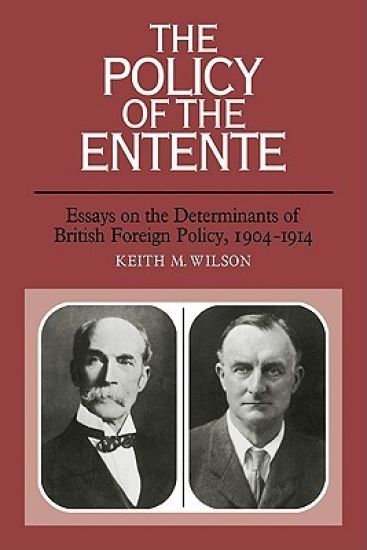
This collection of essays makes a major contribution to the growing debate on British foreign policy before the First World War, and mounts a sustained critique of the received interpretation that invites comparison with the work of Fritz Fischer on the foreign policy of Imperial Germany. The Policy of the Entente presents a realistic assessment of British priorities in the years before 1914, and considers the fundamental and conflicting pressures that determined the formulation of foreign policy. The author concludes that British policy, far from being increasingly Eurocentric, was emphatically imperial: indeed many of the difficulties faced by Britain's rulers stemmed from their inability to live up to this Imperial self-image.
Problems and Possibilities

Problems and Possibilities

Keith M. Wilson

NPI Media Group
2003
nidottu
This is an analysis of the problems faced by statesmen from the Napoleonic wars to the Treaty of Versailles in 1919, including Castlereagh, Palmerston, Alexander I, Metternich, Bismarck, Poincare, and Abdul Hamid II.
The International Impact of the Boer War

The International Impact of the Boer War

Keith M. Wilson

Acumen Publishing Ltd
2001
sidottu
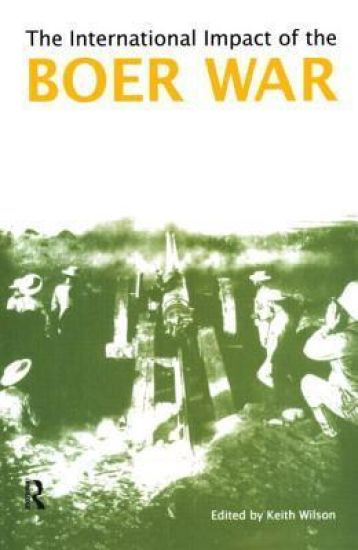
Although much has been written about the conduct of the war in South Africa, very little has been written about how it was regarded on the world stage by powers both great and small. This collection of specially commissioned essays seeks for the first time to put the Boer War (1899-1902) in its international context. Each of the core chapters focuses on the perspective of one country (France, Germany, Austria-Hungary, Italy, The Netherlands, Portugal, Russia, and the United States) and assesses the extent to which each national government tried to capitalize on Britain's embarrassment and distraction while often entangled in imperialist ventures of their own. The anglophobia of many of the nations' press, the activities of pro-Boer organizations, and the shaping of public and parliamentary opinion are examined alongside the real politics and diplomatic considerations that took precedence. In addition, there are summation chapters that examine both the origins of the war and its legacy for Britain's expansionist ambitions. Together these essays present the latest findings on a watershed in international relations that heralded substantive changes of attitude and policy on the part of national governments towards their dependencies and had far-reaching consequences for alliance systems and the international balance of power at the start of the twentieth century.
The International Impact of the Boer War

The International Impact of the Boer War

Keith M. Wilson

Acumen Publishing Ltd
2001
nidottu
Although much has been written about the conduct of the war in South Africa, very little has been written about how it was regarded on the world stage by powers both great and small. This collection of specially commissioned essays seeks for the first time to put the Boer War (1899-1902) in its international context. Each of the core chapters focuses on the perspective of one country (France, Germany, Austria-Hungary, Italy, The Netherlands, Portugal, Russia, and the United States) and assesses the extent to which each national government tried to capitalize on Britain's embarrassment and distraction while often entangled in imperialist ventures of their own. The anglophobia of many of the nations' press, the activities of pro-Boer organizations, and the shaping of public and parliamentary opinion are examined alongside the real politics and diplomatic considerations that took precedence. In addition, there are summation chapters that examine both the origins of the war and its legacy for Britain's expansionist ambitions. Together these essays present the latest findings on a watershed in international relations that heralded substantive changes of attitude and policy on the part of national governments towards their dependencies and had far-reaching consequences for alliance systems and the international balance of power at the start of the twentieth century.