Kirjojen hintavertailu. Mukana 12 016 292 kirjaa ja 12 kauppaa.

Kirjahaku

Etsi kirjoja tekijän nimen, kirjan nimen tai ISBN:n perusteella.

4 kirjaa tekijältä Keith Negus

Music Genres and Corporate Cultures
Music Genres and Corporate Cultures explores the seemingly haphazard workings of the music industry, tracing the uneasy relationship between economics and culture; `entertainment corporations' and the artists they sign. Keith Negus examines the contrasting strategies of major labels like Sony and Polygram in managing different genres, artists and staff. How do takeovers affect the treatment of artists? Why has Polygram been perceived as too European to attract US artists? And how did Warner's wooden floors help them sign Green Day? Through in-depth case studies of three major genres; rap, country, and salsa, Negus explores the way in which the music industry recognises and rewards certain sounds, and how this influences both the creativity of musicians, and their audiences. He examines the tension between raps public image as the spontaneous `music of the streets' and the practicalities of the market, and asks why country labels and radio stations promote top-selling acts like Garth Brooks over hard-to-classify artists like Mary Chapin-Carpenter, and how the lack of soundscan systems in Puerto Rican record shops affects salsa music's position on the US Billboard chart. Drawing on over seventy interviews with music industry personnel in Britain and the United States, Music Genres and Corporate Cultures shows how the creation, circulation and consumption of popular music is shaped by record companies and corporate business styles while stressing that music production takes within a broader culture, not totally within the control of large corporations.
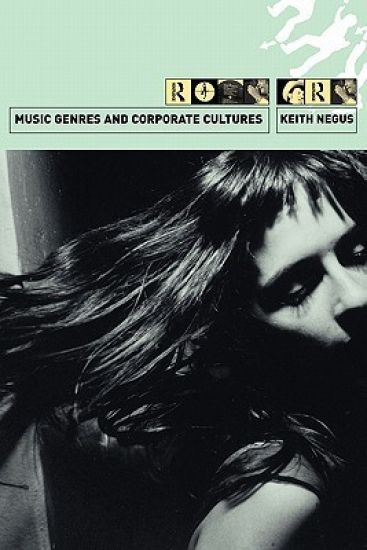
Music Genres and Corporate Cultures
Music Genres and Corporate Cultures explores the seemingly haphazard workings of the music industry, tracing the uneasy relationship between economics and culture; `entertainment corporations' and the artists they sign. Keith Negus examines the contrasting strategies of major labels like Sony and Polygram in managing different genres, artists and staff. How do takeovers affect the treatment of artists? Why has Polygram been perceived as too European to attract US artists? And how did Warner's wooden floors help them sign Green Day? Through in-depth case studies of three major genres; rap, country, and salsa, Negus explores the way in which the music industry recognises and rewards certain sounds, and how this influences both the creativity of musicians, and their audiences. He examines the tension between raps public image as the spontaneous `music of the streets' and the practicalities of the market, and asks why country labels and radio stations promote top-selling acts like Garth Brooks over hard-to-classify artists like Mary Chapin-Carpenter, and how the lack of soundscan systems in Puerto Rican record shops affects salsa music's position on the US Billboard chart. Drawing on over seventy interviews with music industry personnel in Britain and the United States, Music Genres and Corporate Cultures shows how the creation, circulation and consumption of popular music is shaped by record companies and corporate business styles while stressing that music production takes within a broader culture, not totally within the control of large corporations.

Popular Music in Theory

Popular Music in Theory

Keith Negus

JOHN WILEY AND SONS LTD
1996
nidottu
This is a critical introduction to the key theoretical issues which arise in the study of contemporary popular music. The book is organized in a way that shows how popular music is created across a series of relationships that link together industry and audiences, producers and consumers.
Bob Dylan

Bob Dylan

Keith Negus

Equinox Publishing Ltd
2008
nidottu
"Bob Dylan" provides a short introduction to the music of Bob Dylan including an examination of the impact of his work over time and key critical responses. This book starts by locating Dylan's work within a much broader context of the history of the American popular song and its various antecedents, examining how his music draws on a rich heritage of folk, blues, country, r'n'b as well as ballads, standards, nursery rhymes and pop tunes. Focusing on a selection of songs, it examines how his use of words, voice, instruments, melody and timbre, can be understood within the context of various traditions.Much of the writing about Bob Dylan tends to privilege a few recordings, and a limited range of recurring stylistic themes, placing considerable emphasis on Dylan's early career as a 'protest' singer, and then his surrealistic, stream of consciousness mid-1960s music. Yet, the vast majority of Dylan's musical output has been somewhat less radical (but not necessarily less imaginative) and concerned with questions of romantic desire, lust and loss.Negus shows how these thematic concerns are frequently woven into a narrative style that draws from a range of storytelling traditions as diverse as broadside ballads, modern novels and Hollywood cinema. Negus then considers Bob Dylan's enduring impact on new generations of artists in various musical traditions and different parts of the world as well as the influences upon Dylan's changing style and performing identity, from the turn to electric guitars in the 1960s, to the embracing of Christianity and gospel influences in the late 1970s, and increasing explicit use of folk, ballad, blues and country styles in his later work. In assessing some of the key critical responses to Dylan, and in considering his canonisation within a specific popular music tradition, Negus finally asks how claims for Bob Dylan's genius might be assessed. Why is Dylan's work accorded so much value within the popular music canon, and is this justified?