Kirjojen hintavertailu. Mukana 11 342 296 kirjaa ja 12 kauppaa.

Kirjahaku

Etsi kirjoja tekijän nimen, kirjan nimen tai ISBN:n perusteella.

8 kirjaa tekijältä Keith Reader

Robert Bresson

Robert Bresson

Keith Reader

Manchester University Press
2000
nidottu
This book provides a comprehensive introduction to the work of Robert Bresson, one of the most respected and acclaimed directors in the history of cinema.. The first monograph on his work to appear in English for many years dealing not only with his thirteen feature-length films but also his little-seen early short Affaires publiques and his short treatise Notes on cinematography.. The films are considered in chronological order, using a perspective that draws variously on spectator theory, Catholic mysticism, gender theory and Lacanian psychoanalysis.. The major critical responses to his work, from the adulatory to the dismissive, are summarized and analyzed.. The work includes a full filmography and a critical bibliography.
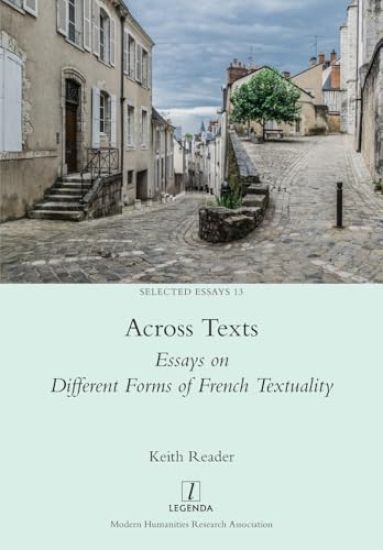
Across Texts

Across Texts

Keith Reader

Legenda
2021
sidottu
The essays grouped together here reflect a career-long preoccupation with aspects of modern French culture. These range from the canonical (no French or indeed European film-maker is more universally admired than Renoir; few screen actresses have aroused such strong feelings as Arletty), by way of the ascetically philosophical (whereof it would be difficult to find a more striking example than Simone Weil) to the basely if not gluttonously material (the regional cooking of Lyon). The fait divers - the Papin sisters' crime - rubs shoulders here with the ideological spat - the querelle between Badiou and Marty - in a collection whose unifying theme, paradoxically, may be said to be its eclecticism.Keith Reader was an undergraduate student at Cambridge and was awarded his DPhil at Oxford, for a thesis on Stendhal. He spent three-and-a-half years in France, deepening his knowledge of the country and its culture. There followed a long period in post at Kingston Polytechnic-then-University, where he had the opportunity to develop pioneering courses in theory and cinema. Professorial appointments followed at the universities of Newcastle and Glasgow. Keith Reader is currently Visiting Emeritus Professor at the University of London Institute in Paris.
Across Texts

Across Texts

Keith Reader

Legenda
2024
pokkari
The essays grouped together here reflect a career-long preoccupation with aspects of modern French culture. These range from the canonical (no French or indeed European film-maker is more universally admired than Renoir; few screen actresses have aroused such strong feelings as Arletty), by way of the ascetically philosophical (whereof it would be difficult to find a more striking example than Simone Weil) to the basely if not gluttonously material (the regional cooking of Lyon). The fait divers - the Papin sisters' crime - rubs shoulders here with the ideological spat - the querelle between Badiou and Marty - in a collection whose unifying theme, paradoxically, may be said to be its eclecticism.Keith Reader was an undergraduate student at Cambridge and was awarded his DPhil at Oxford, for a thesis on Stendhal. He spent three-and-a-half years in France, deepening his knowledge of the country and its culture. There followed a long period in post at Kingston Polytechnic-then-University, where he had the opportunity to develop pioneering courses in theory and cinema. Professorial appointments followed at the universities of Newcastle and Glasgow. Keith Reader is currently Visiting Emeritus Professor at the University of London Institute in Paris.
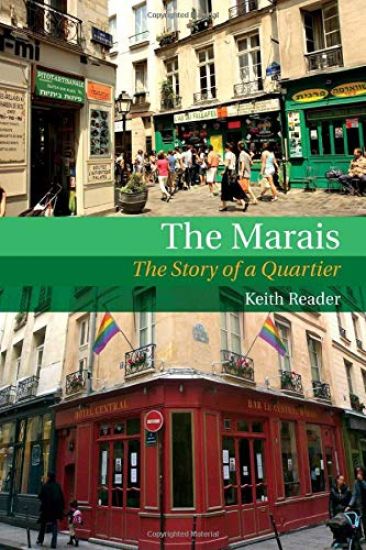
The Marais

The Marais

Keith Reader

Liverpool University Press
2020
sidottu
A cultural history of one of Paris’s most fascinating and variegated areas, whose history can be summarized as ‘from riches to rags and back again.’ The Marais was the beating heart of fashionable Paris from the Middle Ages through to the time of Louis XIV, when the court’s move to Versailles marked the start of a decline in its fortunes. Thereafter it became a working-class, largely Jewish area, sometimes described as a ‘ghetto’, and by the early twentieth century was in a parlous condition from which it was extricated by the Paris City Council and the 1960s restoration plan of André Malraux (which did not go without criticism and opposition). Its most recent avatar has been as the best-known gay quartier of the capital, though again this identity has not been a straightforward or always easily-accepted one. The stress throughout will be on representations – literary, cinematic, autobiographical, photographic and in graphic-novel form – as much as if not more than the unfolding of historical events.
The Marais

The Marais

Keith Reader

LIVERPOOL UNIVERSITY PRESS
2023
nidottu
A cultural history of one of Paris’s most fascinating and variegated areas, whose history can be summarized as ‘from riches to rags and back again.’ The Marais was the beating heart of fashionable Paris from the Middle Ages through to the time of Louis XIV, when the court’s move to Versailles marked the start of a decline in its fortunes. Thereafter it became a working-class, largely Jewish area, sometimes described as a ‘ghetto’, and by the early twentieth century was in a parlous condition from which it was extricated by the Paris City Council and the 1960s restoration plan of André Malraux (which did not go without criticism and opposition). Its most recent avatar has been as the best-known gay quartier of the capital, though again this identity has not been a straightforward or always easily-accepted one. The stress throughout will be on representations – literary, cinematic, autobiographical, photographic and in graphic-novel form – as much as if not more than the unfolding of historical events.
The Place de la Bastille

The Place de la Bastille

Keith Reader

Liverpool University Press
2011
sidottu
Epicentre of the Revolution of 1789, erstwhile bastion of the skilled working-class and centre of radical agitation, along with Pigalle and Montmartre a focus for popular and raffish night-life in the early twentieth century, the Bastille area of Eastern Paris (also known as the Faubourg Saint-Antoine) is now an ethnically and socially mixed quartier which still bears the traces of its previous avatars. In a fascinating tour, Keith Reader charts the history and cultural geography of this unique area of Paris, from the fortress and prison that gave the area its name to the building of the largest and costliest opera house in the world.
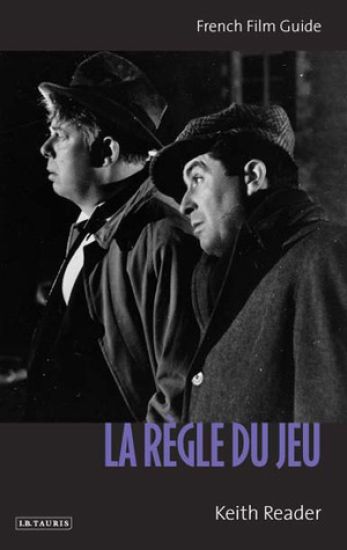
"La Regle Du Jeu"

"La Regle Du Jeu"

Keith Reader

I.B. Tauris
2010
nidottu
Of Jean Renoir's "La Regle du jeu" (1939), Richard Roud noted: 'if France were destroyed tomorrow and nothing remained but this film, the whole country and its civilization could be reconstructed from it'. This is an extravagant claim, but one that in the view of Keith Reader is justified. In this original, up-to-date, scrupulously documented book on one of the great films of world cinema, Reader focuses on "La Regle du jeu" in the context of both the time in which it was made and the currents of intertextuality by which it is traversed. He examines sequences from the film itself, its themes, reception and critical approaches and readings. He also explores its extraordinary subversive charge and its dynamic effect on subsequent generations of filmmakers, including Alain Resnais and Robert Altman. This is the essential companion to "La Regle du jeu", demonstrating as it does why this film remains so central to French cinema and to the history of French and indeed European culture.