Kirjojen hintavertailu. Mukana 11 244 527 kirjaa ja 12 kauppaa.

Kirjahaku

Etsi kirjoja tekijän nimen, kirjan nimen tai ISBN:n perusteella.

14 kirjaa tekijältä Keith Robbins

The World Since 1945

The World Since 1945

Keith Robbins

Oxford University Press
2002
nidottu
This text focuses on global political interaction and the tension between the world conceived as a unity and as a diversity. From this perspective, the author discusses the impulse towards globalization since World War II, the divisions in the Cold War, and the conflicts in the following decades.
The First World War

The First World War

Keith Robbins

Oxford University Press
2002
nidottu
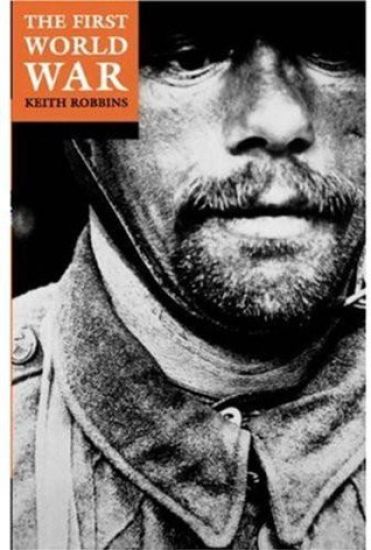
This text gives a clear chronological account of World War I and the campaigns on the Western and Eastern Fronts, and then moves on to investigate areas that many studies ignore - the war poets, the diplomacy of war aims and peace moves, logistics and "the experience of the war".
Nineteenth-Century Britain

Nineteenth-Century Britain

Keith Robbins

Clarendon Press
1995
nidottu
This is a study of two conflicting trends in nineteenth-century Britain: the promotion of integration and unity, and the commitment to preserve regional diversity. In the last century communications between different parts of Britain improved enormously, through the spread of railways, the penny post, newspapers, and increased affluence which enabled more people to take holidays; but this did not necessarily lead to uniformity. The Scots and the Welsh in particular were concerned to retain their own 'nationality' and culture, yet in ways which would not lead to political separation. Professor Robbins examines the various aspects which served to unite or divide the regions: the role of the church and religious beliefs, patterns of eating and drinking, the political system, commercial development, the educational system, language, literature, and music. He concludes that there was a 'British' nation which was consolidated through the century. Although not uniform in character, it held together during the supreme test of the First World War, under the political guidance of a Welshman whose first language was not English and the spiritual guidance of an Archbishop of Canterbury who was a Scot. The relationship between region and state still lies at the heart of today's concerns with local government, devolution, and the North/South divide, and this stimulation account of the making of the modern nation will appeal to all interested in British history and politics.
England, Ireland, Scotland, Wales

England, Ireland, Scotland, Wales

Keith Robbins

Oxford University Press
2008
sidottu
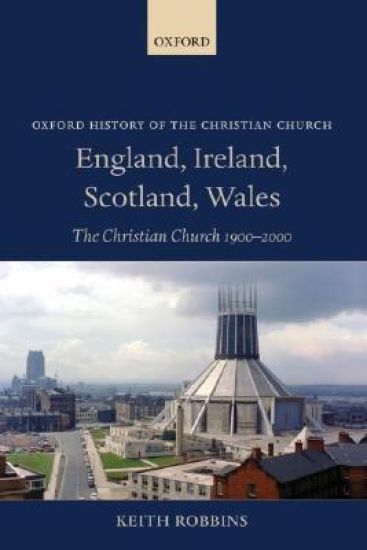
Keith Robbins, building on his previous writing on the modern history of the interlocking but distinctive territories of the British Isles, takes a wide-ranging, innovative and challenging look at the twentieth-century history of the main bodies, at once national and universal, which have collectively constituted the Christian Church. The protracted search for elusive unity is emphasized. Particular beliefs, attitudes, policies and structures are located in their social and cultural contexts. Prominent individuals, clerical and lay, are scrutinized. Religion and politics intermingle, highlighting, for churches and states, fundamental questions of identity and allegiance, of public and private values, in a century of ideological conflict, violent confrontation (in Ireland), two world wars and protracted Cold War. The massive change experienced by the countries and people of the Isles since 1900 has encompassed shifting relationships between England, Ireland (and Northern Ireland), Scotland, and Wales, the end of the British Empire, the emergence of a new Europe and, latterly, major immigration of adherents of Islam, Hinduism, Sikhism, and other faiths from outside Europe: developments scarcely conceivable at the outset. Such a broad contextual perspective provides an essential background to understanding the puzzling ambiguities evident both in secularization and enduring Christian faith. Robbins provides a cogent and compelling overview of this turbulent century for the churches of the Isles.
England, Ireland, Scotland, Wales

England, Ireland, Scotland, Wales

Keith Robbins

Oxford University Press
2010
nidottu
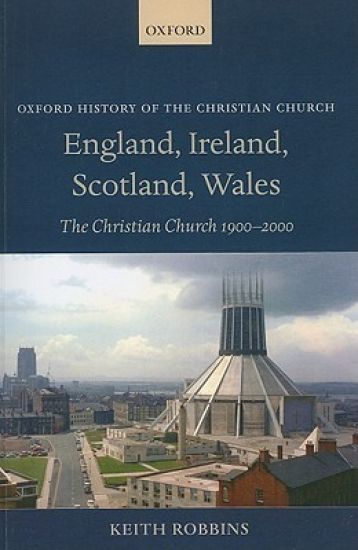
Keith Robbins, building on his previous writing on the modern history of the interlocking but distinctive territories of the British Isles, takes a wide-ranging, innovative and challenging look at the twentieth-century history of the main bodies, at once national and universal, which have collectively constituted the Christian Church. The protracted search for elusive unity is emphasized. Particular beliefs, attitudes, policies and structures are located in their social and cultural contexts. Prominent individuals, clerical and lay, are scrutinized. Religion and politics intermingle, highlighting, for churches and states, fundamental questions of identity and allegiance, of public and private values, in a century of ideological conflict, violent confrontation (in Ireland), two world wars and protracted Cold War. The massive change experienced by the countries and people of the Isles since 1900 has encompassed shifting relationships between England, Ireland (and Northern Ireland), Scotland and Wales, the end of the British Empire, the emergence of a new Europe and, latterly, major immigration of adherents of Islam, Hinduism, Sikhism and other faiths from outside Europe: developments scarcely conceivable at the outset. Such a broad contextual perspective provides an essential background to understanding the puzzling ambiguities evident both in secularization and enduring Christian faith. Robbins provides a cogent and compelling overview of this turbulent century for the churches of the Isles.
Transforming the World

Transforming the World

Keith Robbins

Red Globe Press
2012
sidottu
An ambitious and engaging narrative survey that charts the history of the world from a political perspective, from 1937 to the post-9/11 era. Providing a wide-ranging assessment of global interactions in peace and war since World War II, Robbins connects the crises, conflicts and accommodations that have brought us to the still-troubled present.
Transforming the World

Transforming the World

Keith Robbins

Red Globe Press
2012
nidottu
An ambitious and engaging narrative survey that charts the history of the world from a political perspective, from 1937 to the post-9/11 era. Providing a wide-ranging assessment of global interactions in peace and war since World War II, Robbins connects the crises, conflicts and accommodations that have brought us to the still-troubled present.
Britain and Europe 1789-2005

Britain and Europe 1789-2005

Keith Robbins

Hodder Arnold
2005
nidottu
At critical moments, Britain has played a crucial part in the political evolution of modern Europe, yet its stance has often been ambivalent: sometimes glad to be part of 'European civilization' but at other times rejoicing in the blessings of insularity. This book breaks new ground in tracing the evolving and contested understandings both of Britain and of Europe on the part of politicians, diplomats, historians, and travelers in the centuries since the French Revolution. It is at once a discussion of the foreign policy of the United Kingdom--an independent sovereign state in its relations with 'the continent' during its imperial hey-day and after--and a study of the historical perceptions, experiences and assumptions that preceded, and now accompany and complicate its participation in the European Union. The debate over Britain and Europe has long lacked depth and this book supplies it
Great Britain

Great Britain

Keith Robbins

Routledge
2018
sidottu
This is a timely exploration of national identity in Great Britain over nine hundred years of history. Our attitudes to the nation state are changing - national assemblies in Scotland and Wales and growing pressures for regional assemblies. In his vigorous new survey, Professor Robbins provides the background to these changing attitudes. He considers the development as well as the possible disintegration of the sense of "Britishness" among the inhabitants of Britain and investigates how - and why - they have preserved their own national and regional identities across several centuries of co-existence.
HISTORY, RELIGION AND IDENTITY IN MODERN BRITAIN

HISTORY, RELIGION AND IDENTITY IN MODERN BRITAIN

Keith Robbins

Hambledon Continuum
1993
sidottu
These essays can all be said, in one way or another, to be concerned with the 'Identity of Britain' in the modern period. In the first group, the author considers how British historians have themselves reflected and shaped the national understanding of the British past. He discusses the implications of such debates for the present. Have we reached the end of British history in the age of European integration? In the second group, attention is concentrated on beliefs and values, ranging from aspects of Edwardian religion to the problems posed for the churches by the rise of Nazism. This section also includes a discussion of religion and national identity in modern Britain. Another essay takes 1940 as its reference point for a searching enquiry into contemporary understandings of 'Christian Civilisation'. What kind of Christian country was Britain? The third group, reflecting the author's teaching experience in England, Scotland and Wales, approaches the puzzling problem of the nature of 'Britishness' from distinct angles.
Politicians, Diplomacy and War in Modern British History

Politicians, Diplomacy and War in Modern British History

Keith Robbins

BLOOMSBURY PUBLISHING PLC
1994
sidottu
The aspirations of democracy and the requirements of diplomacy have always coexisted uneasily. The politicians discussed in this book, in particular the appreciation of the careers of John Bright and James Bryce, reflect obliquely or directly on the problems of politicians who seek the 'high moral ground' either in domestic or international politics. There is also a discussion of the relationship between politicians and the press, as well as of the difficult link between cultural and political assumptions on the one hand and the facts of economic performance on the other.