Kirjojen hintavertailu. Mukana 11 244 527 kirjaa ja 12 kauppaa.

Kirjahaku

Etsi kirjoja tekijän nimen, kirjan nimen tai ISBN:n perusteella.

27 kirjaa tekijältä Keith Roberts

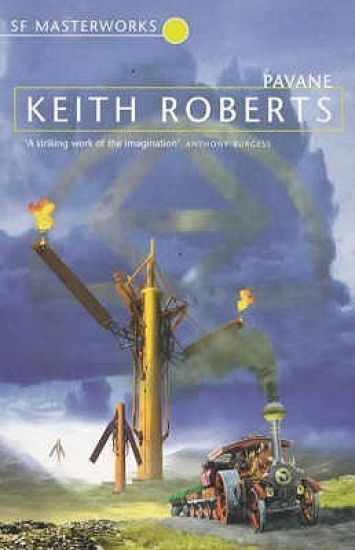
Keith Roberts SF Gateway Omnibus
As author and illustrator, Keith Roberts did more than most to define the look of UK science fiction magazines in the 1960s. In addition to his BFSA Award wins, he was nominated for the Hugo, Nebula and Arthur C. Clarke Awards. He is perhaps best known for his seminal alternate history novel, Pavane, but his work covered a broad range of SF's tropes and settings, as can be seen from the titles collected in this omnibus: The Chalk Giants, Kiteworld and The Grain Kings. THE CHALK GIANTS: After the apocalypse the hazardous evolution of mankind continues. And in primeval response to the disaster, humanity's solutions to catastrophe carve the harsh new world in violent patterns of magic and myth, rite and religion. Brave images scar the ancient hills, the clash of swords and the ageless power of sexuality sign-post another, bloodsoaked path to civilisation.KITEWORLD: Powerful churches have long kept their grip on the people with a theology of fear that makes formidable demons out of the poor, weak mutants of the surrounding badlands. To ward off these specters, an elaborate, tradition-encrusted system of kites with hex signs or armed observers fly over the realm. The men of this Kite Corps, performing hazardous duty to sustain a myth, are driven to find a separate peace, to transform, if they can, disillusionment into enlightenment, to move forward from an assumption of guilt to an assumption of responsibility.THE GRAIN KINGS: They call them The Grain Kings. Gigantic mechanical monarchs of the wheat-bearing plains that were once the frozen Alaskan wastes. Whole eco-systems in themselves, they can supply the food so desperately needed by the teeming millions of our overpopulated planet. But even now, as the whole world waits in hungry suspense, the great powers battle for control of the prairies and two competing combine harvesters find they are heading on a course of collision.
The Origins of Business, Money, and Markets

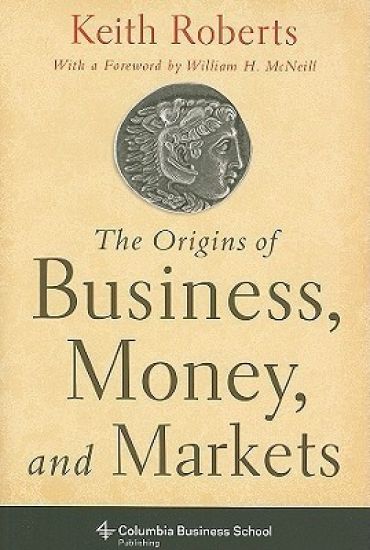
The Origins of Business, Money, and Markets

Keith Roberts

Columbia University Press
2011
sidottu
To understand business and its political, cultural, and economic context, it helps to view it historically, yet most business histories look no further back than the nineteenth century. The full sweep of business history actually begins much earlier, with the initial cities of Mesopotamia. In the first book to describe and explain these origins, Roberts depicts the society of ancient traders and consumers, tracing the roots of modern business and underscoring the relationship between early and modern business practice. Roberts's narrative begins before business, which he defines as selling to voluntary buyers at a profit. Before business, he shows, the material conditions and concepts for the pursuit of profit did not exist, even though trade and manufacturing took place. The earliest business, he suggests, arose with the long distance trade of early Mesopotamia, and expanded into retail, manufacturing and finance in these command economies, culminating in the Middle Eastern empires. (Part One) But it was the largely independent rise of business, money, and markets in classical Greece that produced business much as we know it. Alexander the Great's conquests and the societies that his successors created in their kingdoms brought a version of this system to the old Middle Eastern empires, and beyond. (Part Two) At Rome this entrepreneurial market system gained important new features, including business corporations, public contracting, and even shopping malls. The story concludes with the sharp decline of business after the 3rd century CE. (Part Three) In each part, Roberts portrays the major new types of business coming into existence. He weaves these descriptions into a narrative of how the prevailing political, economic, and social culture shaped the nature and importance of business and the status, wealth, and treatment of business people. Throughout, the discussion indicates how much (and how little) business has changed, provides a clear picture of what business actually is, presents a model for understanding the social impact of business as a whole, and yields stimulating insights for public policy today.
The Origins of Business, Money, and Markets

The Origins of Business, Money, and Markets

Keith Roberts

Columbia University Press
2015
pokkari
To understand business and its political, cultural, and economic context, it helps to view it historically, yet most business histories look no further back than the nineteenth century. The full sweep of business history actually begins much earlier, with the initial cities of Mesopotamia. In the first book to describe and explain these origins, Roberts depicts the society of ancient traders and consumers, tracing the roots of modern business and underscoring the relationship between early and modern business practice. Roberts's narrative begins before business, which he defines as selling to voluntary buyers at a profit. Before business, he shows, the material conditions and concepts for the pursuit of profit did not exist, even though trade and manufacturing took place. The earliest business, he suggests, arose with the long distance trade of early Mesopotamia, and expanded into retail, manufacturing and finance in these command economies, culminating in the Middle Eastern empires. (Part One) But it was the largely independent rise of business, money, and markets in classical Greece that produced business much as we know it. Alexander the Great's conquests and the societies that his successors created in their kingdoms brought a version of this system to the old Middle Eastern empires, and beyond. (Part Two) At Rome this entrepreneurial market system gained important new features, including business corporations, public contracting, and even shopping malls. The story concludes with the sharp decline of business after the 3rd century CE. (Part Three) In each part, Roberts portrays the major new types of business coming into existence. He weaves these descriptions into a narrative of how the prevailing political, economic, and social culture shaped the nature and importance of business and the status, wealth, and treatment of business people. Throughout, the discussion indicates how much (and how little) business has changed, provides a clear picture of what business actually is, presents a model for understanding the social impact of business as a whole, and yields stimulating insights for public policy today.
Soldiers of the English Civil War (1)

Soldiers of the English Civil War (1)

Keith Roberts

Osprey Publishing
1989
nidottu
When civil war erupted in England in 1642, it quickly involved every level of society throughout the British Isles. On one side the King and his supporters fought for traditional government in Church and State. On the other, the supporters of Parliament sought radical changes in religion and economic policy, and a greater share of power at the national level. This is the first of two volumes in the Elite series exploring the recruitment, organisation, and tactics of the soldiers of the English Civil War. This book opens with an account of the origins of the military theory used by both sides, before discussing the weapons, logistics and management of the infantry throughout the Civil War campaign.
Matchlock Musketeer

Matchlock Musketeer

Keith Roberts

Osprey Publishing
2002
nidottu
The Matchlock Musketeer follows the lives of soldiers armed with this weapon from its adoption by the English in Queen Elizabeth's reign until its replacement with the flintlock at the end of the seventeenth century. The role of the matchlock musketeer changed as improved design and better tactical systems turned the musketeer in infantry formations from a support role into an infantry pikeman. Finally, with the adoption of the bayonet the role of pikeman disappeared altogether with infantry formations armed only as musketeers. The musketeer's experience in battle, skirmish, siege and camp saw both change and continuity during this period, with the common factors of firing and fighting hand to hand, the hardships of sieges, digging trenches, storming a breach, and life on campaign.
First Newbury 1643

First Newbury 1643

Keith Roberts

Osprey Publishing
2003
nidottu
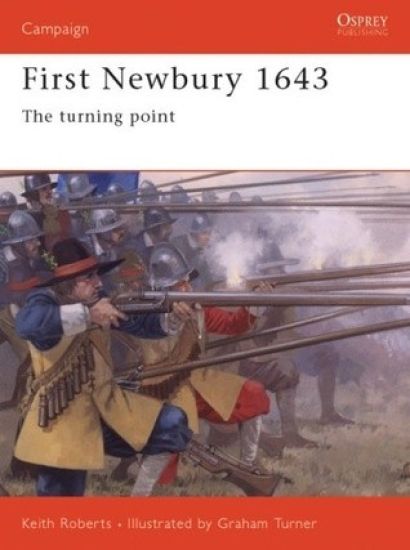
Newbury 1643 is one of the decisive campaigns of the English Civil War, marking a turning point in the course of the conflict. This work shows that the battle of Newbury represented the last realistic chance for the king to win a military victory over Parliament. When on 10 August 1643, King Charles summoned the City of Gloucester to surrender, the city's only hope lay in a relief expedition from London and the Earl of Wessex was forced to send his weakened army to face the king. The two forces met at Newbury and the Londoners more than held their own against the best of the king's cavalry. After a battle both the armies withdrew in good order, the King returning to Oxford. The capital was secure, her people committed to Parliament and the King's cavalry were no longer invincible - the balance of power had shifted irretrievably.
Pike and Shot Tactics 1590–1660

Pike and Shot Tactics 1590–1660

Keith Roberts

Osprey Publishing
2010
nidottu
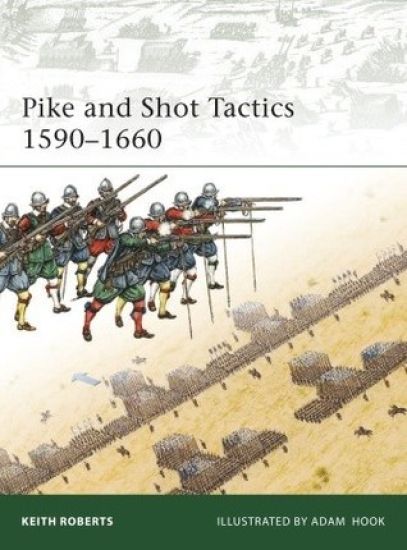
Throughout the 17th century large parts of Europe were depopulated during the wide-ranging and savage wars of religion and dynasty, involving all of the major powers. This was therefore a key period in the development of 'modern' infantry tactics, such as the use of pole-arms and muskets together - hence the popular expression 'pike and shot'. These infantry tactics involved different national schools on thought and practice, and were tested bloodily in great battles. This title covers the Dutch-Spanish wars of independence, The Thirty Years' War and the English Civil Wars.