Kirjojen hintavertailu. Mukana 12 390 323 kirjaa ja 12 kauppaa.

Kirjahaku

Etsi kirjoja tekijän nimen, kirjan nimen tai ISBN:n perusteella.

10 kirjaa tekijältä Keith S. Taber

Student Thinking and Learning in Science
This readable and informative survey of key ideas about students’ thinking in science builds a bridge between theory and practice by offering clear accounts from research, and showing how they relate to actual examples of students talking about widely taught science topics. Focused on secondary students and drawing on perspectives found in the international research literature, the goal is not to offer a comprehensive account of the vast literature, but rather to provide an overview of the current state of the field suitable for those who need an understanding of core thinking about learners’ ideas in science, including science education students in teacher preparation and higher degree programs, and classroom teachers, especially those working with middle school, high school, or college level students. Such understanding can inform and enrich science teaching in ways which are more satisfying for teachers, less confusing and frustrating for learners, and so ultimately can lead to both greater scientific literacy and more positive attitudes to science.
Student Thinking and Learning in Science
This readable and informative survey of key ideas about students’ thinking in science builds a bridge between theory and practice by offering clear accounts from research, and showing how they relate to actual examples of students talking about widely taught science topics. Focused on secondary students and drawing on perspectives found in the international research literature, the goal is not to offer a comprehensive account of the vast literature, but rather to provide an overview of the current state of the field suitable for those who need an understanding of core thinking about learners’ ideas in science, including science education students in teacher preparation and higher degree programs, and classroom teachers, especially those working with middle school, high school, or college level students. Such understanding can inform and enrich science teaching in ways which are more satisfying for teachers, less confusing and frustrating for learners, and so ultimately can lead to both greater scientific literacy and more positive attitudes to science.

Foundations for Teaching Chemistry

Foundations for Teaching Chemistry

Keith S. Taber

CRC Press Inc
2019
sidottu
Chemistry is a subject that has the power to engage and enthuse students but also to mystify and confound them. Effective chemistry teaching requires a strong foundation of subject knowledge and the ability to transform this into teachable content which is meaningful for students. Drawing on pedagogical principles and research into the difficulties that many students have when studying chemical concepts, this essential text presents the core ideas of chemistry to support new and trainee chemistry teachers, including non-specialists.The book focuses on the foundational ideas that are fundamental to and link topics across the discipline of chemistry and considers how these often complex notions can be effectively presented to students without compromising on scientific authenticity. Chapters cover: the nature of chemistry as a science the chemistry triplet substances and purity in chemistry the periodic table energy in chemistry and chemical bonding contextualising and integrating chemical knowledge Whilst there are a good many books describing chemistry and many others that offer general pedagogic guidance on teaching science, Foundations for Teaching Chemistry provides accounts of core chemical topics from a teaching perspective and offers new and experienced teachers support in developing their own ‘chemical knowledge for teaching’.
Foundations for Teaching Chemistry

Foundations for Teaching Chemistry

Keith S. Taber

CRC Press Inc
2019
nidottu
Chemistry is a subject that has the power to engage and enthuse students but also to mystify and confound them. Effective chemistry teaching requires a strong foundation of subject knowledge and the ability to transform this into teachable content which is meaningful for students. Drawing on pedagogical principles and research into the difficulties that many students have when studying chemical concepts, this essential text presents the core ideas of chemistry to support new and trainee chemistry teachers, including non-specialists.The book focuses on the foundational ideas that are fundamental to and link topics across the discipline of chemistry and considers how these often complex notions can be effectively presented to students without compromising on scientific authenticity. Chapters cover: the nature of chemistry as a science the chemistry triplet substances and purity in chemistry the periodic table energy in chemistry and chemical bonding contextualising and integrating chemical knowledge Whilst there are a good many books describing chemistry and many others that offer general pedagogic guidance on teaching science, Foundations for Teaching Chemistry provides accounts of core chemical topics from a teaching perspective and offers new and experienced teachers support in developing their own ‘chemical knowledge for teaching’.
MasterClass in Science Education

MasterClass in Science Education

Keith S. Taber

Bloomsbury Academic
2018
nidottu
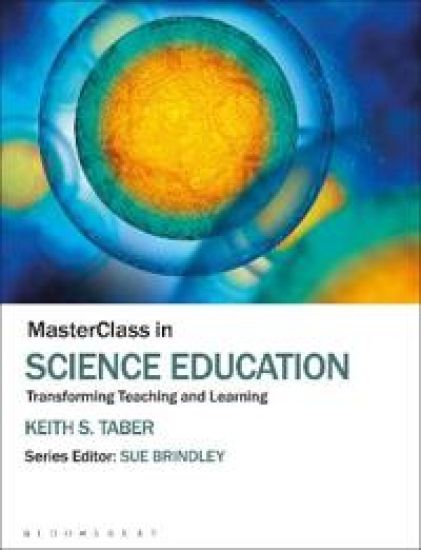
Worried about teaching natural selection, submicroscopic particle models or circuits? Keith S. Taber explores a range of issues faced in secondary science teaching and discusses strategies for teaching the nature of scientific knowledge, making practical work effective and challenging gifted young scientists.MasterClass in Science Education shows how to become a master science teacher by developing and adopting the habits and mind-set of a teacher-as-scientist. The author introduces the three pillars of this approach: subject knowledge, pedagogic knowledge, and classroom research. The body of subject knowledge in the sciences is both vast and constantly evolving as it is challenged, updated and developed, and this text supports you to understand the dynamic nature of knowledge and the implications this has for your teaching. Taber shows how to use a knowledge-in-action approach, enacting knowledge in the complex and dynamic classroom environment. He supports you to critically examine classroom experiences, drawing on a wide-range of research-informed perspectives that offer insights into facilitating effective student learning. He also guides you to understand how to use recommendations from published research studies as components of a toolkit to improve your teaching and learning.
MasterClass in Science Education

MasterClass in Science Education

Keith S. Taber

Bloomsbury Academic
2018
sidottu
Worried about teaching natural selection, submicroscopic particle models or circuits? Keith S. Taber explores a range of issues faced in secondary science teaching and discusses strategies for teaching the nature of scientific knowledge, making practical work effective and challenging gifted young scientists.MasterClass in Science Education shows how to become a master science teacher by developing and adopting the habits and mind-set of a teacher-as-scientist. The author introduces the three pillars of this approach: subject knowledge, pedagogic knowledge, and classroom research. The body of subject knowledge in the sciences is both vast and constantly evolving as it is challenged, updated and developed, and this text supports you to understand the dynamic nature of knowledge and the implications this has for your teaching. Taber shows how to use a knowledge-in-action approach, enacting knowledge in the complex and dynamic classroom environment. He supports you to critically examine classroom experiences, drawing on a wide-range of research-informed perspectives that offer insights into facilitating effective student learning. He also guides you to understand how to use recommendations from published research studies as components of a toolkit to improve your teaching and learning.
Progressing Science Education

Progressing Science Education

Keith S. Taber

Springer
2009
sidottu
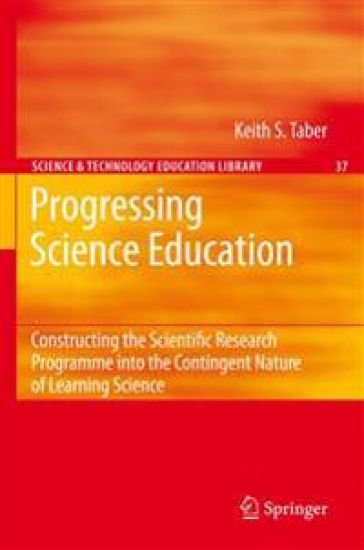
Exploring one of the central themes in science education theory, this volume examines how science education can be considered as a scientific activity within a broad post-positivist notion of science. Many students find learning science extremely problematic, whatever level of education they have reached. At the end of the 1970s a new approach to tackling learning difficulties in science was developed, drawing on ideas from psychology and cognitive science, and centred on the way students build up new knowledge in reference to their existing ideas. ‘Constructivism’ became the dominant paradigm in science education research for two decades, spawning a vast body of literature reporting aspects of learners’ ideas in different science topics. However, Constructivism came under fire as it was recognised that the research did not offer immediate and simple prescriptions for effective science teaching. The whole approach was widely criticised, in particular by those who saw it as having ‘anti-science’ leanings. In this book, the notion of scientific research programmes is used to understand the development, limitations and potential of constructivism. It is shown that constructivist work in science education fits into a coherent programme exploring the contingencies of learning science. The author goes further to address criticisms of constructivism; evaluate progress in the field; and suggest directions for future research. It is concluded that constructivism has provided the foundations for a progressive research programme that continues to guide enquiry into learning and teaching science.
Progressing Science Education

Progressing Science Education

Keith S. Taber

Springer
2010
nidottu
Exploring one of the central themes in science education theory, this volume examines how science education can be considered as a scientific activity within a broad post-positivist notion of science. Many students find learning science extremely problematic, whatever level of education they have reached. At the end of the 1970s a new approach to tackling learning difficulties in science was developed, drawing on ideas from psychology and cognitive science, and centred on the way students build up new knowledge in reference to their existing ideas. ‘Constructivism’ became the dominant paradigm in science education research for two decades, spawning a vast body of literature reporting aspects of learners’ ideas in different science topics. However, Constructivism came under fire as it was recognised that the research did not offer immediate and simple prescriptions for effective science teaching. The whole approach was widely criticised, in particular by those who saw it as having ‘anti-science’ leanings. In this book, the notion of scientific research programmes is used to understand the development, limitations and potential of constructivism. It is shown that constructivist work in science education fits into a coherent programme exploring the contingencies of learning science. The author goes further to address criticisms of constructivism; evaluate progress in the field; and suggest directions for future research. It is concluded that constructivism has provided the foundations for a progressive research programme that continues to guide enquiry into learning and teaching science.
Modelling Learners and Learning in Science Education
This book sets out the necessary processes and challenges involved in modeling student thinking, understanding and learning. The chapters look at the centrality of models for knowledge claims in science education and explore the modeling of mental processes, knowledge, cognitive development and conceptual learning. The conclusion outlines significant implications for science teachers and those researching in this field.This highly useful work provides models of scientific thinking from different field and analyses the processes by which we can arrive at claims about the minds of others. The author highlights the logical impossibility of ever knowing for sure what someone else knows, understands or thinks, and makes the case that researchers in science education need to be much more explicit about the extent to which research onto learners’ ideas in science is necessarily a process of developing models.Through this book we learn that research reports should acknowledgethe role of modeling and avoid making claims that are much less tentative than is justified as this can lead to misleading and sometimes contrary findings in the literature. In everyday life we commonly take it for granted that finding out what another knows or thinks is a relatively trivial or straightforward process. We come to take the ‘mental register’ (the way we talk about the ‘contents’ of minds) for granted and so teachers and researchers may readily underestimate the challenges involved in their work.
Modelling Learners and Learning in Science Education
This book sets out the necessary processes and challenges involved in modeling student thinking, understanding and learning. The chapters look at the centrality of models for knowledge claims in science education and explore the modeling of mental processes, knowledge, cognitive development and conceptual learning. The conclusion outlines significant implications for science teachers and those researching in this field.This highly useful work provides models of scientific thinking from different field and analyses the processes by which we can arrive at claims about the minds of others. The author highlights the logical impossibility of ever knowing for sure what someone else knows, understands or thinks, and makes the case that researchers in science education need to be much more explicit about the extent to which research onto learners’ ideas in science is necessarily a process of developing models.Through this book we learn that research reports should acknowledgethe role of modeling and avoid making claims that are much less tentative than is justified as this can lead to misleading and sometimes contrary findings in the literature. In everyday life we commonly take it for granted that finding out what another knows or thinks is a relatively trivial or straightforward process. We come to take the ‘mental register’ (the way we talk about the ‘contents’ of minds) for granted and so teachers and researchers may readily underestimate the challenges involved in their work.