Kirjojen hintavertailu. Mukana 11 717 486 kirjaa ja 12 kauppaa.

Kirjahaku

Etsi kirjoja tekijän nimen, kirjan nimen tai ISBN:n perusteella.

13 kirjaa tekijältä Keith Somerville

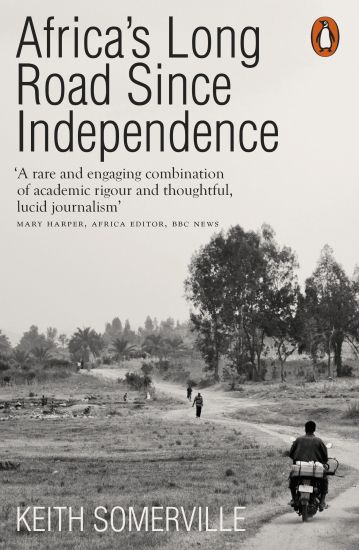
Africa's Long Road Since Independence

Africa's Long Road Since Independence

Keith Somerville

Penguin Books Ltd
2017
pokkari
'A superb book...genuinely innovative' Jack Spence OBE, King's College LondonOver the last half century, sub-Saharan Africa has not had one history, but many. Histories that have intertwined, converged and diverged. They have involved a continuing process of decolonization and state-building, conflict, economic problems but also progress and the perpetual interplay of structure and agency. This new view of those histories looks in particular at the relationship between territorial, economic, political and societal structures and human agency in the complex and sometimes confusing development of an independent Africa. The story starts well before the granting of independence to Ghana in 1957, but the book also looks at Africa in the closing decades of the old millennium and opening ones of the new. This is a book, too, about the history of the peoples of Africa and their struggle for economic development against the global economic straitjacket into which they were strapped by colonial rule and decolonisation. The importance of imposed or inherited structures, whether the global capitalist system, of which Africa is a subordinate part, or the artificial and often inappropriate state borders and political systems is discussed in the light of the exercise of agency by African peoples, political movements and leaders.
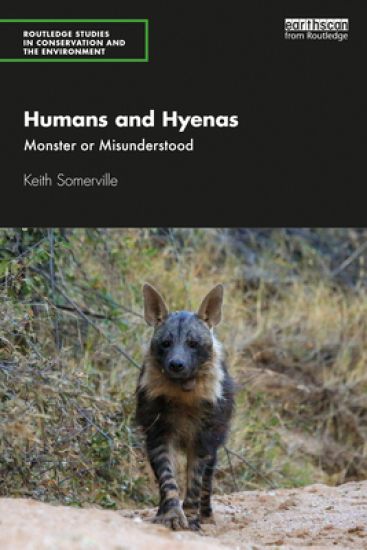
Humans and Hyenas

Humans and Hyenas

Keith Somerville

Routledge
2021
nidottu
Humans and Hyenas examines the origins and development of the relationship between the two to present an accurate and realistic picture of the hyena and its interactions with people. The hyena is one of the most maligned, misrepresented and defamed mammals. It is still, despite decades of research-led knowledge, seen as a skulking, cowardly scavenger rather than a successful hunter with complex family and communal systems. Hyenas are portrayed as sex-shifting deviants, grave robbers and attackers of children in everything from African folk tales through Greek and Roman accounts of animal life, to Disney’s The Lion King depicting hyenas with a lack of respect and disgust, despite the reality of their behaviour and social structures. Combining the personal, in-depth mining of scientific papers about the three main species and historical accounts, Keith Somerville delves into our relationship with hyenas from the earliest records from millennia ago, through the accounts by colonisers, to contemporary coexistence, where hyenas and humans are forced into ever closer proximity due to shrinking habitats and loss of prey. Are hyenas fated to retain their bad image or can their amazing ability to adapt to humans more successfully than lions and other predators lead to a shift in perspective?This book will be of great interest to students and scholars in the environmental sciences, conservation biology, and wildlife and conservation issues.
Humans and Hyenas

Humans and Hyenas

Keith Somerville

Routledge
2021
sidottu
Humans and Hyenas examines the origins and development of the relationship between the two to present an accurate and realistic picture of the hyena and its interactions with people. The hyena is one of the most maligned, misrepresented and defamed mammals. It is still, despite decades of research-led knowledge, seen as a skulking, cowardly scavenger rather than a successful hunter with complex family and communal systems. Hyenas are portrayed as sex-shifting deviants, grave robbers and attackers of children in everything from African folk tales through Greek and Roman accounts of animal life, to Disney’s The Lion King depicting hyenas with a lack of respect and disgust, despite the reality of their behaviour and social structures. Combining the personal, in-depth mining of scientific papers about the three main species and historical accounts, Keith Somerville delves into our relationship with hyenas from the earliest records from millennia ago, through the accounts by colonisers, to contemporary coexistence, where hyenas and humans are forced into ever closer proximity due to shrinking habitats and loss of prey. Are hyenas fated to retain their bad image or can their amazing ability to adapt to humans more successfully than lions and other predators lead to a shift in perspective?This book will be of great interest to students and scholars in the environmental sciences, conservation biology, and wildlife and conservation issues.
Jackals, Golden Wolves, and Honey Badgers

Jackals, Golden Wolves, and Honey Badgers

Keith Somerville

TAYLOR FRANCIS LTD
2024
nidottu
This book explores the fascinating and complex lives of the honey badger, the African jackals (black-backed and side-striped), African golden wolves, and Eurasian golden jackals. In recent years, interest in these creatures has grown exponentially, through wildlife documentaries and media clips showing the aggressive, fearless, and tenacious behaviour of the honey badger, with jackals often presented in a supporting role. Written by renowned journalist and educator Keith Somerville, this accessible volume includes historical narratives, folklore, and contemporary accounts of human–wildlife relationships and conflicts. It traces the evolution of the species; their foraging and diet; the development of their relationships with humans; and their commensal, kleptocratic, and symbiotic relationships with other carnivores, raptors and birds. It also charts the recent expansion in European jackal numbers and ranges, now including as far west as the Netherlands and as far north as Finland.Blending historical observations by non-scientists, colonial officials, administrators, and early conservationists with contemporary scientific accounts, it presents a new multidisciplinary approach that will interest researchers, scientists, and students in wildlife conservation, human–wildlife relations, zoology, biology, and environmental science.
Jackals, Golden Wolves, and Honey Badgers

Jackals, Golden Wolves, and Honey Badgers

Keith Somerville

TAYLOR FRANCIS LTD
2022
sidottu
This book explores the fascinating and complex lives of the honey badger, the African jackals (black-backed and side-striped), African golden wolves, and Eurasian golden jackals. In recent years, interest in these creatures has grown exponentially, through wildlife documentaries and media clips showing the aggressive, fearless, and tenacious behaviour of the honey badger, with jackals often presented in a supporting role. Written by renowned journalist and educator Keith Somerville, this accessible volume includes historical narratives, folklore, and contemporary accounts of human–wildlife relationships and conflicts. It traces the evolution of the species; their foraging and diet; the development of their relationships with humans; and their commensal, kleptocratic, and symbiotic relationships with other carnivores, raptors and birds. It also charts the recent expansion in European jackal numbers and ranges, now including as far west as the Netherlands and as far north as Finland.Blending historical observations by non-scientists, colonial officials, administrators, and early conservationists with contemporary scientific accounts, it presents a new multidisciplinary approach that will interest researchers, scientists, and students in wildlife conservation, human–wildlife relations, zoology, biology, and environmental science.
Contemporary Africa

Contemporary Africa

Keith Somerville

Wiley-Blackwell (an imprint of John Wiley Sons Ltd)
2015
sidottu
Contemporary Africa presents an engagingly written and historically-grounded introduction to the myriad events that have shaped the states and peoples of sub-Saharan Africa since the 1970s. Offers readers an engaging, historically-grounded introduction to contemporary sub-Saharan Africa Covers a wide range of topics that range from political governance of African states since decolonization and issues surrounding economic development to environmental and health policies Explores the complex interactions between Africa and the outside world, including military intervention, 'extractive' economic relationships, and humanitarian involvement Discusses themes within a clear, chronological framework and assumes no prior knowledge of African history
Humans and Lions

Humans and Lions

Keith Somerville

Routledge
2019
sidottu
This book places lion conservation and the relationship between people and lions both in historical context and in the context of the contemporary politics of conservation in Africa. The killing of Cecil the Lion in July 2015 brought such issues to the public’s attention. Were lions threatened in the wild and what was the best form of conservation? How best can lions be saved from extinction in the wild in Africa amid rural poverty, precarious livelihoods for local communities and an expanding human population?This book traces man’s relationship with lions through history, from hominids, to the Romans, through colonial occupation and independence, to the present day. It concludes with an examination of the current crisis of conservation and the conflict between Western animal welfare concepts and sustainable development, thrown into sharp focus by the killing of Cecil the lion. Through this historical account, Keith Somerville provides a coherent, evidence-based assessment of current human-lion relations, providing context to the present situation.This book will be of interest to students and scholars of environmental and African history, wildlife conservation, environmental management and political ecology, as well as the general reader.
Humans and Lions

Humans and Lions

Keith Somerville

Routledge
2019
nidottu
This book places lion conservation and the relationship between people and lions both in historical context and in the context of the contemporary politics of conservation in Africa. The killing of Cecil the Lion in July 2015 brought such issues to the public’s attention. Were lions threatened in the wild and what was the best form of conservation? How best can lions be saved from extinction in the wild in Africa amid rural poverty, precarious livelihoods for local communities and an expanding human population?This book traces man’s relationship with lions through history, from hominids, to the Romans, through colonial occupation and independence, to the present day. It concludes with an examination of the current crisis of conservation and the conflict between Western animal welfare concepts and sustainable development, thrown into sharp focus by the killing of Cecil the lion. Through this historical account, Keith Somerville provides a coherent, evidence-based assessment of current human-lion relations, providing context to the present situation.This book will be of interest to students and scholars of environmental and African history, wildlife conservation, environmental management and political ecology, as well as the general reader.
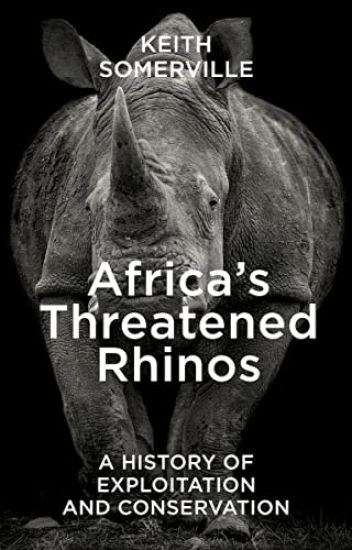
Africa's Threatened Rhinos

Africa's Threatened Rhinos

Keith Somerville

Pelagic Publishing
2025
sidottu
Africa’s surviving rhinos are under serious threat. Poaching for their horns, massive extermination by ‘sports’ hunters in the nineteenth and first half of the twentieth century, and progressive habitat loss have all driven black and white rhino close to the edge. This book considers human interactions with these magnificent and enigmatic animals – charting hunting for food and hides, and then hunting for horn to meet external demand for this much-coveted commodity, as well as peaceful coexistence, over the course of three millennia. With only two females alive in a closely protected reserve in Kenya, the Northern White Rhino is on the brink of extinction. The Southern White Rhino was increasing in numbers, but poaching in South Africa, Botswana and Namibia has now reduced the population to fewer than 20,000, while Black Rhino are hovering around the 6,000–6,500 mark, also with the danger of extirpation everywhere but in parts of eastern and southern Africa. Many books have been written on poaching and the decline of the rhino, often from a very personal, engaged viewpoint. This volume takes the reader into important new territory, showing how human agency has led to the situation we now face. Covering the history of commercial and sporting exploitation of rhino, it brings the picture up to date with an overview of contemporary conservation and anti-poaching operations. This urgent work is a significant contribution to our understanding of wildlife on the African continent.
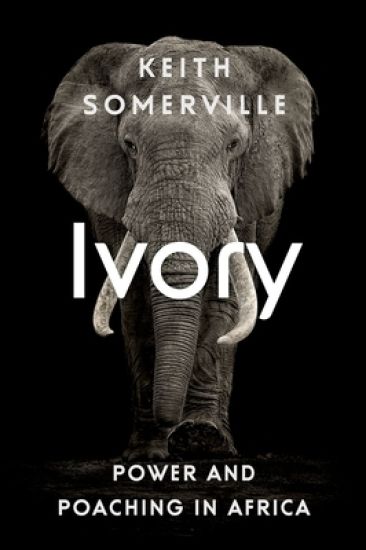
Ivory

Ivory

Keith Somerville

C Hurst Co Publishers Ltd
2019
nidottu
Despite the 1989 global ivory trade ban, poaching and ivory smuggling have not abated. More than half of Tanzania's elephants have been killed for their ivory since 2007. A similarly alarming story can be told of the herds in northern Mozambique and across swathes of central Africa. But why the new upsurge? The popular narrative blames a meeting of two evils - criminal poaching and terrorism. But the answer is not that simple.Since ancient times, large-scale killing of elephants for their tusks has been driven by demand beyond Africa's range states from the Egyptian pharaohs through the industrialising West to the new wealthy business class of China. Elephant hunting in Africa is also governed by human-elephant conflict, traditional hunting practices and the impact of colonial exploitation and criminalisation.Ivory follows this complex history of the tusk trade in Africa, and explains why it is corruption, crime and politics, rather than insurgency, that we should worry about. In this ground-breaking work, Somerville argues that regulation - not prohibition - of the ivory trade is the best way to stop uncontrolled poaching.
Africa's Long Road Since Independence

Africa's Long Road Since Independence

Keith Somerville

C Hurst Co Publishers Ltd
2016
sidottu
Over the last half century, sub-Saharan Africa has not had one history, but many - histories that have intertwined, converged and diverged. They have involved a continuing saga of decolonization and state-building, conflict, economic problems, but also progress. This new view of those histories looks in particular at the relationship between territorial, economic, political and societal structures and human agency in the complex and sometimes confusing development of an independent Africa. The story starts well before the granting of independence to Ghana in 1957, with an introductory chapter about pre-colonial societies, slavery and colonial occupation. But the thrust of the book looks at Africa in the closing decades of the old millennium and the beginning of the new millennium. While this book examines post-colonial conflicts within and between new states, it also considers the history of the peoples of Africa - their struggle for economic development in the context of harsh local environments and the economic straitjacket into which they were strapped by colonial rule is charted in detail. The importance of imposed or inherited structures, whether the global capitalist system, of which Africa is a subordinate part, or the artificial and often inappropriate state borders and political systems set up by colonial powers will be examined in the light of the exercise of agency by African peoples, political movements and leaders.
Ivory

Ivory

Keith Somerville

C Hurst Co Publishers Ltd
2016
sidottu
Despite the 1989 global ivory trade ban, poaching and ivory smuggling have not abated. More than half of Tanzania's elephants have been killed for their ivory since 2007. A similarly alarming story can be told of the herds in northern Mozambique and across swathes of central Africa. But why the new upsurge? The popular narrative blames a meeting of two evils - criminal poaching and terrorism. But the answer is not that simple.Since ancient times, large-scale killing of elephants for their tusks has been driven by demand beyond Africa's range states from the Egyptian pharaohs through the industrialising West to the new wealthy business class of China. Elephant hunting in Africa is also governed by human-elephant conflict, traditional hunting practices and the impact of colonial exploitation and criminalisation.Ivory follows this complex history of the tusk trade in Africa, and explains why it is corruption, crime and politics, rather than insurgency, that we should worry about. In this ground-breaking work, Somerville argues that regulation - not prohibition - of the ivory trade is the best way to stop uncontrolled poaching.
Africa's Threatened Rhinos

Africa's Threatened Rhinos

Keith Somerville

Pelagic Publishing
2026
nidottu
Africa’s surviving rhinos are under serious threat. Poaching for their horns, massive extermination by ‘sports’ hunters in the nineteenth and first half of the twentieth century, and progressive habitat loss have all driven black and white rhino close to the edge. This book considers human interactions with these magnificent and enigmatic animals – charting hunting for food and hides, and then hunting for horn to meet external demand for this much-coveted commodity, as well as peaceful coexistence, over the course of three millennia. With only two females alive in a closely protected reserve in Kenya, the Northern White Rhino is on the brink of extinction. The Southern White Rhino was increasing in numbers, but poaching in South Africa, Botswana and Namibia has now reduced the population to fewer than 20,000, while Black Rhino are hovering around the 6,000–6,500 mark, also with the danger of extirpation everywhere but in parts of eastern and southern Africa. Many books have been written on poaching and the decline of the rhino, often from a very personal, engaged viewpoint. This volume takes the reader into important new territory, showing how human agency has led to the situation we now face. Covering the history of commercial and sporting exploitation of rhino, it brings the picture up to date with an overview of contemporary conservation and anti-poaching operations. This urgent work is a significant contribution to our understanding of wildlife on the African continent.