Kirjojen hintavertailu. Mukana 11 342 296 kirjaa ja 12 kauppaa.

Kirjahaku

Etsi kirjoja tekijän nimen, kirjan nimen tai ISBN:n perusteella.

7 kirjaa tekijältä Keith Stewart Thomson

Morphogenesis and Evolution

Morphogenesis and Evolution

Keith Stewart Thomson

Oxford University Press Inc
1988
sidottu
Today, developmental and evolutionary biologists are focusing renewed attention on the developmental process, specifically those genetic and cellular factors which influence variation in individual body shape or metabolism. They are attempting to understand better how evolutionary trends and patterns within individuals might be limited and controlled. In this important work, the author reviews the classical literature on embryology, morphogenesis, and palaeontology, and presents recent genetic and molecular studies on development. The result is a unique perspective on a set of problems of fundamental importance to developmental and evolutionary biologists.
The Common but Less Frequent Loon and Other Essays

The Common but Less Frequent Loon and Other Essays

Keith Stewart Thomson

Yale University Press
1996
pokkari
From an acclaimed biologist, a view of science as a great intellectual adventure “Thomson loves biology and literature with equal passion. . . . Writing with rare eloquence, he mourns the current death of literary merit in scientific literature, drawing a parallel between the demise of cogent expression and the fate of the loons on his favorite New Hampshire lake.”—Charles Solomon, Los Angeles Times The great Piltdown fraud, the mystery of how a shark swims with an asymmetric tail, the debate over dinosaur extinction, the haunting beauty of a loon on a northern lake—these are only a few of the subjects discussed by Keith Stewart Thomson in this wide-ranging book. At once instructive and entertaining, the book celebrates the aesthetic, literary, and intellectual aspects of science and conveys what is involved in being a scientist today—the excitement of discovery and puzzle solving, the debate over what to read and what to write, and the element of promotion that seems to be necessary to stimulate research and funding. Keith Thomson, a well-known biologist who writes a column for the distinguished bimonthly magazine American Scientist, here presents some of his favorite essays from that periodical in a book of three parts, each introduced by a new essay. In the first section, “The Uses of Diversity,” he ponders such questions as why we care passionately and expensively about the dusky seaside sparrow and how and why we rescued the flowering tree Franklinia from extinction. The second section, “On Being a Scientist,” includes an autobiographical account of Thomson’s life and his views on what makes being a scientist special and interesting. The last section, “The Future of Evolution,” gives examples of how the study of evolution is entering one of the most dramatic stages in its own development. Thomson presents science as a great intellectual adventure—a search of why things are as they are—most rewarding when it is accompanied by an appreciation of the subtleties and aesthetic qualities of the objects studied. His book will enable nonscientists to open their minds to the pleasures of science and scientists to become more articulate and passionate about what they do.
The Legacy of the Mastodon

The Legacy of the Mastodon

Keith Stewart Thomson

Yale University Press
2009
pokkari
A history of the early days of fossil hunting in America, replete with high adventure, ruthless competitors, and amazing scientific discoveries The uncovering in the mid-1700s of fossilized mastodon bones and teeth at Big Bone Lick, Kentucky, signaled the beginning of a great American adventure. The West was opening up and unexplored lands beckoned. Unimagined paleontological treasures awaited discovery: strange horned mammals, birds with teeth, flying reptiles, gigantic fish, diminutive ancestors of horses and camels, and more than a hundred different kinds of dinosaurs. In this exciting book, Keith Thomson tells the story of the grandest period of fossil discovery in American history, the years from 1750 to 1890. The volume begins with Thomas Jefferson, whose keen interest in the American mastodon led him to champion the study of fossil vertebrates. The book continues with vivid descriptions of the actual work of prospecting for fossils—a pick in one hand, a rifle in the other—and enthralling portraits of Joseph Leidy, Ferdinand Hayden, Edward Cope, and Othniel Marsh among other major figures in the development of the science of paleontology. Shedding new light on these scientists’ feuds and rivalries, on the connections between fossil studies in Europe and America, and on paleontology’s contributions to America’s developing national identity, The Legacy of the Mastodon is itself a fabulous discovery for every reader to treasure.
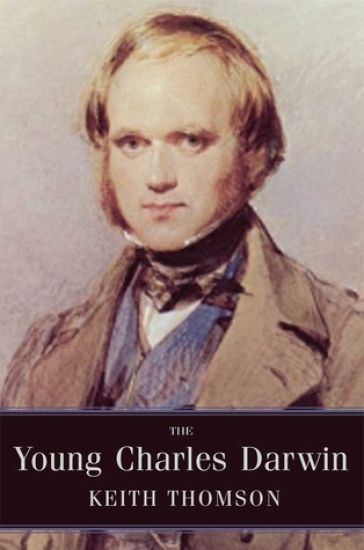
The Young Charles Darwin

The Young Charles Darwin

Keith Stewart Thomson

Yale University Press
2010
pokkari
An investigation of Charles Darwin as a young naturalist and how he arrived at his revolutionary ideas What sort of person was the young naturalist who developed an evolutionary idea so logical, so dangerous, that it has dominated biological science for a century and a half? How did the quiet and shy Charles Darwin produce his theory of natural selection when many before him had started down the same path but failed? This book is the first to inquire into the range of influences and ideas, the mentors and rivals, and the formal and informal education that shaped Charles Darwin and prepared him for his remarkable career of scientific achievement. Keith Thomson concentrates on Darwin’s early life as a schoolboy, a medical student at Edinburgh, a theology student at Cambridge, and a naturalist aboard the Beagle on its famous five-year voyage. Closely analyzing Darwin’s Autobiography and scientific notebooks, the author draws a fully human portrait of Darwin for the first time: a vastly erudite and powerfully ambitious individual, self-absorbed but lacking self-confidence, hampered as much as helped by family, and sustained by a passion for philosophy and logic. Thomson’s account of the birth and maturing of Darwin’s brilliant theory is fascinating for the way it reveals both his genius as a scientist and the human foibles and weaknesses with which he mightily struggled.
Private Doubt, Public Dilemma

Private Doubt, Public Dilemma

Keith Stewart Thomson

Yale University Press
2015
sidottu
A distinguished scholar urges scientists and religious thinkers to become colleagues rather than adversaries in areas where their fields overlap “Refreshingly modest and nondogmatic. . . . Brims with lively anecdotes.”—John Horgan, Wall Street Journal Each age has its own crisis—our modern experience of science-religion conflict is not so very different from that experienced by our forebears, Keith Thomson proposes in this thoughtful book. He considers the ideas and writings of Thomas Jefferson and Charles Darwin, two men who struggled mightily to reconcile their religion and their science, then looks to more recent times when scientific challenges to religion (evolutionary theory, for example) have given rise to powerful political responses from religious believers. Today as in the eighteenth century, there are pressing reasons for members on each side of the religion-science debates to find common ground, Thomson contends. No precedent exists for shaping a response to issues like cloning or stem cell research, unheard of fifty years ago, and thus the opportunity arises for all sides to cooperate in creating a new ethics for the common good.
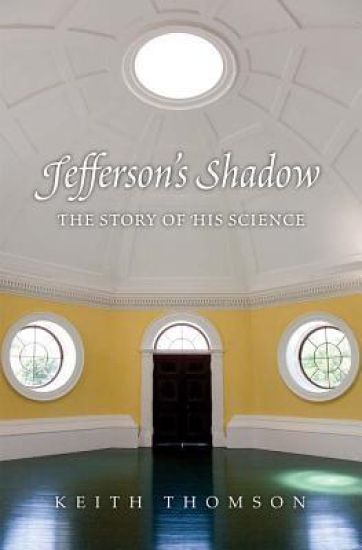
Jefferson's Shadow

Jefferson's Shadow

Keith Stewart Thomson

Yale University Press
2015
pokkari
A unique account of Thomas Jefferson’s passion for science, the influence of science on his vision for America, and the amazing extent of his scientific contributions In the voluminous literature on Thomas Jefferson, little has been written about his passionate interest in science. This new and original study of Jefferson presents him as a consummate intellectual whose view of science was central to both his public and his private life. Keith Stewart Thomson reintroduces us in this remarkable book to Jefferson’s eighteenth-century world and reveals the extent to which Jefferson used science, thought about it, and contributed to it, becoming in his time a leading American scientific intellectual. With a storyteller’s gift, Thomson shows us a new side of Jefferson. He answers an intriguing series of questions—How was Jefferson’s view of the sciences reflected in his political philosophy and his vision of America’s future? How did science intersect with his religion? Did he make any original contributions to scientific knowledge?—and illuminates the particulars of Jefferson’s scientific endeavors. Thomson discusses Jefferson’s theories that have withstood the test of time, his interest in the practical applications of science to societal problems, his leadership in the use of scientific methods in agriculture, and his contributions toward launching at least four sciences in America: geography, paleontology, climatology, and scientific archaeology. A set of delightful illustrations, including some of Jefferson’s own sketches and inventions, completes this impressively researched book.
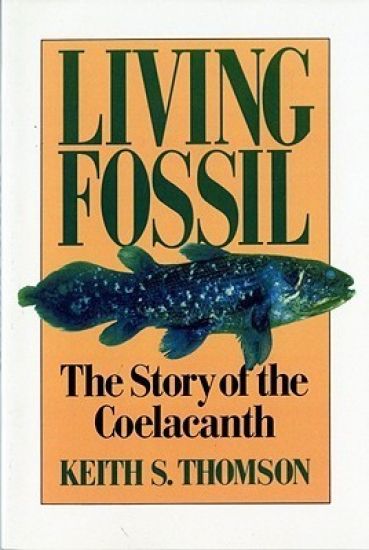
Living Fossil

Living Fossil

Keith Stewart Thomson

WW Norton Co
1992
nidottu
The story of the discovery of a coelacanth, a fish thought to be extinct for seventy million years, and its study by an eccentric icthyologist is dramatically presented in a work that discusses the specie's habits, habitat, number, diet, reproduction, and more