Kirjojen hintavertailu. Mukana 11 244 527 kirjaa ja 12 kauppaa.

Kirjahaku

Etsi kirjoja tekijän nimen, kirjan nimen tai ISBN:n perusteella.

10 kirjaa tekijältä Keith Tudor

Transactional Analysis Proper—and Improper

Transactional Analysis Proper—and Improper

Keith Tudor

TAYLOR FRANCIS LTD
2024
sidottu
Transactional Analysis Proper—and Improper: Selected and New Papers offers a critical reading of transactional analysis (TA), which analyses, deconstructs, and reconstructs its foundational theory.Keith Tudor’s work is detailed, informative, and critical, and written with deep affection for TA and its founder, Eric Berne. Beginning with its philosophical foundations, Tudor considers TA’s ontological assumptions about the essence of human beings, its method and methodology, and its treatment philosophy. A series of chapters then review and advance TA’s theory of transactions, ego states, life scripts, and psychological games, and the book concludes with two chapters which both honor TA’s traditions and look forward to what TA might do differently.This book offers a unique ‘insider but independent’ perspective on transactional analysis. It will be essential reading for students and practitioners of transactional analysis and encourages free, independent, and critical thinking about TA and its place in the world.
Transactional Analysis Proper—and Improper

Transactional Analysis Proper—and Improper

Keith Tudor

TAYLOR FRANCIS LTD
2024
nidottu
Transactional Analysis Proper—and Improper: Selected and New Papers offers a critical reading of transactional analysis (TA), which analyses, deconstructs, and reconstructs its foundational theory.Keith Tudor’s work is detailed, informative, and critical, and written with deep affection for TA and its founder, Eric Berne. Beginning with its philosophical foundations, Tudor considers TA’s ontological assumptions about the essence of human beings, its method and methodology, and its treatment philosophy. A series of chapters then review and advance TA’s theory of transactions, ego states, life scripts, and psychological games, and the book concludes with two chapters which both honor TA’s traditions and look forward to what TA might do differently.This book offers a unique ‘insider but independent’ perspective on transactional analysis. It will be essential reading for students and practitioners of transactional analysis and encourages free, independent, and critical thinking about TA and its place in the world.
Mental Health Promotion

Mental Health Promotion

Keith Tudor

Routledge
1995
nidottu
Mental health promotion is an emerging field of interest to many health professionals. This book traces its history, defines it and distinguishes it from mental illness prevention. Mental health is viewed as a positive concept and seperate from mental illness and psychopathology. Based on original research, the conceptual analysis developed in the book offers policy makers and practitioners a coherent and comprehensive framework within which to design and implement practice. Mental Health Promotion: * offers a new conceptual paradigm for mental health promotion * applies it to policy, assessment, consultation, education and training * provides a comprehensive, international literature review Suitable for a wide variety of courses at student and professional level in psychiatry, nursing, social work and community work, Mental Health Promotion is a significant addition to the study of health promotion.
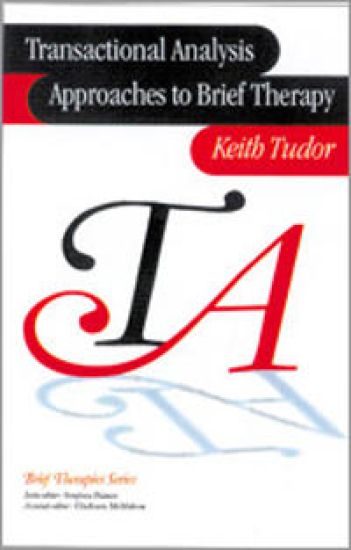
Transactional Analysis Approaches to Brief Therapy
`This book, edited by Keith Tudor (who is also one of the ten contributors) is excellent reading for a number of reasons: for those who know nothing about TA, it is a highly informative and readily accessible introduction. For those who read or studied it some time ago, it is an excellent refresher. I am impressed by the diversity of people and applications of TA, and the developments outlined in this book are, certainly for me, cause for hope because, as well as offering frameworks for making 'simple' sense of humans in action – and human inaction – TA is a complex and profound system that offers people a way of solving the problems of the present, re-evaluating the struggles of the past, and reshaping the future with permission and power based on a greater sense of self' - Nurturing Potential `I wholeheartedly recommend this book to all therapists as enriching and interesting reading' - European Association for Transactional Analysis Newsletter `It is a book which would offer helpful introductions to both the practice of transactional analysis, and the attitude needed when planning brief therapy of any kind' - The Jounal of Analytical Psychology Of all the approaches to therapy, transactional analysis is arguably one of those most suited to time-limited work. At a time when short-term therapy is increasingly dominant as a form of practice, Transactional Analysis Approaches to Brief Therapy provides an insightful guide which both informs and challenges. Rather than a single theory, TA has developed as a group of four schools which share a common philosophy, but place different emphasis on what occurs during the therapeutic process. Written by therapists at the leading edge of developments in TA, the book presents and differentiates each of these four approaches. Through transcripts and commentaries, it shows how theory applies to practice, for example in treating post-traumatic stress or in achieving a one-session cure. The book also includes a useful glossary of TA terms, as well as an appendix of Eric Berne's short script-questionnaire. In some ways critical of the zeitgeist of short-termism and the commercial pressures for therapy to be brief, the book seeks a balance between the challenge TA offers as an actionistic approach to quick and efficient therapy and the importance of relationship in therapy which is time-conscious. It will be enlightening reading for all those training and those already trained as therapists and counsellors in TA.
Transactional Analysis Approaches to Brief Therapy
`This book, edited by Keith Tudor (who is also one of the ten contributors) is excellent reading for a number of reasons: for those who know nothing about TA, it is a highly informative and readily accessible introduction. For those who read or studied it some time ago, it is an excellent refresher. I am impressed by the diversity of people and applications of TA, and the developments outlined in this book are, certainly for me, cause for hope because, as well as offering frameworks for making 'simple' sense of humans in action – and human inaction – TA is a complex and profound system that offers people a way of solving the problems of the present, re-evaluating the struggles of the past, and reshaping the future with permission and power based on a greater sense of self' - Nurturing Potential `I wholeheartedly recommend this book to all therapists as enriching and interesting reading' - European Association for Transactional Analysis Newsletter `It is a book which would offer helpful introductions to both the practice of transactional analysis, and the attitude needed when planning brief therapy of any kind' - The Jounal of Analytical Psychology Of all the approaches to therapy, transactional analysis is arguably one of those most suited to time-limited work. At a time when short-term therapy is increasingly dominant as a form of practice, Transactional Analysis Approaches to Brief Therapy provides an insightful guide which both informs and challenges. Rather than a single theory, TA has developed as a group of four schools which share a common philosophy, but place different emphasis on what occurs during the therapeutic process. Written by therapists at the leading edge of developments in TA, the book presents and differentiates each of these four approaches. Through transcripts and commentaries, it shows how theory applies to practice, for example in treating post-traumatic stress or in achieving a one-session cure. The book also includes a useful glossary of TA terms, as well as an appendix of Eric Berne's short script-questionnaire. In some ways critical of the zeitgeist of short-termism and the commercial pressures for therapy to be brief, the book seeks a balance between the challenge TA offers as an actionistic approach to quick and efficient therapy and the importance of relationship in therapy which is time-conscious. It will be enlightening reading for all those training and those already trained as therapists and counsellors in TA.
Group Counselling

Group Counselling

Keith Tudor

SAGE Publications Ltd
1999
sidottu
`Group Counselling is an exceptionally practical and useful guide for anyone involved, or anticipating involvement, in groupwork' - Clive Lloyd, Therapeutic Communities This book provides a comprehensive examination of theories and concepts relating to group counselling and shows how differing theoretical frameworks can be used as a basis for practice. Organized around the counselling process, the book considers the practicalities of establishing and running a group, raising awareness of its life cycle, its cultural location and many other diverse issues. Special emphasis is placed on the importance of therapeutic attitudes and philosophies as a basis for practice, and humanistic and existential approaches to group counselling are given particular attention. The author encourages readers to be aware of their conceptual framework and how it influences their work.
Group Counselling

Group Counselling

Keith Tudor

SAGE Publications Ltd
1999
nidottu
`Group Counselling is an exceptionally practical and useful guide for anyone involved, or anticipating involvement, in groupwork' - Clive Lloyd, Therapeutic Communities This book provides a comprehensive examination of theories and concepts relating to group counselling and shows how differing theoretical frameworks can be used as a basis for practice. Organized around the counselling process, the book considers the practicalities of establishing and running a group, raising awareness of its life cycle, its cultural location and many other diverse issues. Special emphasis is placed on the importance of therapeutic attitudes and philosophies as a basis for practice, and humanistic and existential approaches to group counselling are given particular attention. The author encourages readers to be aware of their conceptual framework and how it influences their work.
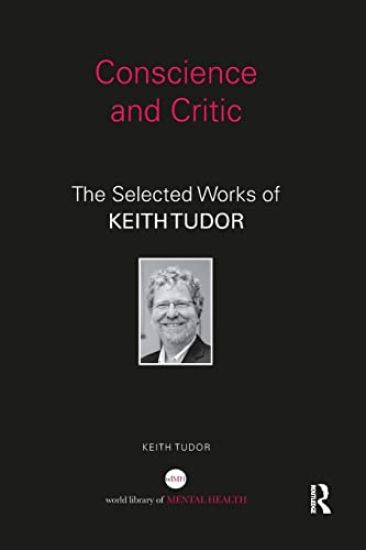
Conscience and Critic

Conscience and Critic

Keith Tudor

Routledge
2018
nidottu
Conscience and Critic: The Selected Works of Keith Tudor brings together 35 years of Keith Tudor’s finest contributions to the field of mental health. Covering a wide range of subjects that encompass psychotherapy, social policy and positive mental health or wellbeing, Keith reflects on practice and theory from his wealth of experience in various fields of practice, including probation, counselling, field, hospital and psychiatric social work, psychotherapy, supervision, and education and training.Over the span of his professional career, Keith’s concerns and contributions have focused on the interface between psyche and society. This is reflected in his writings on the politics of disability, mental health reform, class-conscious therapeutic practice, the application and critique of theory, health and professional regulation and registration.Conscience and Critic will be of interest to psychotherapists and mental health practitioners, as well as students of psychotherapy.
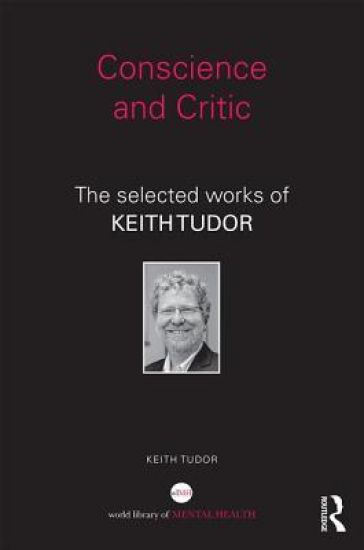
Conscience and Critic

Conscience and Critic

Keith Tudor

Routledge
2016
sidottu
Conscience and Critic: The Selected Works of Keith Tudor brings together 35 years of Keith Tudor’s finest contributions to the field of mental health. Covering a wide range of subjects that encompass psychotherapy, social policy and positive mental health or wellbeing, Keith reflects on practice and theory from his wealth of experience in various fields of practice, including probation, counselling, field, hospital and psychiatric social work, psychotherapy, supervision, and education and training.Over the span of his professional career, Keith’s concerns and contributions have focused on the interface between psyche and society. This is reflected in his writings on the politics of disability, mental health reform, class-conscious therapeutic practice, the application and critique of theory, health and professional regulation and registration.Conscience and Critic will be of interest to psychotherapists and mental health practitioners, as well as students of psychotherapy.
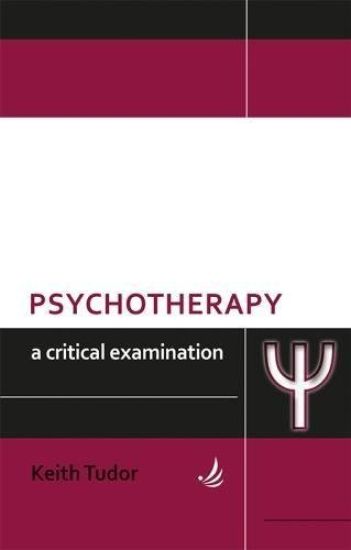
Psychotherapy: A critical examination
The aim of the series is to subject the varied psy professions to rigorous critique by leading proponents in their fields. In this book, internationally acknowledges academic and psychotherapist, teacher and supervisor Keith Tudor focuses his spotlight on psychotherapy.