Kirjojen hintavertailu. Mukana 11 342 296 kirjaa ja 12 kauppaa.

Kirjahaku

Etsi kirjoja tekijän nimen, kirjan nimen tai ISBN:n perusteella.

5 kirjaa tekijältä Keith Wailoo

How Cancer Crossed the Color Line

How Cancer Crossed the Color Line

Keith Wailoo

Oxford University Press Inc
2017
nidottu
In the course of the 20th century, cancer went from being perceived as a white woman's nemesis to a "democratic disease" to a fearsome threat in communities of color. Drawing on film and fiction, on medical and epidemiological evidence, and on patients' accounts, Keith Wailoo tracks this transformation in cancer awareness, revealing how not only awareness, but cancer prevention, treatment, and survival have all been refracted through the lens of race. Spanning more than a century, the book offers a sweeping account of the forces that simultaneously defined cancer as an intensely individualized and personal experience linked to whites, often categorizing people across the color line as racial types lacking similar personal dimensions. Wailoo describes how theories of risk evolved with changes in women's roles, with African-American and new immigrant migration trends, with the growth of federal cancer surveillance, and with diagnostic advances, racial protest, and contemporary health activism. The book examines such powerful and transformative social developments as the mass black migration from rural south to urban north in the 1920s and 1930s, the World War II experience at home and on the war front, and the quest for civil rights and equality in health in the 1950s and '60s. It also explores recent controversies that illuminate the diversity of cancer challenges in America, such as the high cancer rates among privileged women in Marin County, California, the heavy toll of prostate cancer among black men, and the questions about why Vietnamese-American women's cervical cancer rates are so high. A pioneering study, How Cancer Crossed the Color Line gracefully documents how race and gender became central motifs in the birth of cancer awareness, how patterns and perceptions changed over time, and how the "war on cancer" continues to be waged along the color line.
How Cancer Crossed the Color Line

How Cancer Crossed the Color Line

Keith Wailoo

Oxford University Press Inc
2011
sidottu
In the course of the 20th century, cancer went from being perceived as a white woman's nemesis to a "democratic disease" to a fearsome threat in communities of color. Drawing on film and fiction, on medical and epidemiological evidence, and on patients' accounts, Keith Wailoo tracks this transformation in cancer awareness, revealing how not only awareness, but cancer prevention, treatment, and survival have all been refracted through the lens of race. Spanning more than a century, the book offers a sweeping account of the forces that simultaneously defined cancer as an intensely individualized and personal experience linked to whites, often categorizing people across the color line as racial types lacking similar personal dimensions. Wailoo describes how theories of risk evolved with changes in women's roles, with African-American and new immigrant migration trends, with the growth of federal cancer surveillance, and with diagnostic advances, racial protest, and contemporary health activism. The book examines such powerful and transformative social developments as the mass black migration from rural south to urban north in the 1920s and 1930s, the World War II experience at home and on the war front, and the quest for civil rights and equality in health in the 1950s and '60s. It also explores recent controversies that illuminate the diversity of cancer challenges in America, such as the high cancer rates among privileged women in Marin County, California, the heavy toll of prostate cancer among black men, and the questions about why Vietnamese-American women's cervical cancer rates are so high. A pioneering study, How Cancer Crossed the Color Line gracefully documents how race and gender became central motifs in the birth of cancer awareness, how patterns and perceptions changed over time, and how the "war on cancer" continues to be waged along the color line.
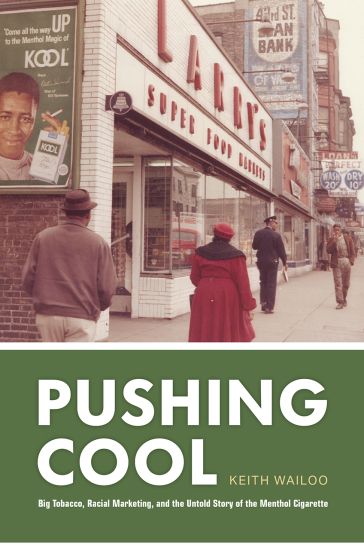
Pushing Cool

Pushing Cool

Keith Wailoo

University of Chicago Press
2021
sidottu
Police put Eric Garner in a fatal chokehold for selling cigarettes on a New York City street corner. George Floyd was killed by police outside a store in Minneapolis known as “the best place to buy menthols.” Black smokers overwhelmingly prefer menthol brands such as Kool, Salem, and Newport. All of this is no coincidence. The disproportionate Black deaths and cries of “I can’t breathe” that ring out in our era—because of police violence, COVID-19, or menthol smoking—are intimately connected to a post-1960s history of race and exploitation. In Pushing Cool, Keith Wailoo tells the intricate and poignant story of menthol cigarettes for the first time. He pulls back the curtain to reveal the hidden persuaders who shaped menthol buying habits and racial markets across America: the world of tobacco marketers, consultants, psychologists, and social scientists, as well as Black lawmakers and civic groups like the NAACP. Today most Black smokers buy menthols, and calls to prohibit their circulation hinge on a history of the industry’s targeted racial marketing. Ten years ago, when Congress banned flavored cigarettes as criminal enticements to encourage youth smoking, menthol cigarettes were also slated to be banned. Through a detailed study of internal tobacco industry documents, Wailoo exposes why they weren’t and how they remain so popular with Black smokers. Spanning a century, Pushing Cool reveals how the twin deceptions of health and Black affinity for menthol were crafted—and how the industry’s disturbingly powerful narrative has endured to this day.
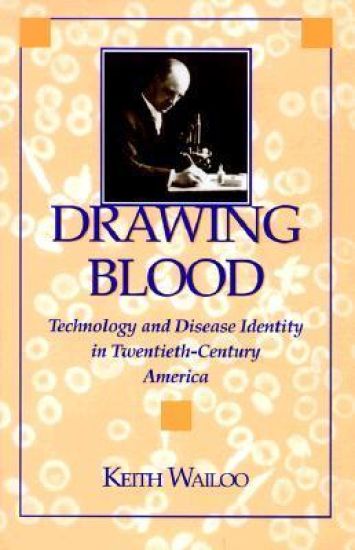
Drawing Blood

Drawing Blood

Keith Wailoo

Johns Hopkins University Press
1999
pokkari
In Drawing Blood, medical historian Keith Wailoo uses the story of blood diseases to explain how physicians in this century wielded medical technology to define disease, carve out medical specialties, and shape political agendas. As Wailoo's account makes clear, the seemingly straightforward process of identifying disease is invariably influenced by personal, professional, and social factors-and as a result produces not only clarity and precision but also bias and outright error. Drawing Blood reveals the ways in which physicians and patients as well as the diseases themselves are simultaneously shaping and being shaped by technology, medical professionalization, and society at large. This thought-provoking cultural history of disease, medicine, and technology offers an important perspective for current discussions of HIV and AIDS, genetic blood testing, prostate-specific antigen, and other important issues in an age of technological medicine. "Makes clear that the high stakes involved in medical technology are not just financial, but moral and far reaching. They have been harnessed to describe clinical phenomena and to reflect social and cultural realities that influence not only medical treatment but self-identity, power, and authority."-Susan E. Lederer, H-Net Humanities & Social Sciences On Line "Wailoo's masterful study of hematology and its disease discourse is a model of interdisciplinarity, combining cultural analysis, social history, and the history of medical ideas and technology to produce a complex narrative of disease definition, diagnosis, and treatment...He reminds us that medical technology is a neutral artifact of history. It can be, and has been, used to clarify and to cloud the understanding of disease, and it has the potential both to constrain and to emancipate its subjects."-Regina Morantz-Sanchez, Journal of Interdisciplinary History
Pain

Pain

Keith Wailoo

Johns Hopkins University Press
2015
pokkari
In this history of American political culture, Keith Wailoo examines how pain has defined the line between liberals and conservatives from just after World War II to the present. From disabling pain to end-of-life pain to fetal pain, the battle over whose pain is real and who deserves relief has created stark ideological divisions at the bedside, in politics, and in the courts. Beginning with the return of soldiers after World War II and fierce medical and political disagreements about whether pain constitutes a true disability, Wailoo explores the 1960s rise of an expansive liberal pain standard along with the emerging conviction that subjective pain was real, disabling, and compensable. These concepts were attacked during the Reagan era, when a conservative backlash led to diminished disability aid and an expanding role of courts as arbiters in the politicized struggle to define pain. New fronts in pain politics opened nationwide as advocates for death with dignity insisted that end-of-life pain warranted full relief, while the religious right mobilized around fetal pain. The book ends with the 2003 OxyContin arrest of conservative talk show host Rush Limbaugh, a cautionary tale about deregulation and the widening gaps between the overmedicated and the undertreated.