Kirjojen hintavertailu. Mukana 11 244 527 kirjaa ja 12 kauppaa.

Kirjahaku

Etsi kirjoja tekijän nimen, kirjan nimen tai ISBN:n perusteella.

68 kirjaa tekijältä Keith Ward

Religion and Revelation

Religion and Revelation

Keith Ward

Clarendon Press
1994
nidottu
Since first Thomas Aquinas defined theology as revelation, or the rational elucidation of revealed truth, the idea of revelation has played a fundamental role in the history of western theology. This book provides a new and detailed investigation of the concept, examining its nature, sources, and limitations in all five of the major scriptural religions of the world: Christianity, Judaism, Islam, Hinduism, and Buddhism. The first part of the book discusses the nature of theology, and expounds the comparative method as the most useful and appropriate for the modern age. Part Two focuses on the nature of religion and its early historical manifestations, whilst the third part of the book goes on to consider the idea of revelation as found in the great canonical traditions of the religions of the world. Part Four develops the distinctively Christian idea of revelation as divine self-expression in history. The final part of the book discusses how far the idea of revelation must be revised or adapted in the light of modern historical and scientific thought, and proposes a new and positive theology of revelation for the future. The book includes discussions of the work of most major theologians and scholars in the study of religion - Aquinas, Tillich, Barth, Temple, Frazer, and Evans Pritchard - and should be of interest to many scholars and students of comparative religion and theology, and anthropologists.
Religion and Creation

Religion and Creation

Keith Ward

Clarendon Press
1996
sidottu
This book is the second part of a major project of comparative theology begun with Religion and Revelation (Clarendon Press, 1994), which looks at major concepts of faith in all four of the main scriptural religions of the world. In Religion and Creation, the author explores the idea of a creator God in the work of twentieth century writers from Judaism, Islam, Hinduism, and Christianity. He develops a positive concept of God which stresses God's dynamic and responsive relation to the temporal structure of the universe, and the importance of that structure to the self-expression of the divine being. Professor Ward goes on to present a Trinitarian doctrine of creation, drawing inspiration from a wider set of theistic traditions and recent discussions in physics in the realm of cosmology.
Religion and Creation

Religion and Creation

Keith Ward

Clarendon Press
1996
nidottu
This book is the second part of a major project of comparative theology begun with Religion and Revelation (Clarendon Press, 1994), which looks at major concepts of faith in all four of the main scriptural religions of the world. In Religion and Creation, the author explores the idea of a creator God in the work of twentieth century writers from Judaism, Islam, Hinduism, and Christianity. He develops a positive concept of God which stresses God's dynamic and responsive relation to the temporal structure of the universe, and the importance of that structure to the self-expression of the divine being. Professor Ward goes on to present a Trinitarian doctrine of creation, drawing inspiration from a wider set of theistic traditions and recent discussions in physics in the realm of cosmology.
Religion and Revelation

Religion and Revelation

Keith Ward

Clarendon Press
1994
sidottu
Since first Thomas Aquinas defined theology as revelation, or the rational elucidation of revealed truth, the idea of revelation has played a fundamental role in the history of western theology. This book provides a new and detailed investigation of the concept, examining its nature, sources, and limitations in all five of the major scriptural religions of the world: Christianity, Judaism, Islam, Hinduism, and Buddhism. The first part of the book discusses the nature of theology, and expounds the comparative method as the most useful and appropriate for the modern age. Part Two focuses on the nature of religion and its early historical manifestations, whilst the third part of the book goes on to consider the idea of revelation as found in the great canonical traditions of the religions of the world. Part Four develops the distinctively Christian idea of revelation as divine self-expression in history. The final part of the book discusses how far the idea of revelation must be revised or adapted in the light of modern historical and scientific thought, and proposes a new and positive theology of revelation for the future. The book includes discussions of the work of most major theologians and scholars in the study of religion - Aquinas, Tillich, Barth, Temple, Frazer, and Evans Pritchard - and should be of interest to many scholars and students of comparative religion and theology, and anthropologists.
Religion and Human Nature

Religion and Human Nature

Keith Ward

Oxford University Press
1998
sidottu
Continuing Keith Ward's series on comparative religion, this book deals with religious views of human nature and destiny. The beliefs of six major traditions are presented: the view of Advaita Vedanta that there is one Supreme Self, unfolding into the illusion of individual existence; the Vaishnava belief that there is an infinite number of souls, whose destiny is to be released from material embodiment; the Buddhist view that there is no eternal Self; the Abrahamic belief that persons are essentially embodied souls; and the materialistic position that persons are complex material organisms. Indian ideas of rebirth, karma, and liberation from samsara are critically analysed and compared with semitic belief in the intermediate state of Sheol, Purgatory or Paradise, the Final Judgement and the resurrection of the body. The impact of scientific theories of cosmic and biological evolution on religious beliefs is assessed, and a form of 'soft emergent materialism' is defended, with regard to the soul. In this context, a Christian doctrine of original sin and atonement is presented, stressing the idea of soterial, as opposed to forensic, justice. Finally, a Christian view of personal immortality and the 'end of all things' is developed in conversation with Jewish and Muslim beliefs about judgement and resurrection.
Religion and Human Nature

Religion and Human Nature

Keith Ward

Oxford University Press
1998
nidottu
Continuing Keith Ward's series on comparative religion, this book deals with religious views of human nature and destiny. The beliefs of six major traditions are presented: the view of Advaita Vedanta that there is one Supreme Self, unfolding into the illusion of individual existence; the Vaishnava belief that there is an infinite number of souls, whose destiny is to be released from material embodiment; the Buddhist view that there is no eternal Self; the Abrahamic belief that persons are essentially embodied souls; and the materialistic position that persons are complex material organisms. Indian ideas of rebirth, karma, and liberation from samsara are critically analysed and compared with semitic belief in the intermediate state of Sheol, Purgatory or Paradise, the Final Judgement and the resurrection of the body. The impact of scientific theories of cosmic and biological evolution on religious beliefs is assessed, and a form of 'soft emergent materialism' is defended, with regard to the soul. In this context, a Christian doctrine of original sin and atonement is presented, stressing the idea of soterial, as opposed to forensic, justice. Finally, a Christian view of personal immortality and the 'end of all things' is developed in conversation with Jewish and Muslim beliefs about judgement and resurrection.
The The Priority of Mind

The The Priority of Mind

Keith Ward

JAMES CLARKE CO LTD
2023
nidottu
Is the mind just a by-product of the brain? Or is mind the fundamental reality, which creates matter? In The Priority of Mind, Keith Ward mounts a definitive defence of mind as prior to matter. In an accessible style, he unpacks the sources and abilities of the mind, situates it in the wider world, or cosmos, and proposes a relation between mind and virtue, and the nature of mind after death. Along the way, he explores the different philosophical approaches to the mind-matter question taken by thinkers over time, settling on idealism as the teaching of most classical philosophers, and as most consistent with modern science. Lay readers and scholars alike will relish Ward's clear, methodical exposition, and his counterarguments against the materialist narrative that dominates much of popular philosophical thinking today.
The Evidence for God

The Evidence for God

Keith Ward

Darton,Longman Todd Ltd
2014
nidottu
‘It is remarkable how atheism is becoming fashionable. It has become almost compulsory to say that you do not believe in God. … I believe that science itself points in a very different direction. There is a huge amount of evidence for the reality of a spiritual dimension to the world.’ There is a level of being that is deeper than the physical universe, writes Keith Ward. It has purpose and value, and we can sometimes feel it and find in it resources of strength, hope, and inspiration. Through an exploration of six areas of human experience – the arts, morality, philosophy, science, religion and personal experience – Ward demonstrates the existence of more than simply physical facts. His evidence builds to an impressive argument for a ‘sense for the spiritual dimension’ that is beyond and yet expressed in and through physical facts.
What the Bible Really Teaches

What the Bible Really Teaches

Keith Ward

SPCK Publishing
2004
nidottu
This prominent theologian adds his contribution to the authority of Scripture debate An impassioned contribution to the debate about the authority of scripture - how we read the Bible, and how, the author believes, a fundamentalist reading is unsustainable. This book will infuriate many and delight others, and will make a valuable contribution to the debate, which we plan to join with voices from many corners. The book works through a series of Bible passages often cited as 'proof texts', and explores how they can be read, and how they are used.
A Guide to Christianity

A Guide to Christianity

Keith Ward

SPCK Publishing
2007
nidottu
A systematic guide to the Christian faith, taking a broad sweep from the big bang through the Old Testament to the New and beyond into the history of the faith and modern theological thinking. The hard questions posed by the Church's history are not ducked and the challenges of the enlightenment and modern science are given full weight. The book explores contemporary strands of Christian thinking and relates them sensitively and intelligently to world faith and non-faith viewpoints. It is a book that many thinking Christians and those thinking about Christianity will find invaluable in its rigorous, open and intelligent approach invaluable.
The Word of God

The Word of God

Keith Ward

SPCK Publishing
2010
pokkari
Keith Ward introduces this volume on the world's greatest ever bestseller by suggesting that the Bible is neither a book dictated by God, as some believe, nor just a set of out-dated taboos and politically slanted histories, as those at the opposite extreme maintain. Rather, it is a very mixed set of documents, by many different writers, from many different times, which records the struggle of many people in one particular religious tradition to respond to their discernments of a transcendent spiritual power. What makes the Bible distinctive among other religious books is that the dominant image of transcendence, of spirituality, that slowly develops in its pages is the image of a power that helps humans to seek a moral goal in history even when such a thing would seem impossible to achieve - were it not for the power of grace. The Bible is, in short, a spiritual text.
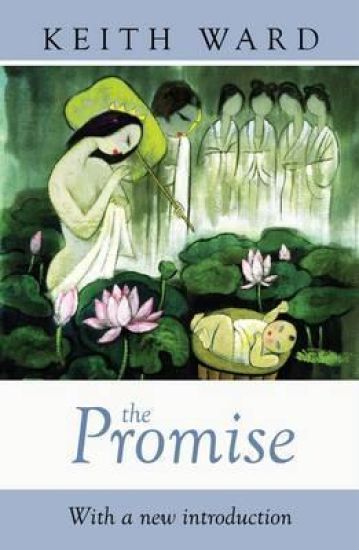
The Promise

The Promise

Keith Ward

SPCK Publishing
2010
nidottu
Keith Ward retells all the events of the first five books of the Bible in a way that attempts to bring out their spiritual meaning, to show their place in the total story, to explain references and terms which are often puzzling, and to incorporate insight from Jewish and Christian meditation.
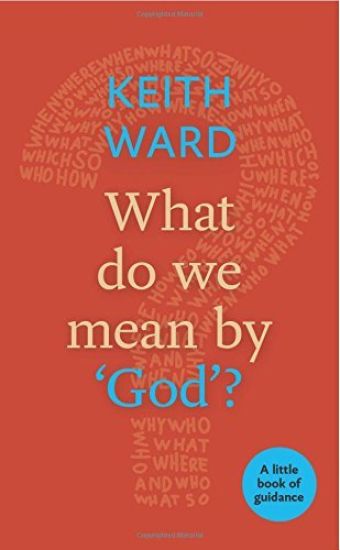
What Do We Mean by 'God'?

What Do We Mean by 'God'?

Keith Ward

SPCK Publishing
2015
nidottu
Language about God is something like the language of poetry - The poetic use of language is not to increase your information about the world. We know facts about the world without having poetry. The use of words in poetry is to evoke in us a certain attitude or way of looking at things or feeling about things...If this is the use of religious language, what sort of view of the world is it trying to convey? I think we might say it is trying to convey that the world is an expression of a reality beyond it...' Keith Ward unpacks the meaning of the word 'God' and explains why we need to get rid of the crude and unhelpful assumptions that still abound. A book for all who are curious about how God, and God's actions, can be understood today. Intended for people looking for answers to life's biggest questions, this little book of guidance will appeal to anyone, whether believer or non-believer, looking for a quick and easy way into the topic.
Love Is His Meaning

Love Is His Meaning

Keith Ward

SPCK Publishing
2017
pokkari
Jesus' teaching has changed the world. Yet his sayings can often seem cryptic and hard to understand. In Love Is His Meaning, Keith Ward explores the various figures of speech and images that Jesus used, and finds they are all ways of expressing and evoking the self-giving love of God, manifested supremely in Jesus' life. They communicate spiritual truths, often not in a literal but in a poetic way. They encourage us to take our own moral decisions with sensitivity and care for others. They show that God's love will never abandon anyone, and that it extends to everyone in the world without exception. And they promise a fulfilment of our hopes for a just and peaceable world that surpasses anything we might describe or imagine. Putting aside literalist, authoritarian, legalistic, judgemental and divisive presentations of Jesus' teachings, the author shows that what remains is the gospel of a divine love - a love stronger than death, and the only power that can and will redeem our disordered world.
The Mystery of Christ

The Mystery of Christ

Keith Ward

SPCK Publishing
2018
nidottu
Though little can be known with certainty about the historical Jesus, the image of a heavenly figure – `Christ crucified and risen’ – was constructed out of his life and teachings. This vision of divine reality transcends traditional Hebrew poetic thought, retaining its ancient power in the context of our new understanding of a vast and evolving cosmos. In order to help us form a truly contemporary Christian spirituality, Keith Ward (writing in our own time and place rather than, for example, in the 4th century like St Augustine, the 14th like Julian of Norwich, the 16th like Ignatius of Loyola, or the 20th like Thomas Merton) offers a set of reflections on what he believes to be the unique and life-transforming revelation of God in the person of Jesus Christ. And as we explore the spiritual truths relating to this mystery as expressed in the Gospels, meditation leads naturally to prayer.
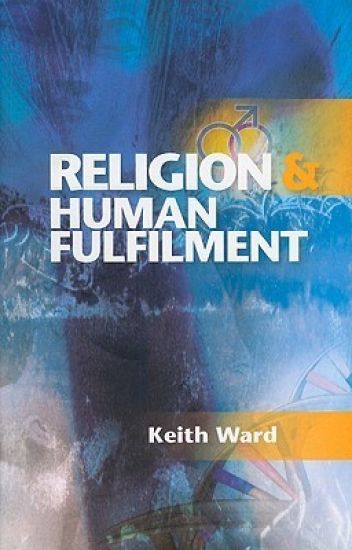
Religion and Human Fulfilment

Religion and Human Fulfilment

Keith Ward

SCM Press
2008
nidottu
"Religion and Human Fulfilment" is a short, accessible reflection on a series of ethical problems in the light of what the world's major faith traditions have to say about them. Keith Ward sets out that morality is an autonomous entity knowable to all human beings and then explores the true nature of morality. The world religions agree on moral goodness as the ultimate goal for humans strive for. But what other beliefs about morality do they share. The author proceeds to trace the consequences of religious views on morality by considering specific moral problems such as violence, human genetic modification and ethical concerns around the beginning and ending of human life as well as questions about secular and religious law. Chapters:1 The God, Gene, Religion and Altruism 2. Islam and Jihad 3. Interference with Nature 4. Christianity and Gender 5. Buddhism and Questions of Life and Death 6. Religious Law and Human Freedom
Ethics and Christianity

Ethics and Christianity

Keith Ward

Routledge
2002
sidottu
First published in 2002. This is Volume XII of twelve in the Library of Philosophy series on Ethics. Written in 1970, this book seeks to elucidate the fundamental characteristics of Christian ethics. The main concern has been with what is of most vital concern to the moral philosopher-the exposition of the formal characteristics of a system of morality rather than with the detail of its content and application.
Why There Almost Certainly Is a God
Richard Dawkins recently claimed that 'no theologian has ever produced a satisfactory response to his arguments'. Well-known broadcaster and author Keith Ward is one of Britain's foremost philosopher-theologians.This is his response. Ward welcomes all comers into philosophy's world of clear definitions, sharp arguments, and diverse conclusions. But when Dawkins enters this world, his passion tends to get the better of him, and he descends into stereotyping, pastiche, and mockery. In this stimulating and thought-provoking philosophical challenge, Ward demonstrates not only how Dawkins' arguments are flawed, but that a perfectly rational case can be made that there, almost certainly, is a God.
Is Religion Dangerous?

Is Religion Dangerous?

Keith Ward

Lion Books
2011
nidottu
Many commentators today claim that religion is dangerous and harmful. In addressing this question, Keith Ward begins by defining what religion actually is and how most human harm has been caused. He then looks at why people say that religion is dangerous, focusing particularly on religious wars and conflicts and on specific attacks on religion, such as the claims that God is wrathful, that religion is intolerant, that religious morality is primitive and cruel. Keith Ward argues that religion produces great good - for example, in terms of hospitals, the abolition of slavery, great art and music, moral heroism, and philosophy and science. Religion, he concludes, is the best rational basis for morality.
Is Religion Irrational?

Is Religion Irrational?

Keith Ward

Lion Books
2011
nidottu
If the New Atheists are to be believed, religious belief is not only dangerous and irrational, but just plain stupid. With increasingly intolerant polemic they are dismissing the views of religious people, and misconstruing them in the process. In this book, Keith Ward debunks the notion that rationality and intelligence are incompatible with belief in God, going through some of the main criticisms raised by the New Atheists (and their predecessors), for example: - Does God cause evil? - Is the universe intelligently designed? - Is God free? This book is essential reading for anyone interested in the current cultural war between atheism and belief.