Kirjojen hintavertailu. Mukana 11 342 296 kirjaa ja 12 kauppaa.

Kirjahaku

Etsi kirjoja tekijän nimen, kirjan nimen tai ISBN:n perusteella.

3 kirjaa tekijältä Kelly Enright

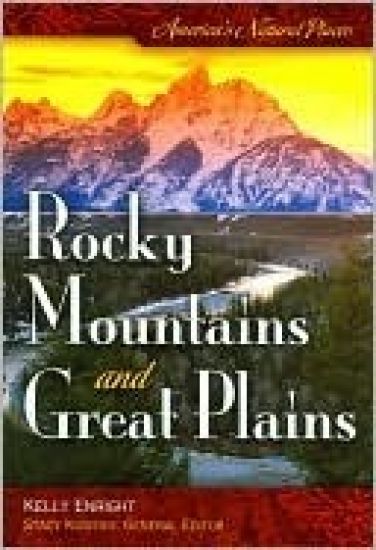
America's Natural Places: Rocky Mountains and Great Plains
From Rocky Mountain National Park in Colorado to the Tallgrass Prairie National Preserve in Kansas, this volume provides a snapshot of the most spectacular and important natural places in the Great Plains and Rocky Mountains. America's Natural Places: Rocky Mountains and Great Plains examines over 50 of the most spectacular and important areas of this region, with each entry describing the importance of the area, the flora and fauna that it supports, threats to the survival of the region, and what is being done to protect it. Organized by state within the volume, this work informs readers about the wide variety of natural areas across the Rocky Mountains and Great Plains and identifies places that may be near them that demonstrate the importance of preserving such regions.
The Maximum of Wilderness

The Maximum of Wilderness

Kelly Enright

University of Virginia Press
2012
sidottu
Danger in the Congo! The unexplored Amazon! Long perceived as a place of mystery and danger, and more recently as a fragile system requiring our protection, the tropical forest captivated America for over a century. In The Maximum of Wilderness, Kelly Enright traces the representation of tropical forests (what Americans have typically thought of as “jungles”) and their place in both our perception of “wildness” and the globalisation of the environmental movement. In the early twentieth century, jungle adventure (as depicted by countless books and films, from Burroughs’s Tarzan novels to King Kong) had enormous mass appeal. Concurrent with the proliferation of a popular image of the jungle that masked many of its truths was the work of American naturalists who sought to represent an “authentic” view of tropical nature through museums, zoological and botanical gardens, books, and film. Enright examines the relationship between popular and scientific representations of the forest through the lives and work of Martin and Osa Johnson (who with films such as Congorilla and Simba blended authenticity with adventure), as well as renowned naturalists John Muir, William Beebe, David Fairchild, and Richard Evans Schultes. The author goes on to explore a startling shift at midcentury in the perception of the tropical forest—from the “jungle,” a place that endangers human life, to the “rain forest,” a place that is itself endangered.
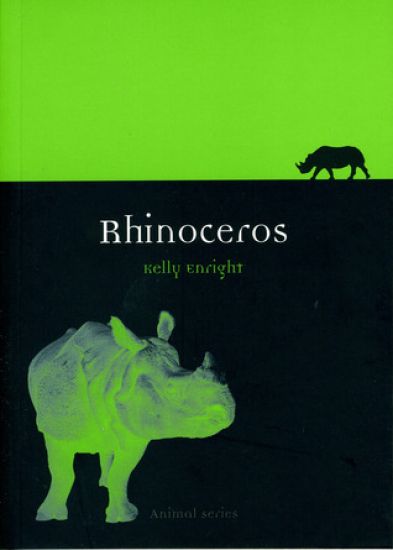
Rhinoceros

Rhinoceros

Kelly Enright

Reaktion Books
2008
nidottu
On Disneyland's ‘Jungle Cruise’, three men are forever chased up a palm tree by a rhinoceros whose sharp horn moves endlessly just out of reach of the lowest man's bottom. Having lived with the memory of this ride since childhood, the author was struck when she came across a reference to this ‘natives up a tree’ scene in an 1838 natural history description. Such images have demonized rhinos for generations; this book examines how such a solitary animal came to earn such a bad reputation. Rhinoceros’ wildness has roots in the ancient, prehistoric and mythic. Many sightings of the rhinoceros were thought to prove the existence of the mythical unicorn, which was said to be impossible to capture alive. Later the rhino was captured, and a few were brought to Europe throughout the Renaissance to the 18th century to be displayed as wonders of nature. In America the first rhinoceros arrived in 1830 and was hailed as the most savage of animals, and thereafter it became the most desired hunting trophy. No wonder that these animals are now an endangered species when we also consider that rhino horn is much sought after as an ingredient in Asian medicine. Rhinoceros explores sources ranging from film and literature, to natural history description and exhibition, and asks whether the savagery of the rhino is a reality or a legacy of its mythic past. Well illustrated and persuasively argued, Rhinoceros will appeal to all enthusiasts eager to learn about the culture, history and nature of this animal, as well as specialists, from art historians to conservation biologists.