Kirjojen hintavertailu. Mukana 11 244 527 kirjaa ja 12 kauppaa.

Kirjahaku

Etsi kirjoja tekijän nimen, kirjan nimen tai ISBN:n perusteella.

44 kirjaa tekijältä Kelly Oliver

Women as Weapons of War

Women as Weapons of War

Kelly Oliver

Columbia University Press
2007
sidottu
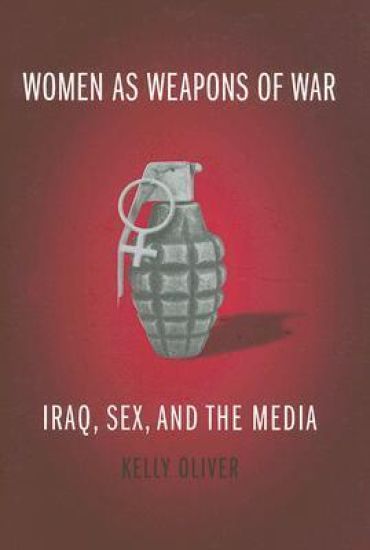
Ever since Eve tempted Adam with her apple, women have been regarded as a corrupting and destructive force. The very idea that women can be used as interrogation tools, as evidenced in the infamous Abu Ghraib torture photos, plays on age-old fears of women as sexually threatening weapons, and therefore the literal explosion of women onto the war scene should come as no surprise. From the female soldiers involved in Abu Ghraib to Palestinian women suicide bombers, women and their bodies have become powerful weapons in the Afghanistan and Iraq wars. In Women as Weapons of War, Kelly Oliver reveals how the media and the administration frequently use metaphors of weaponry to describe women and female sexuality and forge a deliberate link between notions of vulnerability and images of violence. Focusing specifically on the U.S. campaigns in Afghanistan and Iraq, Oliver analyzes contemporary discourse surrounding women, sex, and gender and the use of women to justify America's decision to go to war. For example, the administration's call to liberate "women of cover," suggesting a woman's right to bare arms is a sign of freedom and progress. Oliver also considers what forms of cultural meaning, or lack of meaning, could cause both the guiltlessness demonstrated by female soldiers at Abu Ghraib and the profound commitment to death made by suicide bombers. She examines the pleasure taken in violence and the passion for death exhibited by these women and what kind of contexts created them. In conclusion, Oliver diagnoses our cultural fascination with sex, violence, and death and its relationship with live news coverage and embedded reporting, which naturalizes horrific events and stymies critical reflection. This process, she argues, further compromises the borders between fantasy and reality, fueling a kind of paranoid patriotism that results in extreme forms of violence.
Women as Weapons of War

Women as Weapons of War

Kelly Oliver

Columbia University Press
2010
pokkari
Ever since Eve tempted Adam with her apple, women have been regarded as a corrupting and destructive force. The very idea that women can be used as interrogation tools, as evidenced in the infamous Abu Ghraib torture photos, plays on age-old fears of women as sexually threatening weapons, and therefore the literal explosion of women onto the war scene should come as no surprise. From the female soldiers involved in Abu Ghraib to Palestinian women suicide bombers, women and their bodies have become powerful weapons in the Afghanistan and Iraq wars. In Women as Weapons of War, Kelly Oliver reveals how the media and the administration frequently use metaphors of weaponry to describe women and female sexuality and forge a deliberate link between notions of vulnerability and images of violence. Focusing specifically on the U.S. campaigns in Afghanistan and Iraq, Oliver analyzes contemporary discourse surrounding women, sex, and gender and the use of women to justify America's decision to go to war. For example, the administration's call to liberate "women of cover," suggesting a woman's right to bare arms is a sign of freedom and progress. Oliver also considers what forms of cultural meaning, or lack of meaning, could cause both the guiltlessness demonstrated by female soldiers at Abu Ghraib and the profound commitment to death made by suicide bombers. She examines the pleasure taken in violence and the passion for death exhibited by these women and what kind of contexts created them. In conclusion, Oliver diagnoses our cultural fascination with sex, violence, and death and its relationship with live news coverage and embedded reporting, which naturalizes horrific events and stymies critical reflection. This process, she argues, further compromises the borders between fantasy and reality, fueling a kind of paranoid patriotism that results in extreme forms of violence.
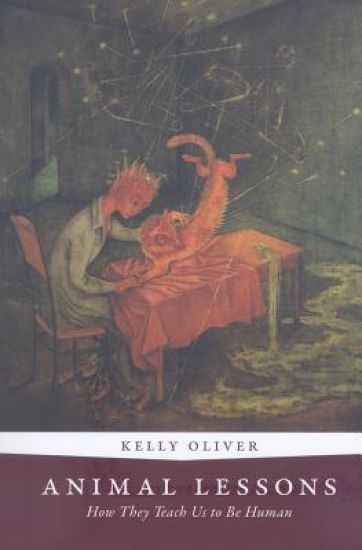
Animal Lessons

Animal Lessons

Kelly Oliver

Columbia University Press
2009
sidottu
Philosophy reads humanity against animality, arguing that "man" is man because he is separate from beast. Deftly challenging this position, Kelly Oliver proves that, in fact, it is the animal that teaches us to be human. Through their sex, their habits, and our perception of their purpose, animals show us how not to be them. This kinship plays out in a number of ways. We sacrifice animals to establish human kinship, but without the animal, the bonds of "brotherhood" fall apart. Either kinship with animals is possible or kinship with humans is impossible. Philosophy holds that humans and animals are distinct, but in defending this position, the discipline depends on a discourse that relies on the animal for its very definition of the human. Through these and other examples, Oliver does more than just establish an animal ethics. She transforms ethics by showing how its very origin is dependent upon the animal. Examining for the first time the treatment of the animal in the work of Heidegger, Merleau-Ponty, Derrida, Agamben, Freud, Lacan, and Kristeva, among others, Animal Lessons argues that the animal bites back, thereby reopening the question of the animal for philosophy.
Animal Lessons

Animal Lessons

Kelly Oliver

Columbia University Press
2009
pokkari
Philosophy reads humanity against animality, arguing that "man" is man because he is separate from beast. Deftly challenging this position, Kelly Oliver proves that, in fact, it is the animal that teaches us to be human. Through their sex, their habits, and our perception of their purpose, animals show us how not to be them. This kinship plays out in a number of ways. We sacrifice animals to establish human kinship, but without the animal, the bonds of "brotherhood" fall apart. Either kinship with animals is possible or kinship with humans is impossible. Philosophy holds that humans and animals are distinct, but in defending this position, the discipline depends on a discourse that relies on the animal for its very definition of the human. Through these and other examples, Oliver does more than just establish an animal ethics. She transforms ethics by showing how its very origin is dependent upon the animal. Examining for the first time the treatment of the animal in the work of Heidegger, Merleau-Ponty, Derrida, Agamben, Freud, Lacan, and Kristeva, among others, Animal Lessons argues that the animal bites back, thereby reopening the question of the animal for philosophy.
Knock Me Up, Knock Me Down

Knock Me Up, Knock Me Down

Kelly Oliver

Columbia University Press
2012
sidottu
No longer is pregnancy a repulsive or shameful condition in Hollywood films, but an attractive attribute, often enhancing the romantic or comedic storyline of a female character. Kelly Oliver investigates this curious shift and its reflection of changing attitudes toward women's roles in reproduction and the family. Not all representations signify progress. Oliver finds that in many pregnancy films, our anxieties over modern reproductive practices and technologies are made manifest, and in some cases perpetuate conventions curtailing women's freedom. Reading such films as Where the Heart Is (2000), Riding in Cars with Boys (2001), Palindromes (2004), Saved! (2004), Quinceanera (2006), Children of Men (2006), Knocked Up (2007), Juno (2007), Baby Mama (2008), Away We Go (2009), Precious (2009), The Back-up Plan (2010), Due Date (2010), and Twilight: Breaking Dawn (2011), Oliver investigates pregnancy as a vehicle for romance, a political issue of "choice," a representation of the hosting of "others," a prism for fears of miscegenation, and a screen for modern technological anxieties.
Knock Me Up, Knock Me Down

Knock Me Up, Knock Me Down

Kelly Oliver

Columbia University Press
2012
pokkari
No longer is pregnancy a repulsive or shameful condition in Hollywood films, but an attractive attribute, often enhancing the romantic or comedic storyline of a female character. Kelly Oliver investigates this curious shift and its reflection of changing attitudes toward women's roles in reproduction and the family. Not all representations signify progress. Oliver finds that in many pregnancy films, our anxieties over modern reproductive practices and technologies are made manifest, and in some cases perpetuate conventions curtailing women's freedom. Reading such films as Where the Heart Is (2000), Riding in Cars with Boys (2001), Palindromes (2004), Saved! (2004), Quinceanera (2006), Children of Men (2006), Knocked Up (2007), Juno (2007), Baby Mama (2008), Away We Go (2009), Precious (2009), The Back-up Plan (2010), Due Date (2010), and Twilight: Breaking Dawn (2011), Oliver investigates pregnancy as a vehicle for romance, a political issue of "choice," a representation of the hosting of "others," a prism for fears of miscegenation, and a screen for modern technological anxieties.
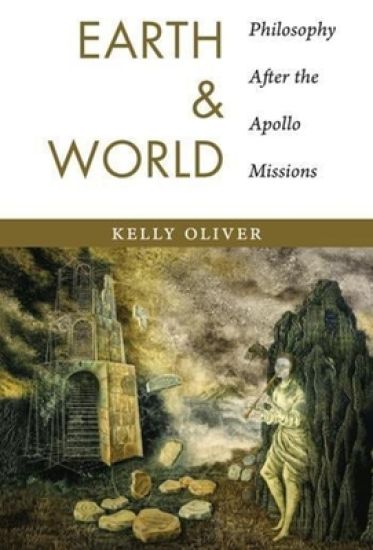
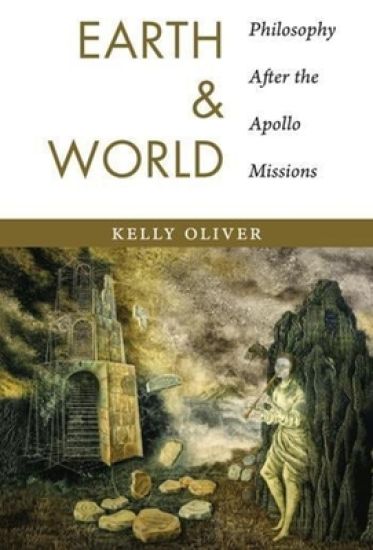
Earth and World

Earth and World

Kelly Oliver

Columbia University Press
2015
sidottu
Critically engaging the work of Immanuel Kant, Hannah Arendt, Martin Heidegger, and Jacques Derrida together with her own observations on contemporary politics, environmental degradation, and the pursuit of a just and sustainable world, Kelly Oliver lays the groundwork for a politics and ethics that embraces otherness without exploiting difference. Rooted firmly in human beings' relationship to the planet and to each other, Oliver shows peace is possible only if we maintain our ties to earth and world. Oliver begins with Immanuel Kant and his vision of politics grounded on earth as a finite surface shared by humans. She then incorporates Hannah Arendt's belief in plural worlds constituted through human relationships; Martin Heidegger's warning that alienation from the Earth endangers not only politics but also the very essence of being human; and Jacques Derrida's meditations on the singular worlds individuals, human and otherwise, create and how they inform the reality we inhabit. Each of these theorists, Oliver argues, resists the easy idealism of world citizenship and globalism, yet they all think about the earth against the globe to advance a grounded ethics. They contribute to a philosophy that avoids globalization's totalizing and homogenizing impulses and instead help build a framework for living within and among the world's rich biodiversity.
Earth and World

Earth and World

Kelly Oliver

Columbia University Press
2015
pokkari
Critically engaging the work of Immanuel Kant, Hannah Arendt, Martin Heidegger, and Jacques Derrida together with her own observations on contemporary politics, environmental degradation, and the pursuit of a just and sustainable world, Kelly Oliver lays the groundwork for a politics and ethics that embraces otherness without exploiting difference. Rooted firmly in human beings' relationship to the planet and to each other, Oliver shows peace is possible only if we maintain our ties to earth and world. Oliver begins with Immanuel Kant and his vision of politics grounded on earth as a finite surface shared by humans. She then incorporates Hannah Arendt's belief in plural worlds constituted through human relationships; Martin Heidegger's warning that alienation from the Earth endangers not only politics but also the very essence of being human; and Jacques Derrida's meditations on the singular worlds individuals, human and otherwise, create and how they inform the reality we inhabit. Each of these theorists, Oliver argues, resists the easy idealism of world citizenship and globalism, yet they all think about the earth against the globe to advance a grounded ethics. They contribute to a philosophy that avoids globalization's totalizing and homogenizing impulses and instead help build a framework for living within and among the world's rich biodiversity.
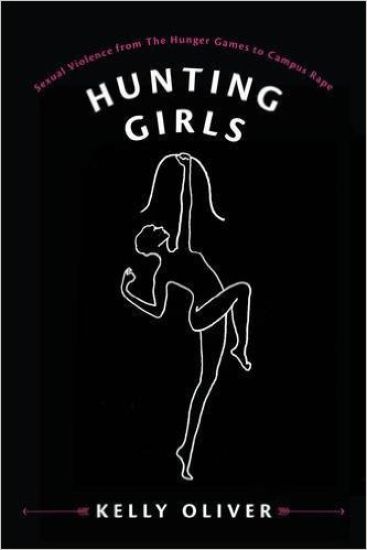
Hunting Girls

Hunting Girls

Kelly Oliver

Columbia University Press
2016
sidottu
Katniss Everdeen (The Hunger Games), Bella Swan (Twilight), Tris Prior (Divergent), and other strong and resourceful characters have decimated the fairytale archetype of the helpless girl waiting to be rescued. Giving as good as they get, these young women access reserves of aggression to liberate themselves-but who truly benefits? By meeting violence with violence, are women turning victimization into entertainment? Are they playing out old fantasies, institutionalizing their abuse? In Hunting Girls, Kelly Oliver examines popular culture's fixation on representing young women as predators and prey and the implication that violence-especially sexual violence-is an inevitable, perhaps even celebrated, part of a woman's maturity. In such films as Kick-Ass (2010), The Girl with the Dragon Tattoo (2011), and Maleficent (2014), power, control, and danger drive the story, but traditional relationships of care bind the narrative, and even the protagonist's love interest adds to her suffering. To underscore the threat of these depictions, Oliver locates their manifestation of violent sex in the growing prevalence of campus rape, the valorization of woman's lack of consent, and the new urgency to implement affirmative consent apps and policies.
Hunting Girls

Hunting Girls

Kelly Oliver

Columbia University Press
2017
pokkari
Katniss Everdeen (The Hunger Games), Bella Swan (Twilight), Tris Prior (Divergent), and other strong and resourceful characters have decimated the fairytale archetype of the helpless girl waiting to be rescued. Giving as good as they get, these young women access reserves of aggression to liberate themselves-but who truly benefits? By meeting violence with violence, are women turning victimization into entertainment? Are they playing out old fantasies, institutionalizing their abuse? In Hunting Girls, Kelly Oliver examines popular culture's fixation on representing young women as predators and prey and the implication that violence-especially sexual violence-is an inevitable, perhaps even celebrated, part of a woman's maturity. In such films as Kick-Ass (2010), The Girl with the Dragon Tattoo (2011), and Maleficent (2014), power, control, and danger drive the story, but traditional relationships of care bind the narrative, and even the protagonist's love interest adds to her suffering. To underscore the threat of these depictions, Oliver locates their manifestation of violent sex in the growing prevalence of campus rape, the valorization of woman's lack of consent, and the new urgency to implement affirmative consent apps and policies.
Reading Kristeva

Reading Kristeva

Kelly Oliver

Indiana University Press
1993
pokkari
" . . . both an excellent introduction and a thoroughgoing analysis of Kristeva's writing." —Signs "The book is a brilliant combination of a recuperative and a critical reading of Kristeva's work." —Changes: An International Journal of Psychology & Psychotherapy " . . . a thorough, detailed, and critical analysis of the writings of Julia Kristeva." —Elizabeth Grosz ". . . the most involved and engaging study of Julia Kristeva's work to date . . ." —The Year's Work in Critical and Cultural Theory This first full-scale feminist interpretation of Kristeva's work situates her within the context of French feminism. Oliver guides her readers through Kristeva's intellectual formation in linguistics, Freud, Lacan, and poetics. This comprehensive introduction to Kristeva makes accessible her important contributions to philosophy, linguistics, and psychoanalytic feminism.
Womanizing Nietzsche

Womanizing Nietzsche

Kelly Oliver

Routledge
1994
sidottu
In Womanizing Nietzsche, Kelly Oliver uses an analysis of the position of woman in Nietzsche's texts to open onto the larger question of philosophy's relation to the feminine and the maternal. Offering readings from Nietzsche, Derrida, Irigaray, Kristeva, Freud and Lacan, Oliver builds an innovative foundation for an ontology of intersubjective relationships that suggests a new approach to ethics.
Womanizing Nietzsche

Womanizing Nietzsche

Kelly Oliver

Routledge
1994
nidottu
In Womanizing Nietzsche, Kelly Oliver uses an analysis of the position of woman in Nietzsche's texts to open onto the larger question of philosophy's relation to the feminine and the maternal. Offering readings from Nietzsche, Derrida, Irigaray, Kristeva, Freud and Lacan, Oliver builds an innovative foundation for an ontology of intersubjective relationships that suggests a new approach to ethics.
Family Values

Family Values

Kelly Oliver

Routledge
1997
sidottu
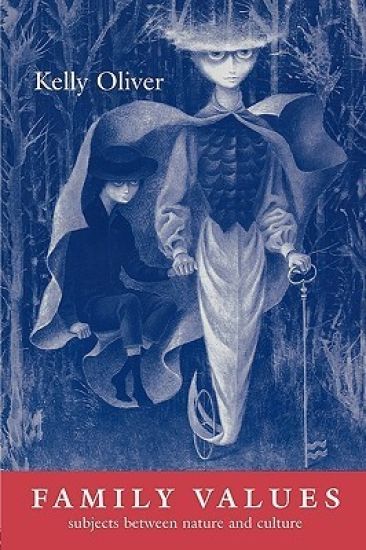
Family Values shows how the various contradictions at the heart of Western conceptions of maternity and paternity problematize our relationships with ourselves and with others. Using philosophical texts, psychoanalytic theory, studies in biology and popular culture, Kelly Oliver challenges our traditional concepts of maternity which are associated with nature, and our conceptions of paternity which are embedded in culture. Oliver's intervention calls into question the traditional image of the oppositional relationship between nature and culture, maternal and paternal. Family Values also undercuts recent returns to the rhetoric of a "battle between the sexes" by analyzing the conceptual basis of these descriptions in biological research and the presuppositions of such suggestions in philosophy and psychoanalysis. By developing a reconception of maternity and paternity, Family Values offers hope for peace in the battle of the sexes.
Family Values

Family Values

Kelly Oliver

Routledge
1997
nidottu
Family Values shows how the various contradictions at the heart of Western conceptions of maternity and paternity problematize our relationships with ourselves and with others. Using philosophical texts, psychoanalytic theory, studies in biology and popular culture, Kelly Oliver challenges our traditional concepts of maternity which are associated with nature, and our conceptions of paternity which are embedded in culture. Oliver's intervention calls into question the traditional image of the oppositional relationship between nature and culture, maternal and paternal. Family Values also undercuts recent returns to the rhetoric of a "battle between the sexes" by analyzing the conceptual basis of these descriptions in biological research and the presuppositions of such suggestions in philosophy and psychoanalysis. By developing a reconception of maternity and paternity, Family Values offers hope for peace in the battle of the sexes.
Cub Reporter

Cub Reporter

Kelly Oliver

Beaver's Pond Press
2020
pokkari
Twelve-year-old Kassy O'Roarke wants to win the Thompson prize at her school newspaper. Her pesky little brother Percy and his key-stealing ferret try to help . . . and that's when the trouble begins.Apollo the cougar cub goes missing from their family's petting zoo. Kassy puts her detective skills to the test to find him before Animal Control does. Can Kassy outsmart the dogcatcher and rescue Apollo before being grounded for life?Join Kassy's fun-filled adventure cracking riddles, detecting clues, and solving a whole zoo of animal trouble in book one of the Pet Detective Mysteries.
Witnessing

Witnessing

Kelly Oliver

University of Minnesota Press
2001
nidottu
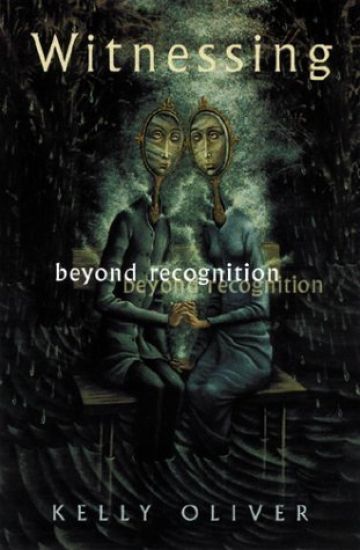
A new, ethically based theory of identity by a major scholar.Challenging the fundamental tenet of the multicultural movement-that social struggles turning upon race, gender, and sexuality are struggles for recognition-this work offers a powerful critique of current conceptions of identity and subjectivity based on Hegelian notions of recognition. The author’s critical engagement with major texts of contemporary philosophy prepares the way for a highly original conception of ethics based on witnessing.Central to this project is Oliver’s contention that the demand for recognition is a symptom of the pathology of oppression that perpetuates subject-object and same-different hierarchies. While theorists across the disciplines of the humanities and social sciences focus their research on multiculturalism around the struggle for recognition, Oliver argues that the actual texts and survivors’ accounts from the aftermath of the Holocaust and slavery are testimonials to a pathos that is “beyond recognition.” Oliver traces many of the problems with the recognition model of subjective identity to a particular notion of vision presupposed in theories of recognition and misrecognition. Contesting the idea of an objectifying gaze, she reformulates vision as a loving look that facilitates connection rather than necessitates alienation. As an alternative, Oliver develops a theory of witnessing subjectivity. She suggests that the notion of witnessing, with its double meaning as either eyewitness or bearing witness to the unseen, is more promising than recognition for describing the onset and sustenance of subjectivity. Subjectivity is born out of and sustained by the process of witnessing-the possibility of address and response-which puts ethical obligations at its heart.
Noir Anxiety

Noir Anxiety

Kelly Oliver

University of Minnesota Press
2002
nidottu
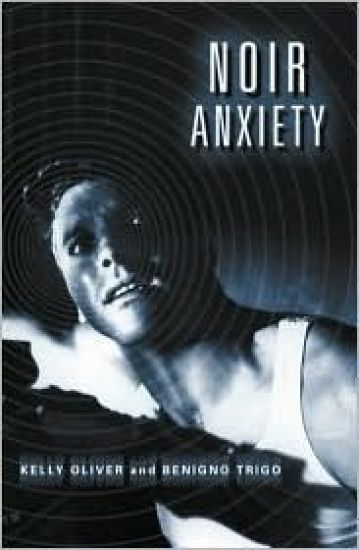
Investigates the fears and desires about sexuality and racial identity that shape film noir.Among the elements that define the classic film noir-chiaroscuro lighting, voice-over narration, and such archetypal characters as the world-weary private eye and the femme fatale-perhaps no element is more responsible for the genre’s continued popularity among movie buffs, filmmakers, and critics than the palpable sense of anxiety that emanates from the screen. Because the genre emerged in the shadow of the Second World War, this profound psychological and philosophical unease is usually ascribed either to postwar fears about the atomic bomb or to the reactions of returning soldiers to a new social landscape. In Noir Anxiety, however, Kelly Oliver and Benigno Trigo interpret what has been called the "free-floating anxiety" of film noir as concrete apprehensions about race and sexuality. Applying feminist and postcolonial psychoanalytic theory to traditional noir films (Murder, My Sweet; The Lady from Shanghai; Vertigo; and Touch of Evil) and the "neo-noirs" of the 1970s, 1980s, and 1990s (Chinatown, Devil in a Blue Dress, and Bound), the authors uncover a rich array of unconscious worries and desires about ambiguous sexual, racial, and national identities, often displaced onto these films’ narrative and stylistic components. In particular, Oliver and Trigo focus on the looming absence of the mother figure within the genre and fears about maternal sexuality and miscegenation. Drawing on the work of Freud and Julia Kristeva, Noir Anxiety locates film noir’s studied ambivalence toward these critical themes within the genre’s social, historical, and cinematic context.