Kirjojen hintavertailu. Mukana 12 016 292 kirjaa ja 12 kauppaa.

Kirjahaku

Etsi kirjoja tekijän nimen, kirjan nimen tai ISBN:n perusteella.

8 kirjaa tekijältä Ken Gelder

Reading the Vampire

Reading the Vampire

Ken Gelder

Routledge
1994
sidottu
Insatiable bloodlust, dangerous sexualities, the horror of the undead, uncharted Trannsylvanian wildernesses, and a morbid fascination with the `other': the legend of the vampire continues to haunt popular imagination.Reading the Vampire examines the vampire in all its various manifestations and cultural meanings. Ken Gelder investigates vampire narratives in literature and in film, from early vampire stories like Sheridan Le Fanu's `lesbian vampire' tale Carmilla and Bram Stoker's Dracula, the most famous vampire narrative of all, to contemporary American vampire blockbusters by Stephen King and others, the vampire chronicles of Anne Rice, `post-Ceausescu' vampire narratives, and films such as FW Murnau's Nosferatu and Bram Stoker's Dracula.Reading the Vampire embeds vampires in their cultural contexts, showing vampire narratives feeding off the anxieties and fascinations of their times: from the nineteenth century perils of tourism, issues of colonialism and national identity, and obsessions with sex and death, to the `queer' identity of the vampire or current vampiric metaphors for dangerous exchanges of bodily fluids and AIDS.

Reading the Vampire

Reading the Vampire

Ken Gelder

Routledge
1994
nidottu
Insatiable bloodlust, dangerous sexualities, the horror of the undead, uncharted Trannsylvanian wildernesses, and a morbid fascination with the `other': the legend of the vampire continues to haunt popular imagination.Reading the Vampire examines the vampire in all its various manifestations and cultural meanings. Ken Gelder investigates vampire narratives in literature and in film, from early vampire stories like Sheridan Le Fanu's `lesbian vampire' tale Carmilla and Bram Stoker's Dracula, the most famous vampire narrative of all, to contemporary American vampire blockbusters by Stephen King and others, the vampire chronicles of Anne Rice, `post-Ceausescu' vampire narratives, and films such as FW Murnau's Nosferatu and Bram Stoker's Dracula.Reading the Vampire embeds vampires in their cultural contexts, showing vampire narratives feeding off the anxieties and fascinations of their times: from the nineteenth century perils of tourism, issues of colonialism and national identity, and obsessions with sex and death, to the `queer' identity of the vampire or current vampiric metaphors for dangerous exchanges of bodily fluids and AIDS.

Popular Fiction

Popular Fiction

Ken Gelder

Routledge
2004
sidottu
In this important book, Ken Gelder offers a lively, progressive and comprehensive account of popular fiction as a distinctive literary field. Drawing on a wide range of popular novelists, from Sir Walter Scott and Marie Corelli to Ian Fleming, J. K. Rowling and Stephen King, his book describes for the first time how this field works and what its unique features are. In addition, Gelder provides a critical history of three primary genres - romance, crime fiction and science fiction - and looks at the role of bookshops, fanzines and prozines in the distribution and evaluation of popular fiction. Finally, he examines five bestselling popular novelists in detail - John Grisham, Michael Crichton, Anne Rice, Jackie Collins and J. R. R. Tolkien - to see how popular fiction is used, discussed and identified in contemporary culture.
Popular Fiction

Popular Fiction

Ken Gelder

Routledge
2004
nidottu
In this important book, Ken Gelder offers a lively, progressive and comprehensive account of popular fiction as a distinctive literary field. Drawing on a wide range of popular novelists, from Sir Walter Scott and Marie Corelli to Ian Fleming, J. K. Rowling and Stephen King, his book describes for the first time how this field works and what its unique features are. In addition, Gelder provides a critical history of three primary genres - romance, crime fiction and science fiction - and looks at the role of bookshops, fanzines and prozines in the distribution and evaluation of popular fiction. Finally, he examines five bestselling popular novelists in detail - John Grisham, Michael Crichton, Anne Rice, Jackie Collins and J. R. R. Tolkien - to see how popular fiction is used, discussed and identified in contemporary culture.
Subcultures

Subcultures

Ken Gelder

Routledge
2007
sidottu
This book presents a cultural history of subcultures, covering a remarkable range of subcultural forms and practices. It begins with London’s ‘Elizabethan underworld’, taking the rogue and vagabond as subcultural prototypes: the basis for Marx’s later view of subcultures as the lumpenproletariat, and Henry Mayhew’s view of subcultures as ‘those that will not work’. Subcultures are always in some way non-conforming or dissenting. They are social - with their own shared conventions, values, rituals, and so on – but they can also seem ‘immersed’ or self-absorbed. This book identifies six key ways in which subcultures have generally been understood:through their often negative relation to work: idle, parasitical, hedonistic, criminaltheir negative or ambivalent relation to classtheir association with territory - the ‘street’, the ‘hood’, the club - rather than propertytheir movement away from home into non-domestic forms of ‘belonging’their ties to excess and exaggeration (as opposed to restraint and moderation)their refusal of the banalities of ordinary life and in particular, of massification.Subcultures looks at the way these features find expression across many different subcultural groups: from the Ranters to the riot grrrls, from taxi dancers to drag queens and kings, from bebop to hip hop, from dandies to punk, from hobos to leatherfolk, and from hippies and bohemians to digital pirates and virtual communities. It argues that subcultural identity is primarily a matter of narrative and narration, which means that its focus is literary as well as sociological. It also argues for the idea of a subcultural geography: that subcultures inhabit places in particular ways, their investment in them being as much imaginary as real and, in some cases, strikingly utopian.
Subcultures

Subcultures

Ken Gelder

Routledge
2007
nidottu
This book presents a cultural history of subcultures, covering a remarkable range of subcultural forms and practices. It begins with London’s ‘Elizabethan underworld’, taking the rogue and vagabond as subcultural prototypes: the basis for Marx’s later view of subcultures as the lumpenproletariat, and Henry Mayhew’s view of subcultures as ‘those that will not work’. Subcultures are always in some way non-conforming or dissenting. They are social - with their own shared conventions, values, rituals, and so on – but they can also seem ‘immersed’ or self-absorbed. This book identifies six key ways in which subcultures have generally been understood:through their often negative relation to work: idle, parasitical, hedonistic, criminaltheir negative or ambivalent relation to classtheir association with territory - the ‘street’, the ‘hood’, the club - rather than propertytheir movement away from home into non-domestic forms of ‘belonging’their ties to excess and exaggeration (as opposed to restraint and moderation)their refusal of the banalities of ordinary life and in particular, of massification.Subcultures looks at the way these features find expression across many different subcultural groups: from the Ranters to the riot grrrls, from taxi dancers to drag queens and kings, from bebop to hip hop, from dandies to punk, from hobos to leatherfolk, and from hippies and bohemians to digital pirates and virtual communities. It argues that subcultural identity is primarily a matter of narrative and narration, which means that its focus is literary as well as sociological. It also argues for the idea of a subcultural geography: that subcultures inhabit places in particular ways, their investment in them being as much imaginary as real and, in some cases, strikingly utopian.
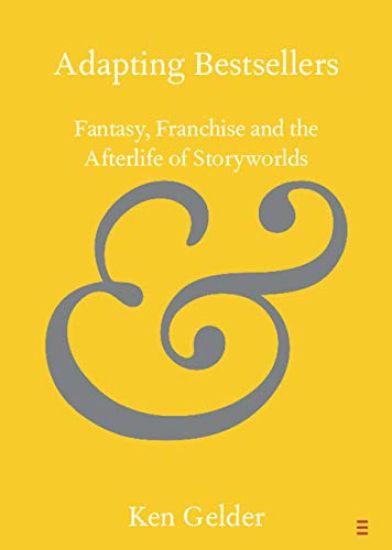
Adapting Bestsellers

Adapting Bestsellers

Ken Gelder

Cambridge University Press
2020
pokkari
This Element looks at adaptations of bestselling works of popular fiction to cinema, television, stage, radio, video games and other media platforms. It focuses on 'transmedia storytelling', building its case studies around the genre of modern fantasy: because the elaborate storyworlds produced by writers like J. R. R. Tolkien, J. K. Rowling and George R. R. Martin have readily lent themselves to adaptations across various media platforms. This has also made it possible for media entertainment corporations to invest in them over the long term, enabling the development of franchises through which their storyworlds are presented and marketed in new ways to new audiences.
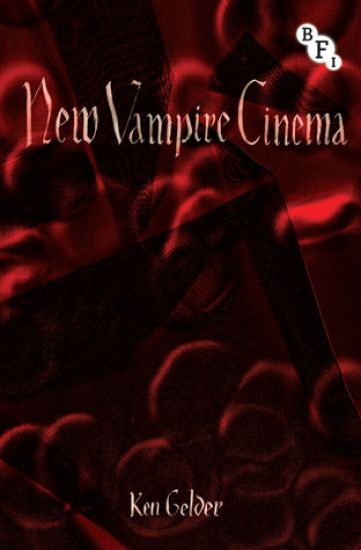
New Vampire Cinema

New Vampire Cinema

Ken Gelder

BFI Publishing
2012
nidottu
New Vampire Cinema lifts the coffin lid on forty contemporary vampire films, charting the evolution of the genre. Ken Gelder's study begins by looking at Francis Ford Coppola's Bram Stoker's Dracula and Fran Rubel Kuzui's Buffy the Vampire Slayer and then examines what happened afterwards, across a range of reiterations and settings: the suburbs of Sweden (Let the Right One In), the forests of North America (the Twilight films), Mexico (Cronos, From Dusk Till Dawn), Japan (Blood: The Last Vampire, Vampire Hunter D: Bloodlust), Australia (Daybreakers), and elsewhere. In a series of readings, Gelder determines what is at stake when the cinematic vampire and the modern world are made to encounter one another – where the new, the remake and the sequel find the vampire struggling to survive the past, the present and, in some cases, the distant future.