Kirjojen hintavertailu. Mukana 11 699 587 kirjaa ja 12 kauppaa.

Kirjahaku

Etsi kirjoja tekijän nimen, kirjan nimen tai ISBN:n perusteella.

5 kirjaa tekijältä Ken Hiltner

Writing a New Environmental Era

Writing a New Environmental Era

Ken Hiltner

Routledge
2019
sidottu
Writing a New Environmental Era first considers and then rejects back-to-nature thinking and its proponents like Henry David Thoreau, arguing that human beings have never lived at peace with nature. Consequently, we need to stop thinking about going back to what never was and instead work at moving forward to forge a more harmonious relationship with nature in the future. Using the rise of the automobile and climate change denial literature to explore how our current environmental era was written into existence, Ken Hiltner argues that the humanities—and not, as might be expected, the sciences—need to lead us there. In one sense, climate change is caused by a rise in atmospheric CO2 and other so-called greenhouse gases. Science can address this cause. However, approached in another way altogether, climate change is caused by a range of troubling human activities that require the release of these gases, such as our obsessions with cars, lavish houses, air travel and endless consumer goods. The natural sciences may be able to tell us how these activities are changing our climate, but not why we are engaging in them. That’s a job for the humanities and social sciences. As this book argues, we need to see anthropogenic (i.e. human-caused) climate change for what it is and address it as such: a human problem brought about by human actions.A passionate and personal exploration of why the Environmental Humanities matter and why we should be looking forward, not back to nature, this book will be essential reading for all those interested in the future and sustainability of our planet.
Writing a New Environmental Era

Writing a New Environmental Era

Ken Hiltner

Routledge
2019
nidottu
Writing a New Environmental Era first considers and then rejects back-to-nature thinking and its proponents like Henry David Thoreau, arguing that human beings have never lived at peace with nature. Consequently, we need to stop thinking about going back to what never was and instead work at moving forward to forge a more harmonious relationship with nature in the future. Using the rise of the automobile and climate change denial literature to explore how our current environmental era was written into existence, Ken Hiltner argues that the humanities—and not, as might be expected, the sciences—need to lead us there. In one sense, climate change is caused by a rise in atmospheric CO2 and other so-called greenhouse gases. Science can address this cause. However, approached in another way altogether, climate change is caused by a range of troubling human activities that require the release of these gases, such as our obsessions with cars, lavish houses, air travel and endless consumer goods. The natural sciences may be able to tell us how these activities are changing our climate, but not why we are engaging in them. That’s a job for the humanities and social sciences. As this book argues, we need to see anthropogenic (i.e. human-caused) climate change for what it is and address it as such: a human problem brought about by human actions.A passionate and personal exploration of why the Environmental Humanities matter and why we should be looking forward, not back to nature, this book will be essential reading for all those interested in the future and sustainability of our planet.
Milton and Ecology

Milton and Ecology

Ken Hiltner

Cambridge University Press
2009
pokkari
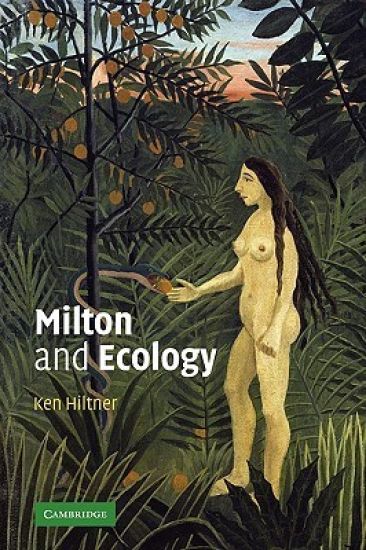
In Milton and Ecology, Ken Hiltner engages with literary, theoretical, and historic approaches to explore the ideological underpinnings of our prevalent environmental crisis. Focusing on Milton's rejection of dualistic theology, metaphysical philosophy, and early-modern subjectivism, Hiltner argues that Milton anticipates certain prevailing essential ecological arguments. Even more remarkable is that Milton was able to integrate these arguments with biblical sources so seamlessly that his interpretative 'Green' reading of scripture has for over three centuries been entirely plausible. This study considers how Milton, from the earliest edition of the Poems, not only sought to tell the story of how through humanity's folly Paradise on earth was lost, but also sought to tell how it might be regained. This intriguing study will be of interest to eco-critics and Milton specialists alike.
Milton and Ecology

Milton and Ecology

Ken Hiltner

Cambridge University Press
2003
sidottu
In Milton and Ecology, Ken Hiltner engages with literary, theoretical, and historic approaches to explore the ideological underpinnings of our current environmental crisis. Focusing on Milton’s rejection of dualistic theology, metaphysical philosophy, and early-modern subjectivism, Hiltner argues that Milton anticipates certain essential modern ecological arguments. Even more remarkable is that Milton was able to integrate these arguments with biblical sources so seamlessly that his interpretative ‘Green’ reading of scripture has for over three centuries been entirely plausible. This study considers how Milton, from the earliest edition of the Poems, not only sought to tell the story of how through humanity’s folly Paradise on earth was lost, but also sought to tell how it might be regained. This intriguing study will be of interest to eco-critics and Milton specialists alike.
What Else Is Pastoral?

What Else Is Pastoral?

Ken Hiltner

Cornell University Press
2011
sidottu
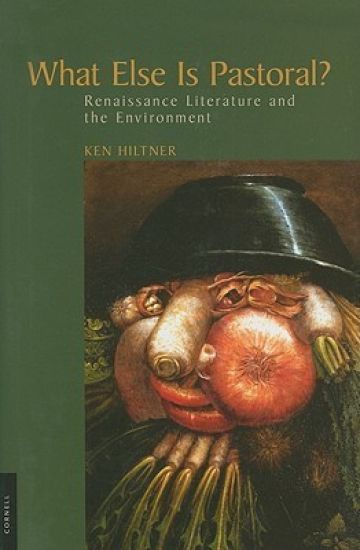
Pastoral was one of the most popular literary forms of early modern England. Inspired by classical and Italian Renaissance antecedents, writers from Ben Jonson to John Beaumont and Abraham Cowley wrote in idealized terms about the English countryside. It is often argued that the Renaissance pastoral was a highly figurative mode of writing that had more to do with culture and politics than with the actual countryside of England. For decades now literary criticism has had it that in pastoral verse, hills and crags and moors were extolled for their metaphoric worth, rather than for their own qualities. In What Else Is Pastoral? Ken Hiltner takes a fresh look at pastoral, offering an environmentally minded reading that reconnects the poems with literal landscapes, not just figurative ones. Considering the pastoral in literature from Virgil and Petrarch to Jonson and Milton, Hiltner proposes a new ecocritical approach to these texts. We only become truly aware of our environment, he explains, when its survival is threatened. As London expanded rapidly during the sixteenth and seventeenth centuries, the city and surrounding rural landscapes began to look markedly different. Hiltner finds that Renaissance writers were acutely aware that the countryside they had known was being lost to air pollution, deforestation, and changing patterns of land use; their works suggest this new absence of nature through their appreciation for the scraps that remained in memory or in fact. A much-needed corrective to the prevailing interpretation of pastoral poetry, What Else Is Pastoral? shows the value of reading literature with an ecological eye.