Kirjojen hintavertailu. Mukana 11 699 587 kirjaa ja 12 kauppaa.

Kirjahaku

Etsi kirjoja tekijän nimen, kirjan nimen tai ISBN:n perusteella.

3 kirjaa tekijältä Ken Moffatt

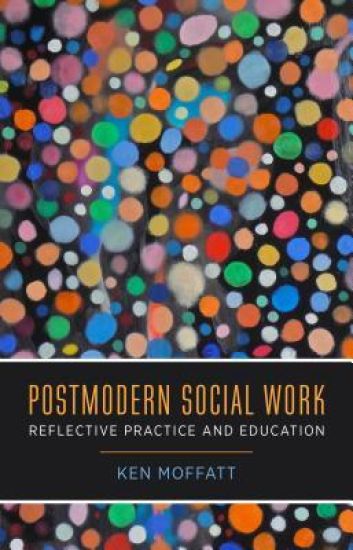
Postmodern Social Work

Postmodern Social Work

Ken Moffatt

Columbia University Press
2019
sidottu
How should social workers adapt to a time of widespread instability and uncertainty? How can social work practice account for the ever-increasing infiltration of technology and media images into our daily lives and mental states? In this book, Ken Moffatt turns to postmodern philosophy’s grappling with late capitalism and the omnipresence of technology in order to develop a new approach to reflective social work practice and critical pedagogy.Postmodern Social Work attempts to reconcile postmodern thinkers with the realities of teaching social work to diverse student populations in a precarious era. Moffatt advocates an ideal of reflective practice that allows social workers to combine direct experience, social welfare, and social justice. Through a series of interlocking essays focused on the theoretical underpinnings of reflective practice in the context of social work education, he explores the implications of postmodern theory for social work practice. Drawing on thinkers such as Michel Foucault, Judith Butler, Julia Kristeva, Gilles Deleuze, and Félix Guattari, Moffatt lays out a path forward for reflective social work, providing new ways of thinking that collapse old categories and integrate direct practice with community engagement and social analysis. Postmodern Social Work offers an approach to practice and teaching that considers the shifting landscape of social change while remaining true to social work’s primary concerns of inclusion and justice.
Postmodern Social Work

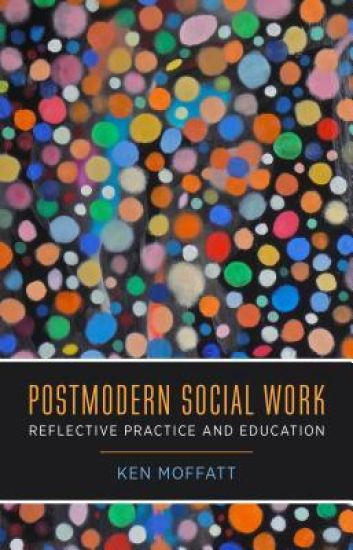
Postmodern Social Work

Ken Moffatt

Columbia University Press
2019
pokkari
How should social workers adapt to a time of widespread instability and uncertainty? How can social work practice account for the ever-increasing infiltration of technology and media images into our daily lives and mental states? In this book, Ken Moffatt turns to postmodern philosophy’s grappling with late capitalism and the omnipresence of technology in order to develop a new approach to reflective social work practice and critical pedagogy.Postmodern Social Work attempts to reconcile postmodern thinkers with the realities of teaching social work to diverse student populations in a precarious era. Moffatt advocates an ideal of reflective practice that allows social workers to combine direct experience, social welfare, and social justice. Through a series of interlocking essays focused on the theoretical underpinnings of reflective practice in the context of social work education, he explores the implications of postmodern theory for social work practice. Drawing on thinkers such as Michel Foucault, Judith Butler, Julia Kristeva, Gilles Deleuze, and Félix Guattari, Moffatt lays out a path forward for reflective social work, providing new ways of thinking that collapse old categories and integrate direct practice with community engagement and social analysis. Postmodern Social Work offers an approach to practice and teaching that considers the shifting landscape of social change while remaining true to social work’s primary concerns of inclusion and justice.

A Poetics of Social Work

A Poetics of Social Work

Ken Moffatt

University of Toronto Press
2001
pokkari
In A Poetics of Social Work, Ken Moffatt considers the epistemological influences in the field of Canadian social work and social welfare from 1920 to 1939. Here, modernist constructs of knowledge are explored through the analysis of the thought of leading social welfare practitioners, namely Dorothy Livesay, Carl Dawson, Charlotte Whitton, and E.J. Urwick. These four figures represent a wide cross-section of Anglo-Canadian social thought at two of Canada's most influential universities (McGill and Toronto), and Moffatt's study of their thinking reveals the presence of a diversity of approaches to social work and social change during this period. By challenging the notion that human values and humanitarian concerns were abandoned in favour of science, empirical findings, and technical interpretation of authoritative knowledge, the author attempts to expand the concept of the social work knowledge base and explores how social work emerged as a profession in Canada. Moffatt's study presents a broad context for analysis, and provides fascinating reading and source material for those interested in history, philosophy, literature, and biography, as well as social work and the social sciences.