Kirjojen hintavertailu. Mukana 12 016 292 kirjaa ja 12 kauppaa.

Kirjahaku

Etsi kirjoja tekijän nimen, kirjan nimen tai ISBN:n perusteella.

7 kirjaa tekijältä Ken Norris

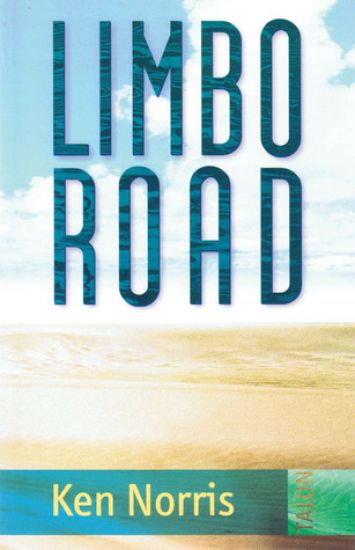
Limbo Road

Limbo Road

Ken Norris

Talonbooks
1998
pokkari
Just as for Dante, for whom the image of the beloved gave entrance to a complete imagination of the world, an "imago mundi," the betrayal of a beloved can also shatter the poet's vision, no matter how elaborately conceived. Such a betrayal can turn the world upside down, where what was loved is now hated, what was benign becomes threatening, what was dangerous is embraced, what was worshipped is murdered, what was past is future. The author is cast adrift, to wander the earth from Tahiti to Prague, from Morocco to Miami, "in limbo" in a newly unknown world. Part divorce journal, part travel poem, part meditation on the rudderless denizens of the global village of which the author is merely one, Limbo Road chronicles the search for the new beloved, the one who will lead to the new "City of God." That she appears only in glimpses is a credit to Ken Norris's adept reading of the late twentieth century, and his disciplined mapping of its increasingly unknown territories. A beautifully sustained work of lyricism from a highly accomplished poet.
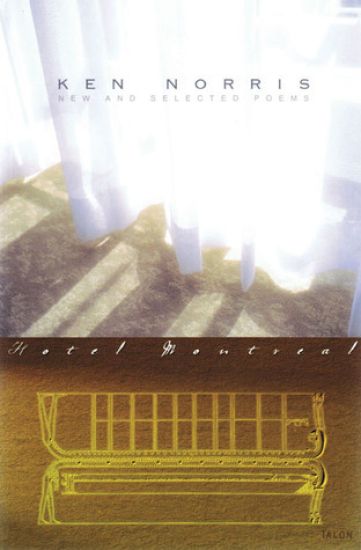
Hotel Montreal

Hotel Montreal

Ken Norris

Talonbooks
2001
pokkari
Since 1975, Ken Norris has produced some of Canada's most intriguing poetry. Whether detailing the amorous lives of produce (Vegetables), documenting travels to the South Seas (The Better Part of Heaven and Islands), engaging contentious social and political issues (In the Spirit of the Times and In the House of No), or taking the measure of the successes and failures of contemporary love (The Music and Limbo Road), Norris has always given us quirky, edgy poetry that has continually revealed unanticipated possibilities and explored new horizons. His work has been widely anthologized in the English-speaking world, as well as in translation in France, Belgium and Israel. His latest book of poems, Limbo Road, is to be published this fall in translation in Quebec by Ecrits des Forges. Hotel Montreal offers the literary traveller a haven for clandestine encounters with the intimate and the exotic. It includes selections from nineteen ground-breaking books of poetry (a number of them now out of print or hard to find), as well as a healthy selection of accomplished new poems.It draws together the very best of Norris's lyric poetry from a 25-year period, while offering the reader an indispensable panoramic view of the work of a poet at the height of his creative power.
Fifty

Fifty

Ken Norris

Talonbooks
2003
pokkari
Fifty is the book Ken Norris began writing when he was 47 and stopped writing on the day he turned 50. It is both a counting and an accounting. He writes of love found and love lost, of children growing and parents dying, of political injustice, of the slow crawl through a Northern winter, of being in the genuine middle of life. Among its widely diverse poetic forms, the book constructs odes, elegies, sonnets and long poem sequences, following Norris's footsteps as he travels from Maine to Santo Domingo, from Phnom Penh to Montreal, from the shorelines of the Caribbean Sea to the banks of the Mekong River. In its seeming offhandedness, Fifty discloses an elegant gesture. All the complexities of human life are laid bare here, with candour, dexterity, wit and intelligence. These are poetic meditations on what's been left behind, what one wishes could be done over, and they take a measure of the worth of what's left to do as a participant in the perilous world of the twenty-first century. They intimate a future more dangerously elemental, a world both more sure of itself and less predictable, less tolerant of those who hesitate and more demanding of those on the move.
Dominican Moon

Dominican Moon

Ken Norris

Talonbooks
2005
pokkari
Composed like a dark novel-in-verse, Dominican Moon is the second book in Ken Norris's travel trilogy. With Dante as his guide, he leaves behind the predominantly European terrain of the first book in this series, Limbo Road, and finds himself in the "terra incognita" of the Caribbean Sea. On his own contemporary voyage of discovery of the island of Hispaniola, the "new world" Columbus discovered in 1492, Norris encounters seductive lovers and moon-haunted tropical nights, dark Dominican rum and winter baseball, sugar cane fields and "the city of shortstops." At the heart of the book is an unsettling story of the deficiencies of love--of a perhaps not so divine comedy of those who didn't love enough--steeped in a clash of cultures wherein the third world willingly, even perversely, offers itself up as a farm-team for the first, fueled by the cataclysm of that other third world export, cocaine.
Going Home

Going Home

Ken Norris

Talonbooks
2008
pokkari
If, as Robert Creeley said, "form is never more than an extension of content," what happens when we lose form? Does content retreat into its ruins, its absences? Can we never go home because it retreats from us as relentlessly and unfathomably as our future? Is the imagination of "our" future as illusory and unreliable as the memory of "our" past? If, for the young man, "going home is the first defeat," the first violation of a burgeoning autonomy, is the very imagination of "home" an abrogation, a transgression? These are the questions that the deceptively simple lyrics of this book ask, that we encounter as we navigate our way, "room to room" through their stanzas--from the poet's New York childhood, his Montreal mentorship with Louis Dudek, to his volitionary adoptive "home" of Asia. The world changes in Going Home--9/11 happens. In that singular, extended historic moment all of our working models of representation on our North American Island turn to paper and dust, and now we know history always had other plans for us. The whole manufactured unreality of our world falls away in these poems, leads us both toward and away from being "at home" in the moment."We're all here and not here," the poet reminds us: an index of time and the true nature of existence--a present impermanence.
Asian Skies

Asian Skies

Ken Norris

Talonbooks
2010
pokkari
Asian Skies is the final book of Ken Norris's travel trilogy. With Dante as his guide, he has previously left behind the predominantly European terrain of the first book, Limbo Road, only to find himself in the terra incognita of the new world of the second, Dominican Moon. Now guideless, Norris continues his search for the metaphorical shortcut, the "inside passage" of the age of discovery; the easy transcendence of "a passage to India" from the post-industrial world, and sets out for that most foreign of shores to the Western mind: Asia--a world of glittering wealth, precious spice, exotic religiosity, tyrannical rule, mysterious ritual and deadly storm. Composed like a dark novel-in-verse, this is the unsettling story of the deficiencies of love that have produced our commodified and globalized world--a perhaps not-so-divine comedy of those who don't love enough--steeped in a clash of cultures wherein the third world seems willingly, even perversely, to offer itself up as a simulacrum of the first, while its otherness remains hidden, inaccessible.As he transits the beaches of Phuket to the island of Bali, the flood plains of Bangladesh to the sublime heights of the Himalaya, Norris ultimately understands it is the absence of a beloved that turns the world upside down: where what was loved is hated, what was benign is threatening, what was dangerous is embraced, what was worshipped is murdered, what was past is future. Part travel journal, part meditation on the rudderless denizens of the global village of which he is merely one, Asian Skies chronicles a search for the beloved, one that will lead to "the City of God." That she appears only in glimpses is a credit to Ken Norris's adept reading of the 21st century and his disciplined mapping of its increasingly unknown territories.
Floating Up to Zero

Floating Up to Zero

Ken Norris

Talonbooks
2011
pokkari
In Floating Up to Zero, Ken Norris introduces us to "a traveller from an antique land," though in this case that traveller's story is not Shelley's meditation on the vanity of ancient kings, but rather the poet's -meditation on the here and now, on the present moment, precariously balanced between a certain frozen past and an uncertain fluid future. Spanning a year in Norris's life, the centre of this poetic journey finds the poet trapped in his house. It is mid-winter, the thermometer reads 35 degrees below zero, and he's trying to dig his way out to the world, where the blizzards and the city snowplows seem to conspire to undo all the pathways shoveled, the driveways cleared. His physical isolation turns him inward: "Surprised when anybody sees me. I've lived in the obscurity of exile. And now am deemed too old for practically everything. I fade into the wallpaper, with only my senses alive. Little by -little you become an object to the world, then a useless object the day you vanish from sight completely."He should have read the stars in the book's opening section more carefully: avoided the nostalgia for youth and lost loves; the illusion that we can vacation from our residential lease on life. Having "faded into the background, years ago," as season followed season, the poet begins to understand that the present is not trapped by the shape of the past, but open to the infinite possibilities the world offers us if we let our past melt away: "How the wallpaper longs for what's in the room." Meditative, incisive and light in their touch, these poems tell us: "The old star charts were perhaps a little out of date. That is, new stars had since been found, though sometimes they were only streetlights, mistaken."