Kirjojen hintavertailu. Mukana 12 016 292 kirjaa ja 12 kauppaa.

Kirjahaku

Etsi kirjoja tekijän nimen, kirjan nimen tai ISBN:n perusteella.

17 kirjaa tekijältä Ken Thompson

Darwin's Most Wonderful Plants: A Tour of His Botanical Legacy
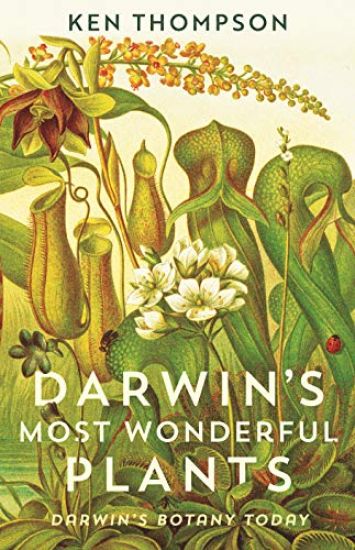
For many people, the story of Charles Darwin goes like this: he ventured to the Galapagos Islands on the Beagle, was inspired by the biodiversity of the birds he saw there, and immediately returned home to write his theory of evolution. But this simplified narrative is inaccurate and lacking: it leaves out a major part of Darwin's legacy. He published On the Origin of Species nearly thirty years after his voyages. And much of his life was spent experimenting with and observing plants. Darwin was a brilliant and revolutionary botanist whose observations and theories were far ahead of his time. With Darwin's Most Wonderful Plants, biologist and gardening expert Ken Thompson restores this important aspect of Darwin's biography while also delighting in the botanical world that captivated the famous scientist. Thompson traces how well Darwin's discoveries have held up, revealing that many are remarkably long-lasting. Some findings are only now being confirmed and extended by high-tech modern research, while some have been corrected through recent analysis. We learn from Thompson how Darwin used plants to shape his most famous theory and then later how he used that theory to further push the boundaries of botanical knowledge. We also get to look over Darwin's shoulder as he labors, learning more about his approach to research and his astonishing capacity for hard work. Darwin's genius was to see the wonder and the significance in the ordinary and mundane, in the things that most people wouldn't look at twice. Both Thompson and Darwin share a love for our most wonderful plants and the remarkable secrets they can unlock. This book will instill that same joy in casual gardeners and botany aficionados alike.

Memoirs of a WWII Fighter Pilot and Some Modern Political Commentary
This book is a recounting of some of the experiences I had while serving in the Army and Army Air Corps during WWII. The events are as accurate as I could recall without embellishment. I took the pictures of Don Lawless and Gene Van Houten in Don Woerpel's book, The 79th Fighter Group. This is an expanded version of my original book, "Memoirs of Ken Thompson, A WWII Fighter Pilot." I have also added my views on some of the issues facing our society.
Computers, Chess, and Cognition

Computers, Chess, and Cognition

Ken Thompson

Springer-Verlag New York Inc.
2011
nidottu
Computers, Chess, and Cognition presents an excellent up-to-date description of developments in computer chess, a rapidly advancing area in artificial intelligence research. This book is intended for an upper undergraduate and above level audience in the computer science (artificial intelligence) community. The chapters have been edited to present a uniform terminology and balanced writing style, to make the material understandable to a wider, less specialized audience. The book's primary strengths are the description of the workings of some major chess programs, an excellent review of tree searching methods, discussion of exciting new research ideas, a philosophical discussion of the relationship of computer game playing to artificial intelligence, and the treatment of computer Go as an important new research area. A complete index and extensive bibliography makes the book a valuable reference work. The book includes a special foreword by Ken Thompson, author of the UNIX operating system.
A Systematic Guide To Game-based Learning (GBL) In Organizational Teams: Transform Performance Through Experiential Learning, Social Learning and Team
A SYSTEMATIC GUIDE TO GAME-BASED LEARNING (GBL) IN ORGANIZATIONAL TEAMS Systematic Guides are aimed at leaders and managers who need to instantly access 'Organization-Ready' models, practices, checklists and guidance in key subject areas which are logically organized and based on best practice.This guide offers a comprehensive and pragmatic framework for achieving transformational learning and behavior change in groups of leaders/managers using Game-Based Learning (GBL) in organizations of all shapes and sizes."This book will help HR and Learning professionals who need clear guidance and case studies to support their own work as they exploit team-focused game-based learning. It provides a deep analysis and clear guidance to help practitioners develop effective social game-based learning solutions." CHARLES JENNINGS, Co-founder of the 70:20:10 Institute"This text is one of the "bibles" for the merging discipline of gamification, serious games, and simulations. It should be prominently displayed upon your bookshelf. The Appendices alone are worth the price of the text." MICHAEL SUTTON, Chief Gamification Officer at FUNIFICATION LLC and purveyor of sims and serious games within immersive learning environments."Some writers 'show off' their knowledge/skills. Ken does not do this as his knowledge/skills in these areas are first class and the style/content speak for themselves".ALAN ANDERSON, Vice Principal, Cambridge Flexible Learning"While there are many books on game design and adult learning, I would place this short book at the top of the list for anyone interested in game-based learning (GBL)."DR. ROSS WIRTH, Professor and online course developer
A Systematic Guide to Change Management: Best Practice in Leading Change and Influencing Stakeholders
A SYSTEMATIC GUIDE TO CHANGE MANAGEMENTSystematic Guides are aimed at leaders and managers who need to instantly access 'Organization-Ready' models, practices, checklists and guidance in key subject areas which are logically organized and based on best practice. This guide provides a pragmatic framework for the interventions needed to successfully identify and intervene with key stakeholders in a Change Management project with the objective of winning their support and commitment. The Guide also covers best practices in the roll-out of change within communities. This Guide is also the course book for the popular Cohort Change Management Business Simulation. "Although Ken Thompson brilliantly and quickly summarizes the best of the best change-management thinkers, .... this book is no simple epitome of the best thinking in change management. Ken Thompson is changing change management. He is one of the leading-edge practitioner-thinkers who is carefully evolving change management from a planning discipline into a political one". CHARLES SPINOSA, Ph.D., Group Director & Leader, Strategy and Customer Experience, VISION Consulting"Ken has written a succinct yet powerful summary of change management thinking, approaches and tools, presented in a practical and accessible manner. Excellent reading for anyone involved with the leadership and management of change". CHRIS COLLISON, Author and Former Director of Change and Knowledge Management, Centrica. "This is a must-read for anyone who is involved in leading or helping to champion any organizational change initiative. The guide is full of really useful frameworks, practical tips and pitfalls to avoid. It would take a long time to research all of these dimensions of change management but Ken Thompson manages to compress it all neatly into a very easy-to-read mini bible". NOEL CLERKIN, Senior Principal Consultant at Axialent - improving individual, team and organizational performance."Ken Thompson applies his established system thinking expertise to produce a holistic appraisal of best practices in change management backed up with case studies and exercises. If you need a clear, concise and informed approach to change management whilst equipping yourself with the tools to make it work, this is the book for you".SIMON SCHOLFIELD, System Dynamics expert for the Dow Chemical company.
A Systematic Guide to Collaboration and Competition within organizations: How understanding the Interplay of Collaboration and Competition maximises B
We expect our organizational leaders and managers to be competent in collaboration and competition. However, truly exceptional leaders are masters of collaboration and competition at the same time, within the same projects and even within the same teams. These Interplay Leaders understand the subtle yet continuous interplay of collaboration and competition necessary for a project's success. The central argument of this book is that the current unspoken assumption in organizational leadership and management that all projects are either collaborative or competitive but never both is fatally flawed and produces, at best, sub-optimal results and at worst total failures. I discuss why I believe this 'single dynamic' mindset has gripped organizations by first reviewing the literature and then examining the etymology of the words "collaborate" and "compete." I then look to biology, war, politics and sport to show that this division between collaboration and competition is artificial and not a natural state of affairs. I propose a new understanding of how these two activities, collaboration and competition, fundamentally interplay and suggest two new hybrid dynamics "Edgy Collaboration" and "Eco Competition" which organizational teams can recognise and employ. I also identify and describe 9 practical disciplines/skills for mastering the Collaborate/Compete "Interplay":1.Qualification2.Teaming3.Game Mapping4.Scorecards5.Reputation6.Alliancing7.Principled Negotiating8.Decision-Making9.Course CorrectionsI conclude by discussing how learning/simulation games can assist in building the skills needed to succeed in Interplay and describe 3 real on-line team game examples which explore the new interplay dynamics experientially and socially
Strategic Thinking for Planning and Execution: A practical booklet for managers

Strategic Thinking for Planning and Execution: A practical booklet for managers

Ken Thompson

Createspace Independent Publishing Platform
2018
nidottu
Many, if not most, planning errors in projects and ventures of all types and sizes are not usually problems of misinterpretation or misunderstanding of complexity but rather simple errors of omission, unchecked assumptions and careless research due to adopting an unsystematic or ad hoc approach to this important task.A second equally large problem is the difficulty planners seem to encounter in successfully integrating existing and new strategy into their planning thinking. This often results in plans which are disconnected from the directions, priorities and values of the host enterprise.This booklet attempts to addresses both problems by providing a systematic approach (based on 30 questions) to defining strategy for immediate use within the planning process. The booklet provides a nine-step express process (with templates) with each step defined in detail and highlighted using a worked example from personal life which any reader can relate to. The objective is to enable an individual or team to come up with a solid "project scoping" which can be used to effectively and strategically direct whatever happens next, such as execution (small projects) or detailed planning (larger projects). All in an hour or two rather than a month or two Finally, I have tried to err on the side of brevity and to avoid the temptation to be overly prescriptive as this frequently results in bureaucracy and over-dependency on "the method" at the expense of common sense, ownership and the quality of thinking.
Where Do Camels Belong?: Why Invasive Species Aren't All Bad
Where do camels belong? In the Arab world is the obvious answer. But they are relative newcomers there. They evolved and lived for tens of millions of years in North America, while today they retain their greatest diversity in South America and have their only wild populations in Australia. This is a classic example of the problems that underlie the issues of natural and invasive species, a hot issue right now, as the flip side of biodiversity. But do we need to fear invaders? And indeed, can we control them, and do we choose the right targets? In Where Do Camels Belong? Ken Thompson puts forward a fascinating array of narratives on invasive and natural plants and animals to explore what he sees as the crucial question -- why only a minority of introduced species succeed, and why so few of them go on to cause trouble. He discusses, too, whether fear of invasive species could be getting in the way of conserving biodiversity, and especially of responding to the threat of climate change. This is a timely, instructive and controversial book that delivers unexpected answers.
Where Do Camels Belong?

Where Do Camels Belong?

Ken Thompson

Profile Books Ltd
2015
pokkari
Where do camels belong? In the Arab world may seem the obvious answer, but they are relative newcomers there. They evolved in North America, retain their greatest diversity in South America, and the only remaining wild dromedaries are in Australia. This is a classic example of the contradictions of 'native' and 'invasive' species, a hot issue right now, as the flip-side of biodiversity. We have all heard the horror stories of invasives, from Japanese knotweed that puts fear into the heart of gardeners to brown tree snakes that have taken over the island of Guam. But do we need to fear invaders? And indeed, can we control them, and do we choose the right targets? Ken Thompson puts forward a fascinating array of narratives to explore what he sees as the crucial question - why only a minority of introduced species succeed, and why so few of them go on to cause trouble. He discusses, too, whether our fears could be getting in the way of conserving biodiversity, and responding to the threat of climate change.
The Sceptical Gardener

The Sceptical Gardener

Ken Thompson

Icon Books Ltd
2016
pokkari
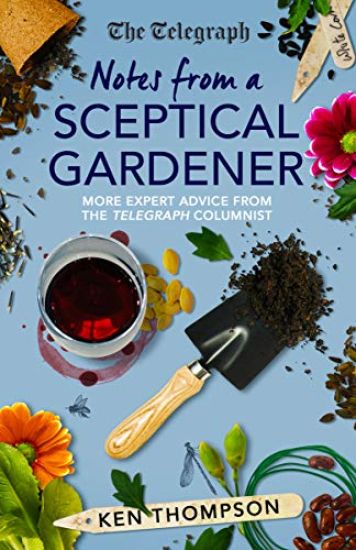
How are birds linked to house prices?How can a gardener improve theflavour of their vegetables?Do wildflowers really thrive in poor soil?In this collection of articles from The Telegraph, biologist and gardening columnist Ken Thompson takes a scientific look at some of the greater - and lesser - questions faced by gardeners everywhere in a bid to sort the genuine wisdom from the hokum.What is the ideal temperature for a compost heap? What do bees do that improves strawberries? Why are gardeners in literature always such dummies? This is an expert's gardening miscellany, aimed at making you not necessarily a better gardener, but probably a far more thoughtful one.
Notes From a Sceptical Gardener

Notes From a Sceptical Gardener

Ken Thompson

Icon Books Ltd
2020
sidottu
What is the best way to kill weeds in paving? How scared should we really be of Japanese knotweed? And what is a weed anyway?Biologist Ken Thompson set out to write a different kind of gardening column, one that tackles what he calls 'the grit in the gardening oyster'. In this new collection he takes a look at some of the questions faced by gardeners everywhere in a bid to sort the truth from the wishful thinking.Why are the beaks of British great tits getting longer? Which common garden insect owns a set of metal-tipped running spikes? Why might growing orange petunias land you in hot water? Are foxes getting bigger? How do you stop the needles falling off your Christmas tree?This expert's miscellany of (mostly) scientifically-tested garden lore will make you look at your garden through fresh eyes.
Darwin's Most Wonderful Plants

Darwin's Most Wonderful Plants

Ken Thompson

Profile Books Ltd
2019
pokkari
Most of us think of Darwin at work on The Beagle, taking inspiration for his theory of evolution from his travels in the Galapagos. But Darwin published his Origin of Species nearly thirty years after his voyages and most of his labours in that time were focused on experimenting with and observing plants at his house in Kent. He was particularly interested in carnivorous and climbing plants, and in pollination and the evolution of flowers. Ken Thompson sees Darwin as a brilliant and revolutionary botanist, whose observations and theories were far ahead of his time - and are often only now being confirmed and extended by high-tech modern research. Like Darwin, he is fascinated and amazed by the powers of plants - particularly their Triffid-like aspects of movement, hunting and 'plant intelligence'. This is a much needed book that re-establishes Darwin as a pioneering botanist, whose close observations of plants were crucial to his theories of evolution.
Do We Need Pandas?

Do We Need Pandas?

Ken Thompson

Green Books
2010
nidottu
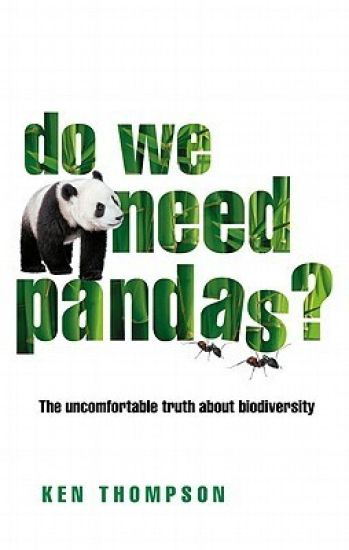
How much do we really know about the species that make up the natural world? In this fascinating book Ken Thompson explains what we do and don’t understand about biodiversity. We know that most species remain undiscovered, and that biodiversity is gravely threatened – by overfishing, habitat loss, pollution and climate change. Life on Earth has previously experienced five episodes of mass extinction, and we are now in the middle of a sixth. Do We Need Pandas? surveys the Earth’s biodiversity, its origins and some of the threats it currently faces. It then asks how biodiversity loss will affect the human race. Will we even notice, and if we do, what will we notice? It asks what we should be doing to secure the survival not only of the species with which we share the planet, but of ourselves – and whether we need to be more concerned about ecosystems as a whole than about iconic species.
No Nettles Required

No Nettles Required

Ken Thompson

Transworld Publishers Ltd
2007
pokkari
In 2003 a MORI poll for the Royal Horticultural Society revealed that an extraordinary number of us are interested in attracting wildlife into our gardens. Because we'll be promoting the biodiversity of the UK, we'll be reconnecting with nature, getting more from our gardens, and we'll be doing our plants a favour.
An Ear to the Ground

An Ear to the Ground

Ken Thompson

Eden Project Books
2011
pokkari
How did plants get to be the way they are? Why do they have pretty flowers? How different would things have been if the wrong kind of pollinators had got the upper hand? Why are Latin names so complicated, and why Latin anyway? Why is a weed-free lawn an ecological impossibility?This entertaining book gives the answers to these questions and many more. It shows how a little botanical knowledge can bring not just better results but peace of mind, and that losing sleep over such traditional gardening bogeys as weeds, pests and pruning is not necessarily the best course. In this new edition Ken Thompson grabs the opportunity to explain why any old plant will do for companion planting - but also that it can do as much harm as good - and why planting by the moon is complete and utter nonsense.