Kirjojen hintavertailu. Mukana 11 627 467 kirjaa ja 12 kauppaa.

Kirjahaku

Etsi kirjoja tekijän nimen, kirjan nimen tai ISBN:n perusteella.

4 kirjaa tekijältä Ken Yeang

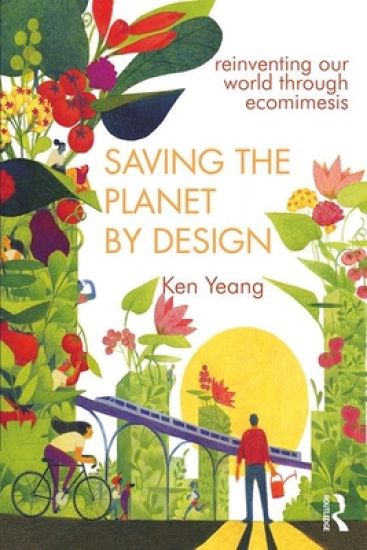
Saving The Planet By Design

Saving The Planet By Design

Ken Yeang

Routledge
2019
nidottu
Can we ‘save the Planet’? For a resilient, durable and sustainable future for human society, we need to repurpose, reinvent, redesign, remake and recover our human-made world so that our built environment is benignly and seamlessly biointegrated with Nature to function synergistically with it. These are the multiple tasks that humanity must carry out imminently if there is to be a future for human society and all lifeforms and their environments on the Planet. Addressing this is the most compelling question for those whose daily work impacts on Nature, such as architects, engineers, landscape architects, town planners, environmental policy makers, builders and others, but it is a question that all of humanity needs to urgently address.Presented here are two key principles as the means to carry out these tasks – ‘ecocentricity’ being guided by the science of ecology, and ‘ecomimesis’ as designing and making the built environment including all artefacts based on the emulation and replication of the ‘ecosystem’ concept. Designing with ecology is contended here as the authentic approach to green design from which the next generation of green design will emerge, going beyond current use of accreditation systems. For those who subscribe to this principle, this is articulated here, showing how it can be implemented by design. Adopting these principles is fundamental in our endeavour to save our Planet Earth, and changes profoundly and in entirety the way we design, make, manage and operate our built environment.
Saving The Planet By Design

Saving The Planet By Design

Ken Yeang

Routledge
2019
sidottu
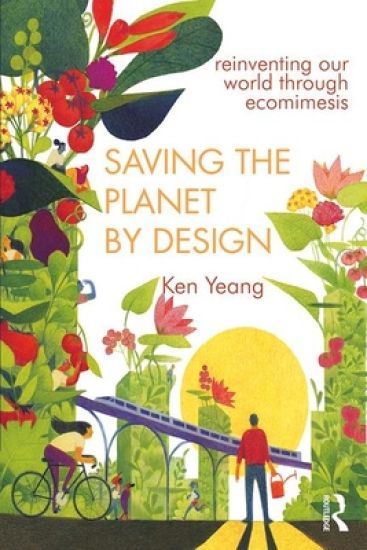
Can we ‘save the Planet’? For a resilient, durable and sustainable future for human society, we need to repurpose, reinvent, redesign, remake and recover our human-made world so that our built environment is benignly and seamlessly biointegrated with Nature to function synergistically with it. These are the multiple tasks that humanity must carry out imminently if there is to be a future for human society and all lifeforms and their environments on the Planet. Addressing this is the most compelling question for those whose daily work impacts on Nature, such as architects, engineers, landscape architects, town planners, environmental policy makers, builders and others, but it is a question that all of humanity needs to urgently address.Presented here are two key principles as the means to carry out these tasks – ‘ecocentricity’ being guided by the science of ecology, and ‘ecomimesis’ as designing and making the built environment including all artefacts based on the emulation and replication of the ‘ecosystem’ concept. Designing with ecology is contended here as the authentic approach to green design from which the next generation of green design will emerge, going beyond current use of accreditation systems. For those who subscribe to this principle, this is articulated here, showing how it can be implemented by design. Adopting these principles is fundamental in our endeavour to save our Planet Earth, and changes profoundly and in entirety the way we design, make, manage and operate our built environment.
EcoMasterplanning

EcoMasterplanning

Ken Yeang

John Wiley Sons Inc
2009
sidottu
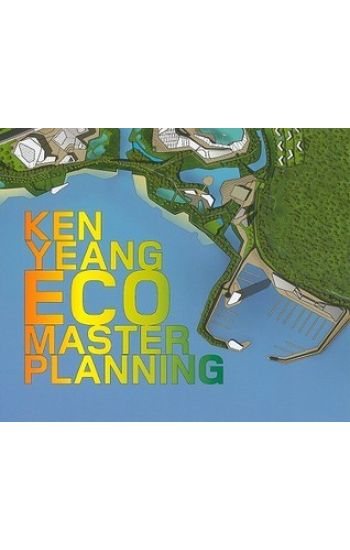
In planning for a sustainable future for our planet, it is vital that we achieve a seamless and benign biointegration of all human interventions in the natural environment. Finding green design solutions for our built environment must start from the wider scale of regional and urban planning and must then be carried right through to infrastructural engineering, architecture and industrial design. Masterplanning affords the chance to redress current environmental imbalances and to reduce the consequences of our built systems on the environment, with the greater and of reversing climate change. Ecomasterplanning presents a groundbreaking integrative and comprehensive approach to masterplanning, illustrated by examples that Ken Yeang – the original pioneer of the ‘green skyscraper’ – has designed in a highly visually driven format, the book examines over 20 of his masterplans from around the world, including those in the Netherlands, china, India, Turkey, Malaysia, Singapore and North America.
It's Not Easy Being Green

It's Not Easy Being Green

Ken Yeang

Goff Books
2017
nidottu
It's Not Easy Being Green tells the reader, quite simply, that 'Green Architecture' is not as simple as many of its promoters expect. It is not solely about energy efficiency or cultivating different levels of vegetation. It is an extensive dedication, involving cautious action that takes into account the needs of both the natural and the built environment. Ken Yeang's work demonstrates a comprehensive set of strategies making Green Architecture feasible and practical for architects and professionals from other fields, to understand the importance of saving the world from environmental devastation. The book intends to raise awareness and concern on environmental issues, and suggests how architecture can be designed now in favour of a benign living environment for the future.