Kirjojen hintavertailu. Mukana 11 244 527 kirjaa ja 12 kauppaa.

Kirjahaku

Etsi kirjoja tekijän nimen, kirjan nimen tai ISBN:n perusteella.

5 kirjaa tekijältä Kenneth B. Moss

Jewish Renaissance in the Russian Revolution

Jewish Renaissance in the Russian Revolution

Kenneth B. Moss

Harvard University Press
2009
sidottu
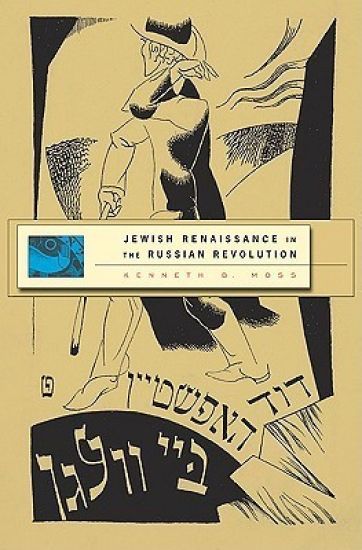
Between 1917 and 1921, as revolution convulsed Russia, Jewish intellectuals and writers across the crumbling empire threw themselves into the pursuit of a “Jewish renaissance.” At the heart of their program lay a radically new vision of Jewish culture predicated not on religion but on art and secular individuality, national in scope yet cosmopolitan in content, framed by a fierce devotion to Hebrew or Yiddish yet obsessed with importing and participating in the shared culture of Europe and the world. These cultural warriors sought to recast themselves and other Jews not only as a modern nation but as a nation of moderns.Kenneth Moss offers the first comprehensive look at this fascinating moment in Jewish and Russian history. He examines what these numerous would-be cultural revolutionaries, such as El Lissitzky and Haim Nahman Bialik, meant by a new Jewish culture, and details their fierce disagreements but also their shared assumptions about what culture was and why it was so important. In close readings of Hebrew, Yiddish, and Russian texts, he traces how they sought to realize their ideals in practice as writers, artists, and thinkers in the burgeoning cultural centers of Moscow, Kiev, and Odessa. And he reveals what happened to them and their ideals as the Bolsheviks consolidated their hold over cultural life.Here is a brilliant, revisionist argument about the nature of cultural nationalism, the relationship between nationalism and socialism as ideological systems, and culture itself, the axis around which the encounter between Jews and European modernity has pivoted over the past century.
An Unchosen People

An Unchosen People

Kenneth B. Moss

Harvard University Press
2021
sidottu
A revisionist account of interwar Europe’s largest Jewish community that upends histories of Jewish agency to rediscover reckonings with nationalism’s pathologies, diaspora’s fragility, Zionism’s promises, and the necessity of choice.What did the future hold for interwar Europe’s largest Jewish community, the font of global Jewish hopes? When intrepid analysts asked these questions on the cusp of the 1930s, they discovered a Polish Jewry reckoning with “no tomorrow.” Assailed by antisemitism and witnessing liberalism’s collapse, some Polish Jews looked past progressive hopes or religious certainties to investigate what the nation-state was becoming, what powers minority communities really possessed, and where a future might be found—and for whom.The story of modern Jewry is often told as one of creativity and contestation. Kenneth B. Moss traces instead a late Jewish reckoning with diasporic vulnerability, nationalism’s terrible potencies, Zionism’s promises, and the necessity of choice. Moss examines the works of Polish Jewry’s most searching thinkers as they confronted political irrationality, state crisis, and the limits of resistance. He reconstructs the desperate creativity of activists seeking to counter despair where they could not redress its causes. And he recovers a lost grassroots history of critical thought and political searching among ordinary Jews, young and powerless, as they struggled to find a viable future for themselves—in Palestine if not in Poland, individually if not communally.Focusing not on ideals but on a search for realism, Moss recasts the history of modern Jewish political thought. Where much scholarship seeks Jewish agency over a collective future, An Unchosen People recovers a darker tradition characterized by painful tradeoffs amid a harrowing political reality, making Polish Jewry a paradigmatic example of the minority experience endemic to the nation-state.
Marque and Reprisal

Marque and Reprisal

Kenneth B. Moss

University Press of Kansas
2019
sidottu
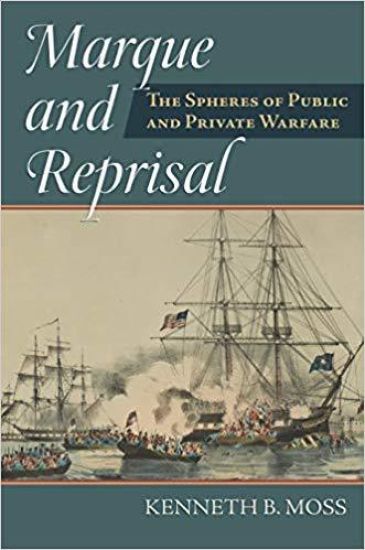
“Letters of marque” might suggest privateers of the Elizabethan era or the American Revolution. But such conventions are duly covered in the US Constitution, and the private military instruments they sanction are very much at work today in the form of mercenaries and military contractors. A history of such practices up to the present day, Marque and Reprisal by Kenneth B. Moss offers unique insight into the role of private actors in military conflicts and the reason they are increasingly deployed in our day.Along with an overview of mercenaries and privateers, Marque and Reprisal provides a comprehensive history of the “marque and reprisal” clause in the US Constitution, reminding us that it is not as arcane as it seems and arguing that it is not a license for all forms of undeclared war. Within this historical context Moss explains why governments and states have sought control over warfare and actors—and why private actors have reappeared in force in recent conflicts. He also looks ahead to the likelihood that cyberwar will become an important venue for “private warfare.” Moss wonders if international law will be up to the challenges of private military actors in the digital realm. Is international law, in fact, equipped to meet the challenges increasingly presented in our day by such extramilitary activity?A government makes no more serious decision than whether to resort to military force and war; and when doing so, Moss suggests, it should ensure that such actions are accountable, not on the sly, and not decided in the marketplace. Marque and Reprisal should inform future deliberations and decisions on that count.
Undeclared War and the Future of U.S. Foreign Policy

Undeclared War and the Future of U.S. Foreign Policy

Kenneth B. Moss

Johns Hopkins University Press
2008
sidottu
Undeclared wars have a history in the United States almost as old as the country itself and bear an importance that has grown along with the nation's power, international status, and technological proficiency. Kenneth B. Moss's highly original argument in Undeclared War and the Future of U.S. Foreign Policy demonstrates that though the framers of the Constitution had a broad notion of the varieties of war and the authority under which they would be undertaken without a formal declaration, Congress and the President are leading the United States into conflicts without fundamental oversight and accountability. The concentration of power in the president's hands is particularly troubling to Moss, and he traces the shift to congressional deference and even timidity. Presidential accountability to Congress and the public for limited wars has been harmfully weak, most recently in the wars against Vietnam and Iraq, says the author, and he proposes a new strategy for improving congressional institutions for oversight.
Undeclared War and the Future of U.S. Foreign Policy

Undeclared War and the Future of U.S. Foreign Policy

Kenneth B. Moss

Johns Hopkins University Press
2008
nidottu
Undeclared wars have a history in the United States almost as old as the country itself and bear an importance that has grown along with the nation's power, international status, and technological proficiency. Kenneth B. Moss's highly original argument in Undeclared War and the Future of U.S. Foreign Policy demonstrates that though the framers of the Constitution had a broad notion of the varieties of war and the authority under which they would be undertaken without a formal declaration, Congress and the President are leading the United States into conflicts without fundamental oversight and accountability. The concentration of power in the president's hands is particularly troubling to Moss, and he traces the shift to congressional deference and even timidity. Presidential accountability to Congress and the public for limited wars has been harmfully weak, most recently in the wars against Vietnam and Iraq, says the author, and he proposes a new strategy for improving congressional institutions for oversight.