Kirjojen hintavertailu. Mukana 11 244 527 kirjaa ja 12 kauppaa.

Kirjahaku

Etsi kirjoja tekijän nimen, kirjan nimen tai ISBN:n perusteella.

18 kirjaa tekijältä Kenneth Frampton

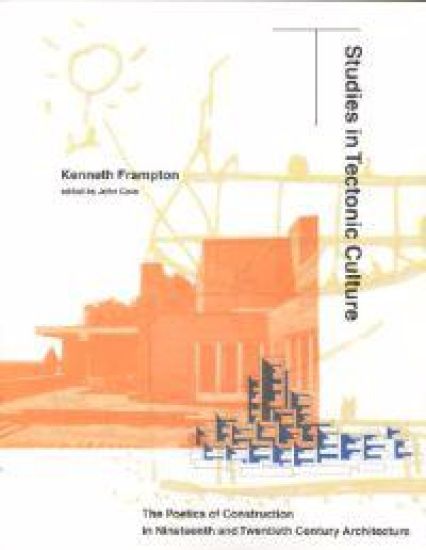
Studies in Tectonic Culture

Studies in Tectonic Culture

Kenneth Frampton

MIT Press
2001
pokkari
Composed of ten essays and an epilogue that trace the history of contemporary form as an evolving poetic of structure and construction, the book's analytical framework rests on Frampton's close readings of key French and German, and English sources from the eighteenth century to the present.Kenneth Frampton's long-awaited follow-up to his classic A Critical History of Modern Architecture is certain to influence any future debate on the evolution of modern architecture. Studies in Tectonic Culture is nothing less than a rethinking of the entire modern architectural tradition. The notion of tectonics as employed by Frampton—the focus on architecture as a constructional craft—constitutes a direct challenge to current mainstream thinking on the artistic limits of postmodernism, and suggests a convincing alternative. Indeed, Frampton argues, modern architecture is invariably as much about structure and construction as it is about space and abstract form.Composed of ten essays and an epilogue that trace the history of contemporary form as an evolving poetic of structure and construction, the book's analytical framework rests on Frampton's close readings of key French and German, and English sources from the eighteenth century to the present. He clarifies the various turns that structural engineering and tectonic imagination have taken in the work of such architects as Perret, Wright, Kahn, Scarpa, and Mies, and shows how both constructional form and material character were integral to an evolving architectural expression of their work. Frampton also demonstrates that the way in which these elements are articulated from one work to the next provides a basis upon which to evaluate the works as a whole. This is especially evident in his consideration of the work of Perret, Mies, and Kahn and the continuities in their thought and attitudes that linked them to the past.Frampton considers the conscious cultivation of the tectonic tradition in architecture as an essential element in the future development of architectural form, casting a critical new light on the entire issue of modernity and on the place of much work that has passed as "avant-garde."A copublication of the Graham Foundation for Advanced Studies and The MIT Press.
The Other Modern Movement

The Other Modern Movement

Kenneth Frampton

Yale University Press
2021
sidottu
A revealing new look at modernist architecture, emphasizing its diversity, complexity, and broad inventiveness “[Frampton] remains a formidable force in architecture . . . The Other Modern Movement offers an opportunity to re-examine the Western canon of 20th-century architecture—which Frampton himself was crucial in establishing—and delve deeper into the work of lesser-known practitioners.”—Josephine Minutillo, Architectural Record Usually associated with Mies and Le Corbusier, the Modern Movement was instrumental in advancing new technologies of construction in architecture, including the use of glass, steel, and reinforced concrete. Renowned historian Kenneth Frampton offers a bold look at this crucial period, focusing on architects less commonly associated with the movement in order to reveal the breadth and complexity of architectural modernism. The Other Modern Movement profiles nineteen architects, each of whom consciously contributed to the evolution of a new architectural typology through a key work realized between 1922 and 1962. Frampton’s account offers new insights into iconic buildings like Eileen Gray’s E-1027 House in France and Richard Neutra’s Kaufmann House in Palm Springs, California, as well as lesser-known works such as Antonin Raymond’s Tokyo Golf Club and Alejandro de la Sota’s Maravillas School Gymnasium in Madrid. Foregrounding the ways that these diverse projects employed progressive models, advanced new methods in construction techniques, and displayed a new sociocultural awareness, Frampton shines a light on the rich legacy of the Modern Movement and the enduring potential of the unfinished modernist project.
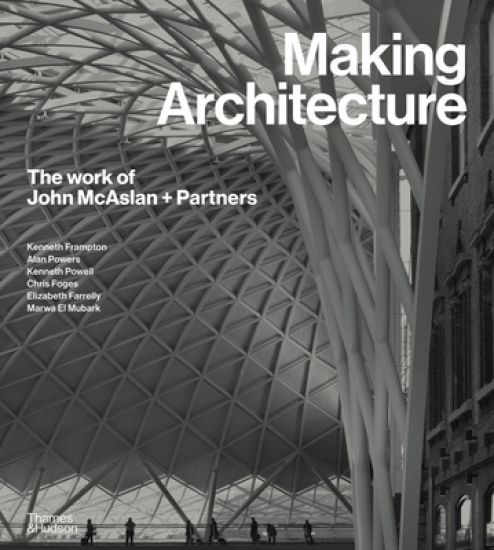
Making Architecture: The work of John McAslan + Partners
The first survey in nearly two decades of the work of John McAslan + Partners. Making Architecture both provides an up-to-date account of the work of John McAslan + Partners, one of Britain’s most respected and dynamic architectural practices, and analyses the culture of a studio that has made a remarkable contribution to architecture, place-making and the lives of individuals for four decades. A series of thematic chapters includes detailed, fully illustrated descriptions of many recent and ongoing international projects, from Central and Waterloo stations in Sydney and ten new stations for Delhi Metro to the transformation of King’s Cross station in London; from the sensitive restoration of the De La Warr Pavilion in Bexhill-on-Sea, East Sussex, to the new Doha Mosque and nearby Msheireb Museums in Qatar. It also includes the pioneering initiatives for which the McAslan studio has become well known and that underline the practice’s humanity and sense of social responsibility: the urgent restoration of the Iron Market in Port-au-Prince, Haiti, after the devastating earthquake in 2010; the Hidden Homelessness initiative, begun in 2017; the N17 project that provided a pop-up design studio in Tottenham, London, after the riots of 2011, with the aim of inspiring young people to become engaged in the regeneration of their own community; and many others. Edited by Chris Foges, with a foreword by Kenneth Frampton and an introduction by Alan Powers, and with contributions by architectural specialists, this beautifully designed book offers the key to understanding the development and philosophy of one of the world’s most socially engaged architectural practices.
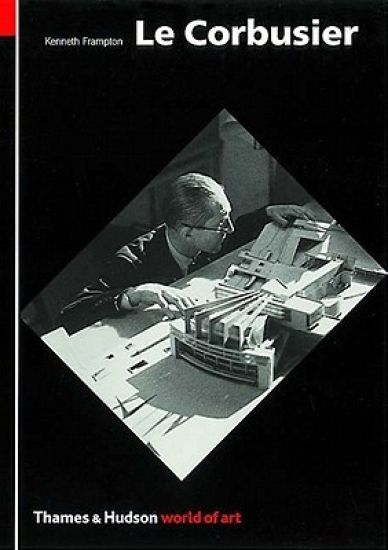
Le Corbusier

Le Corbusier

Kenneth Frampton

Thames Hudson Ltd
2001
nidottu
Le Corbusier is probably the most famous architect of the 20th century. The richness and variety of his work and his passionately expressed philosophy of architecture have had a gigantic impact on the urban fabric and the way we live. Weaving through his long and prolific life are certain recurrent themes – his perennial drive towards new types of dwelling, from the early white villas to the Unité d’Habitation at Marseilles; his evolving concepts of urban form, including the Plan Voisin of 1925 with its cruciform towers imposed on the city of Paris and his work at Chandigarh in India; and his belief in a new technocratic order. The distinguished critic and historian Kenneth Frampton re-examines all the facets of his artistic and philosophical world-view in light of recent thinking, and presents us with a Le Corbusier for the 21st century.
Modern Architecture

Modern Architecture

Kenneth Frampton

THAMES HUDSON LTD
2020
nidottu
This highly acclaimed survey of modern architecture and its origins has become a classic since it first appeared in 1980, and has helped to shape architectural practice and discourse worldwide. For this extensively revised and updated fifth edition, Kenneth Frampton has added a new section that explores in detail the modernist tradition in architecture across the globe in the late twentieth and early twenty-first centuries. He examines the varied ways in which architects are not only responding to the geographical, climatic, material and cultural contexts of their buildings, but also pursuing distinct lines of approach that emphasize topography, morphology, sustainability, materiality habitat and civic form. It remains an essential book for all students of architecture and architectural history.
Le Corbusier

Le Corbusier

Kenneth Frampton

THAMES HUDSON LTD
2024
nidottu
A revised and updated edition of a bestselling introduction on one of the leading architects of the 20th century. Le Corbusier is probably the most famous architect of the 20th century. The richness and variety of his work and his passionately expressed philosophy of architecture have had a gigantic impact on the urban fabric and the way we live. Weaving through his long and prolific life are certain recurrent themes – his perennial drive towards new types of dwelling, from the early white villas to the Unité d’Habitation at Marseilles; his evolving concepts of urban form, including the Plan Voisin of 1925 with its cruciform towers imposed on the city of Paris and his work at Chandigarh in India; and his belief in a new technocratic order. The distinguished critic and architecture historian Kenneth Frampton re-examines all the facets of his artistic and philosophical world-view in light of recent thinking, and presents us with a Le Corbusier for the 21st century. This revised edition features a new introduction; some illustrations have now been replaced with colour.
Kengo Kuma

Kengo Kuma

Kenneth Frampton

Thames Hudson Ltd
2018
sidottu
The quintessential Japanese architect of today, Kengo Kuma has forged a modern design language that artfully combines the country’s traditional building crafts with sophisticated technologies and materials. From his iconic Glass House (1995) to Dundee’s V&A (2018), this is the complete record of Kuma’s built work, comprising thirty projects to date. Kenneth Frampton’s revised and updated essay frames Kuma’s work in the context of post-war Japan’s flourishing architecture scene and influential figures, and recounts the international acclaim that Kuma’s ideas and buildings have received. The heart of the book consists of projects presented in detail, accompanied by descriptive text and detailed drawings, and organized by the material themes that have come to define the architect’s output. This new edition includes five new projects: Komatsu Seiren Fabric Laboratory fa-bo, Under One Roof project for the EPFL ArtLab, Japan House São Paulo, China Academy of Art’s Folk Art Museum, and the V&A Dundee.
Labour, Work and Architecture

Labour, Work and Architecture

Kenneth Frampton

Phaidon Press Ltd
2002
sidottu
This anthology of writings by the architectural critic Kenneth Frampton brings together his most influential essays from the last 35 years. The essays focus on twentieth-century architecture, dealing with diverse themes and movements, built works and the architects responsible for these buildings.The writings are presented in clear chronological order within three sections - Theory, History, and Criticism - which together serve to identify modern architecture in its broader cultural and historical context. The compilation assimilates early critical reviews from the 1960s and 70s analysing contemporary buildings, as well as lengthier pieces covering architecture and the ideological circumstances in which buildings are produced.As a collection, Labour, Work and Architecture is an essential document in the historiography of twentieth-century architecture, composed by a highly respected and readable scholar committed to the nuanced understanding and real improvement of our built environment.
Architecture and the Public World

Architecture and the Public World

Kenneth Frampton

BLOOMSBURY PUBLISHING PLC
2024
nidottu
This book brings together Kenneth Frampton’s essays from the 1960s to today which epitomize his reflections on the historical–theoretical entanglements of architecture with place, the public realm, cultural identity, urban landscape and environment, and the political question of the “predicament” of architecture in the new Millennium. The essays explore Frampton’s contention that architecture’s imperative is to assume a significant responsibility for the edification and stewardship of the Arendtian ‘public world.’ One of the most theoretically sophisticated and politically committed architectural thinkers, Frampton’s work breaks emphatically with the limits and norms of much contemporary practice and restores a sense of richness and social consequence of architecture’s ‘unfinished project,’ while offering abiding lessons not only for architecture but for social, cultural, and design criticism alike.
Architecture and the Public World

Architecture and the Public World

Kenneth Frampton

BLOOMSBURY PUBLISHING PLC
2024
sidottu
This book brings together Kenneth Frampton’s essays from the 1960s to today which epitomize his reflections on the historical–theoretical entanglements of architecture with place, the public realm, cultural identity, urban landscape and environment, and the political question of the “predicament” of architecture in the new Millennium. The essays explore Frampton’s contention that architecture’s imperative is to assume a significant responsibility for the edification and stewardship of the Arendtian ‘public world.’ One of the most theoretically sophisticated and politically committed architectural thinkers, Frampton’s work breaks emphatically with the limits and norms of much contemporary practice and restores a sense of richness and social consequence of architecture’s ‘unfinished project,’ while offering abiding lessons not only for architecture but for social, cultural, and design criticism alike.
Wright's Writings – Reflections on Culture and Politics, 1894–1959

Wright's Writings – Reflections on Culture and Politics, 1894–1959

Kenneth Frampton

Columbia Books on Architecture and the City
2017
nidottu
Wright's Writings traces the discursive work of Frank Lloyd Wright through a set of essays by Kenneth Frampton. Originally written as a series of introductions to the five-volume collection of Wright's writing published in 1992, the essays are gathered here as a critical survey of the architect's written and spoken work-a body of text that testifies to Wright's staggering prolificacy, pleasure in argument, diversity of interests, and desire to engage with timely political debates. Alongside these five essays, Wright's Writings provides a visual record of Wright's literary output, demonstrating the range of media he employed in the act of making architecture. Read together, it presents a history of the architect through the essays, books, letters, lectures, and speeches he wrote as well as the material and social cultures he navigated.
The Architecture of Point William

The Architecture of Point William

Kenneth Frampton

Oro Editions
2021
sidottu
Shim-Sutcliffe's masterful work at Point William intertwines landscape and architecture with ancient rock and water reshaping and reimagining a site on the Canadian Shield over two decades. Found conditions and new buildings are interwoven and choreographed to create a rich spatial experience moving between inside and out. Kenneth Frampton provides an insightful introduction with selected images and his own sketches framing a way of seeing Point William for the reader. Michael Webb's provocative interview with Brigitte Shim and Howard Sutcliffe describes their evolving vision for Point William and their two-decade journey towards its realisation. Acclaimed photographers Ed Burtynsky, James Dow and Scott Norsworthy contribute through their powerful images capturing the spirit of Point William through the seasons and over time.
The Unfinished Modern Project at the End of Modernity

The Unfinished Modern Project at the End of Modernity

Kenneth Frampton

Sir John Soane's Museum
2019
nidottu
British architect, critic, historian and educator Kenneth Frampton is the third recipient of the Soane Medal, which is awarded annually in recognition of architects and critics who have made a major contribution to their field through practice, education, history or theory, and in doing so have furthered and enriched the public understanding of architecture. The lecture was delivered on 11 November 2019 at the Sheikh Zayed Theatre in the New Academic Building of the London School of Economics. This publication contains the transcript of Kenneth Frampton's lecture, which examines masterworks of modern architecture from 1930 to the present in order to theorise an architecture that resists our compulsive commodification of the environment.
Five North American Architects

Five North American Architects

Kenneth Frampton

Lars Muller Publishers
2011
nidottu
Five North American Architects - An Anthology brings together five architectural practices which, while all distinct, share a particularly sensitive feeling for the impact of craftsmanship and climate on the generation of form, as well as an equally shared concern for the expressive tactility of material and the articulation of structure under the impact of light. The book is an in depth survey of recent work by Steven Holl (New York), Rick Joy (Tucson) John and Patricia Patkau (Vancouver), Stanley Saitowitz (San Francisco), and Brigitte Shim and Howard Sutcliffe (Toronto). The regional specificity of the work is considered against a larger North American context, allowing one to assess the practice of architecture across the continent today.
Genealogy of Modern Archiecture

Genealogy of Modern Archiecture

Kenneth Frampton

Lars Muller Publishers
2015
sidottu
Genealogy of Modern Architecture is a reference work on modern architecture by Kenneth Frampton, one of today's leading architectural theorists. Conceived as a genealogy of twentieth century architecture from 1924 to 2000, it compiles some sixteen comparative analyses of canonical modern buildings ranging from exhibition pavilions and private houses to office buildings and various kinds of public institutions. The buildings are compared in terms of their hierarchical spatial order, circulation structure and referential details. The analyses are organized so as to show what is similar and different between two paired types, thus revealing how modern tradition has been diversely inflected. Richly illustrated, Genealogy of Modern Architecture is a new standard work in architectural education.
Michael Webb: Two Journeys

Michael Webb: Two Journeys

Kenneth Frampton

Lars Muller Publishers
2018
sidottu
Two Journeys is the firsat comprehensive monograph on the work of Michael Webb, an artist who is also a trained architect and who operates at the intersection of the two disciplines. He is widely known for creatively exploring the boundaries of drawing techniques, specifically perspectival projection. Webb's aspirations for and re-conceptions of both built and natural environments are revealed between a twenty-year study on perspective projection that utilizes as its subjects the Regatta Course at Henley-on-Thames in England, and early work, some of which was done in conjunction with Archigram, an avant-garde group concerned with theorizing and critiquing architecture which formed during the 1960s at the Architectural Association in London. The publication connects nearly sixty years of the artist's work into a continuously evolving narrative about the relationship between architecture, the automobile, and landscape. Webb's work investigates these relationships using notions of time, space, and speed, and analogue drawing tools such as pencil and collage, which are often rendered later in oil paint. The book features over 150 drawings: artistic works rooted in analytical thinking and structured around architectural elements and notational systems.
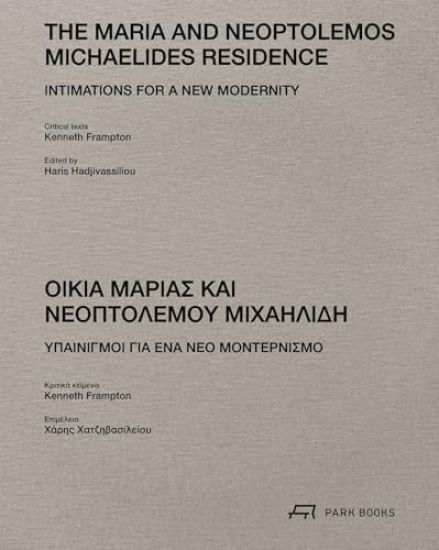
The Maria and Neoptolemos Michaelides Residence
Neoptolemos Michaelides (1920–92) was a pioneer of modern architecture in Cyprus. All of his designs are based on the desire to develop principles that combine modern architecture with traditional Cypriot construction methods—and the knowledge preserved therein regarding the choice of materials, geographical orientation, natural climate control, and the internal organisation of buildings. These principles are rooted in his studies of Western philosophy and even more in his affinity with Eastern philosophical thought, especially the spiritual importance of a harmonious relationship with nature. Between his respect for pure, natural materials and his awareness of elemental forces, his buildings seem both to worship nature and to evoke the Shintoism of Japan. In this first ever book on the architecture of Neoptolemos Michaelides, the distinguished American architectural historian Kenneth Frampton presents his work in two essays. The first, illustrated with historical photos and documents, is dedicated to 13 of his most important buildings. The second takes a close look at Michaelides’ own home in Nicosia. Newly taken photographs and plan drawings created especially for the book on a 1:100 scale document this extraordinary house in detail. The beautiful volume is rounded out with a concise biography of Michaelides. Text in English and Greek.