Kirjojen hintavertailu. Mukana 11 244 527 kirjaa ja 12 kauppaa.

Kirjahaku

Etsi kirjoja tekijän nimen, kirjan nimen tai ISBN:n perusteella.

8 kirjaa tekijältä Kenneth Gross

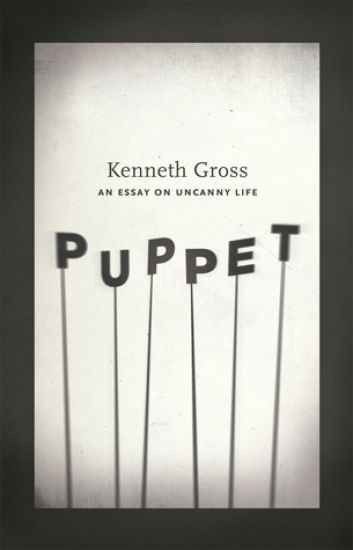
Puppet

Puppet

Kenneth Gross

University of Chicago Press
2012
nidottu
The puppet creates delight and fear. It may evoke the innocent play of childhood, or become a tool of ritual magic, able to negotiate with ghosts and gods. Puppets can be creepy things, secretive, inanimate while also full of spirit, alive with gesture and voice. In this eloquent book, Kenneth Gross contemplates the fascination of these unsettling objects - objects that are also actors and images of life. The poetry of the puppet is central here, whether in its blunt grotesquery or symbolic simplicity, and always in its talent for metamorphosis. On a meditative journey to seek the idiosyncratic shapes of puppets on stage, Gross looks at the anarchic Punch and Judy show, the sacred shadow theater of Bali, and experimental theaters in Europe and the United States, where puppets enact everything from Baroque opera and Shakespearean tragedy to Beckettian farce. Throughout, he interweaves accounts of the myriad faces of the puppet in literature - Collodi's cruel, wooden Pinocchio, puppet-like characters in Kafka and Dickens, Rilke's puppet-angels, the dark puppeteering of Philip Roth's Mickey Sabbath - as well as in the work of artists Joseph Cornell and Paul Klee. The puppet emerges here as a hungry creature, seducer and destroyer, demon and clown. It is a test of our experience of things, of the human and inhuman. A book about reseeing what we know, or what we think we know, "Puppet" evokes the startling power of puppets as mirrors of the uncanny in life and art.
Puppet

Puppet

Kenneth Gross

University of Chicago Press
2011
sidottu
The puppet can entertain or terrify, evoke the innocence of childhood, or become a magical entity, able to negotiate with ghosts and gods. Puppets are often creepy things, inanimate while also full of spirit, alive with gesture and voice. In this haunting and beautiful book, Kenneth Gross takes us on a meditative journey through the world of puppet theater, exploring the mysterious fascination of these unsettling objects. Engaging particular aspects of the puppet, from its blunt grotesquerie to its talent for metamorphosis, Gross teases out their meanings, showing us the puppet in the guise of angel, seducer, demon, and destroyer. On a global tour of puppets onstage, he takes us to the raucous Punch and Judy show, the sacred shadow theater of Bali, and experimental theaters in the United States and Europe where puppets enact everything from Shakespearean tragedy to surrealist fables of discovery and loss. At the same time, he explores the puppet in poetry and fiction-including Collodi's cruel, wooden Pinocchio; puppetlike characters in Dickens and Kafka; Rilke's innocent puppet-angels; and the dark puppeteering of Philip Roth's Micky Sabbath - as well as in the work of artists such as Joseph Cornell and Paul Klee. A lovely, expressive book about re-seeing what we know, or what we think we know, "Puppet" evokes the startling power of puppets as mirrors of the uncanny in art and life.
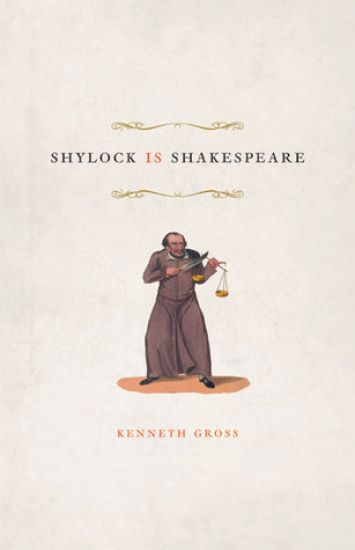
Shylock Is Shakespeare

Shylock Is Shakespeare

Kenneth Gross

University of Chicago Press
2006
sidottu
Shylock, the Jewish moneylender in The Merchant of Venice who famously demands a pound of flesh as security for a loan to his antisemitic tormentors, is one of Shakespeare’s most complex and idiosyncratic characters. With his unsettling eloquence and his varying voices of protest, play, rage, and refusal, Shylock remains a source of perennial fascination. What explains the strange and enduring force of this character, so unlike that of any other in Shakespeare’s plays? Kenneth Gross posits that the figure of Shylock is so powerful because he is the voice of Shakespeare himself. Marvelously speculative and articulate, Gross’s book argues that Shylock is a breakthrough for Shakespeare the playwright, an early realization of the Bard’s power to create dramatic voices that speak for hidden, unconscious, even inhuman impulses—characters larger than the plays that contain them and ready to escape the author’s control. Shylock is also a mask for Shakespeare’s own need, rage, vulnerability, and generosity, giving form to Shakespeare’s ambition as an author and his uncertain bond with the audience. Gross’s vision of Shylock as Shakespeare’s covert double leads to a probing analysis of the character’s peculiar isolation, ambivalence, opacity, and dark humor. Addressing the broader resonance of Shylock, both historical and artistic, Gross examines the character’s hold on later readers and writers, including Heinrich Heine and Philip Roth, suggesting that Shylock mirrors the ambiguous states of Jewishness in modernity. A bravura critical performance, Shylock Is Shakespeare will fascinate readers with its range of reference, its union of rigor and play, and its conjectural—even fictive—means of coming to terms with the question of Shylock, ultimately taking readers to the very heart of Shakespeare’s humanizing genius.
Shakespeare's Noise

Shakespeare's Noise

Kenneth Gross

University of Chicago Press
2001
sidottu
Kenneth Gross explores Shakespeare's deep fascination with dangerous and disorderly forms of speaking--especially rumor, slander, insult, vituperation, and curse--and through them offers a vision of the work of words in his plays. Coriolanus's taunts or Lear's curses force us to think not just about how Shakespeare's characters speak, but also about how they hear, overhear, and mishear what is spoken, how rumor becomes tragic knowledge for Hamlet, or opens Othello to fantastic jealousies. Gross also shows how Shakespeare's preoccupation with "noisy" speech echoed and transformed a broader cultural obsession with the perils of rumor, slander, and libel in Renaissance England.
Shakespeare's Noise

Shakespeare's Noise

Kenneth Gross

University of Chicago Press
2001
nidottu
Kenneth Gross explores Shakespeare's deep fascination with dangerous and disorderly forms of speaking--especially rumor, slander, insult, vituperation, and curse--and through them offers a vision of the work of words in his plays. Coriolanus's taunts or Lear's curses force us to think not just about how Shakespeare's characters speak, but also about how they hear, overhear, and mishear what is spoken, how rumor becomes tragic knowledge for Hamlet, or opens Othello to fantastic jealousies. Gross also shows how Shakespeare's preoccupation with "noisy" speech echoed and transformed a broader cultural obsession with the perils of rumor, slander, and libel in Renaissance England.
Dangerous Children

Dangerous Children

Kenneth Gross

THE UNIVERSITY OF CHICAGO PRESS
2022
sidottu
Gross explores our complex fascination with uncanny children in works of fiction. Ranging from Victorian to modern works—Lewis Carroll’s Alice in Wonderland, Carlo Collodi’s Pinocchio, Henry James’s What Maisie Knew, J. M. Barrie’s Peter and Wendy, Franz Kafka’s “The Cares of a Family Man,” Richard Hughes’s A High Wind in Jamaica, Elizabeth Bowen’s The Death of the Heart, and Vladimir Nabokov’s Lolita—Kenneth Gross’s book delves into stories that center around the figure of a strange and dangerous child. Whether written for adults or child readers, or both at once, these stories all show us odd, even frightening visions of innocence. We see these children’s uncanny powers of speech, knowledge, and play, as well as their nonsense and violence. And, in the tales, these child-lives keep changing shape. These are children who are often endangered as much as dangerous, haunted as well as haunting. They speak for lost and unknown childhoods. In looking at these narratives, Gross traces the reader’s thrill of companionship with these unpredictable, often solitary creatures—children curious about the adult world, who while not accommodating its rules, fall into ever more troubling conversations with adult fears and desires. This book asks how such imaginary children, objects of wonder, challenge our ways of seeing the world, our measures of innocence and experience, and our understanding of time and memory.
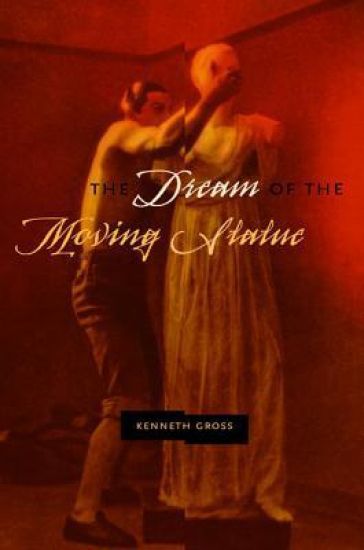
The Dream of the Moving Statue

The Dream of the Moving Statue

Kenneth Gross

Pennsylvania State University Press
2006
pokkari
We live among the images we have made, and those images have an uncanny life. They seduce, challenge, trap, transform, and even kill us; they speak and remain silent. Kenneth Gross's The Dream of the Moving Statue offers a far-ranging and probing exploration of how writers, artists, and filmmakers have imagined the power and life of statues, real and metaphoric, taking up examples from antiquity to modernity, from Ovid, Michelangelo, and Shakespeare to Freud, Rilke, and Charlie Chaplin. The book is about the fate of works of art and about the fate of our fantasies, words, and bodies, about the metamorphoses they undergo in our own and others’ minds.