Kirjojen hintavertailu. Mukana 11 239 951 kirjaa ja 12 kauppaa.

Kirjahaku

Etsi kirjoja tekijän nimen, kirjan nimen tai ISBN:n perusteella.

5 kirjaa tekijältä Kenneth Janda

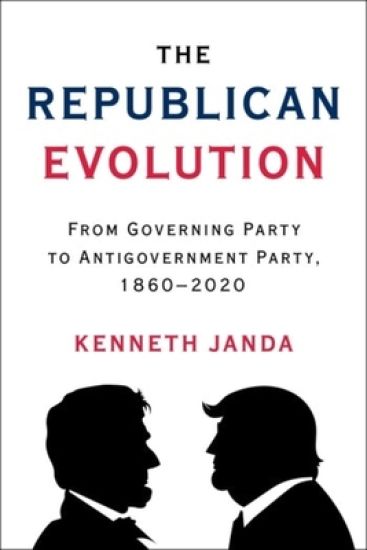
The Republican Evolution

The Republican Evolution

Kenneth Janda

Columbia University Press
2022
sidottu
The Republican Party was founded in 1854 to oppose slavery and its spread to new territories and states. Today, under the sway of Donald Trump, it is hardly recognizable as the party of Lincoln or even the party of Eisenhower. How and why has the Republican Party changed so drastically?Kenneth Janda sheds new light on the Republican Party’s transformations, drawing on a wide range of quantitative and qualitative evidence. He examines nearly three thousand planks from every Republican platform since 1856 as well as candidate statements and historical sources, tracing the evolution of the party’s positions on topics such as states’ rights, trade, taxation, regulation, law and order, immigration, environmental protection, and voting rights. Janda argues that the GOP has gone through three main phases over the course of its history, transforming from a party committed to governance to one vehemently opposed to government. In its first several decades, the Republican Party emphasized national authority and economic development. By the late 1920s, Republicans had begun downplaying the role of government in favor of a new philosophy steeped in free markets. The nomination of Barry Goldwater in 1964 marked a key turning point. Since then, the party has endorsed states’ rights, opposed civil rights, and become increasingly ethnocentric. Richly documented with scores of figures and tables, The Republican Evolution offers new perspective on how the GOP became an antigovernment party—and whether it can step back from the brink of authoritarianism.
The Republican Evolution

The Republican Evolution

Kenneth Janda

Columbia University Press
2022
pokkari
The Republican Party was founded in 1854 to oppose slavery and its spread to new territories and states. Today, under the sway of Donald Trump, it is hardly recognizable as the party of Lincoln or even the party of Eisenhower. How and why has the Republican Party changed so drastically?Kenneth Janda sheds new light on the Republican Party’s transformations, drawing on a wide range of quantitative and qualitative evidence. He examines nearly three thousand planks from every Republican platform since 1856 as well as candidate statements and historical sources, tracing the evolution of the party’s positions on topics such as states’ rights, trade, taxation, regulation, law and order, immigration, environmental protection, and voting rights. Janda argues that the GOP has gone through three main phases over the course of its history, transforming from a party committed to governance to one vehemently opposed to government. In its first several decades, the Republican Party emphasized national authority and economic development. By the late 1920s, Republicans had begun downplaying the role of government in favor of a new philosophy steeped in free markets. The nomination of Barry Goldwater in 1964 marked a key turning point. Since then, the party has endorsed states’ rights, opposed civil rights, and become increasingly ethnocentric. Richly documented with scores of figures and tables, The Republican Evolution offers new perspective on how the GOP became an antigovernment party—and whether it can step back from the brink of authoritarianism.

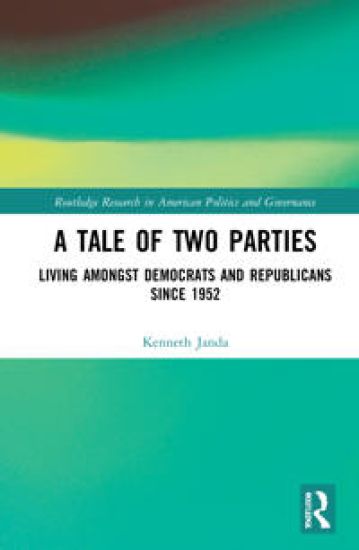
A Tale of Two Parties

A Tale of Two Parties

Kenneth Janda

Routledge
2021
sidottu
Since 1952, the social bases of the Democratic and Republican parties have undergone radical reshuffling. At the start of this period southern Blacks favored Lincoln’s Republican Party over suspect Democrats, and women favored Democrats more than Republicans. In 2020 these facts have been completely reversed. A Tale of Two Parties: Living Amongst Democrats and Republicans Since 1952 traces through this transformation by showing:How the United States society has changed over the last seven decades in terms of regional growth, income, urbanization, education, religion, ethnicity, and ideology;How differently the two parties have appealed to groups in these social cleavages;How groups in these social cleavages have become concentrated within the bases of the Democratic and Republican parties;How party identification becomes intertwined with social identity to generate polarization akin to that of rapid sports fans or primitive tribes.A Tale of Two Parties: Living Amongst Democrats and Republicans Since 1952 will have a wide and enthusiastic readership among political scientists and researchers of American politics, campaigns and elections, and voting and elections.
A Tale of Two Parties

A Tale of Two Parties

Kenneth Janda

TAYLOR FRANCIS LTD
2022
nidottu
Since 1952, the social bases of the Democratic and Republican parties have undergone radical reshuffling. At the start of this period southern Blacks favored Lincoln’s Republican Party over suspect Democrats, and women favored Democrats more than Republicans. In 2020 these facts have been completely reversed. A Tale of Two Parties: Living Amongst Democrats and Republicans Since 1952 traces through this transformation by showing:How the United States society has changed over the last seven decades in terms of regional growth, income, urbanization, education, religion, ethnicity, and ideology;How differently the two parties have appealed to groups in these social cleavages;How groups in these social cleavages have become concentrated within the bases of the Democratic and Republican parties;How party identification becomes intertwined with social identity to generate polarization akin to that of rapid sports fans or primitive tribes.A Tale of Two Parties: Living Amongst Democrats and Republicans Since 1952 will have a wide and enthusiastic readership among political scientists and researchers of American politics, campaigns and elections, and voting and elections.
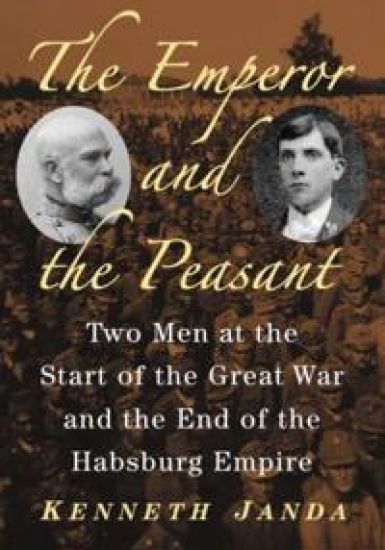
The Emperor and the Peasant

The Emperor and the Peasant

Kenneth Janda

McFarland Co Inc
2018
pokkari
There was more to World War I than the Western Front. This history juxtaposes the experiences of a monarch and a peasant on the Eastern Front. Franz Josef I, emperor of Austria-Hungary, was the first European leader to declare war in 1914 and was the first to commence firing. Samuel Mozolak was a Slovak laborer who sailed to New York--and fathered twins, taken as babies (and U.S. citizens) to his home village--before being drafted into the Austro-Hungarian army and killed in combat. The author interprets the views of the war of Franz Josef and his contemporaries Kaiser Wilhelm II and Tsar Nicholas II. Mozolak's story depicts the life of a peasant in an army staffed by aristocrats, and also illustrates the pattern of East European immigration to America.