Kirjojen hintavertailu. Mukana 12 016 292 kirjaa ja 12 kauppaa.

Kirjahaku

Etsi kirjoja tekijän nimen, kirjan nimen tai ISBN:n perusteella.

10 kirjaa tekijältä Kenneth L. Feder

The Past in Perspective: An Introduction to Human Prehistory
Ideal for introduction to archaeology and world prehistory courses, The Past in Perspective: An Introduction to Human Prehistory, Eighth Edition, is an engaging and up-to-date chronological overview of human prehistory. Kenneth L. Feder introduces students to "the big picture"--the grand sweep of human evolutionary history--presenting the human past within the context of fundamental themes of cultural evolution. Feder's unique, refreshing, and accessible narrative personalizes the past and makes it relevant to today's students. Using a consistent chapter format--"Prelude, Chronicle, Issues and Debates, Messages from the Past, and Case Study Close-up"--Feder helps students master both what we know and what is still debated about the complex story of the human past.
Linking to the Past: A Brief Introduction to Archaeology [With CDROM] [With CDROM]
This thoroughly revised Second Edition of Linking to the Past features: * A completely reorganized structure that ensures all students take the same pathway to learning the material traditionally covered in an archaeology course* An expanded focus that covers the whole of the archaeological experience (including ceramics, theory, and human burials) and integrates examples from around the globe* Updated material on such cutting-edge technology and theory as transformation processes, GIS, Total Station, glacial dating, and aerial photography* Discussions of current issues facing archaeology, including federal legislation that protects archaeological sites* More in-depth coverage of the scientific method; the history and development of archaeology; various theoretical approaches; and the archaeology of social inequality, race, gender, and the sacred* An in-text CD with interactive student exercises and slide shows Written in a conversational style, Linking to the Past: A Brief Introduction to Archaeology, Second Edition, offers students a concise and entertaining introduction to archaeological methods. Author Kenneth L. Feder helps students relate to the study of the past and learn what it means to think like an archaeologist by using accessible examples drawn from daily life; he examines the evolution of the beer and soda can to teach about seriation, demonstrates how technology changes over time with an iPod, and introduces dendrochronology by discussing a tree that fell on his property during a storm. Employing an "ask-and-answer" approach, Feder leads students through a wide-ranging series of questions about how archaeologists find, recover, study, and interpret the material culture left behind by earlier peoples. To give students an opportunity to think like archaeologists, the author offers interactive student exercises and slide shows (provided on the in-text CD). Linked to chapters in the text, the exercises on the CD include exploring a topographic map to see what features might support human habitation, translating radiocarbon dates into calendar years, and calculating the age at death of a sample of human beings by examining their skeletal features. The text is also enriched by additional pedagogical features including detailed study questions at the end of each chapter, an extensive glossary of more than 200 key terms, and suggestions for further reading. An Instructor's Manual on CD is also available.
The Past in Perspective: An Introduction to Human Prehistory
Winner of the Textbook & Academic Authors Association's McGuffey Longevity Award The Past in Perspective: An Introduction to Human Prehistory, Ninth Edition, is an engaging and up-to-date chronological overview of human prehistory. Kenneth L. Feder introduces students to "the big picture"--the grand sweep of human evolutionary history--presenting the human past within the context of fundamental themes of cultural evolution. Feder's unique, refreshing, and accessible narrative personalizes the past and makes it relevant to today's students. Using a consistent chapter format, Feder helps students master both what we know and what is still debated about the complex story of the human past.
Encyclopedia of Dubious Archaeology

Encyclopedia of Dubious Archaeology

Kenneth L. Feder

Greenwood Press
2010
sidottu
This book provides a fascinating, encyclopedic antidote for the mysticism and pseudoscience surrounding well-known or highly publicized archaeological and anthropological "discoveries." Archaeology attempts to answer the question "where do we come from?" in the broadest sense possible; as a result, it is a highly interesting topic for all mankind. When did human beings first walk the earth? How did civilization develop? What compelled our human ancestors to build things like the pyramids, the Great Sphinx, or Monk's Mound? This book presents the widely unknown scientific facts behind the most popular and enthralling "mysteries" of our world from an expert archaeological perspective—and lays out the information and research in a manner that is approachable, engaging, and entertaining for any reader. Encyclopedia of Dubious Archaeology: From Atlantis to the Walam Olum contains detailed and highly descriptive definitions for—and explanations of—terms related to extraordinary claims about human antiquity and its study. Some of the terms in this extensive list of topics relate to archaeological hoaxes. Many of the entries relate to dubious interpretations of the human past; some of the terms relate to far-fetched arguments that actually have produced evidence in support of their veracity.
Native America

Native America

Kenneth L. Feder

PRINCETON UNIVERSITY PRESS
2025
sidottu
An epic deep history of the Indigenous peoples of North America, covering more than 20,000 years of astonishing diversity, adaptation, resilience, and continuityNative America presents an infinitely surprising and fascinating deep history of the continent’s Indigenous peoples. Kenneth Feder, a leading expert on Native American history and archaeology, draws on archaeological, historical, and cultural evidence to tell the ongoing story, more than 20,000 years in the making, of an incredibly resilient and diverse mixture of peoples, revealing how they have ingeniously adapted to the many changing environments of the continent, from the Arctic to the desert Southwest.Richly illustrated, Native America introduces close to a hundred different peoples, each with their own language, economic and social system, and religious beliefs. Here, we meet the Pequot, Tunxis, Iroquois, and Huron of the Northeast; the Navajo, Hopi, Zuni, and Apache of the Southwest; the Hidatsa, Mandan, and Lakota of the Northern Plains; the Haida, Kwakiutl, Nootka, and Salish of the Northwest Coast; the Tule River and Mohave of Southern California; the Cherokee, Creek, and Seminole of the Southeast; and the Inuit and Kalaallit of the Arctic. We learn about hunters of enormous Ice Age beasts; people who raised stone toolmaking to the level of art; a Native American empire ruled by a king and queen, with a huge city at its center and colonies hundreds of miles away; a society that made the desert bloom by designing complex irrigation networks; brilliant architects who built fairy castles in sandstone cliffs; and artists who produced beautiful and moving petroglyphs and pictographs that reflect their deep thinking about history, the sacred, the land, and the sky.Native America is not about peoples of the past, but vibrant, living ones with an epic history of genius and tenacity—a history that everyone should know.
Ancient America

Ancient America

Kenneth L. Feder

Rowman Littlefield
2016
sidottu
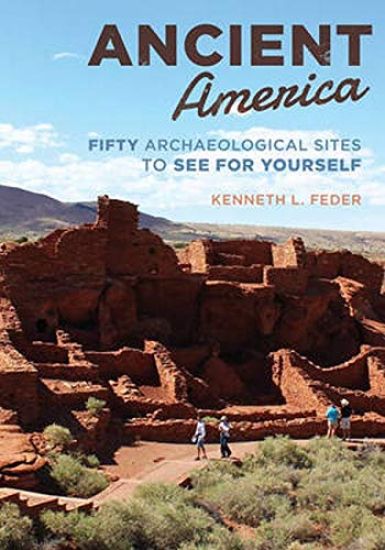
Presenting “the real deal” of American antiquity—as opposed to the hyped fare of many cable TV shows—Kenneth Feder invites readers to explore the stunning technological, architectural, engineering, and artistic achievements of America’s first peoples. Part travel guide, part friendly reference, Ancient America showcases fifty iconic and publicly-accessible sites located across the contiguous United States—including monumental pyramids of earth, “castles” ensconced in cliff niches, and vast rock art galleries. Among the places profiled are four World Heritage Sites (Chaco Canyon, NM; Mesa Verde, CO; Cahokia, IL; Poverty Point, LA); numerous Historic Landmarks and National Monuments (including Crystal River, FL; Town Creek Mound, NC; Casa Grande, AZ; and Hovenweep, UT); and stunningly diverse sites ranging from Serpent Mound (OH) and Horsethief Lake (WA) to Canyon de Chelly (AZ) and Nine Mile Canyon (UT). In addition to practical visitor information, Feder tells the fascinating stories of each site as revealed by archaeological research. Introductory chapters delve into the deep past of Native America; historical and cultural details as well as original photography round out the site entries. Readers will be inspired to visit these remarkable places where the past continues to resonate in the present.
Archaeological Oddities

Archaeological Oddities

Kenneth L. Feder

Rowman Littlefield
2019
sidottu
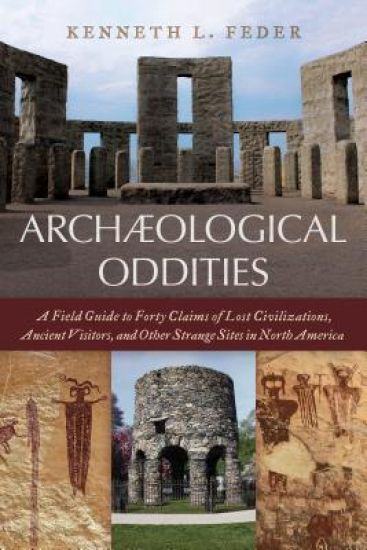
Does evidence show that Native Americas residing in Utah a thousand years ago lived among dinosaurs, depicting those creatures in their rock art? Did some of those same ancient Americans also encounter visitors from other planets, painting images of space-suited aliens on canyon walls? Have archaeologists discovered evidence that members of the Lost Tribes of Israel visited ancient America, leaving their mark by engraving the Ten Commandments in Hebrew on rocks in New Mexico? And Ohio? Is there archaeological evidence of ancient Celtic visitors to the New World in the form of messages etched in stone, megalithic monuments, and even the remnants of the villages in which they lived? Are American archaeologists covering up the remains of lost cities deeply ensconced in a secret cave in Arizona and in a subterranean chamber in Missouri? Finally, have archaeologists discovered the far western outpost of an ancient Egyptian pharaoh, not in Egypt or even Africa, but in, of all places, California? Those questions and more are answered by archaeologist Ken Feder in Archaeological Oddities: A Field Guide to Forty Claims of Lost Civilizations, Ancient Visitors, and Other Strange Sites in North America that the above listed questions and others addressed in his book represent the equivalent of “fake news” about America’s ancient past. The forty sites he highlights are, in fact, fascinating and fun places to visit. Feder’s guide provides an entertaining summary of those forty sites along with the practical information you’ll need to visit them. This full-color book includes over 100 fascinating photographs.
Native American Archaeology in the Parks

Native American Archaeology in the Parks

Kenneth L. Feder

BLOOMSBURY PUBLISHING PLC
2023
sidottu
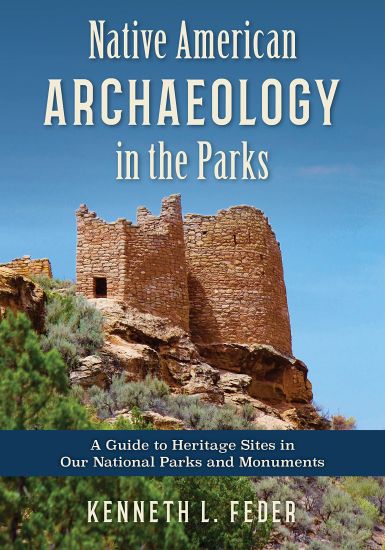
Historian Wallace Stegner characterized America’s National Park system as “the best idea we ever had.” One can quibble with that, but, indeed, it was a pretty good idea! This book specifically is a guide and a celebration of 30 of those national parks, national historical parks, and national monuments that, each in its own way, reveals the histories and cultures of America’s first inhabitants, the Native Americans.Its pages will take you to: great mounds in Ohio where the dead were laid to rest in sumptuous splendor 2,000 years agoa place in Iowa where 1,000 years ago, Native Americans sculpted earth into the forms of giant bears and birdsa quarry in Minnesota where Native People have, for hundreds of years, extracted blood-red stone for their ceremonial pipesthe remains of a village in North Dakota visited by Lewis and Clark in the early 1800s and the home of their guide Sacageweatruly breathtaking, more than 700-year-old cliff dwellings in Arizona and Colorado, that will astonish you in their ethereal beauty and architectural ingenuityphantasmagorical images of 7-foot-tall, wide-eyed spirit beings in Utah painted more than 1,000 years agoAnd many more.All of these sites have in common the fact that, at the insistence of Native and non-Native people, men and women, the federal government of the United States set them aside as places to preserve, study, and revere as part of the American story no matter where your ancestors came from, how they got here, or how long ago. Read this book and visit the historically sacred sites enshrined in our national parks, national historical parks, and national monuments, places that reveal the creativity and genius of the Native People of North America.With 180 color photographs and complete visitor information, this is a wonderful guide to Native American archaeology in our national parks and monuments.
The Barkhamsted Lighthouse

The Barkhamsted Lighthouse

Kenneth L. Feder

BLOOMSBURY PUBLISHING PLC
2023
sidottu
Deep in the woods of Barkhamsted, Connecticut, archaeologist Kenneth Feder found a series of irregular cellar holes. That discovery led to the archaeological and genealogical investigation into what had become the legend of Barkhamsted Lighthouse.
Ancient America

Ancient America

Kenneth L. Feder

Rowman Littlefield
2019
nidottu
Presenting “the real deal” of American antiquity—as opposed to the hyped fare of many cable TV shows—Kenneth Feder invites readers to explore the stunning technological, architectural, engineering, and artistic achievements of America’s first peoples. Part travel guide, part friendly reference, Ancient America showcases fifty iconic and publicly-accessible sites located across the contiguous United States—including monumental pyramids of earth, “castles” ensconced in cliff niches, and vast rock art galleries. Among the places profiled are four World Heritage Sites (Chaco Canyon, NM; Mesa Verde, CO; Cahokia, IL; Poverty Point, LA); numerous Historic Landmarks and National Monuments (including Crystal River, FL; Town Creek Mound, NC; Casa Grande, AZ; and Hovenweep, UT); and stunningly diverse sites ranging from Serpent Mound (OH) and Horsethief Lake (WA) to Canyon de Chelly (AZ) and Nine Mile Canyon (UT). In addition to practical visitor information, Feder tells the fascinating stories of each site as revealed by archaeological research. Introductory chapters delve into the deep past of Native America; historical and cultural details as well as original photography round out the site entries. Readers will be inspired to visit these remarkable places where the past continues to resonate in the present.