
Kirjojen hintavertailu. Mukana 11 627 670 kirjaa ja 12 kauppaa.

Kirjahaku

Etsi kirjoja tekijän nimen, kirjan nimen tai ISBN:n perusteella.

3 kirjaa tekijältä Kenneth M. Murchison

The Snail Darter Case

The Snail Darter Case

Kenneth M. Murchison

University Press of Kansas
2007
sidottu
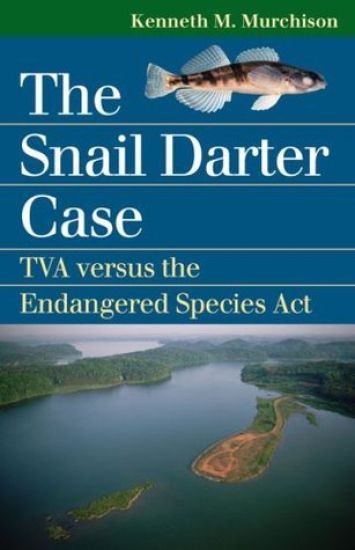
With the discovery of a tiny fish in a soon-to-be-flooded stretch of the Little Tennessee River, construction on a dam that had already cost taxpayers $100 million came crashing to a halt. Thanks to the Endangered Species Act of 1973, the snail darter was instantly transformed into both an icon for species preservation and a despised symbol of the environmental movement's alleged excesses. The intense legal battle that ensued over its fate was contested all the way to the Supreme Court. The 1978 decision in TVA v. Hill, the Court's first decision interpreting the Endangered Species Act, remains one of the most instructive cases in American environmental law. Affirming an injunction that prohibited the Tennessee Valley Authority from completing the Tellico Dam because it would eliminate the snail darter's only known habitat, the Supreme Court resolved an intragovernmental dispute between the TVA and the Interior Department as well as the claims of the local opponents of the dam. Kenneth Murchison reveals that the snail darter case was just one part of a long struggle over whether the TVA should build the Tellico Dam. He traces disputes over the TVA's mission back to the 1930s and intertwines this with the emergence of federal environmental law in the 1960s and 1970s, culminating in the National Environmental Policy Act and Endangered Species Act, both of which provided a statutory basis for litigating against the dam builders. He continues with an exhaustive analysis of the arguments, deliberations, and decision of the Supreme Court, based largely on original sources, before concluding with a summary of the subsequent congressional actions and administrative proceedings that ultimately allowed the dam's completion. By plumbing the Court's deliberations, the politics behind the law, and the way that law spurred political responses, Murchison clarifies how the story of darter and dam came to exemplify the tensions and conflict between legislative and judicial action. Even though its players were left with only partial victories, TVA v. Hill helped to define the modern role of the TVA and remains an important chapter in the development of federal environmental law. Murchison helps us better understand this landmark decision, which drew the battle lines for current debates over the environment and the policies that protect or regulate its use.
The Snail Darter Case

The Snail Darter Case

Kenneth M. Murchison

University Press of Kansas
2007
nidottu
With the discovery of a tiny fish in a soon-to-be-flooded stretch of the Little Tennessee River, construction on a dam that had already cost taxpayers $100 million came crashing to a halt. Thanks to the Endangered Species Act of 1973, the snail darter was instantly transformed into both an icon for species preservation and a despised symbol of the environmental movement's alleged excesses. The intense legal battle that ensued over its fate was contested all the way to the Supreme Court. The 1978 decision in TVA v. Hill, the Court's first decision interpreting the Endangered Species Act, remains one of the most instructive cases in American environmental law. Affirming an injunction that prohibited the Tennessee Valley Authority from completing the Tellico Dam because it would eliminate the snail darter's only known habitat, the Supreme Court resolved an intragovernmental dispute between the TVA and the Interior Department as well as the claims of the local opponents of the dam. Kenneth Murchison reveals that the snail darter case was just one part of a long struggle over whether the TVA should build the Tellico Dam. He traces disputes over the TVA's mission back to the 1930s and intertwines this with the emergence of federal environmental law in the 1960s and 1970s, culminating in the National Environmental Policy Act and Endangered Species Act, both of which provided a statutory basis for litigating against the dam builders. He continues with an exhaustive analysis of the arguments, deliberations, and decision of the Supreme Court, based largely on original sources, before concluding with a summary of the subsequent congressional actions and administrative proceedings that ultimately allowed the dam's completion. By plumbing the Court's deliberations, the politics behind the law, and the way that law spurred political responses, Murchison clarifies how the story of darter and dam came to exemplify the tensions and conflict between legislative and judicial action. Even though its players were left with only partial victories, TVA v. Hill helped to define the modern role of the TVA and remains an important chapter in the development of federal environmental law. Murchison helps us better understand this landmark decision, which drew the battle lines for current debates over the environment and the policies that protect or regulate its use.
Federal Criminal Law Doctrines

Federal Criminal Law Doctrines

Kenneth M. Murchison

Duke University Press
1994
sidottu
This book offers a close look at the development of legal thought during the era of prohibition and documents the impact of prohibition on law as an intellectual discipline. Kenneth M. Murchison examines changes in federal criminal law doctrines from 1918 to 1933 in light of recent historical scholarship on prohibition and its impact on American society. He identifies these federal doctrinal developments as an important but ignored legacy of prohibition and describes how these changes continue to effect contemporary law.In this detailed examination, Murchison considers a portion of the Supreme Court’s work prior to the New Deal crisis, a period insufficiently considered until now. Among the developments he discusses are those relating to the defense of entrapment, the Fourth Amendment’s protection against unreasonable search and seizure, the Fifth Amendment’s prohibition against double jeopardy, property forfeitures, and the jury trial guarantees for criminal proceedings. His analysis reveals a court less rigid, less consistently divided along modern ideological lines, and more tolerant of governmental authority than traditional wisdom would suggest. Thus, Murchison offers a framework for a revisionist view of the Supreme Court’s activities during this period. Exploring an important connection between the Eighteenth Amendment, the Volstead Act, and the development of federal criminal law, this book documents what was arguably the nation’s first criminal law revolution at the federal level. Explaining the modern origins of doctrines that still inform federal criminal law, Murchison also provides a case study of how legal doctrine responds to changing social conditions. Federal Criminal Law Doctrines will add immeasurably to the work of historians and legal scholars alike.