Kirjojen hintavertailu. Mukana 11 342 296 kirjaa ja 12 kauppaa.

Kirjahaku

Etsi kirjoja tekijän nimen, kirjan nimen tai ISBN:n perusteella.

8 kirjaa tekijältä Kenneth Payne

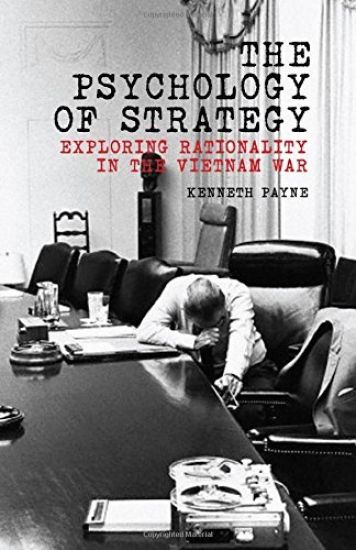
The Psychology of Strategy: Exploring Rationality in the Vietnam War
How do strategists decide what they wish to achieve through war, and how they might accomplish it? And why does their understanding of violence regularly turn out to be wrong? In seeking answers to these questions Kenneth Payne draws on the study of psychology to examine strategic behaviour during the Vietnam War. He explores the ways in which cognitive biases distort our sense of our own agency and our decision-making, arguing that much of the latter is emotional, shaped by unconscious processing and driven by a prickly concern for social esteem. The Nixon and Johnson administrations both proved susceptible to the processes that are familiar to students of modern neuroscience and psychology, but perhaps less appreciated within strategic studies. US strategists in the Vietnam era miscalculated in ways that would surprise rational theorists, but not evolutionary psychologists: they exaggerated the stakes, embraced risky and overly optimistic solutions, and failed to appreciate the limits of force to shatter the enemy's resolve. Their concern for reputation led to escalation, based on a flawed conception of what such escalation could achieve. The Vietnam conflict provides an excellent illustration that war is an inherently psychological phenomenon. This challenges abstract notions of rationality in strategic affairs, suggesting that the strategists -- much like the rest of us -- are strangers to themselves.
I, Warbot: The Dawn of Artificially Intelligent Conflict

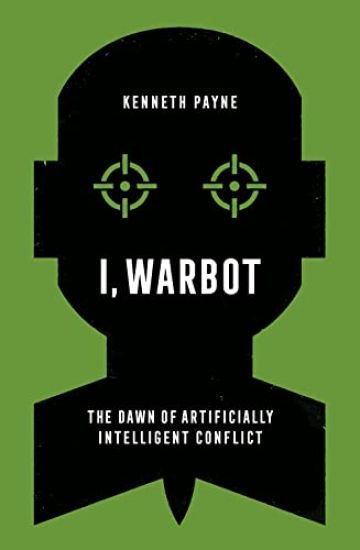
I, Warbot: The Dawn of Artificially Intelligent Conflict

Kenneth Payne

Oxford University Press, USA
2021
sidottu
Artificial Intelligence is going to war. Intelligent weapon systems are here today, and many more are on the way tomorrow. Already, they're reshaping conflict--from the chaos of battle, with pilotless drones, robot tanks and unmanned submersibles, to the headquarters far from the action, where generals and politicians use technology to weigh up what to do. AI changes how we fight, and even how likely it is that we will. In battle, warbots will be faster, more agile and more deadly than today's crewed weapons. New tactics and concepts will emerge, with spoofing and swarming to fool and overwhelm enemies. Strategies are changing too. When will an intelligent machine escalate, and how can it be deterred? Can robots predict the future? And what happens to the 'art of war' as machines themselves become creative? Autonomous warfare makes many people uneasy. An international campaign against 'killer robots' hopes to ban AI from conflict. But the genie is out--AI weapons are too useful for states to outlaw. Still, crafting sensible rules for warbots is possible. This fascinating book shows how it might be done.
I, Warbot: The Dawn of Artificially Intelligent Conflict
Artificial Intelligence is going to war. Intelligent weapon systems are here today, and many more are on the way tomorrow. Already, they're reshaping conflict--from the chaos of battle, with pilotless drones, robot tanks and unmanned submersibles, to the headquarters far from the action, where generals and politicians use technology to weigh up what to do. AI changes how we fight, and even how likely it is that we will. In battle, warbots will be faster, more agile and more deadly than today's crewed weapons. New tactics and concepts will emerge, with spoofing and swarming to fool and overwhelm enemies. Strategies are changing too. When will an intelligent machine escalate, and how can it be deterred? Can robots predict the future? And what happens to the 'art of war' as machines themselves become creative? Autonomous warfare makes many people uneasy. An international campaign against 'killer robots' hopes to ban AI from conflict. But the genie is out--AI weapons are too useful for states to outlaw. Still, crafting sensible rules for warbots is possible. This fascinating book shows how it might be done.
Strategy, Evolution, and War

Strategy, Evolution, and War

Kenneth Payne

Georgetown University Press
2018
sidottu
Decisions about war have always been made by humans, but now intelligent machines are on the cusp of changing things – with dramatic consequences for international affairs. This book explores the evolutionary origins of human strategy, and makes a provocative argument that Artificial Intelligence will radically transform the nature of war by changing the psychological basis of decision-making about violence. Strategy, Evolution, and War is a cautionary preview of how Artificial Intelligence (AI) will revolutionize strategy more than any development in the last three thousand years of military history. Kenneth Payne describes strategy as an evolved package of conscious and unconscious behaviors with roots in our primate ancestry. Our minds were shaped by the need to think about warfare—a constant threat for early humans. As a result, we developed a sophisticated and strategic intelligence. The implications of AI are profound because they depart radically from the biological basis of human intelligence. Rather than being just another tool of war, AI will dramatically speed up decision making and use very different cognitive processes, including when deciding to launch an attack, or escalate violence. AI will change the essence of strategy, the organization of armed forces, and the international order. This book is a fascinating examination of the psychology of strategy-making from prehistoric times, through the ancient world, and into the modern age.
Strategy, Evolution, and War

Strategy, Evolution, and War

Kenneth Payne

Georgetown University Press
2018
pokkari
Decisions about war have always been made by humans, but now intelligent machines are on the cusp of changing things – with dramatic consequences for international affairs. This book explores the evolutionary origins of human strategy, and makes a provocative argument that Artificial Intelligence will radically transform the nature of war by changing the psychological basis of decision-making about violence. Strategy, Evolution, and War is a cautionary preview of how Artificial Intelligence (AI) will revolutionize strategy more than any development in the last three thousand years of military history. Kenneth Payne describes strategy as an evolved package of conscious and unconscious behaviors with roots in our primate ancestry. Our minds were shaped by the need to think about warfare—a constant threat for early humans. As a result, we developed a sophisticated and strategic intelligence. The implications of AI are profound because they depart radically from the biological basis of human intelligence. Rather than being just another tool of war, AI will dramatically speed up decision making and use very different cognitive processes, including when deciding to launch an attack, or escalate violence. AI will change the essence of strategy, the organization of armed forces, and the international order. This book is a fascinating examination of the psychology of strategy-making from prehistoric times, through the ancient world, and into the modern age.
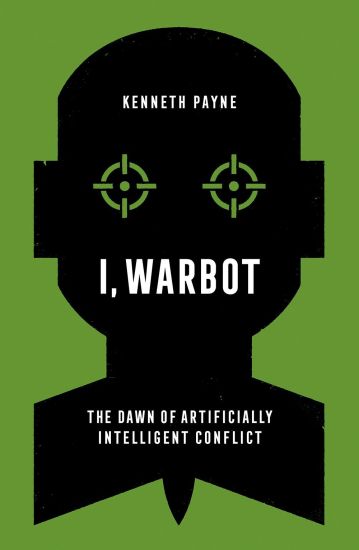
I, Warbot

I, Warbot

Kenneth Payne

C Hurst Co Publishers Ltd
2021
sidottu
An Economist Best Book of 2021 Artificial Intelligence is going to war. Intelligent military systems are already reshaping conflict—from the chaos of battle, with pilotless drones and robot tanks, to the headquarters far from the action, where generals and politicians use technology to weigh up what to do. AI changes how we fight, and even how likely it is that we will. Warbots will be faster, more agile and more deadly than today’s crewed weapons. New tactics are already emerging, but much deeper thinking is needed. When will an intelligent machine escalate, and how might you deter it? Can robots predict the future? And what happens to the ‘art of war’ as machines become creative? An international campaign against ‘killer robots’ hopes to ban AI from conflict. But the genie is out—autonomous weapons are too useful for states to outlaw. Still, crafting sensible rules for our warbots is possible. This fascinating book shows how it might be done.
I, Warbot

I, Warbot

Kenneth Payne

C HURST CO PUBLISHERS LTD
2022
nidottu
An Economist Best Book of 2021 Artificial Intelligence is going to war. Intelligent military systems are already reshaping conflict—from the chaos of battle, with pilotless drones and robot tanks, to the headquarters far from the action, where generals and politicians use technology to weigh up what to do. AI changes how we fight, and even how likely it is that we will. Warbots will be faster, more agile and more deadly than today’s crewed weapons. New tactics are already emerging, but much deeper thinking is needed. When will an intelligent machine escalate, and how might you deter it? Can robots predict the future? And what happens to the ‘art of war’ as machines become creative? An international campaign against ‘killer robots’ hopes to ban AI from conflict. But the genie is out—autonomous weapons are too useful for states to outlaw. Still, crafting sensible rules for our warbots is possible. This fascinating book shows how it might be done.
The Psychology of Strategy

The Psychology of Strategy

Kenneth Payne

C Hurst Co Publishers Ltd
2015
sidottu
How do strategists decide what they wish to achieve through war, and how they might accomplish it? And why does their understanding of violence regularly turn out to be wrong? In seeking answers to these questions Kenneth Payne draws on the study of psychology to examine strategic behaviour during the Vietnam War. He explores the ways in which cognitive biases distort our sense of our own agency and our decision-making, arguing that much of the latter is emotional, shaped by unconscious processing and driven by a prickly concern for social esteem. The Nixon and Johnson administrations both proved susceptible to the processes that are familiar to students of modern neuroscience and psychology, but perhaps less appreciated within strategic studies. US strategists in the Vietnam era miscalculated in ways that would surprise rational theorists, but not evolutionary psychologists: they exaggerated the stakes, embraced risky and overly optimistic solutions, and failed to appreciate the limits of force to shatter the enemy's resolve. Their concern for reputation led to escalation, based on a flawed conception of what such escalation could achieve.The Vietnam conflict provides an excellent illustration that war is an inherently psychological phenomenon. This challenges abstract notions of rationality in strategic affairs, suggesting that the strategists - - much like the rest of us - - are strangers to themselves.