Kirjojen hintavertailu. Mukana 11 244 527 kirjaa ja 12 kauppaa.

Kirjahaku

Etsi kirjoja tekijän nimen, kirjan nimen tai ISBN:n perusteella.

13 kirjaa tekijältä Kenneth R. Lang

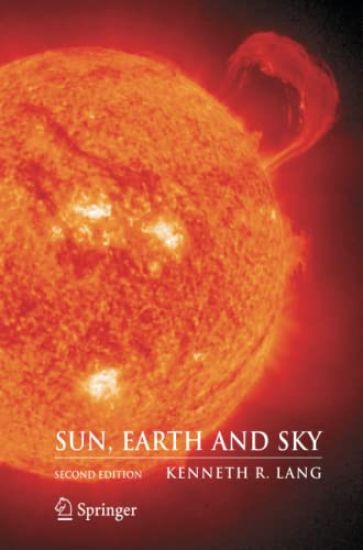
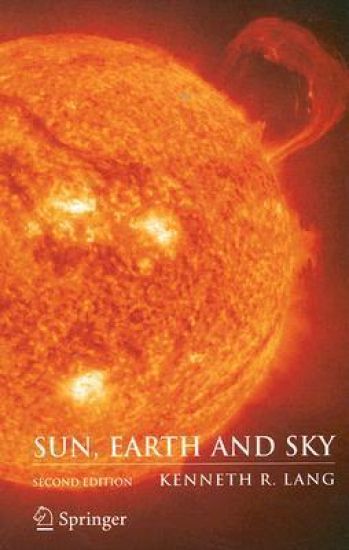
Sun, Earth and Sky

Sun, Earth and Sky

Kenneth R. Lang

Springer-Verlag New York Inc.
2006
sidottu
This Second Edition of Sun, Earth and Sky updates the popular text by providing comprehensive accounts of the most recent discoveries made by five modern solar spacecraft during the past decade. Their instruments have used sound waves to peer deep into the Sun’s inner regions and measure the temperature of its central nuclear reactor, and extended our gaze far from the visible Sun to record energetic outbursts that threaten Earth. Breakthrough observations with the underground Sudbury Neutrino Observatory are also included, which explain the new physics of ghostly neutrinos and solve the problematic mismatch between the predicted and observed amounts of solar neutrinos. This new edition of Sun, Earth and Sky also describes our recent understanding of how the Sun’s outer atmosphere is heated to a million degrees, and just where the Sun’s continuous winds come from. As humans we are more intimately linked with our life-sustaining Sun than with any other astronomical object, and the new edition therefore provides modern interpretations of ozone depletion and global warming that are related to both the Sun and to human activities. Written in a light and friendly style, this lavishly illustrated book introduces the Sun and its physics, and describes all aspects of the Sun’s interaction with us on Earth.
A Companion to Astronomy and Astrophysics

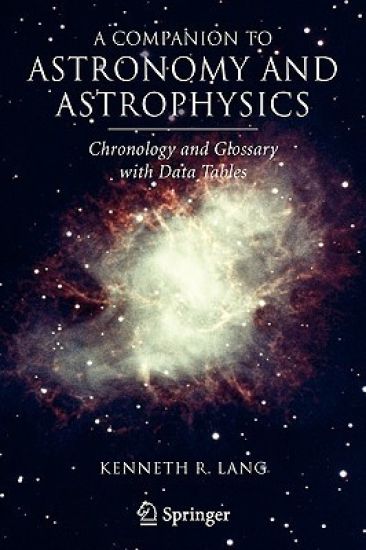
A Companion to Astronomy and Astrophysics

Kenneth R. Lang

Springer-Verlag New York Inc.
2006
nidottu
Astronomy and Astrophysics is a comprehensive, fundamental, up-to-date reference book. It is filled with vital information and basic facts for amateur astronomers and professional astrophysicists, and for anyone interested in the Universe, from the Earth and other planets to the stars, galaxies and beyond. Although serious and thorough, the language, and ideas will attract the general reader, as well as students and professionals. Astronomy and Astrophysics consists of two main parts, a Timeline and a Dictionary. The Timeline is a concise history, arranged chronologically, which provides the complete story of cosmic discovery from early Chinese and Greek astronomy to the latest findings of modern astrophysics and robotic spacecraft. It provides a sense of destination and flow in our growing awareness of the Universe. Each entry in the unfolding narrative is written in a concise, light and friendly style that will be appreciated by all, without being weighted down with incomprehensible specialized terms. The story of science is one of individuals, as well as discoveries and ideas. So our Timeline includes the people who have made major scientific contributions that are related to astronomy, and astrophysics. The Dictionary defines all terms and acronyms that deal with our celestial science, from important concepts to individual objects and space missions. It is arranged alphabetically and complemented by numerous tables of fundamental data for bright cosmic objects, including the celestial coordinates required to observe them. Line drawings are also used to forcefully compact a scientific insight, with clear labels and captions. An exceptionally thorough Index cross-references concepts, discoveries and individuals in both the Timeline and Dictionary. The combined result is a unique, comprehensive, stand-alone reference volume in which the reader can quickly locate information, while also discovering new and unexpected knowledge.
Parting the Cosmic Veil

Parting the Cosmic Veil

Kenneth R. Lang

Springer-Verlag New York Inc.
2006
sidottu
Parting the Cosmic Veil describes our gradual awareness of a vast, previously concealed Universe. It is a story of expanding horizons and the discovery of invisible worlds, made possible with new technology and novel telescopes that have broadened our range of perception and sharpened our vision. Spacecraft have carried men to the Moon, and traveled throughout the Solar System, obtaining close-up views that have transformed the moons and planets from moving points of light to fascinating, diverse worlds. Modern technology has also enabled the detection of giant planets around other stars, taking us one step closer to the possible detection of life outside the Earth. Astronomers have used telescopes, operating at the visible wavelengths that we see with our eye, to reveal the true extent of the Milky Way and discover billions of remote galaxies that are rushing away from us in an expanding Universe. Each of these galaxies contains billions of stars wheeling around their massive central hub. Radio waves and X-rays, which lie beyond the range of visual perception, are used to detect a violent Universe, from exploding stars to gamma ray bursts and the Big Bang itself, with the associated discoveries of pulsars, black holes and quasars. Radio astronomers have also shown that the dark spaces between the stars contain vast tracts of cold hydrogen atoms and a host of molecules. Dark invisible matter has been discovered residing outside the shining stars and galaxies, outweighing them all. And a mysterious dark energy has also been found, which fills the nooks and crannies of seemingly empty space. The Cosmos is evolving, participating in ongoing processes of creation, destruction, and re-birth. But even though we are pushing the boundaries of knowledge closer to an understanding of the origins and destinies, of either the Universe or Life, the ultimate answers to these grand questions still lie hidden behind the Cosmic Veil.
The Cambridge Guide to the Solar System

The Cambridge Guide to the Solar System

Kenneth R. Lang

Cambridge University Press
2011
sidottu
Richly illustrated with full-color images, this book is a comprehensive, up-to-date description of the planets, their moons, and recent exoplanet discoveries. This second edition of a now classic reference is brought up to date with fascinating new discoveries from 12 recent Solar System missions. Examples include water on the Moon, volcanism on Mercury's previously unseen half, vast buried glaciers on Mars, geysers on Saturn's moon Enceladus, lakes of hydrocarbons on Titan, encounter with asteroid Itokawa, and sample return from comet Wild 2. The book is further enhanced by hundreds of striking new images of the planets and moons. Written at an introductory level appropriate for undergraduate and high-school students, it provides fresh insights that appeal to anyone with an interest in planetary science. A website hosted by the author contains all the images in the book with an overview of their importance. A link to this can be found at www.cambridge.org/solarsystem.
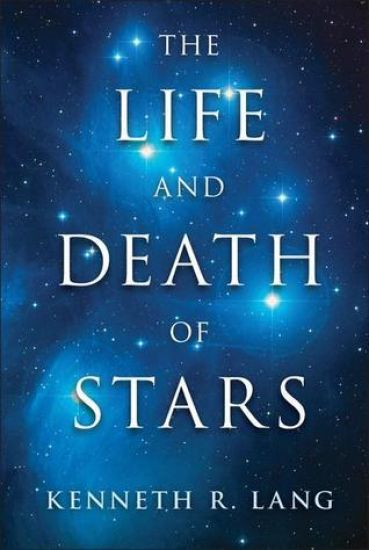
The Life and Death of Stars

The Life and Death of Stars

Kenneth R. Lang

Cambridge University Press
2013
sidottu
In this well-illustrated text, Kenneth R. Lang explains the life cycle of stars, from the dense molecular clouds that are stellar nurseries to the enigmatic nebulae some stars leave behind in their violent ends. Free of mathematical equations and technical jargon, Lang's lively and accessible text provides physical insights into how stars such as our Sun are born, what fuels them and keeps them bright, how they evolve and the processes by which they eventually die. The book demonstrates the sheer scope and variety of stellar phenomena in the context of the universe as a whole. Boxed focus elements enhance and amplify the discussion for readers looking for more depth. Featuring more than 150 figures, including color plates, The Life and Death of Stars is a modern and up-to-date account of stars written for a broad audience, from armchair astronomers and popular science readers to students and teachers of science.
Sun, Earth and Sky

Sun, Earth and Sky

Kenneth R. Lang

Springer-Verlag New York Inc.
2014
nidottu
This Second Edition of Sun, Earth and Sky updates the popular text by providing comprehensive accounts of the most recent discoveries made by five modern solar spacecraft during the past decade. Their instruments have used sound waves to peer deep into the Sun’s inner regions and measure the temperature of its central nuclear reactor, and extended our gaze far from the visible Sun to record energetic outbursts that threaten Earth. Breakthrough observations with the underground Sudbury Neutrino Observatory are also included, which explain the new physics of ghostly neutrinos and solve the problematic mismatch between the predicted and observed amounts of solar neutrinos. This new edition of Sun, Earth and Sky also describes our recent understanding of how the Sun’s outer atmosphere is heated to a million degrees, and just where the Sun’s continuous winds come from. As humans we are more intimately linked with our life-sustaining Sun than with any other astronomical object, and the new edition therefore provides modern interpretations of ozone depletion and global warming that are related to both the Sun and to human activities. Written in a light and friendly style, this lavishly illustrated book introduces the Sun and its physics, and describes all aspects of the Sun’s interaction with us on Earth.
Astrophysical Data

Astrophysical Data

Kenneth R. Lang

Springer-Verlag New York Inc.
2012
nidottu
This volume of Astrophysical Data deals with Planets and Stars; a second volume, Part II, will give data for Galaxies and the Universe. They both pro­ vide basic data for use by all scientists, from the amateur astronomer to the professional astrophysicist. In this first volume, we not only provide physical parameters of planets, stars and their environment, but we also provide the celestial coordinates required to observe them. Here we use c.g.s. units, for they are the most commonly used in astron­ omy and astrophysics; but our volume begins with astronomical and physical constants and the conversion factors needed for other units. The next section concerns the planets and their satellites; it singles out the Earth and Moon for special treatment. Spacecraft rendezvous with the planets and satellites have led to improved values for their atmospheric compositions, orbital parameters, magnetic fields, masses, radii, rotation periods, and surface pressures and temperatures. This section also contains data for the asteroids, comets and their debris. We then discuss everyday stars, beginning with the Sun, and continuing with basic stellar data, the brightest stars and nearby stars. Special categories of stars, such as the Wolf-Rayet stars, magnetic stars, flare stars, and RS CVn binary stars, are included.
Parting the Cosmic Veil

Parting the Cosmic Veil

Kenneth R. Lang

Springer-Verlag New York Inc.
2014
nidottu
Parting the Cosmic Veil describes our gradual awareness of a vast, previously concealed Universe. It is a story of expanding horizons and the discovery of invisible worlds, made possible with new technology and novel telescopes that have broadened our range of perception and sharpened our vision. Spacecraft have carried men to the Moon, and traveled throughout the Solar System, obtaining close-up views that have transformed the moons and planets from moving points of light to fascinating, diverse worlds. Modern technology has also enabled the detection of giant planets around other stars, taking us one step closer to the possible detection of life outside the Earth. Astronomers have used telescopes, operating at the visible wavelengths that we see with our eye, to reveal the true extent of the Milky Way and discover billions of remote galaxies that are rushing away from us in an expanding Universe. Each of these galaxies contains billions of stars wheeling around their massive central hub. Radio waves and X-rays, which lie beyond the range of visual perception, are used to detect a violent Universe, from exploding stars to gamma ray bursts and the Big Bang itself, with the associated discoveries of pulsars, black holes and quasars. Radio astronomers have also shown that the dark spaces between the stars contain vast tracts of cold hydrogen atoms and a host of molecules. Dark invisible matter has been discovered residing outside the shining stars and galaxies, outweighing them all. And a mysterious dark energy has also been found, which fills the nooks and crannies of seemingly empty space. The Cosmos is evolving, participating in ongoing processes of creation, destruction, and re-birth. But even though we are pushing the boundaries of knowledge closer to an understanding of the origins and destinies, of either the Universe or Life, the ultimate answers to these grand questions still lie hidden behind the Cosmic Veil.
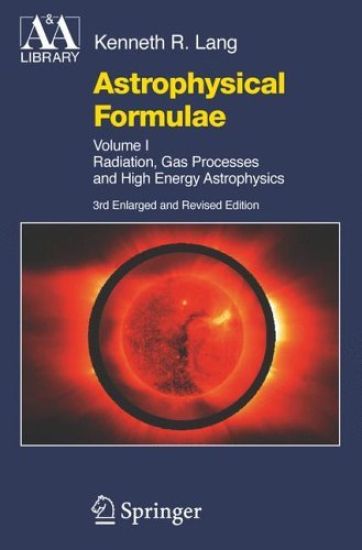
Astrophysical Formulae

Astrophysical Formulae

Kenneth R. Lang

Springer-Verlag Berlin and Heidelberg GmbH Co. K
2006
nidottu
Kenneth Lang's classic work Astrophysical Formulae. (Vol. I and II) is now available as soft cover edition in a set. This volume is a reference source of fundamental formulae in physics and astrophysics. In contrast to most of the usual compendia it carefully explains the physical assumptions entering the formulae. All the important results of physical theories are covered: electrodynamics, hydrodynamics, general relativity, atomic and nuclear physics, and so on. Over 2100 formulae are included, and the original papers for the formulae are cited together with papers on modern applications in a bibliography of over 1900 entries. For the third edition (first published in 1999), a chapter on space, time, matter and cosmology had been included and the other chapters carefully revised.
The Sun from Space

The Sun from Space

Kenneth R. Lang

Springer-Verlag Berlin and Heidelberg GmbH Co. K
2008
sidottu
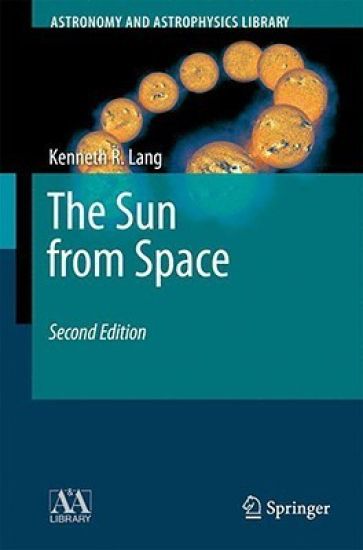
The First Edition of The Sun from Space, completed in 1999, focused on the early accomplishments of three solar spacecraft, SOHO, Ulysses, and Yohkoh, primarily during a minimum in the Sun’s 11-year cycle of magnetic activity. The comp- hensive Second Edition includes the main ndings of these three spacecraft over an entire activity cycle, including two minima and a maximum, and discusses the signi cant results of six more solar missions. Four of these, the Hinode, RHESSI, STEREO, and TRACE missions were launched after the First Edition was either nished or nearly so, and the other two, the ACE and Wind spacecraft, extend our investigations from the Sun to its varying input to the Earth. The Second Edition does not contain simple updates or cosmetic patch ups to the material in the First Edition. It instead contains the relevant discoveries of the past decade, integrated into chapters completely rewritten for the purpose. This provides a fresh perspective to the major topics of solar enquiry, written in an enjoyable, easily understood text accessible to all readers, from the interested layperson to the student or professional.
Essential Astrophysics

Essential Astrophysics

Kenneth R. Lang

Springer-Verlag Berlin and Heidelberg GmbH Co. K
2013
nidottu
Essential Astrophysics is a book to learn or teach from, as well as a fundamental reference volume for anyone interested in astronomy and astrophysics. It presents astrophysics from basic principles without requiring any previous study of astronomy or astrophysics. It serves as a comprehensive introductory text, which takes the student through the field of astrophysics in lecture-sized chapters of basic physical principles applied to the cosmos.This one-semester overview will be enjoyed by undergraduate students with an interest in the physical sciences, such as astronomy, chemistry, engineering or physics, as well as by any curious student interested in learning about our celestial science. The mathematics required for understanding the text is on the level of simple algebra, for that is all that is needed to describe the fundamental principles. The text is of sufficient breadth and depth to prepare the interested student for more advanced specialised courses in the future. Astronomical examples are provided throughout the text, to reinforce the basic concepts and physics, and to demonstrate the use of the relevant formulae. In this way, the student learns to apply the fundamental equations and principles to cosmic objects and situations. Astronomical and physical constants and units as well as the most fundamental equations can be found in the appendix. Essential Astrophysics goes beyond the typical textbook by including references to the seminal papers in the field, with further reference to recent applications, results, or specialised literature.
Astrophysical Formulae

Astrophysical Formulae

Kenneth R. Lang

Springer-Verlag Berlin and Heidelberg GmbH Co. K
2014
nidottu
This volume is a reference source of fundamental formulae in physics and astrophysics. In contrast to most of the usual compendia it carefully explains the physical assumptions entering the formulae. All the important results of physical theories are covered: electrodynamics, hydrodynamics, general relativity, atomic and nuclear physics, and so on. Over 2100 formulae are included, and the original papers for the formulae are cited together with papers on modern applications in a bibliography of over 1900 entries. For this new edition, a chapter on space, time, matter and cosmology has been included and the other chapters have been carefully revised.
The Sun from Space

The Sun from Space

Kenneth R. Lang

Springer-Verlag Berlin and Heidelberg GmbH Co. K
2016
nidottu
The First Edition of The Sun from Space, completed in 1999, focused on the early accomplishments of three solar spacecraft, SOHO, Ulysses, and Yohkoh, primarily during a minimum in the Sun’s 11-year cycle of magnetic activity. The comp- hensive Second Edition includes the main ndings of these three spacecraft over an entire activity cycle, including two minima and a maximum, and discusses the signi cant results of six more solar missions. Four of these, the Hinode, RHESSI, STEREO, and TRACE missions were launched after the First Edition was either nished or nearly so, and the other two, the ACE and Wind spacecraft, extend our investigations from the Sun to its varying input to the Earth. The Second Edition does not contain simple updates or cosmetic patch ups to the material in the First Edition. It instead contains the relevant discoveries of the past decade, integrated into chapters completely rewritten for the purpose. This provides a fresh perspective to the major topics of solar enquiry, written in an enjoyable, easily understood text accessible to all readers, from the interested layperson to the student or professional.