Kirjojen hintavertailu. Mukana 11 717 486 kirjaa ja 12 kauppaa.

Kirjahaku

Etsi kirjoja tekijän nimen, kirjan nimen tai ISBN:n perusteella.

3 kirjaa tekijältä Kenneth W. Warren

So Black and Blue

So Black and Blue

Kenneth W. Warren

University of Chicago Press
2003
nidottu
"So Black and Blue is the best work we have on Ellison in his combined roles of writer, critic, and intellectual. By locating him in the precarious cultural transition between Jim Crow and the era of promised civil rights, Warren has produced a thoroughly engaging and compelling book, original in its treatment of Ellison and his part in shaping the history of ideas in the twentieth century."—Eric J. Sundquist, University of California, Los AngelesWhat would it mean to read Invisible Man as a document of Jim Crow America? Using Ralph Ellison's classic novel and many of his essays as starting points, Kenneth W. Warren illuminates the peculiar interrelation of politics, culture, and social scientific inquiry that arose during the post-Reconstruction era and persisted through the Civil Rights movement. Warren argues that Ellison's novel expresses the problem of who or what could represent and speak for the Negro in an age of limited political representation. So Black and Blue shows that Ellison's successful transformation of these limits into possibilities has also, paradoxically, cast a shadow on the postsegregation world. What can be the direction of African American culture once the limits that have shaped it are stricken down? Here Warren takes up the recent, ongoing, and often contradictory veneration of Ellison's artistry by black writers and intellectuals to reveal the impoverished terms often used in discussions about the political and cultural future of African Americans. Ultimately, by showing what it would mean to take seriously the idea of American novels as creatures of their moment, Warren questions whether there can be anything that deserves the label of classic American literature.
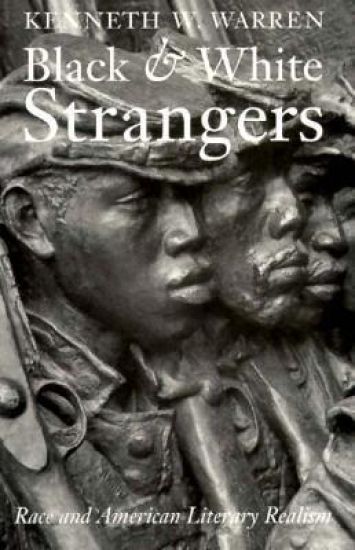
Black and White Strangers

Black and White Strangers

Kenneth W. Warren

University of Chicago Press
1995
nidottu
In a major contribution to the study of race in American literature, Kenneth W. Warren argues that late-nineteenth-century literary realism was shaped by and in turn helped to shape post-Civil War racial politics. Taking up a variety of novelists, including Henry James and William Dean Howells, he shows that even works not directly concerned with race were instrumental in the return after reconstruction to a racially segregated society.
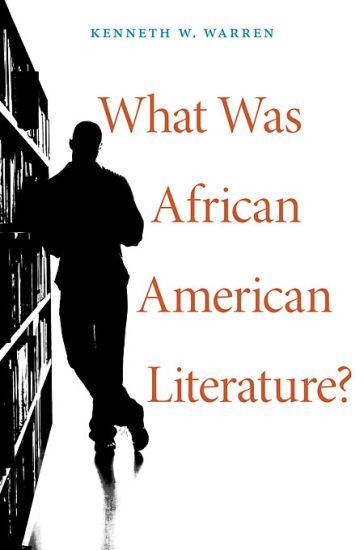
What Was African American Literature?

What Was African American Literature?

Kenneth W. Warren

Harvard University Press
2012
nidottu
African American literature is over. With this provocative claim Kenneth Warren sets out to identify a distinctly African American literature—and to change the terms with which we discuss it.Rather than contest other definitions, Warren makes a clear and compelling case for understanding African American literature as creative and critical work written by black Americans within and against the strictures of Jim Crow America. Within these parameters, his book outlines protocols of reading that best make sense of the literary works produced by African American writers and critics over the first two-thirds of the twentieth century.In Warren’s view, African American literature begged the question: what would happen to this literature if and when Jim Crow was finally overthrown? Thus, imagining a world without African American literature was essential to that literature. In support of this point, Warren focuses on three moments in the history of Phylon, an important journal of African American culture. In the dialogues Phylon documents, the question of whether race would disappear as an organizing literary category emerges as shared ground for critical and literary practice. Warren also points out that while scholarship by black Americans has always been the province of a petit bourgeois elite, the strictures of Jim Crow enlisted these writers in a politics that served the race as a whole.Finally, Warren’s work sheds light on the current moment in which advocates of African American solidarity insist on a past that is more productively put behind us.