Over the last ten years Kent Beck has written dozens of technical papers for the Smalltalk community, earning himself a reputation as both a gifted writer and thinker. Kent Beck’s Guide to Better Smalltalk, is a collection of his best work from Object Magazine, The Smalltalk Report, Dr. Dobbs Journal, and more. Each article has a new introduction that takes a retrospective view of the writing. Topics include: idioms and environments; methods and metamodels; architecture and pattern languages, objects, classes, inheritance, and all things Smalltalk! Nowhere else can one obtain such a complete collection of Beck’s writing. While demonstrating the elegance of Smalltalk and how some of its most powerful features can be exploited profitably, this collection also illuminates breakthrough concepts in object-oriented development. This book is for Smalltalk programmers and anyone working in object-oriented software development.
This classic book is the definitive real-world style guide for better Smalltalk programming. This author presents a set of patterns that organize all the informal experience successful Smalltalk programmers have learned the hard way. When programmers understand these patterns, they can write much more effective code. The concept of Smalltalk patterns is introduced, and the book explains why they work. Next, the book introduces proven patterns for working with methods, messages, state, collections, classes and formatting. Finally, the book walks through a development example utilizing patterns. For programmers, project managers, teachers and students -- both new and experienced. This book presents a set of patterns that organize all the informal experience of successful Smalltalk programmers. This book will help you understand these patterns, and empower you to write more effective code.
Quite simply, test-driven development is meant to eliminate fear in application development. While some fear is healthy (often viewed as a conscience that tells programmers to "be careful!"), the author believes that byproducts of fear include tentative, grumpy, and uncommunicative programmers who are unable to absorb constructive criticism. When programming teams buy into TDD, they immediately see positive results. They eliminate the fear involved in their jobs, and are better equipped to tackle the difficult challenges that face them. TDD eliminates tentative traits, it teaches programmers to communicate, and it encourages team members to seek out criticism However, even the author admits that grumpiness must be worked out individually! In short, the premise behind TDD is that code should be continually tested and refactored. Kent Beck teaches programmers by example, so they can painlessly and dramatically increase the quality of their work.
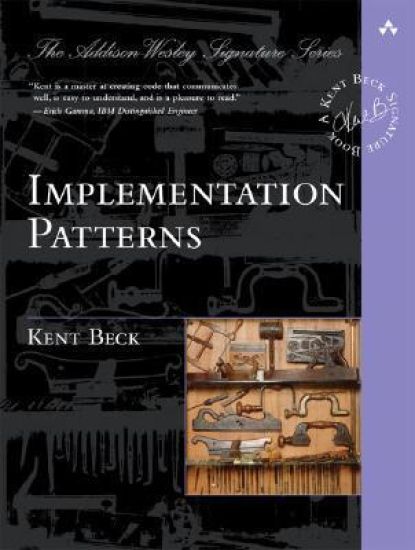
“Kent is a master at creating code that communicates well, is easy to understand, and is a pleasure to read. Every chapter of this book contains excellent explanations and insights into the smaller but important decisions we continuously have to make when creating quality code and classes.” –Erich Gamma, IBM Distinguished Engineer “Many teams have a master developer who makes a rapid stream of good decisions all day long. Their code is easy to understand, quick to modify, and feels safe and comfortable to work with. If you ask how they thought to write something the way they did, they always have a good reason. This book will help you become the master developer on your team. The breadth and depth of topics will engage veteran programmers, who will pick up new tricks and improve on old habits, while the clarity makes it accessible to even novice developers.” –Russ Rufer, Silicon Valley Patterns Group “Many people don’t realize how readable code can be and how valuable that readability is. Kent has taught me so much, I’m glad this book gives everyone the chance to learn from him.” –Martin Fowler, chief scientist, ThoughtWorks “Code should be worth reading, not just by the compiler, but by humans. Kent Beck distilled his experience into a cohesive collection of implementation patterns. These nuggets of advice will make your code truly worth reading.” –Gregor Hohpe, author of Enterprise Integration Patterns “In this book Kent Beck shows how writing clear and readable code follows from the application of simple principles. Implementation Patterns will help developers write intention revealing code that is both easy to understand and flexible towards future extensions. A must read for developers who are serious about their code.” –Sven Gorts “Implementation Patterns bridges the gap between design and coding. Beck introduces a new way of thinking about programming by basing his discussion on values and principles.” –Diomidis Spinellis, author of Code Reading and Code Quality Software Expert Kent Beck Presents a Catalog of Patterns Infinitely Useful for Everyday Programming Great code doesn’t just function: it clearly and consistently communicates your intentions, allowing other programmers to understand your code, rely on it, and modify it with confidence. But great code doesn’t just happen. It is the outcome of hundreds of small but critical decisions programmers make every single day. Now, legendary software innovator Kent Beck–known worldwide for creating Extreme Programming and pioneering software patterns and test-driven development–focuses on these critical decisions, unearthing powerful “implementation patterns” for writing programs that are simpler, clearer, better organized, and more cost effective. Beck collects 77 patterns for handling everyday programming tasks and writing more readable code. This new collection of patterns addresses many aspects of development, including class, state, behavior, method, collections, frameworks, and more. He uses diagrams, stories, examples, and essays to engage the reader as he illuminates the patterns. You’ll find proven solutions for handling everything from naming variables to checking exceptions. This book covers The value of communicating through code and the philosophy behind patternsHow and when to create classes, and how classes encode logicBest practices for storing and retrieving stateBehavior: patterns for representing logic, including alternative pathsWriting, naming, and decomposing methodsChoosing and using collectionsImplementation pattern variations for use in building frameworks Implementation Patterns will help programmers at all experience levels, especially those who have benefited from software patterns or agile methods. It will also be an indispensable resource for development teams seeking to work together more efficiently and build more maintainable software. No other programming book will touch your day-to-day work more often.
JUnit, created by Kent Beck and Erich Gamma, is an open source framework for test-driven development in any Java-based code. JUnit automates unit testing and reduces the effort required to frequently test code while developing it. While there are lots of bits of documentation all over the place, there isn't a go-to-manual that serves as a quick reference for JUnit. This Pocket Guide meets the need, bringing together all the bits of hard to remember information, syntax, and rules for working with JUnit, as well as delivering the insight and sage advice that can only come from a technology's creator. Any programmer who has written, or is writing, Java Code will find this book valuable. Specifically it will appeal to programmers and developers of any level that use JUnit to do their unit testing in test-driven development under agile methodologies such as Extreme Programming (XP) [another Beck creation].
Messy code is a nuisance. "Tidying" code, to make it more readable, requires breaking it up into manageable sections. In this practical guide, author Kent Beck, creator of Extreme Programming and pioneer of software patterns, suggests when and where you might apply tidyings to improve your code while keeping the overall structure of the system in mind. Instead of trying to master tidying all at once, this book lets you try out a few examples that make sense for your problem. If you have a big function containing many lines of code, you'll learn how to logically divide it into smaller chunks. Along the way, you'll learn the theory behind software design: coupling, cohesion, discounted cash flows, and optionality. This book helps you: Understand the basic theory of how software design works and the forces that act on it Explore the difference between changes to a system's behavior and changes to its structure Improve your programming experience by sometimes tidying first and sometimes tidying after Learn how to make large changes in small, safe steps Approach design as a human activity with diverging incentives
Messy systems slow progress and increase costs-but tidying up isn't just an individual effort, it's a team responsibility. In this essential guide, author Kent Beck offers a practical framework for improving system design collaboratively. Building on the ideas from Tidy First?, this book shows teams how to balance changes to a system's behavior with improvements to its structure, ensuring smoother development, faster progress, and more effective collaboration. With a focus on teamwork, this book emphasizes not just fixing code but strengthening the human relationships that sustain system evolution.Through thoughtful insights, real-world examples, and actionable practices, Beck teaches teams to alternate between tidying and building, minimizing risk while maintaining momentum. Learn how to make large changes safely, refine your team dynamics, and clear the path to sustainable system improvements with approaches that prioritize both people and code. Whether you're an individual contributor or leading a design team, you'll be equipped to design better systems-together.Understand the difference between changes to system behavior and structureLearn the power of alternating investments between tidying and buildingApply small, safe steps to execute large system changesStrengthen team relationships to sustain healthy design practicesPrepare for design challenges shaped by diverging incentives and human collaboration