Kirjojen hintavertailu. Mukana 12 425 499 kirjaa ja 12 kauppaa.

Kirjahaku

Etsi kirjoja tekijän nimen, kirjan nimen tai ISBN:n perusteella.

6 kirjaa tekijältä Kenya Hara

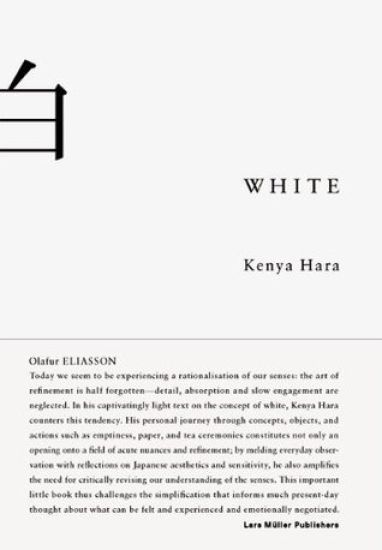
White

White

Kenya Hara

Lars Muller Publishers
2009
sidottu
"White" is not a book about colors. It is rather Kenya Haras attempt to explore the essence of "White," which he sees as being closely related to the origin of Japanese aesthetics - symbolizing simplicity and subtlety. The central concepts discussed by Kenya Hara in this publication are emptiness and the absolute void. Kenya Hara also sees his work as a designer as a form of communication. Good communication has the distinction of being able to listen to each other, rather than to press one's opinion onto the opponent. Kenya Hara compares this form of communication with an "empty container." In visual communication, there are equally signals whose signification is limited, as well as signals or symbols such as the cross or the red circle on the Japanese flag, which - like an "empty container" - permit every signification and do not limit imagination. Not alone the fact that the Japanese character for white forms a radical of the character for emptiness has prompted him the closely associate the color white with emptiness.

100 Whites

100 Whites

Kenya Hara

Lars Muller Publishers
2019
sidottu
White not only plays an important role in Japanese culture in general but also in the work of designer Kenya Hara. In 100 Whites, Hara gives one hundred specific examples of white-such as snow, Iceland, rice, and wax. On the basis of these examples he discusses the importance of white in design-not only as a color but as a philosophy. Hara describes how he experiments with the different whites he mentions, what they mean in the process of his work, and how they influence design today. 100 Whites is the extension of his previously published book White. The new publication explores the essence of white, which Hara sees as symbolizing simplicity and subtlety.
Designing Japan

Designing Japan

Kenya Hara

Lars Muller Publishers
2019
sidottu
'Designing Japan' presents renowned designer Kenya Hara’s vision of how his industry can support Japan in crafting a future founded on a unique philosophy of beauty as well as crowd-sourced wisdom from around the world. A master collaborator, meticulous organiser, and globally conscious innovator, Hara draws on more than three decades of participations in design work and exhibition curating, as well as deep professional interaction with creators from many fields. In 'Designing Japan' Hara reveals methods that make publicly accessible aesthetic inquiries of how this island nation will proceed as its population ages, other nations take over manufacturing, and technology develops. Illustrations and examples recognise successful problem-solving through design, proving that it is a living, changing industry that remains relevant not in spite of, but as a partner to, advancing technology.
Visual Philosophy: Thoughts on I and We

Visual Philosophy: Thoughts on I and We

Kenya Hara

BIRKHAUSER VERLAG AG
2022
nidottu
A charming but clear-eyed manifesto for a new era of "we" in the face of ecological collapseThis small but substantial pocket-size book is an attempt to think through life and the universe in graphic-design terms. With concise drawings and brief texts, Japanese illustrator and designer Ruida Si quietly shows humanity in the grip of a dawning realization about its own collectivity. Facing the imminent collapse of the ecosystem, humanity must prepare to replace "I" with "we"--"we" defined in a utopian spirit as a subject transcending generations and individuals.At first glance, the visuals are as simple and clear as those of a children's picture book, but they are the product of Si's extensive and sophisticated knowledge of information, pattern and rhythm, and deliver her message with tremendous clarity and simplicity. Muji art director Kenya Hara, with whom Si studied, provides a foreword.
Weiss

Weiss

Kenya Hara

Lars Muller Publishers
2009
sidottu
Weiss ist kein Buch A1/4ber Farben. Es ist vielmehr ein Versuch Kenya Haras das Wesen von Weiss zu ergrA1/4nden, das er eng mit der Quelle der japanischen A"sthetik, die fA1/4r Einfachheit und Feinheit steht, verbunden sieht. Leere und das vollkommene Nichts sind die zentralen Begriffe, die Kenya Hara in dieser Publikation diskutiert. Kenya Hara betrachtet seine Arbeit als Designer auch als eine Form von Kommunikation. Eine gute Kommunikation kennzeichnet sich durch gegenseitiges ZuhAren aus, statt dem GegenA1/4ber seine Meinung aufzudrAngen. Diese Form der VerstAndigung wird von Kenya Hara mit einem a žleeren GefAssa oe verglichen. Ebenso gibt es in der visuellen Kommunikation Zeichen, deren Bedeutung begrenzt ist, aber auch Zeichen wie das Kreuz oder den roten Kreis auf der japanischen Flagge, die wie ein leeres GefAss, jede Beutung zu lassen und der Vorstellung keine Grenzen setzen. Nicht nur die Tatsache, dass das japanische Schriftzeichen fA1/4r Weiss Bestandteil der Schriftzeichen fA1/4r Leere ist, haben ihn veranlasst die Farbe Weiss in eine enge Verbindung mit Leere zu setzen. Das Buch bietet einen persAnlichen Einblick in die Philosphie des erfolgreichen Designers und Autors von Designing Design.
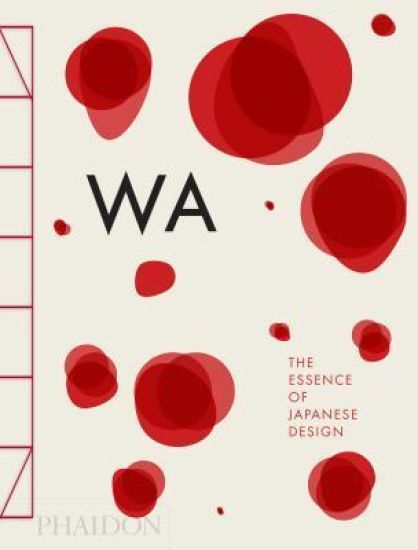
WA

WA

Rossella Menegazzo; Stefania Piotti; Kenya Hara

Phaidon Press Ltd
2014
sidottu
Through some 300 objects this book explores contemporary Japanese design: from everyday objects and packaging to interior design and lighting elements. Ultimately the book aims to explore the way in which Japanese design manages to harness its materials – whether natural or synthetic – and at the same time combines respect for tradition with forward-thinking and experimentation. The objects featured were chosen because of their strong Japanese character and the influence this 'Japaneseness' has had on Western culture. Rather than following a chronological order or concentrating on the designers, this book focuses on the objects and is categorized by material, highlighting the strong link between design and material in Japan. There will be a general introduction and then each section will have its own individual introduction: - Wood, Bamboo & Lacquer - Paper - Metal - Fabric & Textiles - Ceramic - Synthetic/new materials The book will include examples from some of the most important Japanese designers from Sori Yanagi and Shiro Kuramata to Naoto Fukasawa and Tokujin Yoshioka and there will be an introductory essay about Japanese design by Kenya Hara.