Kirjojen hintavertailu. Mukana 11 699 587 kirjaa ja 12 kauppaa.

Kirjahaku

Etsi kirjoja tekijän nimen, kirjan nimen tai ISBN:n perusteella.

14 kirjaa tekijältä Kerry Walters

Atheism: A Guide for the Perplexed

Atheism: A Guide for the Perplexed

Kerry Walters

Continuum Publishing Corporation
2010
nidottu
This title moves beyond the polemics to present an overview of atheism that is rigorous yet accessible. Interest in atheism has surged since the 'New Atheism' trinity of Sam Harris, Richard Dawkins, and Christopher Hitchens launched their attack on religious belief. Their militant, in-your-face style has delighted readers who are already nonbelievers and infuriated theists, and in the process made them best-selling authors. But the cost of their approach is that the current cultural and intellectual dialogue about atheism frequently generates more heat than light: acrimony replaces reasoned investigation, polemic overpowers philosophical analysis, and too often the outcome is confusion rather than truth. "Atheism: A Guide for the Perplexed" moves beyond the polemics to present an overview of atheism that is rigorous but still accessible to the educated layperson as well as the undergraduate student in philosophy and theology courses. After a preliminary investigation of what atheists mean when they use the words 'atheism' and 'God' - a much more complex investigation than one might suspect - the book: explores the differences and similarities between 'old' and 'new' atheism (the primary distinction is that the latter relies heavily on science whereas the former relied on philosophy and is uncompromisingly hostile to religion); places atheism of either variety in context by examining the naturalistic worldview that grounds it; provides a short historical sketch of atheism; examines a number of arguments against God-belief; investigates whether an atheist worldview is consistent with ethics and a sense of purposefulness; asks is an atheist 'spirituality' is possible; inquires into whether the current militancy against religious belief is pertinent or a red herring; and, concludes with a few suggestions for continued dialogue between believers and nonbelievers. The goal throughout is to present a balanced, non-partisan introduction to the worldview, principles, and arguments of atheism that highlights the positions strengths as well as its weaknesses. "Continuum's Guides for the Perplexed" are clear, concise and accessible introductions to thinkers, writers and subjects that students and readers can find especially challenging - or indeed downright bewildering. Concentrating specifically on what it is that makes the subject difficult to grasp, these books explain and explore key themes and ideas, guiding the reader towards a thorough understanding of demanding material.

Atheism: A Guide for the Perplexed

Atheism: A Guide for the Perplexed

Kerry Walters

Continuum Publishing Corporation
2010
sidottu
This title moves beyond the polemics to present an overview of atheism that is rigorous yet accessible. Interest in atheism has surged since the 'New Atheism' trinity of Sam Harris, Richard Dawkins, and Christopher Hitchens launched their attack on religious belief. Their militant, in-your-face style has delighted readers who are already nonbelievers and infuriated theists, and in the process made them best-selling authors. But the cost of their approach is that the current cultural and intellectual dialogue about atheism frequently generates more heat than light: acrimony replaces reasoned investigation, polemic overpowers philosophical analysis, and too often the outcome is confusion rather than truth. "Atheism: A Guide for the Perplexed" moves beyond the polemics to present an overview of atheism that is rigorous but still accessible to the educated layperson as well as the undergraduate student in philosophy and theology courses. After a preliminary investigation of what atheists mean when they use the words 'atheism' and 'God' - a much more complex investigation than one might suspect - the book: explores the differences and similarities between 'old' and 'new' atheism (the primary distinction is that the latter relies heavily on science whereas the former relied on philosophy and is uncompromisingly hostile to religion); places atheism of either variety in context by examining the naturalistic worldview that grounds it; provides a short historical sketch of atheism; examines a number of arguments against God-belief; investigates whether an atheist worldview is consistent with ethics and a sense of purposefulness; asks is an atheist 'spirituality' is possible; inquires into whether the current militancy against religious belief is pertinent or a red herring; and, concludes with a few suggestions for continued dialogue between believers and nonbelievers. The goal throughout is to present a balanced, non-partisan introduction to the worldview, principles, and arguments of atheism that highlights the positions strengths as well as its weaknesses. "Continuum's Guides for the Perplexed" are clear, concise and accessible introductions to thinkers, writers and subjects that students and readers can find especially challenging - or indeed downright bewildering. Concentrating specifically on what it is that makes the subject difficult to grasp, these books explain and explore key themes and ideas, guiding the reader towards a thorough understanding of demanding material.
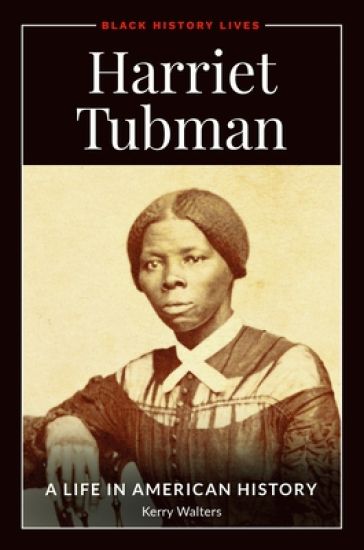
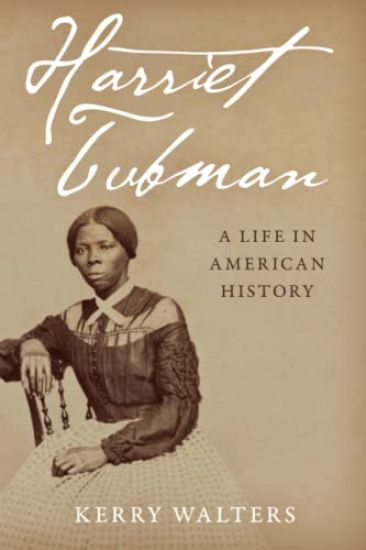
Harriet Tubman

Harriet Tubman

Kerry Walters

Greenwood Press
2019
sidottu
Harriet Tubman: A Life in American History is an indispensable resource for high school and college students about the life and times of anti-slavery activist Harriet Tubman, who exemplifies how slaves took the initiative to free themselves and others.Harriet Tubman served a pivotal role in leading slaves to freedom in the decade before the Civil War. This biography offers a demythologized chronicle of her life and work with information about her life as a slave, role as conductor on the Underground Railroad, work as a military scout during the Civil War, and postwar activism for blacks and women.The book provides valuable context that situates Harriet Tubman against the backdrop of the slavery debate in antebellum America, and the hardships endured by ex-slaves in postbellum America. As such, the timeframe covers nearly a full century, from the first quarter of the 19th to the first quarter of the 20th. In addition to ten biographical chapters and a short timeline, Harriet Tubman includes an interpretive essay reflecting on her importance in American history. The volume also includes an appendix of primary documents about Tubman's life and work, a bibliography, and a number of sidebars and short commentaries embedded in the text, inviting readers to explore connections between Tubman's life and political, intellectual, and social culture.
Vegetarianism: A Guide for the Perplexed

Vegetarianism: A Guide for the Perplexed

Kerry Walters

Continuum Publishing Corporation
2012
nidottu
The choice of whether or not to consume animals is more than merely a dietary one. It frequently reflects deep ethical commitments or religious convictions that serve as the bedrock of an entire lifestyle. Proponents of vegetarianism frequently infuriate nonvegetarians, who feel that they're being morally condemned because of what they choose to eat. Vegetarians are frequently infuriated by what they consider to be the nonvegetarians' disregard for the environment and animal-suffering. Vegetarianism: A Guide for the Perplexed offers a much needed survey of the different arguments offered by ethical vegetarians and their critics. In a rigorous but accessible manner, the author scrutinizes the strengths and weaknesses of arguments in defense of vegetarianism based on compassion, rights, interests, eco-feminism, environmentalism, anthrocentrism, and religion. Authors examined include Peter Singer, Tom Regan, Carol J. Adams, and Kathryn Paxton George. As the global climate crisis worsens, population increases, and fossil fuels disappear, ethical and public policy questions about the ethics of diet will become ever more urgent. This book is a useful resource for thinking through the questions.
Faith Matters

Faith Matters

Kerry Walters

Cascade Books
2019
pokkari
In a day in which Christians too often reduce faith to mere sentimentality and atheists decry it as superstitious nonsense, Fr. Kerry Walters offers a series of reflections intended to show that, indeed, faith matters. Drawn from his popular weekly newspaper column ""Faith Matters,"" these short meditations explore Christian faith from the perspectives of doctrine, spirituality, ethics, politics, art and science, the saints, and the holy seasons that mark the Christian year and set the rhythm of Christian living. ""Kerry Walters provides a desperately needed model for the Christian voice in the public conversation. Each article gets to the bottom of issues confronting our society using creative thought and colorful language, such as describing grace as the invigorating surprise of a flash mob. At the same time, they constantly reference the best of traditional and modern theologians. Just what we need "" --Frederick A Foltz, Lutheran pastor and co-author of Faith, Hope, and Love in the Technological Society ""Walters' essays are comparable to those of Evelyn Underwood and C.S. Lewis and have much to say to Christians everywhere. Timely, prophetic, and profound, Faith Matters is a welcome spirit-filled balm for the lost soul of 'American' Christianity."" --Robin Jarrell, Episcopal Priest and author of Fallen Women and Fallen Angels: The Mother of the Son of Man Kerry Walters, professor of philosophy emeritus and independent Catholic priest, is the author or editor of over forty books and hundreds of articles. Several of his books have been translated. Recognition of his books include two Catholic Press Awards. He lives in central Pennsylvania and pastors the parish of Holy Spirit American National Catholic Church.
Faith Matters

Faith Matters

Kerry Walters

Cascade Books
2019
sidottu
One of the most widely accepted ways of describing an addiction is as a disease, but do we realize what we are saying when we describe it that way? Our current language and approach to addiction is not only lacking in depth but is keeping us blind to an amazing way that God is working in each and every one of us. What if our addictions are not broken parts of us that we have to get rid of, but invitations from God to new depth and transformation? When we are able to hold this experience gently and look at it anew, it reveals a new depth to how we can understand ourselves, our suffering, and God. For too long we have been trying to treat addiction like a disease, and tear it out by the root, but we are invited to something more in our humanity; something that we will never find if we continue to wish away our suffering. Author David Tremaine explores the possibilities of understanding addiction not as a diseased part of our humanity, but as a blessed part of our spiritual journey, and sheds new light on this deeply engrained experience of God.
Harriet Tubman: A Life in American History

Harriet Tubman: A Life in American History

Kerry Walters

Rowman Littlefield Publishers
2022
nidottu
Harriet Tubman served a pivotal role in leading slaves to freedom in the decade before the Civil War. This biography offers a demythologized chronicle of her life and work, providing information about her life as a slave, role as conductor on the Underground Railroad, work as a military scout during the Civil War, and postwar activism for blacks and women. Harriet Tubman: A Life in American History provides valuable context that situates Harriet Tubman against the backdrop of the slavery debate in antebellum America, and the hardships endured by ex-slaves in postbellum America. As such, the timeframe covers nearly a full century, from the first quarter of the nineteenth to the first quarter of the twentieth. In addition to ten biographical chapters and a short timeline, Harriet Tubman includes an interpretive essay reflecting on Tubman's importance in American history, an appendix of primary documents about Tubman's life and work, a bibliography, and a number of sidebars and short commentaries embedded in the text that invite readers to explore connections between Tubman's life and political, intellectual, and social culture.
Outbreak in Washington, D.C.: The 1857 Mystery of the National Hotel Disease
The National was once the grandest hotel in the capital. In 1857, it twice hosted President-elect James Buchanan and his advisors, and on both occasions, most of the party was quickly stricken by an acute illness. Over the course of several months, hundreds fell ill, and over thirty died from what became known as the National Hotel disease. Buchanan barely recovered enough to give his inauguration speech. Rumors ran rampant across the city and the nation. Some claimed that the illness was born of a sewage effluvia," while others darkly speculated about an assassination attempt by either abolitionists or southern slaveowners intent on war. Author Kerry Walters investigates the mysteries of the National Hotel disease."
Explosion on the Potomac: The 1844 Calamity Aboard the USS Princeton
In 1844, the USS Princeton" was the most technologically sophisticated warship in the world. Its captain, Robert Stockton, and President John Tyler were both zealous expansionists, and they hoped that it would be the forerunner in a formidable steam-powered fleet. On a Potomac cruise intended to impress power brokers, the ship's main gun--the Peacemaker--exploded as the vessel neared Mount Vernon. Eight died horribly, while twenty others were injured. Two of Tyler's most important cabinet members were instantly lost, and the president himself had a near miss--making it the worst physical disaster to befall a presidential administration. The tragedy set off an unpredictable wave of events that cost Tyler a second term, nearly scuttled plans to add Texas to the Union and stirred up sectional rancor that drove the nation closer to civil war. Author Kerry Walters chronicles this little-known disaster that altered the course of the nation's history."
Practicing Presence

Practicing Presence

Kerry Walters

Sheed Ward,U.S.
2001
nidottu
Genuine, life-giving spirituality calls us to be our best selves and to bring out the best in others, each and every day. It calls us to care—for God, others, and ourselves. In Practicing Presence, popular spiritual writer Kerry Walters shows us how to integrate care into our daily lives on the road to happiness and holiness. As Walters reveals, we do not need to be professional caregivers to nurture a creative, intimate, and meaningful openness to our deepest selves, to others, and to God. We simply need to be “present” to who God is and who we are as images of God.
The Underground Railroad

The Underground Railroad

Kerry Walters

ABC-CLIO
2012
sidottu
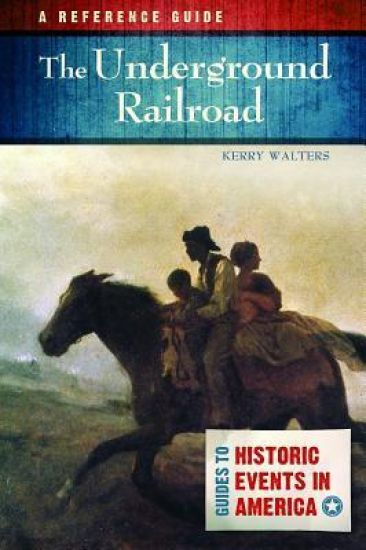
Full of true stories more dramatic than any fiction, The Underground Railroad: A Reference Guide offers a fresh, revealing look at the efforts of hundreds of dedicated persons—white and black, men and women, from all walks of life—to help slave fugitives find freedom in the decades leading up to the Civil War.The Underground Railroad provides the richest portrayal yet of the first large scale act of interracial collaboration in the United States, mapping out the complex network of routes and safe stations that made escape from slavery in the American South possible. Kerry Walters' stirring account ranges from the earliest acts of slave resistance and the rise of the Abolitionist movement, to the establishment of clandestine "liberty lines" through the eastern and then-western regions of the Union and ultimately to Canada. Separating fact from legend, Walters draws extensively on first-person accounts of those who made the Railroad work, those who tried to stop it, and those who made the treacherous journey to freedom—including Eliza Harris and Josiah Henson, the real-life "Eliza" and "Uncle Tom" from Harriet Beecher Stowe's Uncle Tom's Cabin.
Lincoln, the Rise of the Republicans, and the Coming of the Civil War
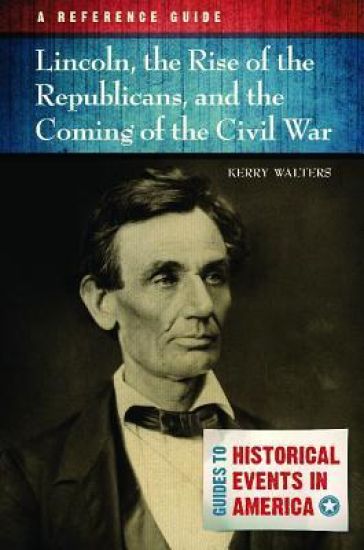
This succinct and readable account of the heated debate over the expansion of slavery provides readers with a thorough understanding of how the Civil War was precipitated.This book vividly depicts and clearly explains the events in the decades leading up to the Civil War that resulted from the controversy over expansion of slavery into the western territories. The chapters describe how this single issue drove a wedge through the country and spawned the creation of several new political parties, including the Republican Party; caused furious congressional debates; sparked violence in Kansas; increased sectional discord between North and South; and allowed Abraham Lincoln to rise from relative obscurity to become the first Republican president of the United States. The work also supplies two-dozen thumbnail sketches of the period's greatest statesmen and less-than-great presidents, including individuals such as James Buchanan, John C. Calhoun, Salmon P. Chase, Henry Clay, Stephen Douglas, and William Henry Seward.
American Slave Revolts and Conspiracies
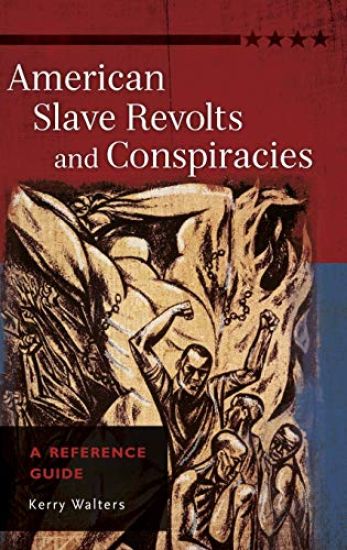
Provides a comprehensive overview of 10 major slave revolts and examines how those uprisings and conspiracies impacted slaveholding colonies and states from 1663 to 1861.Hundreds of slave revolts and conspiracies occurred during the two centuries that North America engaged in slavery. None were successful, but certain campaigns were significant enough to inspire other revolts, fuel a chronic fear of uprising in slaveholders and politicians, and keep alive the perennial desire for freedom felt by black slaves. Kerry Walters examines 10 representative revolts and offers narratives, primary materials, chronologies and biographies of participants for high school and undergraduate students.The book also contains an annotated bibliography of print and online primary and secondary sources for students seeking material for research papers and projects, as well as an examination of fictional depictions of slave revolts in novels and film. Walters offers information on a compelling topic that will be of interest to students of American history or sociology as well as anyone engaging in multicultural studies.
Revolutionary Deists

Revolutionary Deists

Kerry Walters

Prometheus Books
2010
pokkari
This illuminating discussion of deism in the early American colonies presents an overview of its main tenets, showing how its influence rose swiftly and for a time became a highly controversial subject of debate among the first citizens of our nation. The deists were students of the Enlightenment and took a keen interest in the scientific study of nature. They were thus critical of orthodox Christianity for its superstitious belief in miracles, persecution of dissent, and suppression of independent thought and expression. At the heart of his book are profiles of six "rational infidels," most of whom are quite familiar to Americans as founding fathers or colonial patriots: Benjamin Franklin (the ambivalent deist), Thomas Jefferson (a critic of Christian supernaturalism but an admirer of its ethics), Ethan Allen (the rough-edged "frontier deist"), Thomas Paine (the arch iconoclast and author of The Age of Reason), Elihu Palmer (the tireless crusader for deism and perhaps its most influential proponent), and Philip Freneau (a poet whose popular verses combined deism with early romanticism). This is a fascinating study of America's first culture war, one that in many ways has continued to this day.