Kirjojen hintavertailu. Mukana 12 016 292 kirjaa ja 12 kauppaa.

Kirjahaku

Etsi kirjoja tekijän nimen, kirjan nimen tai ISBN:n perusteella.

12 kirjaa tekijältä Kevin Corrigan

Evagrius and Gregory

Evagrius and Gregory

Kevin Corrigan

Routledge
2019
nidottu
Evagrius of Pontus and Gregory of Nyssa have either been overlooked by philosophers and theologians in modern times, or overshadowed by their prominent friend and brother (respectively), Gregory Nazianzus and Basil the Great. Yet they are major figures in the development of Christian thought in late antiquity and their works express a unique combination of desert and urban spiritualities in the lived and somewhat turbulent experience of an entire age. They also provide a significant link between the great ancient thinkers of the past - Plato, Aristotle, the Stoics, Clement and others - and the birth and transmission of the early Medieval period - associated with Boethius, Cassian and Augustine. This book makes accessible, to a wide audience, the thought of Evagrius and Gregory on the mind, soul and body, in the context of ancient philosophy/theology and the Cappadocians generally. Corrigan argues that in these two figures we witness the birth of new forms of thought and science. Evagrius and Gregory are no mere receivers of a monolithic pagan and Christian tradition, but innovative, critical interpreters of the range and limits of cognitive psychology, the soul-body relation, reflexive self-knowledge, personal and human identity and the soul’s practical relation to goodness in the context of human experience and divine self-disclosure. This book provides a critical evaluation of their thought on these major issues and argues that in Evagrius and Gregory we see the important integration of many different concerns that later Christian thought was not always able to balance including: mysticism, asceticism, cognitive science, philosophy, and theology.
Evagrius and Gregory

Evagrius and Gregory

Kevin Corrigan

Ashgate Publishing Limited
2016
sidottu
Evagrius of Pontus and Gregory of Nyssa have either been overlooked by philosophers and theologians in modern times, or overshadowed by their prominent friend and brother (respectively), Gregory Nazianzus and Basil the Great. Yet they are major figures in the development of Christian thought in late antiquity and their works express a unique combination of desert and urban spiritualities in the lived and somewhat turbulent experience of an entire age. They also provide a significant link between the great ancient thinkers of the past - Plato, Aristotle, the Stoics, Clement and others - and the birth and transmission of the early Medieval period - associated with Boethius, Cassian and Augustine. This book makes accessible, to a wide audience, the thought of Evagrius and Gregory on the mind, soul and body, in the context of ancient philosophy/theology and the Cappadocians generally. Corrigan argues that in these two figures we witness the birth of new forms of thought and science. Evagrius and Gregory are no mere receivers of a monolithic pagan and Christian tradition, but innovative, critical interpreters of the range and limits of cognitive psychology, the soul-body relation, reflexive self-knowledge, personal and human identity and the soul’s practical relation to goodness in the context of human experience and divine self-disclosure. This book provides a critical evaluation of their thought on these major issues and argues that in Evagrius and Gregory we see the important integration of many different concerns that later Christian thought was not always able to balance including: mysticism, asceticism, cognitive science, philosophy, and theology.
A Less Familiar Plato

A Less Familiar Plato

Kevin Corrigan

Cambridge University Press
2023
sidottu
In this book, Kevin Corrigan sheds light on aspects of Plato's thought that are less familiar to contemporary readers. He reveals a Plato who believes in Forms but is not essentialist, who develops a scientific view of perception in the middle and late dialogues, and who offers positive models of art and science. Corrigan shows how Plato articulates a broader view of intelligible reality in which embodiment is affirmative and the mind-soul-body continuum has an eidetic structure, and where even failure and the imperfect are included. He also demonstrates that Plato developed an ideal, yet finely layered view of love that provided a practical guide throughout antiquity; and that the dialogues and unwritten teachings can be understood in a mutually open-ended, non-antagonistic way. Corrigan's book provides a guide to Plato in an unexpected key and poses important questions regarding imagination, divine inspiration, and Forms and the Good, among other topics.
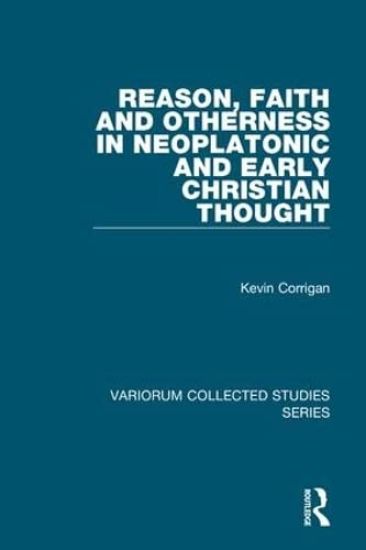
Reason, Faith and Otherness in Neoplatonic and Early Christian Thought
This book brings together a selection of Kevin Corrigan’s works published over the course of some 27 years. Its predominant theme is the encounter with otherness in ancient, medieval and modern thought and it ranges in scope from the Presocratics-through Plato, Aristotle, Plotinus and the late ancient period, on the one hand, and early Christian thought, especially Gregory of Nyssa, Augustine and, much later, Aquinas, on the other. Among the key questions examined are the relation between faith and reason; the nature of creation and insight, being and existence; literature, philosophy and the invention of the novel; personal, human and divine identity; the problem of evil (particularly here in Dostoevsky’s adaptation of a Platonic perspective); the character of ideas themselves; women saints in the early Church; love of God and love of neighbor; the development of Christian Trinitarian thinking; the strange notion of philosophy as prayer; and the mind/soul-body relation.
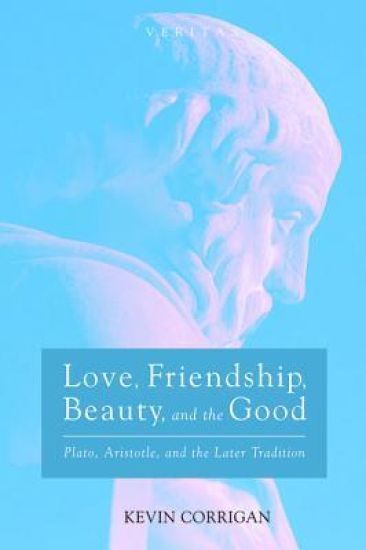
Love Friendship Beauty and the Good

Love Friendship Beauty and the Good

Kevin Corrigan

Cascade Books
2018
nidottu
This book tells a compelling story about love, friendship, and the Divine that took over a thousand years to unfold. It argues that mind and feeling are intrinsically connected in the thought of Plato, Aristotle, and Plotinus; that Aristotle developed his theology and physics primarily from Plato's Symposium (from the ""Greater"" and ""Lesser Mysteries"" of Diotima-Socrates' speech); and that the Beautiful and the Good are not coincident classes, but irreducible Forms, and the loving ascent of the Symposium must be interpreted in the light of the Republic, as the later tradition up to Ficino saw. Against the view that Platonism is an escape from the ambiguities of ordinary experience or opposed to loving individuals for their own sakes, this book argues that Plato dramatizes the ambiguities of ordinary experience, confronts the possibility of failure, and bequeaths erotic models for the loving of individuals to later thought. Finally, it examines the Platonic-Aristotelian heritage on the Divine to discover whether God can love us back, and situates the dramatic development of this legacy in Plotinus, Iamblichus, Proclus, and Dionysius the Areopagite. ""Love, Friendship, Beauty, and the Good debunks the academic myth which has encased ancient philosophy and its later pagan and Christian permutations in a curio box, available for a sterile analytical examination, but devoid of relevance to the nitty-gritty psychology of our daily life. It takes a lifetime of experience and expertise to reexamine the relationship between being and thinking in the most Cartesian of ways. Corrigan does just this with reason and passion."" --Svetla Slaveva-Griffin, Florida State University ""In this small volume, Corrigan shows convincingly that . . . Plato and his successors held that such experiences as love, pleasure, and desire are entirely compatible with divine transcendence, without which there can be no real immanence and no real love of individuals without the vertical dimension that makes this possible."" --John D. Turner, University of Nebraska-Lincoln ""Kevin Corrigan, noted authority on both Plato himself and the later Platonist tradition, particularly Plotinus, has here produced a remarkable study of the role of love in both stages of that tradition."" --John Dillon, Trinity College Dublin ""In this multifaceted gem of a book, Corrigan expertly guides us to understand more deeply and anew the perennial themes of love and friendship both in Platonism and in our own lives. . . . This is a valuable book and a model of concision."" --Arthur Versluis, author of Platonic Mysticism "" A]n arresting revisionist essay. . . . This book should be required reading for students of ancient philosophy and early Christian theology."" --John Peter Kenney, Saint Michael's College Kevin Corrigan is Samuel Candler Dobbs Professor of Interdisciplinary Humanities, Department of Middle Eastern and South Asian Studies, Emory University, Atlanta. He is the author of Gregory and Evagrius: Mind, Soul and Body in the 4th Century (2009); Reason, Faith and Otherness in Neoplatonic and Early Christian Thought (2017); Plotinus, Ennead VI 8: On the Voluntary and on the Free Will of the One (2017, with John D. Turner).
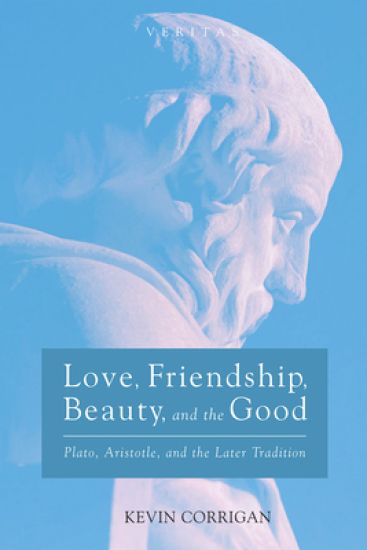
Love, Friendship, Beauty, and the Good

Love, Friendship, Beauty, and the Good

Kevin Corrigan

Cascade Books
2018
sidottu
This book tells a compelling story about love, friendship, and the Divine that took over a thousand years to unfold. It argues that mind and feeling are intrinsically connected in the thought of Plato, Aristotle, and Plotinus; that Aristotle developed his theology and physics primarily from Plato's Symposium (from the ""Greater"" and ""Lesser Mysteries"" of Diotima-Socrates' speech); and that the Beautiful and the Good are not coincident classes, but irreducible Forms, and the loving ascent of the Symposium must be interpreted in the light of the Republic, as the later tradition up to Ficino saw. Against the view that Platonism is an escape from the ambiguities of ordinary experience or opposed to loving individuals for their own sakes, this book argues that Plato dramatizes the ambiguities of ordinary experience, confronts the possibility of failure, and bequeaths erotic models for the loving of individuals to later thought. Finally, it examines the Platonic-Aristotelian heritage on the Divine to discover whether God can love us back, and situates the dramatic development of this legacy in Plotinus, Iamblichus, Proclus, and Dionysius the Areopagite. ""Love, Friendship, Beauty, and the Good debunks the academic myth which has encased ancient philosophy and its later pagan and Christian permutations in a curio box, available for a sterile analytical examination, but devoid of relevance to the nitty-gritty psychology of our daily life. It takes a lifetime of experience and expertise to reexamine the relationship between being and thinking in the most Cartesian of ways. Corrigan does just this with reason and passion."" --Svetla Slaveva-Griffin, Florida State University ""In this small volume, Corrigan shows convincingly that . . . Plato and his successors held that such experiences as love, pleasure, and desire are entirely compatible with divine transcendence, without which there can be no real immanence and no real love of individuals without the vertical dimension that makes this possible."" --John D. Turner, University of Nebraska-Lincoln ""Kevin Corrigan, noted authority on both Plato himself and the later Platonist tradition, particularly Plotinus, has here produced a remarkable study of the role of love in both stages of that tradition."" --John Dillon, Trinity College Dublin ""In this multifaceted gem of a book, Corrigan expertly guides us to understand more deeply and anew the perennial themes of love and friendship both in Platonism and in our own lives. . . . This is a valuable book and a model of concision."" --Arthur Versluis, author of Platonic Mysticism "" A]n arresting revisionist essay. . . . This book should be required reading for students of ancient philosophy and early Christian theology."" --John Peter Kenney, Saint Michael's College Kevin Corrigan is Samuel Candler Dobbs Professor of Interdisciplinary Humanities, Department of Middle Eastern and South Asian Studies, Emory University, Atlanta. He is the author of Gregory and Evagrius: Mind, Soul and Body in the 4th Century (2009); Reason, Faith and Otherness in Neoplatonic and Early Christian Thought (2017); Plotinus, Ennead VI 8: On the Voluntary and on the Free Will of the One (2017, with John D. Turner).
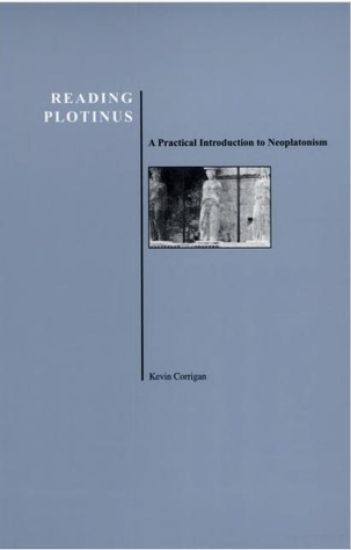
Reading Plotinus

Reading Plotinus

Kevin Corrigan

Purdue University Press
2004
nidottu
This title provides a practical reading guide to the thought of Plotinus, the great philosopher who was born in Alexandria in the third century AD, lived in Rome and wrote in Greek. Deeply immersed in earlier Greek philosophy, especially Plato and Aristotle, Plotinus' thought was to have an immense influence on the theology and philosophy of Christianity, Judaism and Islam, as well as to bear a deep resonance with the major forms of Eastern mystical thought, particularly Buddhism and Hinduism. At the same time, Plotinus' philosphy remains unique in its own right. Corrigan's work presents, in an accessible and yet authoritative way, three treatises translated in full, as well as several other major passages representative of the wide range of thought to be found in Plotinus' ""Enneads"". There is extensive and detailed commentary accompanying each translation which helps the reader to work his or her way through Plotinus' often highly compressed thought.
10 Bloody Slices: A Collection of Short Stories

10 Bloody Slices: A Collection of Short Stories

Kevin Corrigan

Independently Published
2018
nidottu
These 'bloody slices' of life, love and loneliness are packed with an eclectic range of characters and scenarios set in the UK, USA and one that takes the protagonist on a nostalgic journey to France to revisit the adventures of a former life. There's also a story about Mel and Fred, two wise-cracking New Yorkers, a budding actor playing the part of a super-hero and a sardonic Fleet Street journalist with a paranoia over the boring people he comes into contact with. There's tragedy here too with a long forgotten Blues singer and a story of a forty-year birth separation mixed with the capture of a serial killer. Whatever the story and the travails of the characters, can you guess the denouement for each of the bloody slices?
Captain Freedom: Do Super-Heroes Get Depressed? a Play

Captain Freedom: Do Super-Heroes Get Depressed? a Play

Kevin Corrigan

Independently Published
2019
nidottu
This is a humorous story about a young budding actor, Alan Finkelstein from Brooklyn, New York trying to make it big in movies. Unfortunately he is stuck making his living playing plastic vegetables in low brow TV commercials for local TV stations. Alan thinks he can do better than this. Unfortunately his pretty useless agent does not share Alan's aspirations. Alan begins the action by meeting and haranguing his agent, George Arthur Lewis, for not giving him the big parts he feels he is capable of. Alan does an impromptu impersonation of the famous 'do you feel lucky punk' scene from the film Dirty Harry. The young actor is also writing a script about a superhero which he feels is one way of moving up the movie ladder, preferably with him playing the central character, the super-hero Captain Freedom. However, George can only get him a part in a new burger commercial. At home, we meet Alan's parents. The mother is supportive, helping him with his super-hero costume, his father dismissive of Alan's acting ambitions. As the story unfolds, Alan begins to assume the persona of his super-hero alter-ego, Captain Freedom. The story is full of Alan's playing of parts from famous films, not just Clint Eastwood. He also does Bogart and de Niro while his friend Jimmy makes do with bit parts in the latest Planet of the Apes blockbuster. Is Alan really a super-hero from the planet Zeldon or just a schizophrenic, out of work actor? This version of the story is in a play format with the added bonus of the short story also included. The short story version can also be found in the collection '10 Bloody Slices' by the same author.
50 Original Songbook Lyrics

50 Original Songbook Lyrics

Kevin Corrigan

Independently Published
2019
nidottu
These songbook lyrics were written over a period of about ten years between around 2008 and 2018. As a music lover with an eclectic taste in musical genres (but not extending to rap, garage and other more 'modern' versions of the pop genre) these lyrics have been inspired by many of the artists I have enjoyed listening to over several decades. These have included Paul Simon, Bob Dylan, the Mavericks, Neil Diamond, Richard Hawley, the Eagles, Don Mclean, Leonard Cohen, the Beach Boys, David Gray, Billy Joel and representing the blues genre, John Lee Hooker. Each of the song lyrics has an appended 'melody hint' which provide a clue to the musical arrangements suggested for each of the songs. Six of the songs in this volume have been recorded by Steve Corrigan in 2012 on the album 'Bahraini Sunsets', singing, playing and producing the tracks according to his magical interpretation of them. The fifty sets of lyrics here are full of emotion and chart life's ups and downs with a sincerity guaranteed to move the reader and singer of them. If you just like lyrics as poems, as enshrined in the works of Bob Dylan and Paul Simon, then these hold up well and are full of depth and poetic imagery. Dip into this kaleidoscope of moving, lyrical stories and tunes. This second edition also contains the 18 song lyrics that feature in the production 'Captain Freedom - the Musical'. Happy reading, happy singing, happy playing T
Do Angels Have Birthdays?

Do Angels Have Birthdays?

Kevin Corrigan

Xlibris Au
2020
pokkari
Here is an eclectic mix of humorous, sardonic, often sad short stories about life, love, laughter and loneliness - life's rich pageant' All the stories keep the reader guessing until the final page where an unexpected twist caps an entertaining ride with the author's enigmatic range of characters. Do superheroes get depressed? is about a young actor struggling to make a name for himself through his none-too competent agent. Were Mel and Fred funny? has many funny one-liners from a modern day odd couple' living in up-state New York. We then travel south, down the iconic Route 66, for the story of evergreen love and a tragic blues music story in Will Billy sing the blues for me? Squeezed in between these US-located stories are Do Angels have birthdays? and Was Michael Alexander Caruso a decent poet? The former is an attempt at making sense of a near-death experience and the latter a story of missed opportunities and misunderstandings. Should he have confessed? describes the time spent by the story's protagonist in France, both in the present time of the story and during the Second World War. You may need to know a little about children's television in the 1960s to fully appreciate the plot and setting of Do puppets have feelings?, Those who are convinced that computers have a mind of their own will sympathise with the young man at the heart of the story Could you blame him? Should all bores be gagged? is about a pretentious Fleet Street journalist who eventually gets his literary come-uppance and the final story, Is November the cruellest month? is a sad tale of family separation and the quest to apprehend a serial killer. This really is a great mix of stories to suit a wide range of tastes and interests. Enjoy