Kirjojen hintavertailu. Mukana 11 515 013 kirjaa ja 12 kauppaa.

Kirjahaku

Etsi kirjoja tekijän nimen, kirjan nimen tai ISBN:n perusteella.

5 kirjaa tekijältä Kevin M. Schultz

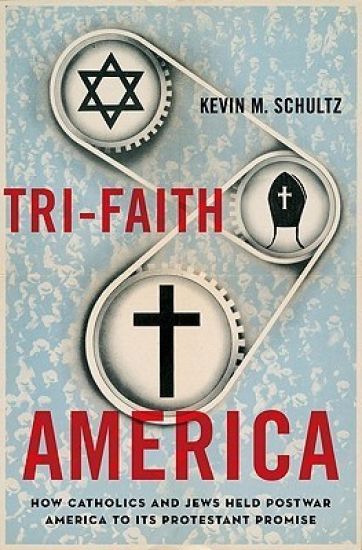
Tri-Faith America

Tri-Faith America

Kevin M. Schultz

Oxford University Press Inc
2011
sidottu
President Franklin D. Roosevelt put it bluntly, if privately, in 1942--the United States was "a Protestant country," he said, "and the Catholics and Jews are here under sufferance." In Tri-Faith America, Kevin Schultz explains how the United States left behind this idea that it was "a Protestant nation" and embraced the notion that Protestants, Catholics, and Jews were "Americans all." Schultz describes how the tri-faith idea surfaced after World War I, promoted by public relations campaigns, interfaith organizations, and the government to the extent that by the end of World War II, the idea was becoming widely accepted--particularly in the armed forces, fraternities, neighborhoods, social organizations, and schools. During the Cold War, the public religiosity spurred by the fight against godless communism led to widespread embrace of tri-faith America. Equally important, Schultz shows how Catholics and Jews in the post-World War II era used tri-faith rhetoric to challenge the nation's established moral authority. Indeed, as Americans began vigorously debating the merits of pluralism, they initiated a social and political climate that would pave the way toward the civil rights movement.
Tri-Faith America

Tri-Faith America

Kevin M. Schultz

Oxford University Press Inc
2013
nidottu
President Franklin D. Roosevelt put it bluntly, if privately, in 1942-the United States was "a Protestant country," he said, "and the Catholics and Jews are here under sufferance." In Tri-Faith America, Kevin Schultz explains how the United States left behind this idea that it was "a Protestant nation" and replaced it with a new national image, one premised on the notion that the country was composed of three separate, equally American faiths-Protestants, Catholics, and Jews. Tracing the origins of the tri-faith idea to the early twentieth century, when Catholic and Jewish immigration forced Protestant Social Gospelers to combine forces with Catholic and Jewish relief agencies, Tri-Faith America shows how the tri-faith idea gathered momentum after World War I, promoted by public relations campaigns, interfaith organizations, and the government, to the point where, by the end of World War II and into the early years of the Cold War, the idea was becoming widely accepted, particularly in the armed forces, fraternities, neighborhoods, social organizations, and schools. Tri-Faith America also shows how postwar Catholics and Jews used the new image to force the country to confront the challenges of pluralism. Should Protestant bibles be allowed on public school grounds? Should Catholic and Jewish fraternities be allowed to exclude Protestants? Should the government be allowed to count Americans by religion? Challenging the image of the conformist 1950s, Schultz describes how Americans were vigorously debating the merits of recognizing pluralism, paving the way for the civil rights movement and leaving an enduring mark on American culture.
Why Everyone Hates White Liberals (Including White Liberals)

Why Everyone Hates White Liberals (Including White Liberals)

Kevin M. Schultz

THE UNIVERSITY OF CHICAGO PRESS
2025
sidottu
A bracing, accessible history of white American liberals—and why it’s time to change the conversation about them. If there’s one thing most Americans can agree on, it’s that everyone hates white liberals. Conservatives hate them for being culturally tolerant and threatening to usher in communism. Libertarians hate them for believing in the power of the state. Socialists hate them for serving as capitalism’s beard. Even liberals hate liberals—either because they can’t manage to overcome their own prejudices, or precisely because they’re so self-hating. This is the starting point for Kevin M. Schultz’s lively new history of white liberals in the United States. He efficiently lays out the array of objections to liberals—ineffective, spineless, judgmental, authoritarian, and more—in a historical frame that shows how protean the concept has been throughout the past hundred years. It turns out, he declares, that how you define a “white liberal” is less a reflection of reality and more a Rorschach test revealing your own anxieties. Sharply assessing how decades of attacks on liberals and liberalism have steadily hollowed out the center of American political life, Schultz also explains precisely what needs to be done to avoid digging ourselves even further into the hole of polarization. The ultimate goal, he argues, is to achieve political fragmentation that will fuel the rise of a true multiparty system, where ideology will matter more, not less. With a tight command of postwar American history and a spirited voice, Why Everyone Hates White Liberals (Including White Liberals) is a must-read for anyone wishing to understand—and envision a way forward in—the complicated landscape of American politics.
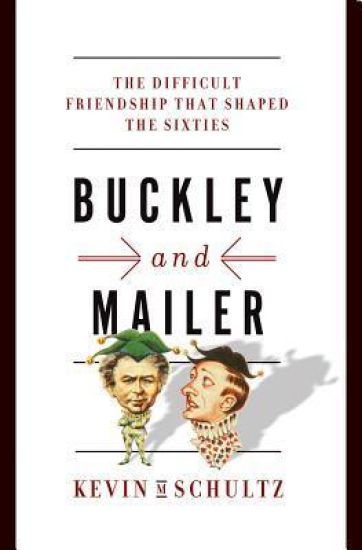
Buckley and Mailer

Buckley and Mailer

Kevin M. Schultz

WW Norton Co
2015
sidottu
Norman Mailer and William F. Buckley Jr. were towering figures who argued publicly about every major issue of the 1960s: the counterculture, Vietnam, feminism, civil rights, the Cold War. Behind the scenes, the two were close friends and trusted confidantes who lived surprisingly parallel lives. In Buckley and Mailer, Kevin M. Schultz delves into their personal archives to tell the rich story of their friendship, arguments and the tumultuous decade they did so much to shape. He delivers a fresh chronicle of the ‘60s and its long aftermath as well as an entertaining work of narrative history that explores these extraordinary figures’ contrasting visions of America and the future.
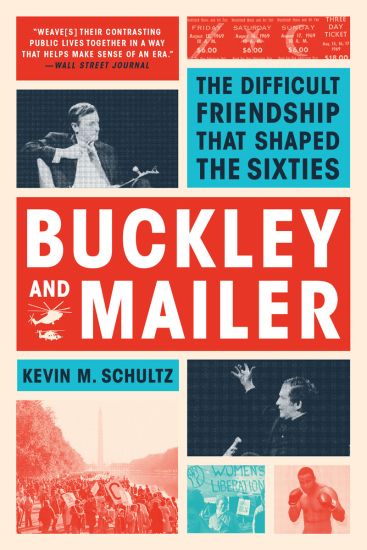
Buckley and Mailer

Buckley and Mailer

Kevin M. Schultz

WW Norton Co
2016
nidottu
Norman Mailer and William F. Buckley Jr. were towering figures who argued publicly about every major issue of the 1960s: the counterculture, Vietnam, feminism, civil rights, the Cold War. Behind the scenes, the two were close friends and trusted confidantes who lived surprisingly parallel lives. In Buckley and Mailer, Kevin M. Schultz delves into their personal archives to tell the rich story of their friendship, arguments and the tumultuous decade they did so much to shape. He delivers a fresh chronicle of the ‘60s and its long aftermath as well as an entertaining work of narrative history that explores these extraordinary figures’ contrasting visions of America and the future.