Kirjojen hintavertailu. Mukana 11 244 527 kirjaa ja 12 kauppaa.

Kirjahaku

Etsi kirjoja tekijän nimen, kirjan nimen tai ISBN:n perusteella.

5 kirjaa tekijältä Kevin M. Watson

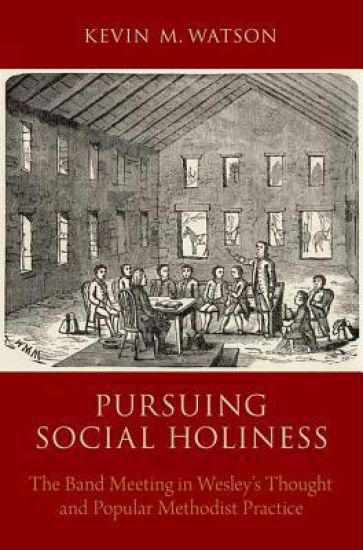
Pursuing Social Holiness

Pursuing Social Holiness

Kevin M. Watson

Oxford University Press Inc
2015
nidottu
Kevin M. Watson offers the first in-depth examination of an essential early Methodist tradition: the band meeting, a small group of five to seven people who focused on the confession of sin in order to grow in holiness. Watson shows how the band meeting, which figured significantly in John Wesley's theology of discipleship, united Wesley's emphasis on the importance of holiness with his conviction that Christians are most likely to make progress in the Christian life together, rather than in isolation. Demonstrating that neither John Wesley's theology nor popular Methodism can be understood independent of each other, Watson explores how Wesley synthesized important aspects of Anglican piety (an emphasis on a disciplined practice of the means of grace) and Moravian piety (an emphasis on an experience of justification by faith and the witness of the Spirit) in his own version of the band meeting. Pursuing Social Holiness is an essential contribution to understanding the critical role of the band meeting in the development of British Methodism and shifting concepts of community in eighteenth-century British society.
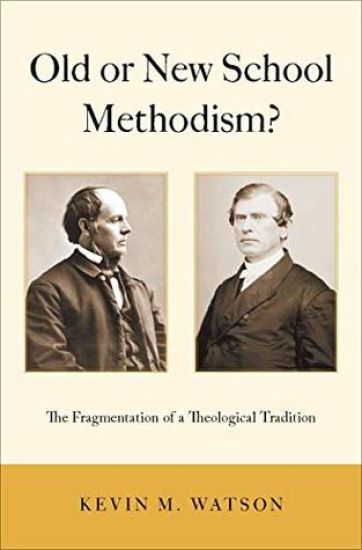
Old or New School Methodism?

Old or New School Methodism?

Kevin M. Watson

Oxford University Press Inc
2019
sidottu
On September 7, 1881, Matthew Simpson, Bishop in the Methodist Episcopal Church, in a London sermon asserted that: "As to the divisions in the Methodist family, there is little to mar the family likeness." Nearly a quarter-century earlier, Benjamin Titus (B.T.) Roberts, a minister in the same branch of Methodism as Simpson, had published an article in the Northern Independent in which he argued that Methodism had split into an "Old School" and "New School." He warned that if the new school were to "generally prevail," then "the glory will depart from Methodism." As a result of this article, Roberts was charged with "unchristian and immoral conduct" and expelled from the Genesee Conference of the Methodist Episcopal Church (MEC). Old or New School Methodism? examines how less than three decades later Matthew Simpson could claim that the basic beliefs and practices that Roberts had seen as threatened were in fact a source of persisting unity across all branches of Methodism. Kevin Watson argues that B. T. Roberts's expulsion from the MEC and the subsequent formation of his Free Methodist Church represent a crucial moment of transition in American Methodism. This book challenges understandings of American Methodism that emphasize its breadth and openness to a variety of theological commitments and underemphasize the particular theological commitments that have made it distinctive and have been the cause of divisions over the past century and a half. Old or New School Methodism? fills a major gap in the study of American Methodism from the 1850s to 1950s through a detailed study of two of the key figures of the period and their influence on the denomination.
Pursuing Social Holiness

Pursuing Social Holiness

Kevin M. Watson

Oxford University Press Inc
2014
sidottu
Kevin M. Watson offers the first in-depth examination of the early Methodist band meeting: a small group of five to seven people focusing on the confession of sin in order to grow in holiness. The ''social holiness'' of the band meeting figures significantly both in the development of eighteenth-century British Methodism and in understanding shifting forms of community in the context of rapidly changing British society. Arguing that neither John Wesley's theology nor popular Methodism can be understood independent of each other, Watson shows how Wesley synthesized important aspects of Anglican (an emphasis on a disciplined practice of the means of grace) and Moravian (an emphasis on an experience of justification by faith and the witness of the Spirit) piety in his own version of the band meeting. The small groups were of particular significance in John Wesley's theology of discipleship because the bands united his emphasis on the importance of holiness with his conviction that Christians are most likely to make progress in the Christian life together, rather than in isolation.
Doctrine, Spirit, and Discipline

Doctrine, Spirit, and Discipline

Kevin M. Watson

ZONDERVAN
2024
sidottu
The definitive history of the Wesleyan movement in the United States.An expansive, substantive history of the Wesleyan tradition in the United States, Doctrine, Spirit, and Discipline offers a broad survey of the Methodist movement as it developed and spread throughout America, from the colonial era to the present day.It also provides an theological appraisal of these developments in light of John Wesley's foundational vision. Beginning with Wesley himself, Watson describes the distinctiveness of the tradition at the outset. Then, as history unfolds, he identifies the common set of beliefs and practices which have unified a diverse group of people across the centuries, providing them a common identity through a number of divisions and mergers.In the midst of the sweeping changes happening in Methodism and the pan-Wesleyan movement today, Watson shows that the heart of the Wesleyan theological tradition is both more expansive and substantive than any singular denominational identity."A fresh, panoramic overview of the history of the Methodist movement. . . Promises to be a standard textbook on the history of Methodism for years to come." —TIMOTHY C. TENNENT, Asbury Theological Seminary