Kirjojen hintavertailu. Mukana 11 244 527 kirjaa ja 12 kauppaa.

Kirjahaku

Etsi kirjoja tekijän nimen, kirjan nimen tai ISBN:n perusteella.

9 kirjaa tekijältä Kevin McCain

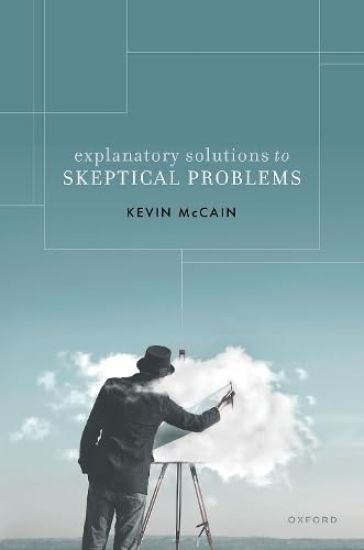
Explanatory Solutions to Skeptical Problems

Explanatory Solutions to Skeptical Problems

Kevin McCain

Oxford University Press
2025
sidottu
Phenomenal Explanationism is a powerful new theory of epistemic justification that combines an explanationist conception of evidential support with an appearance-based or phenomenal conception of evidence. According to PE, epistemic justification is a matter of what best explains our evidence, which ultimately consists of appearances. It is a complete internalist theory of epistemic justification that delivers on the promises of other appearance-based theories while avoiding their pitfalls. In Explanatory Solutions to Skeptical Problems, Kevin McCain expands his previous work on the internalist dimension of the theory to cover external world skepticism. He also demonstrates how PE offers solutions to a host of other perennial skeptical problems including the problem of the criterion, the regress of justification, memory skepticism, and inductive skepticism. The promise that PE displays in responding to these problems makes it plain that it is a viable conception of epistemic justification worthy of careful consideration, and also that accepting internalism more generally doesn't leave one without reasonable responses to skeptical problems.

Epistemology: 50 Puzzles, Paradoxes, and Thought Experiments
In this new kind of entrée to contemporary epistemology, Kevin McCain presents fifty of the field’s most important puzzles, paradoxes, and thought experiments. Assuming no familiarity with epistemology from the reader, McCain titles each case with a memorable name, describes the details of the case, explains the issue(s) to which the case is relevant, and assesses its significance. McCain also briefly reviews the key responses to the case that have been put forward, and provides a helpful list of suggested readings on the topic. Each entry is accessible, succinct, and self-contained. Epistemology: 50 Puzzles, Paradoxes, and Thought Experiments is a fantastic learning tool as well as a handy resource for anyone interested in epistemological issues. Key Features: Though concise overall, offers broad coverage of the key areas of epistemology. Describes each imaginative case directly and in a memorable way, making the cases accessible and easy to remember. Provides a list of Suggested Readings for each case, divided into General Overviews, Seminal Presentations, and Other Important Discussions.
Epistemology: 50 Puzzles, Paradoxes, and Thought Experiments
In this new kind of entrée to contemporary epistemology, Kevin McCain presents fifty of the field’s most important puzzles, paradoxes, and thought experiments. Assuming no familiarity with epistemology from the reader, McCain titles each case with a memorable name, describes the details of the case, explains the issue(s) to which the case is relevant, and assesses its significance. McCain also briefly reviews the key responses to the case that have been put forward, and provides a helpful list of suggested readings on the topic. Each entry is accessible, succinct, and self-contained. Epistemology: 50 Puzzles, Paradoxes, and Thought Experiments is a fantastic learning tool as well as a handy resource for anyone interested in epistemological issues. Key Features: Though concise overall, offers broad coverage of the key areas of epistemology. Describes each imaginative case directly and in a memorable way, making the cases accessible and easy to remember. Provides a list of Suggested Readings for each case, divided into General Overviews, Seminal Presentations, and Other Important Discussions.
Evidentialism and Epistemic Justification
Evidentialism is a popular theory of epistemic justification, yet, as early proponents of the theory Earl Conee and Richard Feldman admit, there are many elements that must be developed before Evidentialism can provide a full account of epistemic justification, or well-founded belief. It is the aim of this book to provide the details that are lacking; here McCain moves past Evidentialism as a mere schema by putting forward and defending a full-fledged theory of epistemic justification. In this book McCain offers novel approaches to several elements of well-founded belief. Key among these are an original account of what it takes to have information as evidence, an account of epistemic support in terms of explanation, and a causal account of the basing relation (the relation that one's belief must bear to her evidence in order to be justified) that is far superior to previous accounts. The result is a fully developed Evidentialist account of well-founded belief.
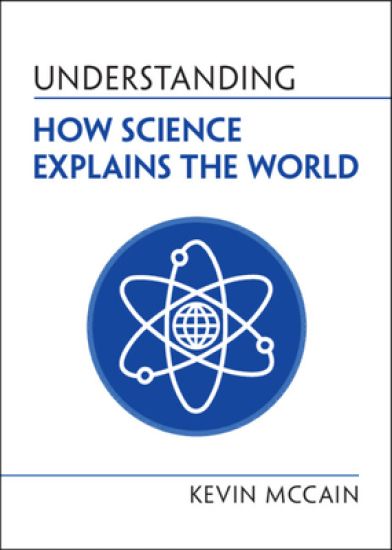
Understanding How Science Explains the World

Understanding How Science Explains the World

Kevin McCain

Cambridge University Press
2022
pokkari
All people desire to know. We want to not only know what has happened, but also why it happened, how it happened, whether it will happen again, whether it can be made to happen or not happen, and so on. In short, what we want are explanations. Asking and answering explanatory questions lies at the very heart of scientific practice. The primary aim of this book is to help readers understand how science explains the world. This book explores the nature and contours of scientific explanation, how such explanations are evaluated, as well as how they lead to knowledge and understanding. As well as providing an introduction to scientific explanation, it also tackles misconceptions and misunderstandings, while remaining accessible to a general audience with little or no prior philosophical training.
Evidentialism and Epistemic Justification
Evidentialism is a popular theory of epistemic justification, yet, as early proponents of the theory Earl Conee and Richard Feldman admit, there are many elements that must be developed before Evidentialism can provide a full account of epistemic justification, or well-founded belief. It is the aim of this book to provide the details that are lacking; here McCain moves past Evidentialism as a mere schema by putting forward and defending a full-fledged theory of epistemic justification. In this book McCain offers novel approaches to several elements of well-founded belief. Key among these are an original account of what it takes to have information as evidence, an account of epistemic support in terms of explanation, and a causal account of the basing relation (the relation that one's belief must bear to her evidence in order to be justified) that is far superior to previous accounts. The result is a fully developed Evidentialist account of well-founded belief.
Understanding How Science Explains the World

Understanding How Science Explains the World

Kevin McCain

Cambridge University Press
2022
sidottu
All people desire to know. We want to not only know what has happened, but also why it happened, how it happened, whether it will happen again, whether it can be made to happen or not happen, and so on. In short, what we want are explanations. Asking and answering explanatory questions lies at the very heart of scientific practice. The primary aim of this book is to help readers understand how science explains the world. This book explores the nature and contours of scientific explanation, how such explanations are evaluated, as well as how they lead to knowledge and understanding. As well as providing an introduction to scientific explanation, it also tackles misconceptions and misunderstandings, while remaining accessible to a general audience with little or no prior philosophical training.
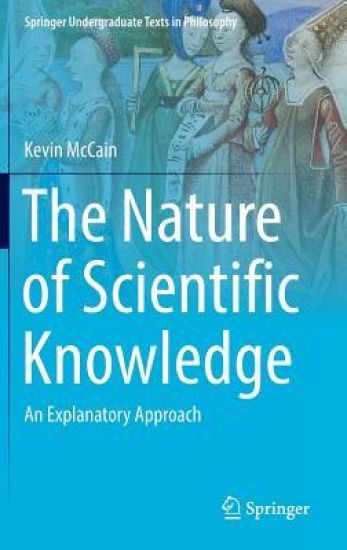
The Nature of Scientific Knowledge

The Nature of Scientific Knowledge

Kevin McCain

Springer International Publishing AG
2016
sidottu
This book offers a comprehensive and accessible introduction to the epistemology of science. It not only introduces readers to the general epistemological discussion of the nature of knowledge, but also provides key insights into the particular nuances of scientific knowledge. No prior knowledge of philosophy or science is assumed by The Nature of Scientific Knowledge. Nevertheless, the reader is taken on a journey through several core concepts of epistemology and philosophy of science that not only explores the characteristics of the scientific knowledge of individuals but also the way that the development of scientific knowledge is a particularly social endeavor. The topics covered in this book are of keen interest to students of epistemology and philosophy of science as well as science educators interested in the nature of scientific knowledge. In fact, as a result of its clear and engaging approach to understanding scientific knowledge The Nature of Scientific Knowledge is a book that anyone interested in scientific knowledge, knowledge in general, and any of a myriad of related concepts would be well advised to study closely.
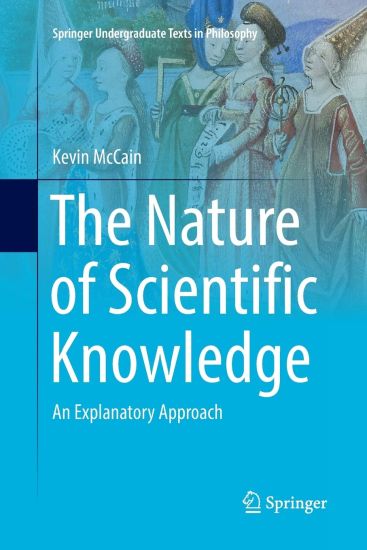
The Nature of Scientific Knowledge

The Nature of Scientific Knowledge

Kevin McCain

Springer International Publishing AG
2018
nidottu
This book offers a comprehensive and accessible introduction to the epistemology of science. It not only introduces readers to the general epistemological discussion of the nature of knowledge, but also provides key insights into the particular nuances of scientific knowledge. No prior knowledge of philosophy or science is assumed by The Nature of Scientific Knowledge. Nevertheless, the reader is taken on a journey through several core concepts of epistemology and philosophy of science that not only explores the characteristics of the scientific knowledge of individuals but also the way that the development of scientific knowledge is a particularly social endeavor. The topics covered in this book are of keen interest to students of epistemology and philosophy of science as well as science educators interested in the nature of scientific knowledge. In fact, as a result of its clear and engaging approach to understanding scientific knowledge The Nature of Scientific Knowledge is a book that anyone interested in scientific knowledge, knowledge in general, and any of a myriad of related concepts would be well advised to study closely.