Kirjahaku
Etsi kirjoja tekijän nimen, kirjan nimen tai ISBN:n perusteella.
16 kirjaa tekijältä Kevin McGrath
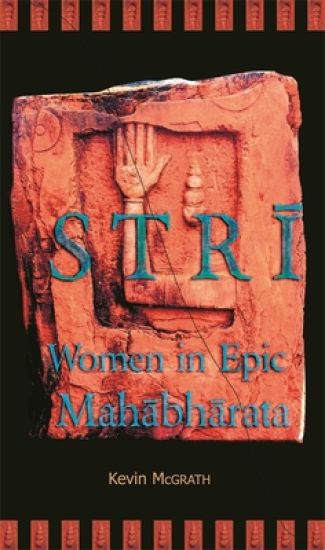
This book is a study of heroic femininity as it appears in the epic Mahabharata, and focuses particularly on the roles of wife, daughter-in-law, and mother, on how these women speak and on the kinship groups and varying marital systems that surround them. It portrays those qualities that cohere about women in the poem, which are particular to them and which distinguish them as women, and describes how women heroes function as crucial speakers in the generation and maintenance of cultural value and worth. This includes men who have been transformed into women and women who have been reincarnated as men. The overall method accomplishes an ethnography of text, describing a special aspect of the bronze age preliterate and premonetary world as it is represented by the actions and metaphors of Mahabharata. References to contemporary Indian cinema and popular culture support the narrative of the book, bringing modern valence to the arguments.
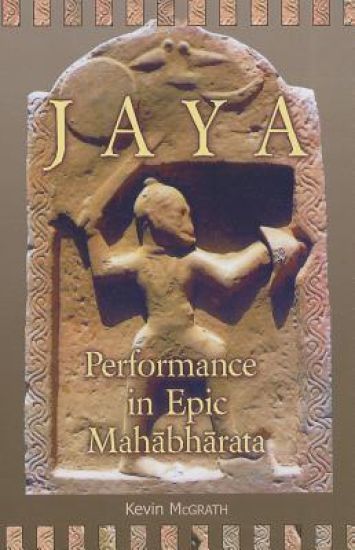
Jaya is a study of how the four poets of the Indian epic Mahabharata fuse their separate performances of the poem into a single and seamless work of art. The book examines in detail the different mnemonic forms engaged by this verbal activity focusing primarily on the distinction between what is seen and what is heard, as the poets stage and dramatize the four dimensions of their heroic song within one timely occasion. The subtle poetics of preliteracy and literacy which are compounded in one performance are demonstrated and made distinct in both a literary and a conceptual light. Jaya will be of interest to those who work in Sanskrit and Indian Studies, the Classics, Oral Traditions, Comparative Literature, and the traditions of archaic poetry.
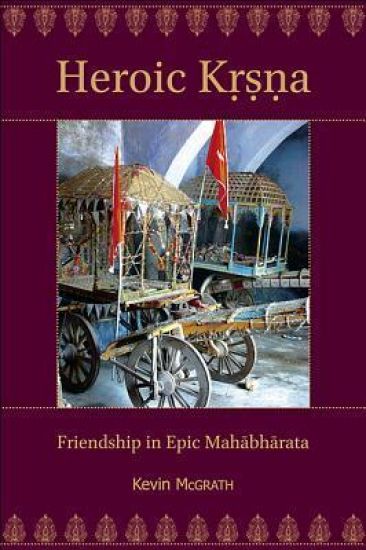
Heroic K???a is a portrait of a pre-Hindu and pre-classical figure of a superhuman hero who in time became the divinity Krsna, an incarnation of Visnu. This is a picture, drawn from the epic Mahabharata, of an archaic warrior who excelled as a charioteer; in fact this is the best depiction that we presently possess in any epic corpus of a charioteer type. Krsna is also described in his role of moral instructor, as poet and ambassador, and in the office of dual kingship with the dharmaraja Yudhisthira. There is no other representation of a complex friendship in the poem apart from what exists between Krsna and Arjuna, and this profound amity is completely founded on the activity of a charioteer and his hero. Cultural and poetic continuities from the Bronze Age Vedic world are shown to exist in this model of duality. Krsna is also an adept of the speech-act, for—apart from his charioteering—he accomplishes little in the epic except via the causality of speech: he is a master of “doing things with words.” This book illustrates a heroic life which pre-exists the divine status of one of the most popular Indian deities of today.
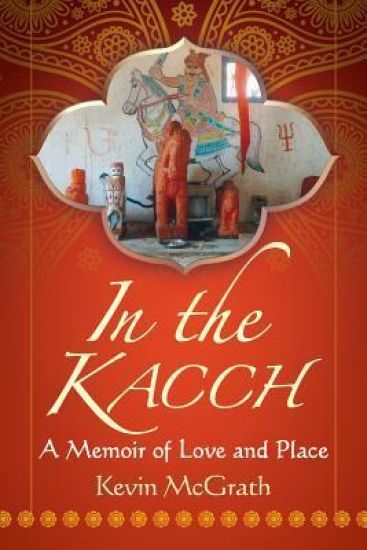
This personal narrative about life in a remote desert region of western India tells of how love of place and love of person find their equilibrium in a world far removed from modernity. Yet this small, distant land of kingship and pastoral life is rapidly being eroded by the new India of commerce and industrialization. The author describes how an ancient society is transformed by the culture of consumption where the lyrical beauty of balance, exchange and loyalty is translated into a single market economy. The people and places of post-Partition Kacch, where even the land and value systems of a lately independent India now appear in a nostalgic light, are described in detail. This is a record of private emotion and physical terrain, of traditions and of profound social practice.
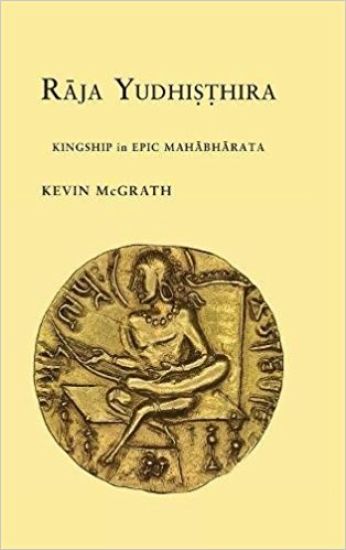
In Raja Yudhisthira, Kevin McGrath brings his comprehensive literary, ethnographic, and analytical knowledge of the epic Mahabharata to bear on the representation of kingship in the poem. He shows how the preliterate Great Bharata song depicts both archaic and classical models of kingly and premonetary polity and how the king becomes a ruler who is viewed as ritually divine. Based on his precise and empirical close reading of the text, McGrath then addresses the idea of heroic religion in both antiquity and today; for bronze-age heroes still receive great devotional worship in modern India and communities continue to clash at the sites that have been—for millennia—associated with these epic figures; in fact, the word hero is in fact more of a religious than a martial term. One of the most important contributions of Raja Yudhisthira, and a subtext in McGrath's analysis of Yudhisthira's kingship, is the revelation that neither of the contesting moieties of the royal Hastinapura clan triumphs in the end, for it is the Yadava band of Krsna who achieve real victory. That is, it is the matriline and not the patriline that secures ultimate success: it is the kinship group of Krsna—the heroic figure who was to become the dominant Vaisnava icon of classical India—who benefits most from the terrible Bharata war.
Al Qaeda killed over 3,000 US citizens on September 11, 2001, and terrorism leapt to the fore of US strategic and political priorities. Yet, after nearly six years of concentrated effort by the United States, the dominant power in the international system, Al Qaeda survives and is still acknowledged as a potent threat. This begs the question not just of why, but also of what the United States can do to redress the situation. Confronting Al-Qaeda asserts that Al-Qaeda is primarily a political threat, not a military one. This is because terrorists subvert legitimate political processes to achieve political ends. Al-Qaeda challenges not only specific U.S. policy decisions, but also the very nature of the U.S. political system and the U.S.-lead international order created after World War II. Therefore the character of the U.S. political response to the threat from Al-Qaeda is critical. Al-Qaeda’s capacity for violence is the direct source of its power. This must be reduced, and coercive means, such as the military, intelligence and law enforcement, are necessary, for they alone directly degrade Al-Qaeda’s potential. A singularly coercive approach, however, is insufficient. As the leader of the international system, the United States is in a position to politically undercut Al-Qaeda. The United States can do so by adhering to globally revered traditional US political values and foreign policy. About the Author Kevin McGrath earned both an M.A. and Ph.D. in political science at the University of Maryland with a focus on international relations and security studies. He is a senior analyst with the MASY group, a global intelligence and risk management firm, and lives in Washington DC.
Song of the Republic is a mythical handbook of poetry about these United States and how they first arose in consciousness. The native awareness of our pre-Columbian and pre-Cartesian terrain, the terrible ordeals of human extinction and trafficking, the violence of civil contention, and the vast endurance and visionary efforts of millions of European and Asian migrants voyaging toward this land, have produced an American culture that is deeply imbued with the experience of terrific grief and yet it is one whose composition is profoundly feminine. In this book there is no male gaze, for the work is a feminist project; in its purest sense the male gaze only truly concerns situations where men are thinking about other men.
Vyasa is the primary creative poet of the Sanskrit epic Mahabharata and 'Vyasa Redux' examines the many paradoxical dimensions of his narrative virtuosity in the poem where the poet is both the creator of the work and a character within it. The book also studies elements in the poem which have been received by the late Bronze Age poets who composed the figure of Vyasa, elements that reflect kinship, polity and modes of mnemonic inspiration. Three paired concepts function within the poem’s narrative process: first, the central approach of the book is founded upon the distinction between plot and story, that is, the causal relation of events as opposed to the temporal relation of events. Second, much of the argument then engages with how this distinction relates to the difference between the preliterate and literate phases of our present text. Third, the nature of how inspiration functions and how edition operates becomes another vital component in our analytic process explaining how Vyasa becomes a dramatic, causal and at times prophetic character in the poem’s narration as well as its originator.
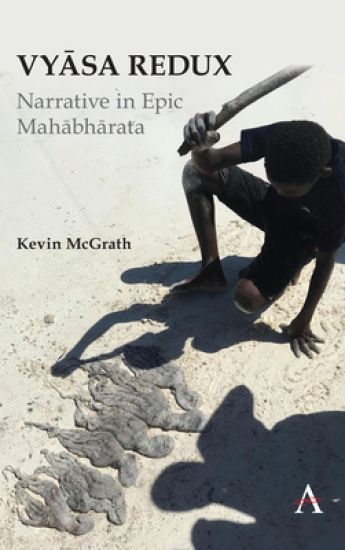
Vyasa is the primary creative poet of the Sanskrit epic Mahabharata and 'Vyasa Redux' examines the many paradoxical dimensions of his narrative virtuosity in the poem where the poet is both the creator of the work and a character within it. The book also studies elements in the poem which have been received by the late Bronze Age poets who composed the figure of Vyasa, elements that reflect kinship, polity and modes of mnemonic inspiration. Three paired concepts function within the poem’s narrative process: first, the central approach of the book is founded upon the distinction between plot and story, that is, the causal relation of events as opposed to the temporal relation of events. Second, much of the argument then engages with how this distinction relates to the difference between the preliterate and literate phases of our present text. Third, the nature of how inspiration functions and how edition operates becomes another vital component in our analytic process explaining how Vyasa becomes a dramatic, causal and at times prophetic character in the poem’s narration as well as its originator.
FAME is a book about human affection and disaffection and the unique narrative which presents this perpetual movement. The poems come from India, Greece, the Windward Islands, and New England, places whose landscapes have informed the metaphors of this work. Love being itself the only metaphor that allows us to apprehend our true freedom in this world, enabling us to give more than we receive so that our aim be true. Fame is a sign of this transcendental knowledge and experience.
Romance: The Only Life by poet Kevin McGrath, published by Saint Julian Press, unfolds like a whispered conversation between the poet and the ineffable. The collection takes a contemplative approach to the notion of romance-not merely as a sentiment reserved for lovers, but as an elemental force, shaping the way we move through the world. The book's title suggests that romance, in all its sprawling meanings, might just be the central current that makes life worth living. Divided into a series of compact, numbered poems, Romance resists the temptation to over-explain or embellish. The poems, often spare in language, invite the reader to pause, to reflect, and to find resonance in what is unsaid. There's a quiet power in this restraint, as the collection meanders through themes of connection, spirituality, and the sensuality of existence, offering glimpses rather than declarations. Each poem, pared down to its essential elements, feels like a small meditation-on a moment, a relationship, a thought. This is not a book of love poems, at least not in the conventional sense. The romance here is larger, encompassing our relationship with nature, with the divine, with the self. It's the romance of being alive, of noticing, of breathing into the spaces where life unfolds unexpectedly. These poems suggest that romance is not something we find; it is something we cultivate, an ethos to carry through the day. And yet, there is intimacy here. The poet speaks directly, as if leaning in, revealing these truths with a delicate touch. There is no grandiosity, no sweeping declarations, just the simple act of observing the world with an open heart. It's an invitation to the reader: to slow down, to listen more closely, to rediscover the beauty in the ordinary. For readers accustomed to poetry that drips with overt emotion or elaborate form, Romance: The Only Life may feel like a reprieve. Its understated style allows for a deeper engagement with the subject matter, as though each poem is merely a doorway to something much larger-a feeling, a memory, a revelation. It is a book that doesn't ask to be understood so much as experienced. In the end, Romance offers its readers a gift: a chance to find the extraordinary in the everyday, to see romance as a way of being rather than an outcome to chase. It is a quiet, beautiful collection that speaks to those who understand that the most profound connections often arise from the simplest moments.