
Kirjojen hintavertailu. Mukana 11 678 731 kirjaa ja 12 kauppaa.

Kirjahaku

Etsi kirjoja tekijän nimen, kirjan nimen tai ISBN:n perusteella.

4 kirjaa tekijältä Kevin Olson

Subaltern Silence

Subaltern Silence

Kevin Olson

Columbia University Press
2024
sidottu
Subordination did not simply fade away in the aftermath of colonialism. Instead, this illuminating book shows, a host of subtle new techniques have arisen that dominate vast categories of people by rendering them silent. Kevin Olson investigates how contemporary societies silence the subaltern: sometimes a literal silencing, often a metaphor for other ways of making people unheard. Such forms of silence make some people invisible, push others to the margins, and devalue the voices and actions of still others.Subaltern Silence traces the development of these techniques to the early years of European colonialism, focusing on Haiti’s revolution and postcolonial trajectory. Exploring rich archives from Europe and the postcolonial world, Olson critiques fundamental modern institutions and technologies, such as the public sphere, the free press, and even progressively minded democratic revolution, as sites of exclusion. With the emergence of postcoloniality, he argues, subordination has become increasingly abstract, virtual, and symbolic. Nonetheless, it lies at the heart of contemporary racial politics, divides Global South from Global North, and allocates privileges and burdens in ways that are often scarcely perceptible. Engaging deeply with the thought of Gayatri Spivak and Michel Foucault, Subaltern Silence offers a new genealogy of colonialism and postcoloniality that is both historically informed and theoretically rich.

Subaltern Silence

Subaltern Silence

Kevin Olson

Columbia University Press
2024
pokkari
Subordination did not simply fade away in the aftermath of colonialism. Instead, this illuminating book shows, a host of subtle new techniques have arisen that dominate vast categories of people by rendering them silent. Kevin Olson investigates how contemporary societies silence the subaltern: sometimes a literal silencing, often a metaphor for other ways of making people unheard. Such forms of silence make some people invisible, push others to the margins, and devalue the voices and actions of still others.Subaltern Silence traces the development of these techniques to the early years of European colonialism, focusing on Haiti’s revolution and postcolonial trajectory. Exploring rich archives from Europe and the postcolonial world, Olson critiques fundamental modern institutions and technologies, such as the public sphere, the free press, and even progressively minded democratic revolution, as sites of exclusion. With the emergence of postcoloniality, he argues, subordination has become increasingly abstract, virtual, and symbolic. Nonetheless, it lies at the heart of contemporary racial politics, divides Global South from Global North, and allocates privileges and burdens in ways that are often scarcely perceptible. Engaging deeply with the thought of Gayatri Spivak and Michel Foucault, Subaltern Silence offers a new genealogy of colonialism and postcoloniality that is both historically informed and theoretically rich.
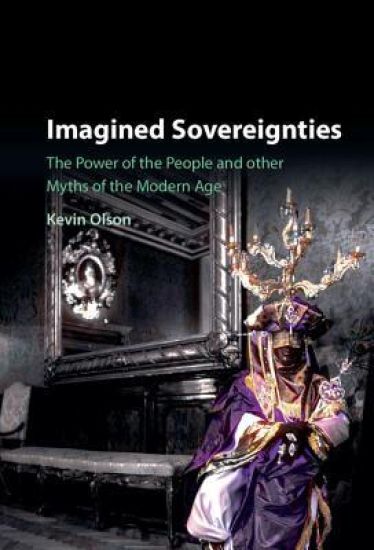
Imagined Sovereignties

Imagined Sovereignties

Kevin Olson

Cambridge University Press
2016
sidottu
Movements like the Arab Spring, Occupy Wall Street, and the Tea Party embody some of our deepest intuitions about popular politics and 'the power of the people'. They also expose tensions and shortcomings in our understanding of these ideals. We typically see 'the people' as having a special, sovereign power. Despite the centrality of this idea in our thinking, we have little understanding of why it has such importance. Imagined Sovereignties probes the considerable force that 'the people' exercises on our thought and practice. Like the imagined communities described by Benedict Anderson, popular politics is formed around shared, imaginary constructs rooted in our collective imagination. This book investigates these 'imagined sovereignties' in a genealogy traversing the French Enlightenment, the Haitian Revolution, and nineteenth-century Haitian constitutionalism. It problematizes taken-for-granted ideas about popular politics and provokes new ways of imagining the power of the people.