Kirjojen hintavertailu. Mukana 11 342 296 kirjaa ja 12 kauppaa.

Kirjahaku

Etsi kirjoja tekijän nimen, kirjan nimen tai ISBN:n perusteella.

6 kirjaa tekijältä Kevin P. Gallagher

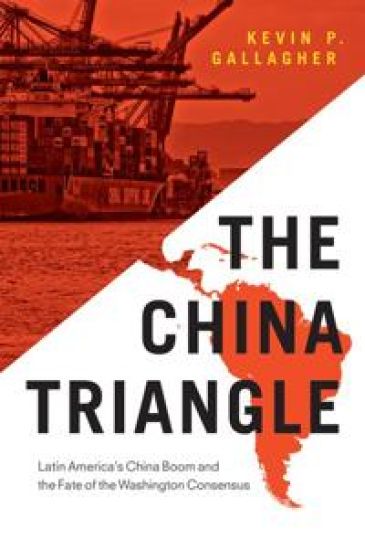
The China Triangle

The China Triangle

Kevin P. Gallagher

Oxford University Press Inc
2016
sidottu
In less than a quarter century, China has gone from one of the poorest to one of the largest economies in the world. As China grew from a rural economy to the largest industrial powerhouse since the Industrial Revolution, it demanded more and more steel for factories and new cities, copper for electronic wires, petroleum for cars and manufacturing plants, and soybeans to feed people and cattle in a country with an increasing standard of living and diversified diet. Many Latin American countries rode China's coattails and prospered. From the turn of the century when China entered the World Trade Organization until 2013, Latin America served as a strategic location that supplied China with these primary commodities and more, allowing it to log one of the region's most impressive periods of economic growth in a fifty years. In The China Triangle, Boston University political economist Kevin P. Gallagher argues that Latin American nations have little to show for riding the coattails of the "China Boom" and now face significant challenges for the next decades as China's economy slows down and transforms itself in a variety of ways. While the region saw significant economic growth due to China's rise over the past decades, Latin Americans saved very little of the windfall profits it earned while the region saw a significant hollowing of its industrial base. What is more, commodity-led growth during the China boom reignited social and environmental conflicts across the region. Scholars and reporters have covered the Chinese expansion into East Asia, Southeast Asia, Australasia, Africa, the US, and Europe. Yet China's penetration Latin America is as little understood as it is significant. Gallagher provides a clear overview of China's growing economic ties with Latin America and points to ways that Latin American nations, China, and even the United States can act in order to make the next decades of China-Latin America economic activity more prosperous for all involved.
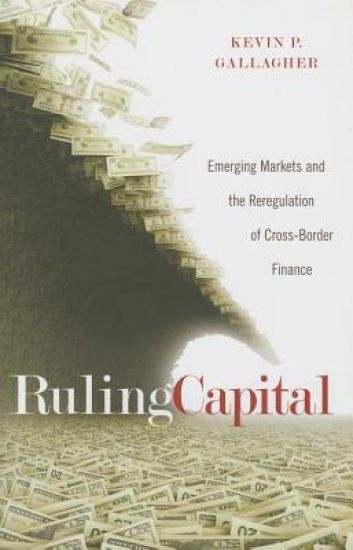
Ruling Capital

Ruling Capital

Kevin P. Gallagher

Cornell University Press
2014
sidottu
In Ruling Capital, Kevin P. Gallagher demonstrates how several emerging market and developing countries (EMDs) managed to reregulate cross-border financial flows in the wake of the global financial crisis, despite the political and economic difficulty of doing so at the national level. Gallagher also shows that some EMDs, particularly the BRICS coalition, were able to maintain or expand their sovereignty to regulate cross-border finance under global economic governance institutions. Gallagher combines econometric analysis with in-depth interviews with officials and interest groups in select emerging markets and policymakers at the International Monetary Fund, the World Trade Organization, and the G-20 to explain key characteristics of the global economy. Gallagher develops a theory of countervailing monetary power that shows how emerging markets can counter domestic and international opposition to the regulation of cross-border finance. Although many countries were able to exert countervailing monetary power in the wake of the crisis, such power was not sufficient to stem the magnitude of unstable financial flows that continue to plague the world economy. Drawing on this theory, Gallagher outlines the significant opportunities and obstacles to regulating cross-border finance in the twenty-first century.
Free Trade and the Environment

Free Trade and the Environment

Kevin P. Gallagher

Stanford University Press
2004
sidottu
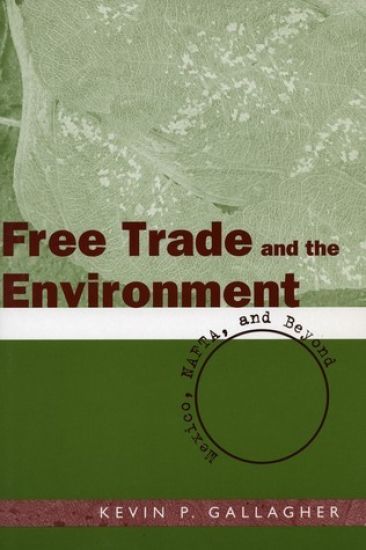
Free Trade and the Environment examines the impact economic integration has on the environment, using Mexico, which transformed itself from one of the most closed economies to one of the world's most open, as a case study. As new nations join the Free Trade Area of the Americas or the World Trade Organization, they are considering the path taken by Mexico nearly 20 years ago. The author investigates two commonly held and opposing beliefs in the policy community about the impact of free trade on the environment. While some believe that free trade will raise incomes in developing countries, thus encouraging governments to protect the environment, others argue that free trade simply provides an incentive for heavily polluting industries to move to developing countries with lax environmental regulations. The author shows that for Mexico in fact neither position is correct, and concludes with suggestions for free trade policies that couple environmental benefits with economic integration.
Free Trade and the Environment

Free Trade and the Environment

Kevin P. Gallagher

Stanford University Press
2004
pokkari
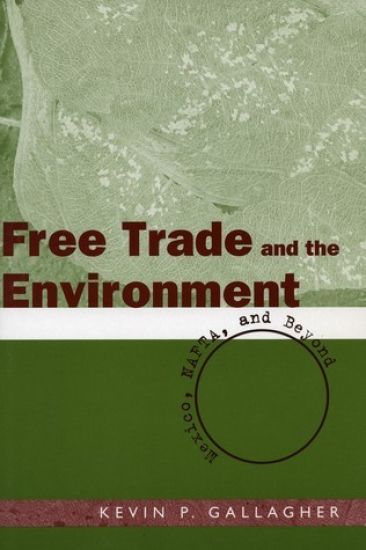
Free Trade and the Environment examines the impact economic integration has on the environment, using Mexico, which transformed itself from one of the most closed economies to one of the world's most open, as a case study. As new nations join the Free Trade Area of the Americas or the World Trade Organization, they are considering the path taken by Mexico nearly 20 years ago. The author investigates two commonly held and opposing beliefs in the policy community about the impact of free trade on the environment. While some believe that free trade will raise incomes in developing countries, thus encouraging governments to protect the environment, others argue that free trade simply provides an incentive for heavily polluting industries to move to developing countries with lax environmental regulations. The author shows that for Mexico in fact neither position is correct, and concludes with suggestions for free trade policies that couple environmental benefits with economic integration.
The Clash of Globalizations

The Clash of Globalizations

Kevin P. Gallagher

Anthem Press
2013
sidottu
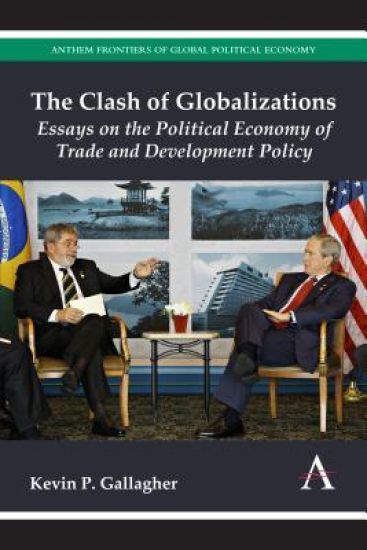
Collecting and synthesizing a series of essays on the political economy of trade and development policy, this book explores the following research questions: to what extent is the global trading regime reducing the ability of nation-states to pursue policies for financial stability and economic growth; and what political factors explain such changes in policy space over time, across different types of trade treaties and across nations? Gallagher presents intriguing findings on the policy constraints on the Uruguay Round, as well as the significant restrictions that the USA places upon the ability of developing nations to deploy a range of development strategies for stability and growth. Analyzing the factors that have led to twenty-first-century trade politics being characterized by a “clash of globalizations,” this volume explores the role of economic power, institutional structure, domestic politics, currency fluctuations and ideas about globalization in effecting changes to global trade policies.
The Clash of Globalizations

The Clash of Globalizations

Kevin P. Gallagher

Anthem Press
2014
nidottu
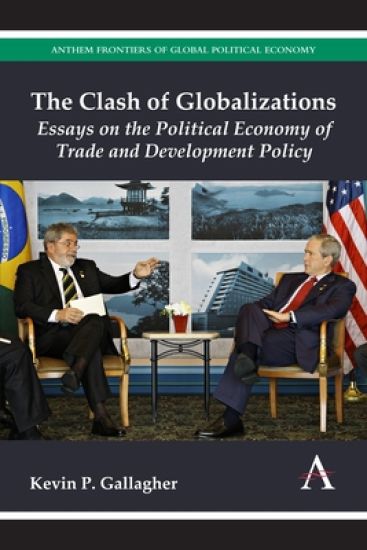
Collecting and synthesizing a series of essays on the political economy of trade and development policy, this book explores the following research questions: to what extent is the global trading regime reducing the ability of nation-states to pursue policies for financial stability and economic growth; and what political factors explain such changes in policy space over time, across different types of trade treaties and across nations? Gallagher presents intriguing findings on the policy constraints on the Uruguay Round, as well as the significant restrictions that the USA places upon the ability of developing nations to deploy a range of development strategies for stability and growth. Analyzing the factors that have led to twenty-first-century trade politics being characterized by a “clash of globalizations,” this volume explores the role of economic power, institutional structure, domestic politics, currency fluctuations and ideas about globalization in effecting changes to global trade policies.