Kirjojen hintavertailu. Mukana 11 342 296 kirjaa ja 12 kauppaa.

Kirjahaku

Etsi kirjoja tekijän nimen, kirjan nimen tai ISBN:n perusteella.

6 kirjaa tekijältä Kevin P. Murphy

Political Manhood

Political Manhood

Kevin P. Murphy

Columbia University Press
2010
pokkari
In a 1907 lecture to Harvard undergraduates, Theodore Roosevelt warned against becoming "too fastidious, too sensitive to take part in the rough hurly-burly of the actual work of the world." Roosevelt asserted that colleges should never "turn out mollycoddles instead of vigorous men," and cautioned that "the weakling and the coward are out of place in a strong and free community." A paradigm of ineffectuality and weakness, the mollycoddle was "all inner life," whereas his opposite, the "red blood," was a man of action. Kevin P. Murphy reveals how the popular ideals of American masculinity coalesced around these two distinct categories. Because of its similarity to the emergent "homosexual" type, the mollycoddle became a powerful rhetorical figure, often used to marginalize and stigmatize certain political actors. Issues of masculinity not only penetrated the realm of the elite, however. Murphy's history follows the redefinition of manhood across a variety of classes, especially in the work of late nineteenth-century reformers, who trumpeted the virility of the laboring classes. By highlighting this cross-class appropriation, Murphy challenges the oppositional model commonly used to characterize the relationship between political "machines" and social and municipal reformers at the turn of the twentieth century. He also revolutionizes our understanding of the gendered and sexual meanings attached to political and ideological positions of the Progressive Era.
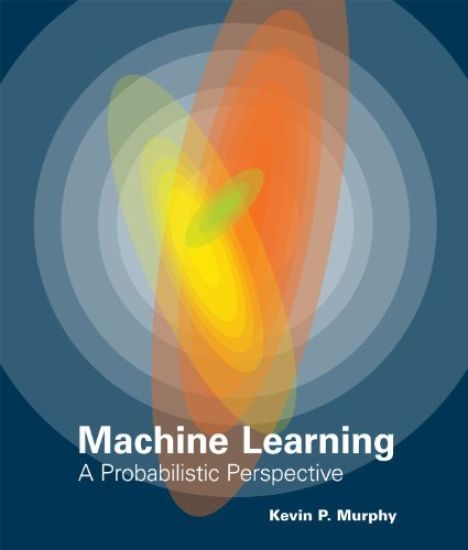
Machine Learning

Machine Learning

Kevin P. Murphy

MIT Press
2012
sidottu
A comprehensive introduction to machine learning that uses probabilistic models and inference as a unifying approach.Today's Web-enabled deluge of electronic data calls for automated methods of data analysis. Machine learning provides these, developing methods that can automatically detect patterns in data and then use the uncovered patterns to predict future data. This textbook offers a comprehensive and self-contained introduction to the field of machine learning, based on a unified, probabilistic approach.The coverage combines breadth and depth, offering necessary background material on such topics as probability, optimization, and linear algebra as well as discussion of recent developments in the field, including conditional random fields, L1 regularization, and deep learning. The book is written in an informal, accessible style, complete with pseudo-code for the most important algorithms. All topics are copiously illustrated with color images and worked examples drawn from such application domains as biology, text processing, computer vision, and robotics. Rather than providing a cookbook of different heuristic methods, the book stresses a principled model-based approach, often using the language of graphical models to specify models in a concise and intuitive way. Almost all the models described have been implemented in a MATLAB software package-PMTK (probabilistic modeling toolkit)-that is freely available online. The book is suitable for upper-level undergraduates with an introductory-level college math background and beginning graduate students.
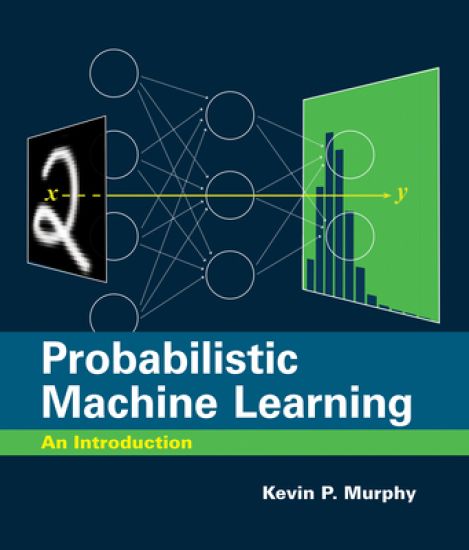
Probabilistic Machine Learning

Probabilistic Machine Learning

Kevin P. Murphy

MIT PRESS LTD
2022
sidottu
A detailed and up-to-date introduction to machine learning, presented through the unifying lens of probabilistic modeling and Bayesian decision theory. This book offers a detailed and up-to-date introduction to machine learning (including deep learning) through the unifying lens of probabilistic modeling and Bayesian decision theory. The book covers mathematical background (including linear algebra and optimization), basic supervised learning (including linear and logistic regression and deep neural networks), as well as more advanced topics (including transfer learning and unsupervised learning). End-of-chapter exercises allow students to apply what they have learned, and an appendix covers notation. Probabilistic Machine Learning grew out of the author's 2012 book, Machine Learning: A Probabilistic Perspective. More than just a simple update, this is a completely new book that reflects the dramatic developments in the field since 2012, most notably deep learning. In addition, the new book is accompanied by online Python code, using libraries such as scikit-learn, JAX, PyTorch, and Tensorflow, which can be used to reproduce nearly all the figures; this code can be run inside a web browser using cloud-based notebooks, and provides a practical complement to the theoretical topics discussed in the book. This introductory text will be followed by a sequel that covers more advanced topics, taking the same probabilistic approach.
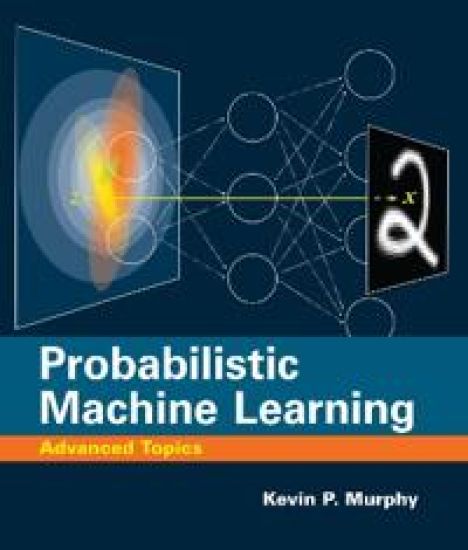
Probabilistic Machine Learning

Probabilistic Machine Learning

Kevin P. Murphy

MIT PRESS LTD
2023
sidottu
An advanced book for researchers and graduate students working in machine learning and statistics who want to learn about deep learning, Bayesian inference, generative models, and decision making under uncertainty. An advanced counterpart to Probabilistic Machine Learning: An Introduction, this high-level textbook provides researchers and graduate students detailed coverage of cutting-edge topics in machine learning, including deep generative modeling, graphical models, Bayesian inference, reinforcement learning, and causality. This volume puts deep learning into a larger statistical context and unifies approaches based on deep learning with ones based on probabilistic modeling and inference. With contributions from top scientists and domain experts from places such as Google, DeepMind, Amazon, Purdue University, NYU, and the University of Washington, this rigorous book is essential to understanding the vital issues in machine learning. Covers generation of high dimensional outputs, such as images, text, and graphs Discusses methods for discovering insights about data, based on latent variable models Considers training and testing under different distributionsExplores how to use probabilistic models and inference for causal inference and decision makingFeatures online Python code accompaniment