Kirjojen hintavertailu. Mukana 11 342 296 kirjaa ja 12 kauppaa.

Kirjahaku

Etsi kirjoja tekijän nimen, kirjan nimen tai ISBN:n perusteella.

5 kirjaa tekijältä Kevin P. Timoney

Hidden Scourge

Hidden Scourge

Kevin P. Timoney

McGill-Queen's University Press
2021
sidottu
This book began when Kevin Timoney noticed a suspicious pattern in data reported by the Alberta Energy Regulator. For tens of thousands of spills, recovery volumes exactly matched the reported spill volumes. In short, the data were too good to be true. And so began a search for the scientific truth about spills. In western North America crude oil and saline water spills – both small and large – occur daily and cause permanent damage to ecosystems that remains largely hidden from public view.Hidden Scourge takes the reader on a journey into a covert world of energy industry spills with environmental incident data from over 100,000 spills in Alberta, Saskatchewan, North Dakota, Montana, and the Northwest Territories. Timoney evaluates the truthfulness of regulatory reporting in light of evidence from peer-reviewed scientific data, original field observations, industrial and government reports, interviews, and documents obtained under freedom of information. In stark contrast to a halcyon picture of prosperity and "world-class" environmental management, the reality is rampant destruction of biodiversity, persistent soil contamination, failed reclamation, and thousands of undocumented spills.Hidden Scourge grounds existential debates about climate and ecological crises in evidence of how hydrocarbon-based economies change the ecosystems where fossil fuels are extracted. The science is clear: the industry consistently damages ecosystems wherever it operates. If energy-industry regulators cannot act independently, honestly, and in the public interest, they profoundly undermine democratic institutions. The result is a legacy of contaminated sites that will burden future generations with great uncertainty and cost.
Hidden Scourge

Hidden Scourge

Kevin P. Timoney

McGill-Queen's University Press
2021
nidottu
This book began when Kevin Timoney noticed a suspicious pattern in data reported by the Alberta Energy Regulator. For tens of thousands of spills, recovery volumes exactly matched the reported spill volumes. In short, the data were too good to be true. And so began a search for the scientific truth about spills. In western North America crude oil and saline water spills – both small and large – occur daily and cause permanent damage to ecosystems that remains largely hidden from public view.Hidden Scourge takes the reader on a journey into a covert world of energy industry spills with environmental incident data from over 100,000 spills in Alberta, Saskatchewan, North Dakota, Montana, and the Northwest Territories. Timoney evaluates the truthfulness of regulatory reporting in light of evidence from peer-reviewed scientific data, original field observations, industrial and government reports, interviews, and documents obtained under freedom of information. In stark contrast to a halcyon picture of prosperity and "world-class" environmental management, the reality is rampant destruction of biodiversity, persistent soil contamination, failed reclamation, and thousands of undocumented spills.Hidden Scourge grounds existential debates about climate and ecological crises in evidence of how hydrocarbon-based economies change the ecosystems where fossil fuels are extracted. The science is clear: the industry consistently damages ecosystems wherever it operates. If energy-industry regulators cannot act independently, honestly, and in the public interest, they profoundly undermine democratic institutions. The result is a legacy of contaminated sites that will burden future generations with great uncertainty and cost.
The Peace-Athabasca Delta

The Peace-Athabasca Delta

Kevin P. Timoney

University of Alberta Press
2013
sidottu
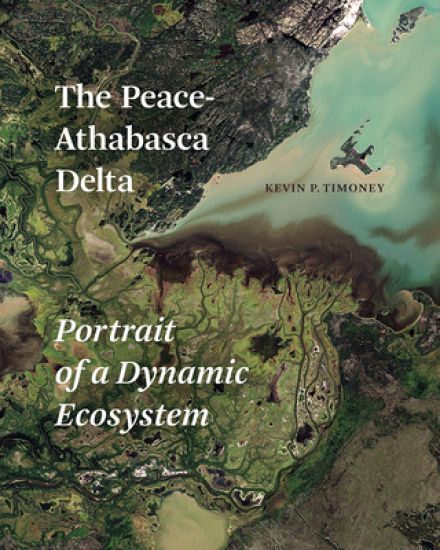
"In the delta, water is boss, change is the only constant, and creation and destruction exist side by side." The Peace-Athabasca Delta in northern Alberta is a globally significant wetland that lies within one of the largest unfragmented landscapes in North America. Arguably the world's largest boreal inland delta, it is renowned for its biological productivity and is a central feature of a UNESCO World Heritage Site. Yet the delta and its indigenous cultures lie downstream of Alberta's bitumen sands, whose exploitation comprises one of the largest industrial projects in the world. Kevin Timoney provides an authoritative synthesis of the science and history of the delta, describing its ecology, unraveling its millennia-long history, and addressing its uncertain future. Scientists, students, leaders in the energy sector, government officials and policy makers, and conscientious citizens everywhere should read this lively work.
The Peace-Athabasca Delta

The Peace-Athabasca Delta

Kevin P. Timoney

University of Alberta Press
2013
pokkari
"In the delta, water is boss, change is the only constant, and creation and destruction exist side by side." The Peace-Athabasca Delta in northern Alberta is a globally significant wetland that lies within one of the largest unfragmented landscapes in North America. Arguably the world's largest boreal inland delta, it is renowned for its biological productivity and is a central feature of a UNESCO World Heritage Site. Yet the delta and its indigenous cultures lie downstream of Alberta's bitumen sands, whose exploitation comprises one of the largest industrial projects in the world. Kevin Timoney provides an authoritative synthesis of the science and history of the delta, describing its ecology, unraveling its millennia-long history, and addressing its uncertain future. Scientists, students, leaders in the energy sector, government officials and policy makers, and conscientious citizens everywhere should read this lively work.
Impaired Wetlands in a Damaged Landscape

Impaired Wetlands in a Damaged Landscape

Kevin P. Timoney

Springer International Publishing AG
2015
nidottu
This work is a scientific monograph that examines the flora and vegetation of natural mineral wetlands in comparison to mineral wetlands affected by bitumen exploitation. The work is of broad relevance because (a) wetland loss and degradation is a global problem; (b) the continued global increase in fossil fuel exploitation is resulting in widespread damage; and (c) bitumen (tar sands, oil sands) exploitation is a rapidly growing and destructive set of activities. The core of the work is a meta-analysis of 417 vegetation plots. Analyses of change over time and chemical and physical attributes of water and soil are presented for the subset of plots with sufficient data. The purpose of the work is to demonstrate that: (1) There are marked differences between natural and industrially-affected wetlands. (2) Industrially-affected mineral wetlands differ from natural wetlands in their vegetation assemblages, their depressed vegetation and species diversity, and their abundance of exotic weeds. (3) Successful post-bitumen mining wetland reclamation has not been accomplished and may not be attainable within the foreseeable future given the ecological and physical conditions of the industrial wetlands, current reclamation practices, and lax regulatory standards. In regard to government policy and industrial practices, it finds that they are responsible for reclamation failure on a grand scale.