Kirjojen hintavertailu. Mukana 11 627 220 kirjaa ja 12 kauppaa.

Kirjahaku

Etsi kirjoja tekijän nimen, kirjan nimen tai ISBN:n perusteella.

6 kirjaa tekijältä Kevin Passmore

The Right in France from the Third Republic to Vichy

The Right in France from the Third Republic to Vichy

Kevin Passmore

Oxford University Press
2012
sidottu
The Right in France from the Third Republic to Vichy provides a new history of parliamentary conservatism and the extreme right in France during the successive crises of the years from 1870 to 1945. In it, Kevin Passmore charts royalist opposition to the newly established Republic, the emergence of the nationalist extreme right in the 1890s, and the parallel development of republican conservatism. He moves on to the hitherto unstudied story of conservatism in during the Great War, and then to the Right's victory in the 1919 elections. Passmore charts the crisis of parliamentary conservatism in the interwar years, and explores the Right's response to the rise of Fascism and Communism. He concludes by placing the Vichy regime, which governed France under the German Occupation, in the context of the history of conservative politics. This history is related to the struggle of those who saw themselves as 'elites' to preserve their leadership in the 'age of the masses'. Passmore shows that conservatives of all stripes shared a common culture (notably including organicism and crowd theory), but that different factions used these ideas in different ways, for different purposes. Whereas previous studies have been primarily concerned to 'categorize' conservatives groups, for example as 'fascist',' liberal', or 'modern', this study examines the way in which competing groups used such terms in complex struggles amongst themselves and with the left. The study is based on considerable archival research, as well as on knowledge of the vast body of recently published research in English and French.
Fascism

Fascism

Kevin Passmore

Oxford University Press
2014
nidottu
What is fascism? Is it revolutionary? Or is it reactionary? Can it be both? Fascism is notoriously hard to define. How do we make sense of an ideology that appeals to streetfighters and intellectuals alike? That is overtly macho in style, yet attracts many women? That calls for a return to tradition while maintaining a fascination with technology? And that preaches violence in the name of an ordered society? In the new edition of this Very Short Introduction, Kevin Passmore brilliantly unravels the paradoxes of one of the most important phenomena in the modern world--tracing its origins in the intellectual, political, and social crises of the late nineteenth century, the rise of fascism following World War I, including fascist regimes in Italy and Germany, and the fortunes of 'failed' fascist movements in Eastern Europe, Spain, and the Americas. He also considers fascism in culture, the new interest in transnational research, and the progress of the far right since 2002. ABOUT THE SERIES: The Very Short Introductions series from Oxford University Press contains hundreds of titles in almost every subject area. These pocket-sized books are the perfect way to get ahead in a new subject quickly. Our expert authors combine facts, analysis, perspective, new ideas, and enthusiasm to make interesting and challenging topics highly readable.
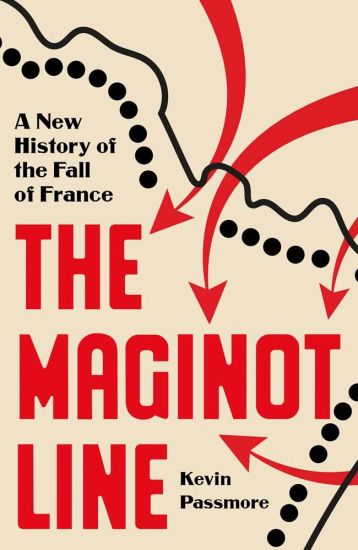
The Maginot Line

The Maginot Line

Kevin Passmore

YALE UNIVERSITY PRESS
2025
sidottu
An authoritative and original history of the Maginot Line that reshapes our understanding of interwar France and the events of 1940 The Maginot Line was a marvel of 1930s engineering. The huge forts, up to eighty meters underground, contained hospitals, modern kitchens, telephone exchanges, and even electric trains. Kilometres of underground galleries led to casements hidden in the terrain, and turrets that rose from the ground to fire upon the enemy. The fortifications were invulnerable to the heaviest artillery and to chemical warfare. Despite this extensive preparation, France fell to Germany in a little under six weeks. Eight decades on, the Maginot Line is still remembered as an expensively misguided response to obvious danger. In this groundbreaking account, Kevin Passmore reevaluates the Maginot Line. He traces the controversies surrounding construction, the lives of the men who manned the forts, the impact on German-speaking inhabitants of the frontier, and the fight against espionage from within. Far from a backward step, the Maginot Line was an ambitious project of modernisation—one that was let down by strategic error and growing dissatisfaction with fortification.
From Liberalism to Fascism

From Liberalism to Fascism

Kevin Passmore

Cambridge University Press
1997
sidottu
The Croix de Feu and its successor the Parti Social Français stood at the centre of political conflict in the turbulent final years of the French Third Republic. Membership peaked at 750,000 in 1937, and at the time the movement was widely regarded as the counterpart of fascism in Germany and Italy. However, only recently has the view that fascism also has roots in France become a serious topic for debate. From Liberalism to Fascism is based largely on archival research, and shows that contemporary perceptions of the Croix de Feu and the PSF as fascist were in fact correct. Dr Passmore places French fascism in the wider context of the history of French conservatism through a micro-study of a crisis of the liberal-conservative tradition in Lyon. This 1997 book was the first to place the emergence of French fascism in the wider political and social context. In the process, received views of the nature of French society and politics are contested.
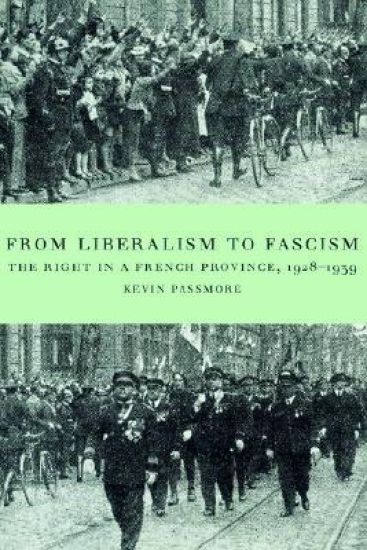
From Liberalism to Fascism

From Liberalism to Fascism

Kevin Passmore

Cambridge University Press
2002
pokkari
The Croix de Feu and its successor the Parti Social Français stood at the centre of political conflict in the turbulent final years of the French Third Republic. Membership peaked at 750,000 in 1937, and at the time the movement was widely regarded as the counterpart of fascism in Germany and Italy. However, only recently has the view that fascism also has roots in France become a serious topic for debate. From Liberalism to Fascism is based largely on archival research, and shows that contemporary perceptions of the Croix de Feu and the PSF as fascist were in fact correct. Dr Passmore places French fascism in the wider context of the history of French conservatism through a micro-study of a crisis of the liberal-conservative tradition in Lyon. This book is the first to place the emergence of French fascism in the wider political and social context. In the process, received views of the nature of French society and politics are contested.
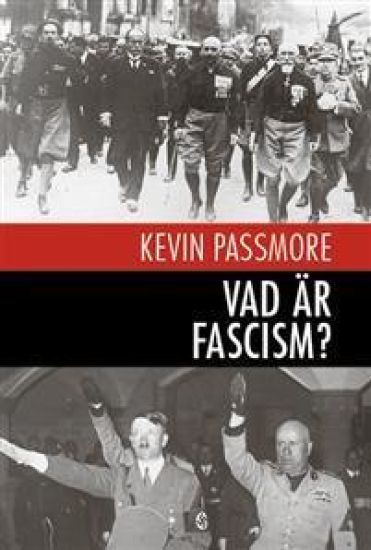
Vad är fascism? : en en kort introduktion

Vad är fascism? : en en kort introduktion

Kevin Passmore

Arx Förlag AB
2015
nidottu
Vad är fascism? Är det en revolutionär eller reaktionär ideologi? Eller kan den vara både och? Det är svårt att definiera fascism. För hur ska man betrakta en ideologi som strävar efter gamla traditioner samtidigt som den fascineras av modern teknologi? En ideologi som predikar politiskt våld samtidigt som den kräver lag och ordning. I Fascism – en kort introduktion reder professor Kevin Passmore ut paradoxerna i ett av de mest omstridda fenomenen i vårt moderna samhälle. I boken ingår den senaste forskningen om fascismens utbredning från Italien till Tyskland och till resten av världen samt omprövar den högerextrema rörelsens utveckling under 2000-talet. Om författarenKevin Passmore är professor i historia vid universitetet i Cardiff. Förutom om fascism forskar han och skriver om den högerextrema rörelsen i Europa från 1870 och om historisk teori. ”En imponerande, omfattande och välinformerad text.”Richard J. Evans, University of Cambridge