Kirjojen hintavertailu. Mukana 11 342 296 kirjaa ja 12 kauppaa.

Kirjahaku

Etsi kirjoja tekijän nimen, kirjan nimen tai ISBN:n perusteella.

8 kirjaa tekijältä Kevin Shillington

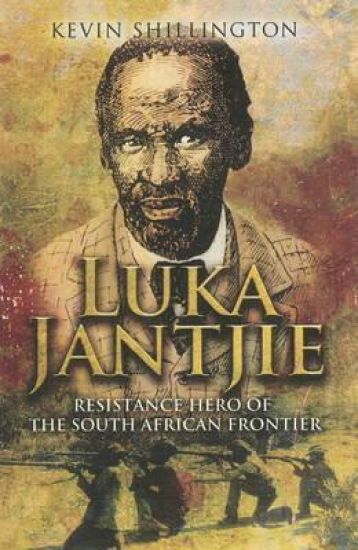
Luka Jantjie

Luka Jantjie

Kevin Shillington

Aldridge Press
2011
pokkari
Luka Jantjie is today a largely forgotten hero of resistance to British colonialism. His place in South African history has tended to be overshadowed by events elsewhere in the region. This book attempts to redress the balance by recording his remarkable story. In 1870, at the beginning of the Kimberley diamond mining boom that was to transform southern Africa, Luka Jantjie was the first independent African ruler to lose his land to the new colonialists, who promptly annexed the diamond fields. His outspoken stand against the hypocrisy of colonial 'justice' earned him the epithet: 'a wild fellow who hates the English'. As the son of an early Christian convert, Luka was brought up to respect peace and non-violence; his boycott of rural trading stores in the early 1890s was perhaps the earliest use of non-violent resistance in colonial South Africa. His steady refusal to bow to colonial demands of subservience intensified the enmity of local colonists determined to 'teach him a lesson'. As many of his people succumbed to colonial pressures, Luka was twice forced to take up arms to defend himself and his people from colonial attacks.His life ended in a dramatic and heroic last stand in the ancestral sanctuary of the Langeberg mountain range; its tragic consequences stretched far into the next century.
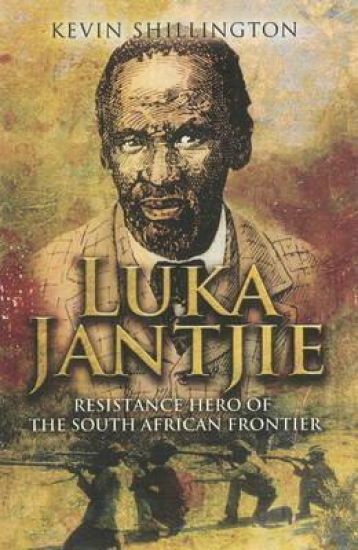
Luka Jantjie

Luka Jantjie

Kevin Shillington

Aldridge Press
2011
sidottu
Luka Jantjie is today a largely forgotten hero of resistance to British colonialism. His place in South African history has tended to be overshadowed by events elsewhere in the region. This book attempts to redress the balance by recording his remarkable story. In 1870, at the beginning of the Kimberley diamond mining boom that was to transform southern Africa, Luka Jantjie was the first independent African ruler to lose his land to the new colonialists, who promptly annexed the diamond fields. His outspoken stand against the hypocrisy of colonial 'justice' earned him the epithet: 'a wild fellow who hates the English'. As the son of an early Christian convert, Luka was brought up to respect peace and non-violence; his boycott of rural trading stores in the early 1890s was perhaps the earliest use of non-violent resistance in colonial South Africa. His steady refusal to bow to colonial demands of subservience intensified the enmity of local colonists determined to 'teach him a lesson'. As many of his people succumbed to colonial pressures, Luka was twice forced to take up arms to defend himself and his people from colonial attacks.His life ended in a dramatic and heroic last stand in the ancestral sanctuary of the Langeberg mountain range; its tragic consequences stretched far into the next century.
History of Africa

History of Africa

Kevin Shillington

Red Globe Press
2018
nidottu
This fourth edition of this best-selling core history textbook offers a richly illustrated, single volume, narrative introduction to African history, from a hugely respected authority in the field. The market-leading range of illustrated material from prior editions is now further improved, featuring not only additional and redrawn maps and a refreshed selection of photographs, but the addition of full colour to make these even more instructive, evocative and attractive.Already hugely popular on introductory African History courses, the book has been widely praised for its engaging and readable style, and is unrivalled in scope, both geographically and chronologically – while many competitors limit themselves to certain regions or eras, Shillington chronicles the entire continent, from prehistory right up to the present day. For this new edition, both content and layout have been thoroughly refreshed and restructured to make this wealth of material easily navigable, and even more appealing to students unfamiliar with the subject.New to this Edition:- Now in full colour with fresh new design- Part structure and part intros added to help navigation- New and improved online resources include a new testbank, interactive timelines, lecturer slides, debates In African history, essay questions and further readings- Revised and updated in light of recent researchAccompanying online resources for this title can be found at bloomsburyonlineresources.com/history-of-africa-4e. These resources are designed to support teaching and learning when using this textbook and are available at no extra cost.
Patrick Van Rensburg

Patrick Van Rensburg

Kevin Shillington

Wits University Press
2020
pokkari
Patrick van Rensburg (1931–2017) was an anti-apartheid activist and self-made 'alternative educationist' whose work received international recognition with the Right Livelihood Award in 1981. Born in KwaZulu-Natal into what he described as a 'very ordinary South African family that believed in the virtue of racism', Van Rensburg became a self-styled rebel who tirelessly pursued his own vision of a brighter future for emerging societies in post-colonial southern Africa. His emotional and intellectual struggle against his upbringing and cultural roots led him to reject his life of white privilege in South Africa. Determined to prevent the emergence of a privileged black elite in post-colonial society, he devoted his life to implementing an alternative, egalitarian approach to education, focusing on quality and functional schooling for the majority. Rewarded with the internationally prestigious Right Livelihood Award for his unique contribution to education, he saw this work as a 'necessary tool of development'. Exiled from South Africa in 1960 because of his involvement in the London boycott campaign that gave birth to the Anti-Apartheid Movement, Van Rensburg moved to Botswana (then Bechuanaland). There he founded cooperatives, provided vocational training and was among the earliest educationists to espouse the discipline of development studies. Perhaps his best-known legacy is the Swaneng Hill School, which he founded to provide an educational home for primary school 'dropouts' through a curriculum that combined theory and practice, and academic and manual labour. He involved his pupils in building their school, running it, providing their own food, and making their own equipment and furniture. Van Rensburg was an innovative and charismatic visionary who captured the zeitgeist of the late twentieth century, and whose work and vision still have resonance for debates in educational policy today.
Patrick Van Rensburg

Patrick Van Rensburg

Kevin Shillington

WITS UNIVERSITY PRESS
2020
sidottu
Patrick van Rensburg (1931–2017) was an anti-apartheid activist and self-made 'alternative educationist' whose work received international recognition with the Right Livelihood Award in 1981. Born in KwaZulu-Natal into what he described as a 'very ordinary South African family that believed in the virtue of racism', Van Rensburg became a self-styled rebel who tirelessly pursued his own vision of a brighter future for emerging societies in post-colonial southern Africa. His emotional and intellectual struggle against his upbringing and cultural roots led him to reject his life of white privilege in South Africa. Determined to prevent the emergence of a privileged black elite in post-colonial society, he devoted his life to implementing an alternative, egalitarian approach to education, focusing on quality and functional schooling for the majority. Rewarded with the internationally prestigious Right Livelihood Award for his unique contribution to education, he saw this work as a 'necessary tool of development'. Exiled from South Africa in 1960 because of his involvement in the London boycott campaign that gave birth to the Anti-Apartheid Movement, Van Rensburg moved to Botswana (then Bechuanaland). There he founded cooperatives, provided vocational training and was among the earliest educationists to espouse the discipline of development studies. Perhaps his best-known legacy is the Swaneng Hill School, which he founded to provide an educational home for primary school 'dropouts' through a curriculum that combined theory and practice, and academic and manual labour. He involved his pupils in building their school, running it, providing their own food, and making their own equipment and furniture. Van Rensburg was an innovative and charismatic visionary who captured the zeitgeist of the late twentieth century, and whose work and vision still have resonance for debates in educational policy today.
The Quintessential English Eccentric: ROBERT OAKESHOTT

The Quintessential English Eccentric: ROBERT OAKESHOTT

Kevin Shillington

The Self-Publishing Partnership Ltd
2022
sidottu
Robert Oakeshott was of a man of humorous eccentricity and intoxicating discourse, a man of many lives. As an Oxford undergraduate in 1956 he hitch-hiked into Budapest at the height of the student-led revolution, carrying nothing but moral support and a suitcase of penicillin. Then foreign correspondent for the Financial Times, key development officer in Zambia at the time of independence, alternative educationist in Botswana. He founded a think tank in the UK to promote justice and fairness in the workplace through employee ownership, an economic model that he took to Eastern Europe in the 1990s. Simultaneously, he was a generous philanthropist who played a leading role in the founding of pioneering charities.