Kirjojen hintavertailu. Mukana 11 717 486 kirjaa ja 12 kauppaa.

Kirjahaku

Etsi kirjoja tekijän nimen, kirjan nimen tai ISBN:n perusteella.

6 kirjaa tekijältä Kevin Vallier

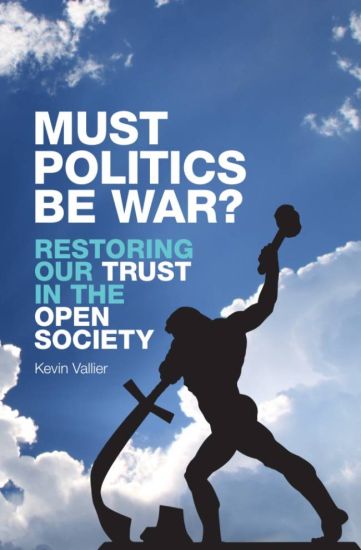
Must Politics Be War?

Must Politics Be War?

Kevin Vallier

Oxford University Press Inc
2019
sidottu
Americans today are far less likely to trust their institutions, and each other, than in decades past. This collapse in social and political trust arguably fuels our increasingly ferocious ideological conflicts and hardened partisanship. Many believe that our previously high levels of trust and bipartisanship were a pleasant anomaly and that we now live under the historic norm. Seen this way, politics itself is nothing more than a power struggle between groups with irreconcilable aims: contemporary American politics is war because political life as such is war. Must Politics Be War? argues that our shared liberal democratic institutions have the unique capacity to sustain social and political trust between diverse persons. In succinct, convincing prose, Kevin Vallier argues that constitutional rights and democratic governance prevent any one ideology or faith from dominating all others, thereby protecting each person's freedom to live according to her values and principles. Illiberal arrangements, where one group's ideology or faith reigns, turn those who disagree into unwilling subversives, persons with little reason to trust their regime or to be trustworthy in obeying it. Liberal arrangements, in contrast, incentivize trust and trustworthiness because they allow people with diverse and divergent ends to act with conviction. Those with opposing viewpoints become trustworthy because they can obey the rules of their society without acting against their ideals. Therefore, as Vallier illuminates, a liberal society is one at moral peace with a politics that is not war.
Trust in a Polarized Age

Trust in a Polarized Age

Kevin Vallier

Oxford University Press Inc
2020
sidottu
Americans today don't trust each other and their institutions as much as they once did. The collapse of social and political trust has arguably fueled our increasingly ferocious ideological conflicts and hardened partisanship. But is today's decline in trust inevitable or avoidable? Are we caught in a downward spiral that must end in institutional decay or even civil war, or can we restore trust through our shared social institutions? In Trust in a Polarized Age, political philosopher Kevin Vallier offers a powerful counter-narrative to the prevailing sense of hopelessness that dogs the American political landscape. In an unapologetic defense of liberalism that synthesizes political philosophy and empirical trust research, Vallier restores faith in our power to reduce polarization and rebuild social and political trust. The solution is to strengthen liberal democratic political and economic institutions--high-quality governance, procedural fairness, markets, social welfare programs, freedom of association, and democracy. These institutions not only create trust, they do so justly, by recognizing and respecting our basic human rights. Liberal institutions have safeguarded trust through the most tumultuous periods of our history. If we heed the arguments and data in this book, trust could return.
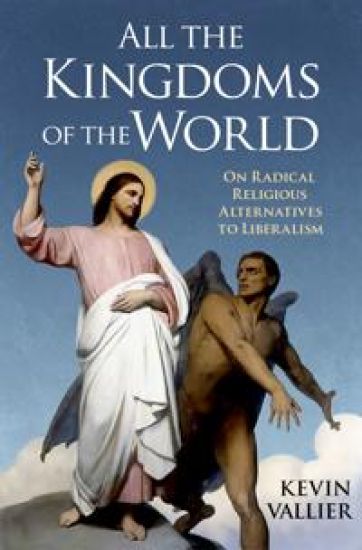
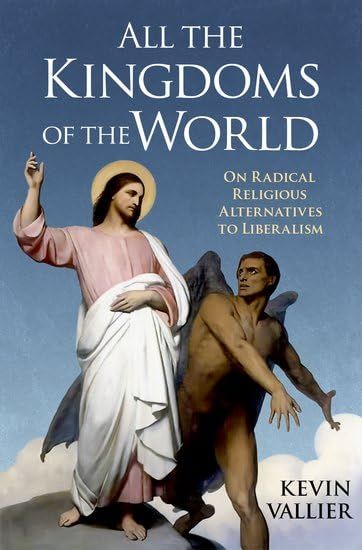
All the Kingdoms of the World

All the Kingdoms of the World

Kevin Vallier

OXFORD UNIVERSITY PRESS INC
2023
sidottu
A fresh assessment of Catholic integralism and other new and radical religious alternatives to liberal democracy. According to a common narrative, the twentieth century spelled the end of faith-infused political movements. Their ideologies, like Catholic integralism, would soon be forgotten. Humans were finally learning to keep religion out of politics. Or were we? In the twenty-first century, nations as diverse as Russia, India, Poland, and Turkey have seen a revival of religious politics, and many religious movements in other countries have proved similarly resilient. A new generation of political theologians passionately reformulate ancient religious doctrines to revolutionize modern political life. They insist that states recognize the true religion, and they reject modern liberal ideals of universal religious freedom and church-state separation. In this book, philosopher Kevin Vallier explores these new doctrines, not as lurid oddities but as though they might be true. The anti-liberal doctrine known as Catholic integralism serves as Vallier's test case. Yet his approach naturally extends to similar ideologies within Chinese Confucianism and Sunni Islam. Vallier treats anti-liberal thinkers with the respect that liberals seldom afford them and offers more moderate skeptics of liberalism a clear account of the alternatives. Many liberals, by contrast, will find these doctrines frightening and strange but of enduring interest. Vallier invites all his readers on a unique intellectual adventure, encouraging them to explore unfamiliar ideals through the lenses of theology, philosophy, politics, economics, and history.
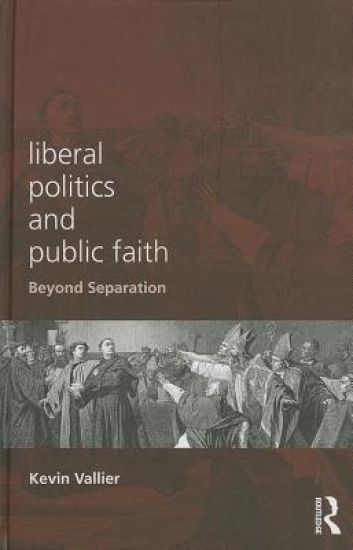
Liberal Politics and Public Faith

Liberal Politics and Public Faith

Kevin Vallier

Routledge
2014
sidottu
In the eyes of many, liberalism requires the aggressive secularization of social institutions, especially public media and public schools. The unfortunate result is that many Americans have become alienated from the liberal tradition because they believe it threatens their most sacred forms of life. This was not always the case: in American history, the relation between liberalism and religion has often been one of mutual respect and support. In Liberal Politics and Public Faith: Beyond Separation, Kevin Vallier attempts to reestablish mutual respect by developing a liberal political theory that avoids the standard liberal hostility to religious voices in public life. He claims that the dominant form of academic liberalism, public reason liberalism, is far friendlier to religious influences in public life than either its proponents or detractors suppose. The best interpretation of public reason, convergence liberalism, rejects the much-derided "privatization" of religious belief, instead viewing religious contributions to politics as a resource for liberal political institutions. Many books reject privatization, Liberal Politics and Public Faith: Beyond Separation is unique in doing so on liberal grounds.
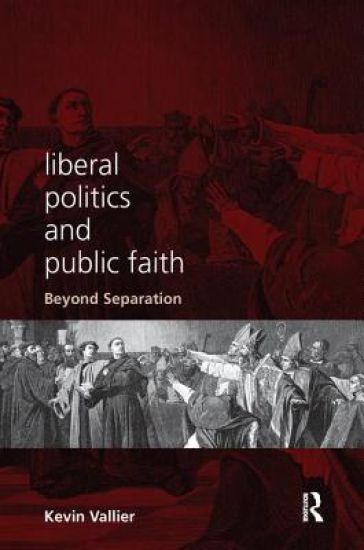
Liberal Politics and Public Faith

Liberal Politics and Public Faith

Kevin Vallier

Routledge
2016
nidottu
In the eyes of many, liberalism requires the aggressive secularization of social institutions, especially public media and public schools. The unfortunate result is that many Americans have become alienated from the liberal tradition because they believe it threatens their most sacred forms of life. This was not always the case: in American history, the relation between liberalism and religion has often been one of mutual respect and support. In Liberal Politics and Public Faith: Beyond Separation, Kevin Vallier attempts to reestablish mutual respect by developing a liberal political theory that avoids the standard liberal hostility to religious voices in public life. He claims that the dominant form of academic liberalism, public reason liberalism, is far friendlier to religious influences in public life than either its proponents or detractors suppose. The best interpretation of public reason, convergence liberalism, rejects the much-derided "privatization" of religious belief, instead viewing religious contributions to politics as a resource for liberal political institutions. Many books reject privatization, Liberal Politics and Public Faith: Beyond Separation is unique in doing so on liberal grounds.