Kirjojen hintavertailu. Mukana 12 016 292 kirjaa ja 12 kauppaa.

Kirjahaku

Etsi kirjoja tekijän nimen, kirjan nimen tai ISBN:n perusteella.

26 kirjaa tekijältä Kevin Williams

Survival Skills

Survival Skills

Kevin Williams

Lulu.com
2017
pokkari
At last... a 21st century approach to motorcycle riding. A motorcycle can do only two things - change speed or change direction. But how, where and when we achieve that has a major impact on just how safe we are on the roads. Based on his practical riding courses, Survival SKILLS is a fresh new look at riding from top rider coach Kevin Williams. Taking a uniquely pragmatic approach to building new skills, many of the lessons were learned the hard way by the author. At the same time, the book delves into the latest research and is packed with fresh ways of looking at better riding technique. The innovative content explores the No Surprise? No Accident approach to rider safety and is carefully structured to improve your riding whether you are a novice or an expert rider. Junctions, corners and overtaking all get the Survival Skills approach. The best bolt-on accessory for any bike is the rider. This book will help you become the best rider you can be.
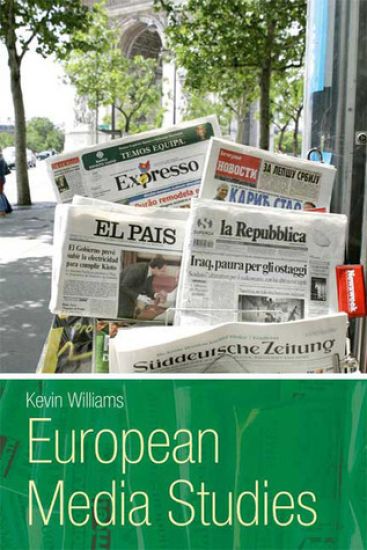
European Media Studies

European Media Studies

Kevin Williams

Hodder Arnold
2005
nidottu
Study of the mass media in Britain and the USA is dominated by an Anglo-American framework. European Media Studies seeks to redress this imbalance by looking at the mass media in a European context and exploring the European understanding of the role of the mass media in society. European Media Studies offers a student-friendly, authoritative and thematic approach which engages readers with the transformation in the European media landscape since 1980; the structure and context of the press and publishing, broadcasting, film and music industries in Europe; the practice and performance of journalism across Europe; the role of the EU in the development of the media and media policy, including the attempts to promote a collective European identity; the extent to which national media systems throughout Europe are undergoing a process of 'Europeanisation'; and the role of the media in the collapse of Communism and the rebuilding of the mass media in Eastern Europe since 1989. European Media Studies will be vital to undergraduates and postgraduates taking courses on European media.
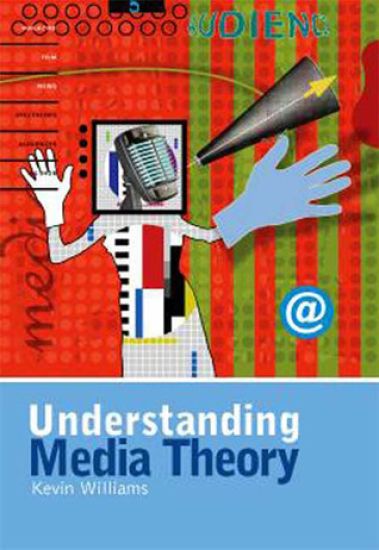
Understanding Media Theory

Understanding Media Theory

Kevin Williams

Hodder Arnold
2003
nidottu
Understanding Media Theory is an accessible introduction to mass media theory. The book emphasizes the importance of using theory not only to make sense of the role of the media in society but also to understand particular aspects of the process of mass communication. This is an introduction to theory which students can understand and enjoy.
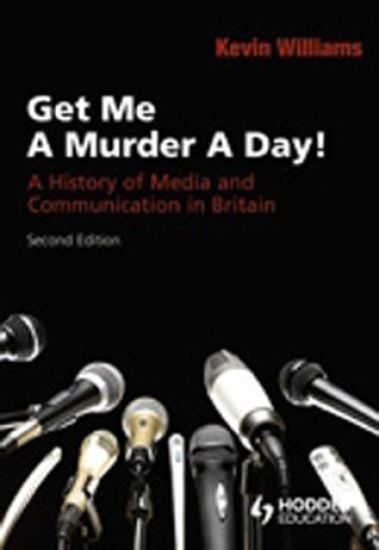
Get Me a Murder a Day!

Get Me a Murder a Day!

Kevin Williams

Hodder Arnold
2009
nidottu
'Get Me A Murder A Day!' the famous motto of Lord Northcliffe, founder of the Daily Mail, says it all. Murder, sex and scandal seem to be the mass media's staple diet in Britain. Now we have 24-hour news television, podcasts and blogs enabling constant communication and consumer comment. To understand how we got to this, we need to start from the beginning. Tracing the history of the print, broadcast and film industries, this book offers a concise and enjoyable introduction to mass communication in Britain. It outlines the main landmarks in the development of the media, the changing nature of their industrial organisation and the resulting impact on audiences. It also looks at censorship and control, the concerns of powerful elites, new managers and moral entrepreneurs. This new edition further discusses 'dumbing down', the changing content of TV and the press, the growth of 'spin' and news management, and introduces key events such as the Hutton inquiry and the Iraq war, the TV telethon fraud, the establishment of the BBC Trust and the furore over the Queen documentary. A new chapter focuses on new media technology developments social networking, citizen journalism, open access and the changing nature of media consumption, particularly among young consumers. Get Me A Murder A Day! is an essential read for media and journalism students and anyone with an interest in understanding the media landscape in the UK.
Read All About It!

Read All About It!

Kevin Williams

Routledge
2009
sidottu
This Text-book traces the evolution of the newspaper, documenting its changing form, style and content as well as identifying the different roles ascribed to it by audiences, government and other social institutions. Starting with the early 17th century, when the first prototype newspapers emerged, through Dr Johnson, the growth of the radical press in the early 19th century, the Lord Northcliffe revolution in the early 20th century, the newspapers wars of the 1930s and the rise of the tabloid in the 1970s, right up to Rupert Murdoch and the online revolution, the book explores the impact of the newspapers on our lives and its role in British society.Using lively and entertaining examples, Kevin Williams illustrates the changing form of the newspaper in its social, political, economic and cultural context. As well as telling the story of the newspaper, he explores key topics in detail, making this an ideal text for students of journalism and the British newspaper. Issues include: newspapers and social change the changing face of regional newspapers the impact of new technologydevelopment of reporting techniquesforms of press regulation
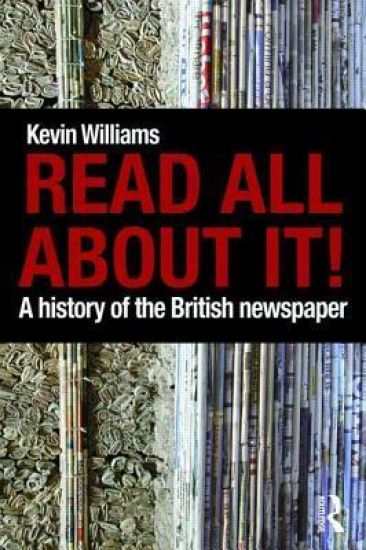
Read All About It!

Read All About It!

Kevin Williams

Routledge
2009
nidottu
This Text-book traces the evolution of the newspaper, documenting its changing form, style and content as well as identifying the different roles ascribed to it by audiences, government and other social institutions. Starting with the early 17th century, when the first prototype newspapers emerged, through Dr Johnson, the growth of the radical press in the early 19th century, the Lord Northcliffe revolution in the early 20th century, the newspapers wars of the 1930s and the rise of the tabloid in the 1970s, right up to Rupert Murdoch and the online revolution, the book explores the impact of the newspapers on our lives and its role in British society.Using lively and entertaining examples, Kevin Williams illustrates the changing form of the newspaper in its social, political, economic and cultural context. As well as telling the story of the newspaper, he explores key topics in detail, making this an ideal text for students of journalism and the British newspaper. Issues include: newspapers and social change the changing face of regional newspapers the impact of new technologydevelopment of reporting techniquesforms of press regulation
A New History of War Reporting

A New History of War Reporting

Kevin Williams

Routledge
2020
sidottu
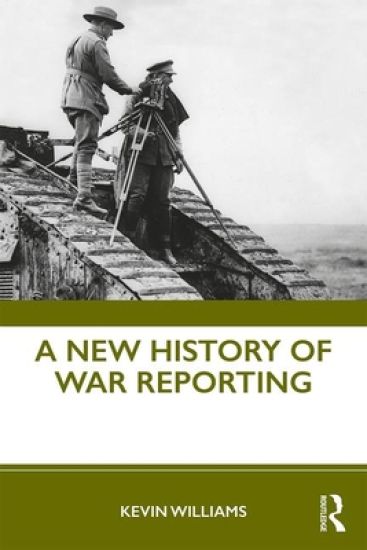
This book takes a fresh look at the history of war reporting to understand how new technology, new ways of waging war and new media conditions are changing the role and work of today’s war correspondent. Focussing on the mechanics of war reporting and the logistical and institutional pressures on correspondents, the book further examines the role of war propaganda, accreditation and news management in shaping the evolution of the specialism. Previously neglected conflicts and correspondents are reclaimed and wars considered as key moments in the history of war reporting such as the Crimean War (1854-56) and the Great War (1914-18) are re-evaluated.The use of objectivity as the yardstick by which to assess the performance of war correspondents is questioned. The emphasis is instead placed on war as a messy business which confronts reporters and photographers with conditions that challenge the norms of professional practice. References to the ‘demise of the war correspondent’ have accompanied the growth of the specialism since the days of William Howard Russell, the so-called father of war reporting. This highlights the fragile nature of this sub-genre of journalism and emphasises that continuity as much as change characterises the work of the war correspondent. A thematically organised, historically rich introduction, this book is ideal for students of journalism, media and communication.
A New History of War Reporting

A New History of War Reporting

Kevin Williams

Routledge
2020
nidottu
This book takes a fresh look at the history of war reporting to understand how new technology, new ways of waging war and new media conditions are changing the role and work of today’s war correspondent. Focussing on the mechanics of war reporting and the logistical and institutional pressures on correspondents, the book further examines the role of war propaganda, accreditation and news management in shaping the evolution of the specialism. Previously neglected conflicts and correspondents are reclaimed and wars considered as key moments in the history of war reporting such as the Crimean War (1854-56) and the Great War (1914-18) are re-evaluated.The use of objectivity as the yardstick by which to assess the performance of war correspondents is questioned. The emphasis is instead placed on war as a messy business which confronts reporters and photographers with conditions that challenge the norms of professional practice. References to the ‘demise of the war correspondent’ have accompanied the growth of the specialism since the days of William Howard Russell, the so-called father of war reporting. This highlights the fragile nature of this sub-genre of journalism and emphasises that continuity as much as change characterises the work of the war correspondent. A thematically organised, historically rich introduction, this book is ideal for students of journalism, media and communication.
Microbial Contamination Control in Parenteral Manufacturing
This reference surveys emerging trends, concepts, and procedures used in the characterization and control of contaminants; the sterile production of traditional drugs and biologics; the design, construction, and validation of new parenteral facilities; and the monitoring of clean environments-vividly illustrating the routes by which products, processes, and manufacturing settings become contaminated through contact with the air, water, raw materials, and the actions of personnel, as well as the current methods necessary to successfully preclude contamination.
Wrestling Merchandise of the 1990s

Wrestling Merchandise of the 1990s

Kevin Williams

AMBERLEY PUBLISHING
2022
nidottu
Take a look back at the Golden Era of wrestling with some of the spectacular merchandise from that awesome time. Featured here is the story of the wrestling merchandise that could be found as pro wrestling took the world by storm. Featuring action figures, gym bags, whacky T-shirts, VHS tapes and much more, this is merchandise that excited a generation. Kevin Williams, also the author of Wrestling Action Figures of the Early 1990s, will take you back in time to grapple with your wrestling passion.
International Journalism

International Journalism

Kevin Williams

SAGE Publications Inc
2011
sidottu
"Kevin Williams has authored an account of "foreign" correspondence and international journalism that is the most comprehensively-sourced, inclusive, contextualized, timely and critical in its field. At last, we have an account that acknowledges that the largest employers of "foreign" correspondents for nearly two hundred years have been and continue to be the news agencies; that the occupation is rooted in a history of imperialism, post-colonialism and commercialization, whose vestiges today are all too apparent; that the impacts of so-called "new media" on the amount, range and quality of international news, while significant, are less dramatic and less positive than commonly supposed." - Oliver Boyd-Barrett, Bowling Green State University, Ohio What is the future of the foreign correspondent - is there one? Tracing the historical development of international reporting, Kevin Williams examines the organizational structures, occupational culture and information environment in which it is practiced to explore the argument that foreign correspondence is becoming extinct in the globalized world. Mapping the institutional, political, economic, cultural, and historical context within which news is gathered across borders, this book reveals how foreign correspondents are adapting to new global and commercial realities in how they gather, adapt and disseminate news. Lucid and engaging, the book expertly probes three global models of reporting - Anglo-American, European and the developing world - to lay bare the forces of technology, commercial constraint and globalization that are changing how journalism is practiced and understood. Essential reading for students of journalism, this is a timely and thought-provoking book for anyone who wishes to fully grasp the core issues of journalism and reporting in a global context.
International Journalism

International Journalism

Kevin Williams

SAGE Publications Inc
2011
nidottu
"Kevin Williams has authored an account of "foreign" correspondence and international journalism that is the most comprehensively-sourced, inclusive, contextualized, timely and critical in its field. At last, we have an account that acknowledges that the largest employers of "foreign" correspondents for nearly two hundred years have been and continue to be the news agencies; that the occupation is rooted in a history of imperialism, post-colonialism and commercialization, whose vestiges today are all too apparent; that the impacts of so-called "new media" on the amount, range and quality of international news, while significant, are less dramatic and less positive than commonly supposed." - Oliver Boyd-Barrett, Bowling Green State University, Ohio What is the future of the foreign correspondent - is there one? Tracing the historical development of international reporting, Kevin Williams examines the organizational structures, occupational culture and information environment in which it is practiced to explore the argument that foreign correspondence is becoming extinct in the globalized world. Mapping the institutional, political, economic, cultural, and historical context within which news is gathered across borders, this book reveals how foreign correspondents are adapting to new global and commercial realities in how they gather, adapt and disseminate news. Lucid and engaging, the book expertly probes three global models of reporting - Anglo-American, European and the developing world - to lay bare the forces of technology, commercial constraint and globalization that are changing how journalism is practiced and understood. Essential reading for students of journalism, this is a timely and thought-provoking book for anyone who wishes to fully grasp the core issues of journalism and reporting in a global context.
A Global History of Journalism

A Global History of Journalism

Kevin Williams

Bloomsbury Academic
2018
nidottu
Journalism history is mostly examined from a national perspective, but the boundaries of the profession have been porous from the very earliest days of the regular publication of news. This book examines the variety of influences from different societies that have shaped the development of journalism from the newsletters and corantos of early 17th-century Europe to the techniques of digital news gathering and dissemination today. A Global History of Journalism examines how the profession has incorporated practices, styles and modes of operation from diverse cultures. It provides a comparative discussion of developments in countries as far apart as the US, Europe, China and India. The emergence of the dedicated news gatherer in the 18th century, the reporter, is described and the contrasting interpretations of the process of reporting are evaluated. The changes in the profession in the 19th century, with the growth of specialist reporters such as the foreign, war and political correspondent and the speeding up of newsgathering through technological innovation, are part of the transformation which took place in the newspaper industry. The expansion of journalism into other walks of life and the growing diversity of practice in a multimedia world are traced throughout the 20th century. Rooted in a national context, the book emphasises that journalism has been 'global' in perspective and performance since wars, commotions and strange events from faraway places featured prominently in the output of the first newspapers.
A Global History of Journalism

A Global History of Journalism

Kevin Williams

Bloomsbury Academic
2018
sidottu
Journalism history is mostly examined from a national perspective, but the boundaries of the profession have been porous from the very earliest days of the regular publication of news. This book examines the variety of influences from different societies that have shaped the development of journalism from the newsletters and corantos of early 17th-century Europe to the techniques of digital news gathering and dissemination today. A Global History of Journalism examines how the profession has incorporated practices, styles and modes of operation from diverse cultures. It provides a comparative discussion of developments in countries as far apart as the US, Europe, China and India. The emergence of the dedicated news gatherer in the 18th century, the reporter, is described and the contrasting interpretations of the process of reporting are evaluated. The changes in the profession in the 19th century, with the growth of specialist reporters such as the foreign, war and political correspondent and the speeding up of newsgathering through technological innovation, are part of the transformation which took place in the newspaper industry. The expansion of journalism into other walks of life and the growing diversity of practice in a multimedia world are traced throughout the 20th century. Rooted in a national context, the book emphasises that journalism has been 'global' in perspective and performance since wars, commotions and strange events from faraway places featured prominently in the output of the first newspapers.