Kirjojen hintavertailu. Mukana 11 342 296 kirjaa ja 12 kauppaa.

Kirjahaku

Etsi kirjoja tekijän nimen, kirjan nimen tai ISBN:n perusteella.

6 kirjaa tekijältä Key Publishing

Halifax

Halifax

Key Publishing

KEY PUBLISHING LTD
2023
nidottu
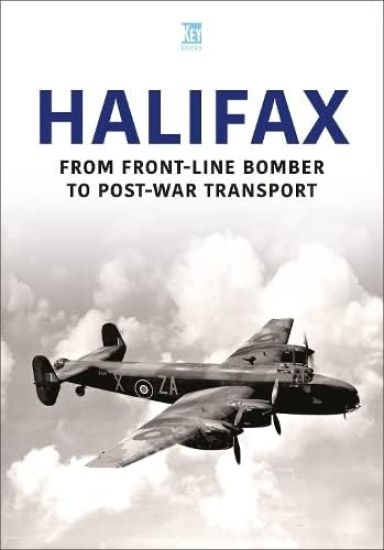
One of the three British four-engine heavy bombers that took the fight to Germany, the Handley Page Halifax contributed in no small way to the destruction and ultimate surrender of the Third Reich. However, in its early years from service entry in March 1941, little good could be said about the Halifax. All round it was a poor design from Britain's most famous builder of big bombers. In fact, it was so bad that 'Bomber' Harris wanted it withdrawn from service and production switched in favour of the Lancaster. However, there was simply no time or money to switch to building a new machine. Instead, Handley Page designers struggled to improve the aircraft and it was a good two years before they succeeded. The new Halifax was worth waiting for. By late 1944, Halifax losses dropped below those of the Lancaster, even though the former often outnumbered the latter on some of the big raids. Those who flew and maintained the Halifax were largely loyal to the type, particularly the Canadians, who operated 15 squadrons. Its early difficulties overcome, the design was found ideal for other tasks - towing gliders, carrying troops, stuffing the fuselage full of electronics to spook the enemy, anti-submarine patrollers, spy dropping and, in the post-war world, flying early civil air routes around Europe and helping to sustain Berlin against the Russians. This new book edition of Aeroplane Icons: Halifax reviews the lows and highs of the mighty Halifax and recounts its contribution to the Allied success in winning World War Two.
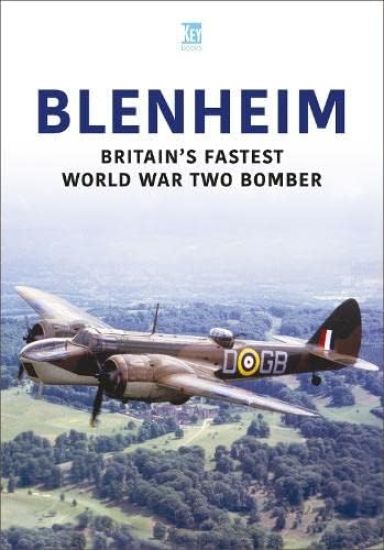
Blenheim

Blenheim

Key Publishing

KEY PUBLISHING LTD
2023
nidottu
Introduced to RAF squadrons in early 1937, the Blenheim's superb performance made it the RAF's fastest bomber for many years and, before the arrival of the Hurricane and Spitfire, also the fastest aircraft in the entire inventory. The Blenheim proved successful, despite never originating as a military requirement. The way it was built was also ground-breaking, leading to the introduction of sectionalised production. It set the standard for how virtually all British aircraft were constructed from 1936 onwards. By the beginning of World War Two, over 1,000 served with the RAF, even though the type was clearly obsolete when compared to its German counterparts. Despite this, it served with the Fairey Battles over France. The Blenheim would suffer heavy losses and its brave crews constantly faced overwhelming odds. Fortunately, several examples have been preserved across the world. This new book edition of Aeroplane Icons: Blenheim showcases this incredible aircraft and celebrates its ground-breaking history.
Canberra

Canberra

Key Publishing

KEY PUBLISHING LTD
2023
nidottu
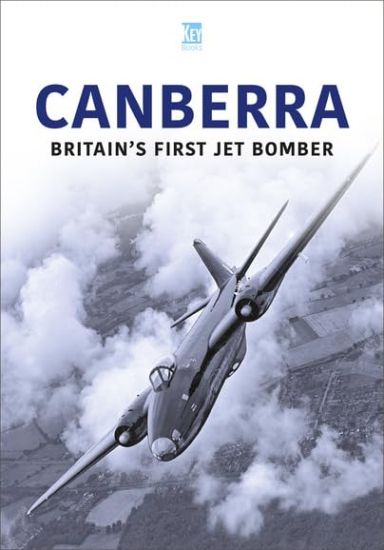
While the history of the jet engine and the development of Britain's first jet fighter are well known, the evolution of a jet-powered bomber is a story that is less well charted, even though its creation was undoubtedly as important as the fighter's - if not more so. English Electric's Canberra bomber was created without fuss and fanfare, and without any significant delays or disasters. However, the Canberra was far from mundane. At the time of the aircraft's development, RAF's Bomber Command relied upon obsolescent Lincolns. The Canberra was a breath of fresh air. It was fast, it could climb to hitherto unattainable altitudes, and it was astonishingly manoeuvrable. Of course, the Canberra was also much more than a bomber. Its simple and rugged construction endowed the aircraft with a capacity to take on many roles, ranging from reconnaissance through to target towing. In another much darker guise, it also became a low-level intruder, with atomic weaponry in its belly. The Canberra also claimed a considerable number of export sales, not least in the US where the aircraft became one of only a handful of post-war foreign designs to be adopted by the United States Air Force. This new book edition of Aeroplane Icons: Canberra celebrates an aircraft with a long and colourful history.
Wellington

Wellington

Key Publishing

KEY PUBLISHING LTD
2023
nidottu
In 1932, the British Air Ministry issued Specification B.9/32 for a twin-engined day bomber. Key to its design success was the removal of all restrictions on the unladen weight of aircraft, enabling designers to select a powerplant suitable for the designated role of the aircraft. Significant to its success was the development of the revolutionary geodetic construction method, which allowed a traditional fabric-covered skin to clothe an innovative super-strength 'basket woven' aircraft skeleton. The Wellington had the potential to carry nine 500lb bombs or nine 250lb bombs for long-range attack and was declared one of the most advanced aircraft of the day. Throughout its lifespan, 19 different marks were developed, including many sub variants for a variety of roles. The Wellington's contribution to Britain's war effort was remarkable, initially providing the backbone for Bomber Command and remaining in service throughout the entire war. Packed with historic photographs, detailed specifications, eye-witness accounts and manufacturing records, this new book edition of Aeroplane Icons: Vickers Wellington details the history and development of one of World War Two's most iconic bomber aircraft, providing a complete overview of its role in service.
Harrier

Harrier

Key Publishing

KEY PUBLISHING LTD
2023
nidottu
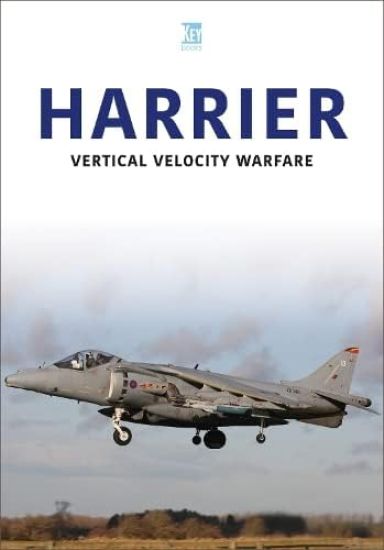
The Hawker Harrier was an incredible aircraft. It was the first operational warplane to dispense with any need for conventional airfields or aircraft carriers, thanks to its vertical take-off and landing capabilities. Designed for Cold War requirements, the Harrier became a remarkably effective ground-attack bomber. Development continued throughout the 1960s and 1970s, and the Harrier matured into a versatile aircraft that proved invaluable with the Royal Air Force and Royal Navy, and also with the United States Marine Corps and many export customers around the world. In the US, the Harrier ultimately became the AV-8B or Super Harrier. By any standards, the Harrier was a huge success, though it found itself the victim of politics and budgets. With over 100 images, this new book edition of Aeroplane Icons: Hawker Harrier details the history of the aircraft, its origins and development, tracing how the P.1127 developed into the Kestrel and the Harrier, and then eventually to the AV-8B. This book highlights why the Harrier enjoys a special place in military aviation history.
De Havilland Military

De Havilland Military

Key Publishing

KEY PUBLISHING LTD
2023
nidottu
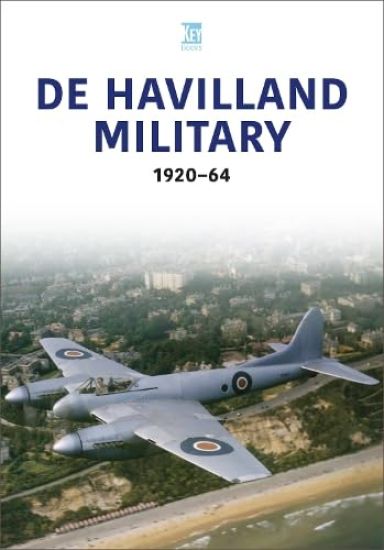
Geoffrey de Havilland's first attempts to fly were in 1909, and this early part of de Havilland's career saw him rise from an enthusiastic amateur designing his own aircraft to a key figure and test pilot, working for the fledgling Royal Aircraft Factory within a relatively short space of time. By the beginning of World War One, de Havilland had become chief designer at Airco, where he created several successful military machines. He left there to form his own company, de Havilland Company Limited, and it was there that he produced some of his greatest aircraft. Of course, there is only one aircraft comes to mind on de Havilland and its contribution to World War Two - the Mosquito. That aircraft more than proved its worth. De Havilland also produced its own engines, beginning with the successful Gipsy. Other subsidiaries also included de Havilland Canada and de Havilland Australia. Geoffrey de Havilland's contribution to the British aircraft industry was colossal and many of the aircraft covered in this book have remained household names from the day that they first flew. Tiger Moth, Mosquito, Vampire, Venom, Comet and Sea Vixen are just a few; all of them sewn into the tapestry of an industry that, only a few decades ago, led from the front. This new book edition of Aeroplane's De Havilland Company Profile 1920-1964 (Military Types) showcases the legacy of one man and his aircraft.